


Forget everything you think you know about that dusty vacuum in the corner of the garage. For professionals in yard care and residential groundwork, a shop vac is the unsung hero of the job site—a rugged, all-purpose workhorse built for the kind of messes that would kill a regular household vacuum, especially when it comes to digging.
The Unsung Hero of Every Job Site
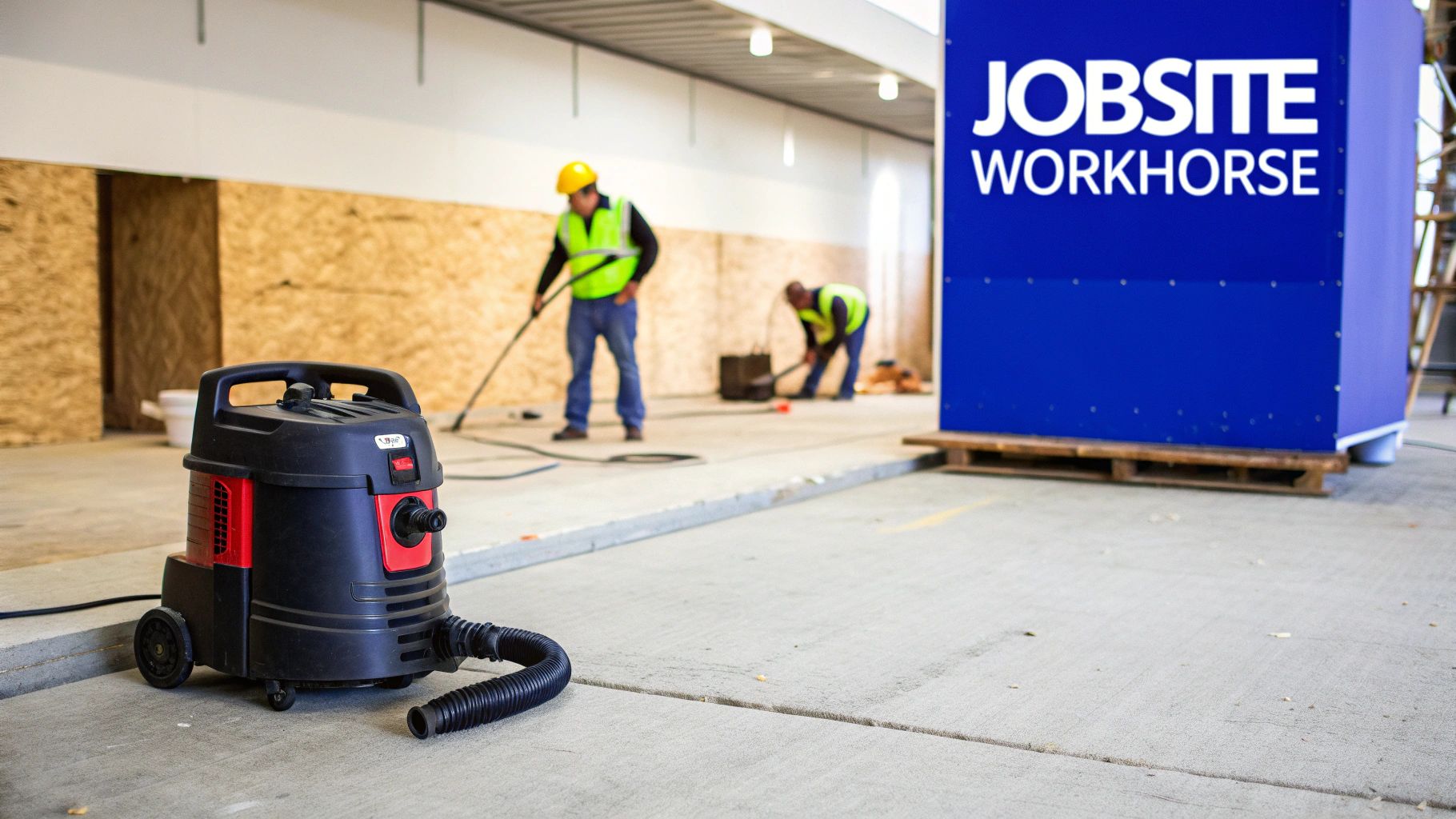
So, what are shop vacs really used for? Think bigger than just sawdust. These machines are the ultimate problem-solvers, designed from the ground up to handle both wet and dry debris with ease. It's this dual capability that makes them an indispensable asset for anyone in landscaping, residential digging, or utility repair.
This incredible versatility isn't a secret. The global industrial vacuum cleaner market hit USD 1.08 billion by 2025 and is on track to reach USD 1.84 billion by 2035. That growth is driven by pros who need one reliable tool that can do it all, from sucking up a sudden spill to carefully excavating soil for a fence post.
To give you a clearer picture, here’s a quick rundown of what these machines handle on a daily basis.
Shop Vac Core Capabilities At a Glance
A quick summary of primary wet and dry applications, helping you grasp the incredible versatility of a standard shop vac.
| Application Type | Common Uses | Industries Served |
|---|---|---|
| Dry Cleanup | Sawdust, drywall dust, wood chips, nails, screws | Construction, Woodworking, Automotive, Manufacturing |
| Wet Cleanup | Water spills, flooded basements, sludge, slurries, precision digging | Plumbing, Restoration, Landscaping, Yard Care |
As you can see, the ability to switch from dry debris to liquids on the fly makes the shop vac a go-to tool across a huge range of trades, especially in the growing wet vac hose industry.
More Than Just Suction Power
While raw suction power is the main event, the real magic is in the attachments. A standard hose and nozzle are great for general cleanup, but the right accessory can completely transform what a shop vac can do. This is especially true when you consider the complex nature of projects like groundwork in construction, where one minute you’re clearing dirt and the next you’re digging a hole next to a sensitive pipe.
A perfect example is the Hydrovac Attachment Tool. This clever device connects a standard pressure washer to your wet vac hose, effectively turning your cleanup tool into a nimble, mobile digging system. It’s ideal for precision jobs like digging fence post holes or exposing underground pipes without causing damage—tasks where a large hydrovac truck is unnecessary and a shovel is too risky.
Think about tasks like:
- Digging a fence post hole right next to a buried sprinkler line.
- Gently exposing underground pipes for a quick repair without damage.
- Carving out small trenches for irrigation or wiring.
By combining the shop vac’s suction with pressurized water, operators can perform small-scale hydro excavation, turning a cleanup tool into a precision digging instrument. This sets the stage for advanced applications once thought to be only for large, expensive hydrovac trucks.
Beyond Sawdust: The Shop Vac in the Yard
When you think "shop vac," you probably picture a garage corner littered with sawdust. But for professionals, these machines are frontline tools, tackling outdoor jobs that would destroy a household vacuum.
On a residential job site, for instance, a shop vac is a workhorse. It’s the only thing that can handle the slurry of mud and rock when digging near utilities. It also makes short work of clearing clogged drainage pipes, which is crucial for keeping a property safe and functional. This is a common pain point for landscapers and property maintenance crews.
The power of a wet vac hose combined with a strong vacuum is a game-changer for yard care and residential digging. Think about digging fence posts without the back-breaking labor of a manual digger or the risk of an auger. What used to be a high-risk job can now be done precisely and safely.
From the Workshop to the Backyard
In a metal fabrication shop, cleanliness isn't just about looking tidy—it's about safety. Those sharp metal shavings from cutting and grinding are a real hazard. A powerful shop vac can suck them up right at the source, keeping floors clear and preventing damage to other expensive machinery.
But the real surprise is how landscapers are putting them to work, especially in the world of wet vac hoses. Think about a hopelessly clogged drainage pipe packed with mud, leaves, and rocks. What used to be a back-breaking job of digging and clearing by hand can now be done in minutes with a shop vac.
A lot of people don't realize that a simple shop vac can become a surprisingly precise digging tool. Add a controlled stream of water to its powerful suction, and you’ve got a mini hydro excavator for delicate jobs.
This is a game-changer for small-scale digging tasks. Professionals are now using this technique for jobs where a shovel is too clumsy and a full-size hydrovac truck is overkill. Need to set a fence post right next to a fragile sprinkler line? Or carefully expose a buried utility cable without risking a costly break?
This is exactly where tools like the Hydrovac Attachment Tool come in. It effectively turns a standard shop vac into a mobile, precise digging solution. By pairing a wet vac hose with a pressure washer, it lets you clear away small, targeted areas with incredible accuracy, bridging the gap between manual labor and heavy machinery.
Unlocking Precision Digging with Your Shop Vac
Think your shop vac is just for cleaning up sawdust and water spills? Think again. With the right approach, it can become a powerful tool for precision digging, turning tough jobs into simple tasks. This technique is often called small-scale hydro excavation, and it's a game-changer for working safely in delicate areas like residential yards without bringing in heavy machinery.
The concept is brilliantly simple: you combine the powerful suction of your shop vac with a focused stream of pressurized water. This duo instantly turns compacted soil, clay, and gravel into a slurry that your vacuum can suck right up. What you get is a clean, non-destructive way to dig, perfect for navigating tight spots and avoiding very expensive mistakes like damaging buried pipes.
Turning Your Shop Vac into a Digging Machine
This method is especially handy for residential projects and landscaping jobs that require a delicate touch, like fence post digging or safely uncovering irrigation lines. It’s the modern answer to old problems where a shovel is too clumsy (and risky) and a full-sized hydrovac truck is complete overkill. This is where a standard shop vac, paired with the right tool, steps into the spotlight.
And it’s easier than you might think. The magic happens with a Hydrovac Attachment Tool, which is a mobile tool that connects the wand from your pressure washer directly to your wet vac hose. In a snap, you’ve created a single, efficient excavation system that puts you in total control, clearing away small amounts of debris with precision.
This flow chart shows just how versatile the humble shop vac has become, evolving from a simple cleanup tool into a key player in construction, detailing, and landscaping.
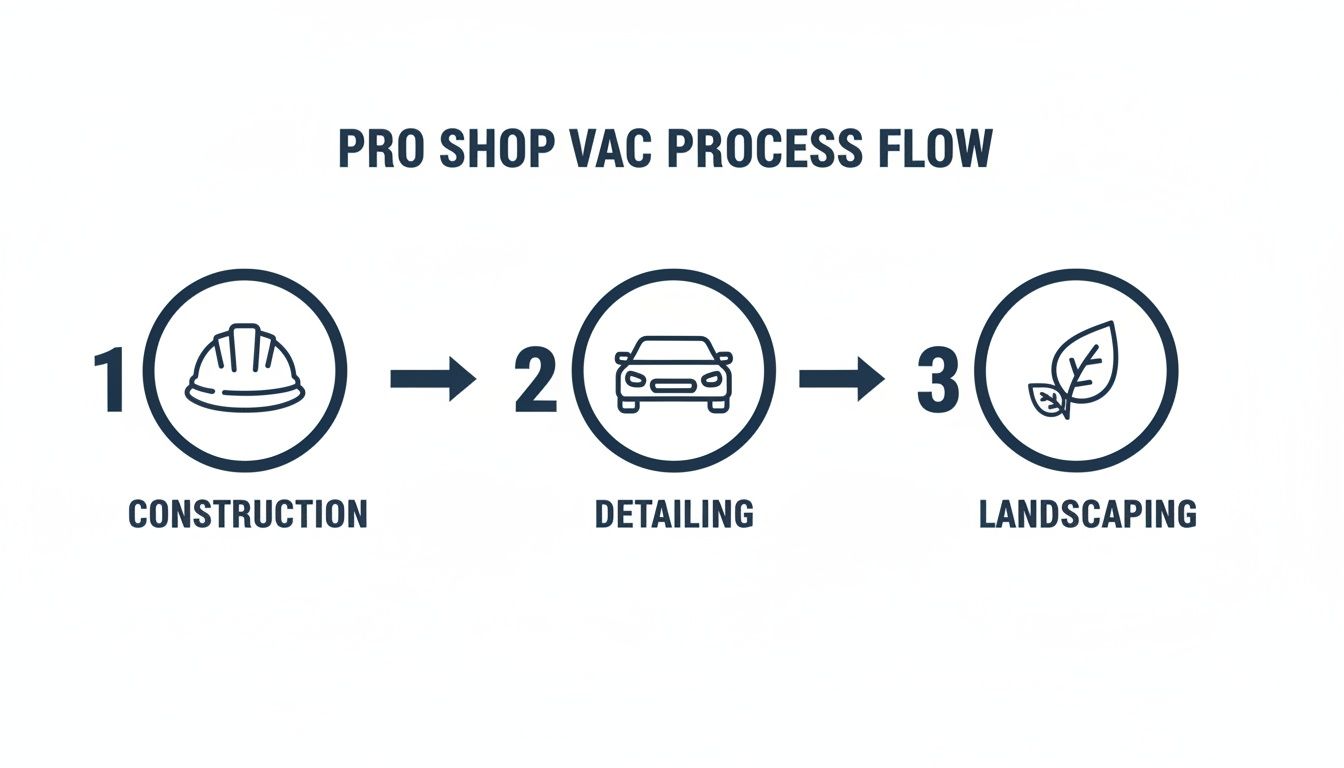
The image really drives home how far these machines have come, moving from basic cleanup to specialized professional work.
Practical Applications for Precision Digging
This technique opens up a whole new world of uses for a shop vac out in the field. Suddenly, jobs that used to be back-breaking or high-risk are now safe and straightforward.
Here are a few real-world examples where this method shines:
- Setting Fence Posts: Forget the manual post-hole digger. You can create clean, perfect holes without the sweat, especially when you know there are sprinkler lines or other utilities lurking just below the surface.
- Exposing Utility Lines: Need to find a buried pipe, cable, or irrigation line? This is the safest way to do it. You can gently wash the dirt away without any danger of hitting and breaking something fragile with a shovel blade.
- Clearing Trenches: Quickly and easily suck out stubborn mud, rocks, and debris from trenches dug for drainage or laying conduit.
By transforming equipment you already own, you can perform targeted excavation with almost surgical precision. This approach saves time, reduces physical strain, and drastically cuts the risk of damaging underground infrastructure.
Shop vacs have been a staple since they hit the commercial market in 1981, completely changing how we handle wet messes. It's no surprise the industrial vacuum market, valued at USD 1.08 billion in 2025, is expected to jump to USD 1.84 billion by 2035, thanks in large part to these expanded capabilities. Today, these tanks-on-wheels are the heart of mobile hydrovac work. Operators use innovations like the Hydrovac Attachment to tackle jobs once reserved for massive trucks, like when utility crews need to expose pipes in crowded residential areas.
To get the most out of your setup for these tougher jobs, make sure you're using the right 2 1/2 inch shop vac hose. That larger diameter is critical for maximizing airflow and suction power, ensuring your entire system—from the motor to the attachment—is working at its absolute best.
Putting It to Work: Real-World Hydro-Excavation Scenarios
It’s one thing to talk about what a tool can do, but it’s another to see it in action. So, let’s walk through three common jobs where pairing a shop vac with the Hydrovac Attachment Tool turns a major headache into a straightforward task, saving time, money, and a whole lot of effort.
These aren't just made-up examples; they're the kind of tough spots that landscapers, utility crews, and property managers find themselves in all the time. In each case, this portable hydro-excavation setup delivers a cleaner, safer, and faster solution for clearing small amounts of debris.
The Fence Post Challenge
A landscaper is putting up a new fence, but there's a catch: the fence line cuts right across a buried sprinkler system. Bringing in a post-hole digger or an auger is a huge gamble. One slip could puncture a line, turning a profitable job into a costly repair nightmare.
Instead of rolling the dice, the landscaper grabs their shop vac and the Hydrovac Attachment Tool. They use a pressure washer to turn the soil into a liquid slurry right where the post needs to be. The wet vac hose sucks it all up instantly, carving out a perfect hole with zero risk to the pipes.
The result? A clean, precise hole right next to the fragile sprinkler line, without so much as a scratch. The client is thrilled, the project stays on track, and a potential disaster is neatly sidestepped.
The Hidden Utility Line
Think about a utility tech who needs to access a shallow fiber-optic cable buried in a customer's prized garden. The homeowner is nervous about their rose bushes, and for good reason. Even a small nick from a shovel could knock out service for the whole block.
This is a textbook situation for what's known as "soft digging." The tech uses a portable rig: a shop vac, a small water tank, a pressure washer, and the Hydrovac Attachment Tool. They gently spray and vacuum the soil around the marked location, carefully exposing the bright orange cable without damaging it or the nearby plant roots. This kind of precise, non-destructive digging is the heart of what makes hydro excavation so effective. To dig deeper into the basics, check out our guide on what is hydro excavation.
The Stubborn Drain Clog
Now, let's look at a property manager fighting a losing battle with a blocked outdoor drain. It’s packed solid with a nasty mix of silt, leaves, and rocks. A drain snake couldn't budge it, and digging it up means destroying a concrete walkway.
Here, the solution is a powerful one-two punch. The manager uses the pressure washer and the Hydrovac Attachment Tool to blast high-pressure water into the drain, breaking apart the compacted blockage. At the same time, the shop vac’s powerful suction pulls all the water and loosened debris right out of the pipe. The entire job is over in less than an hour, no digging required. It's a perfect example of how a simple wet vac hose can solve surprisingly complex plumbing problems.
Choosing the Right Gear for Heavy-Duty Work
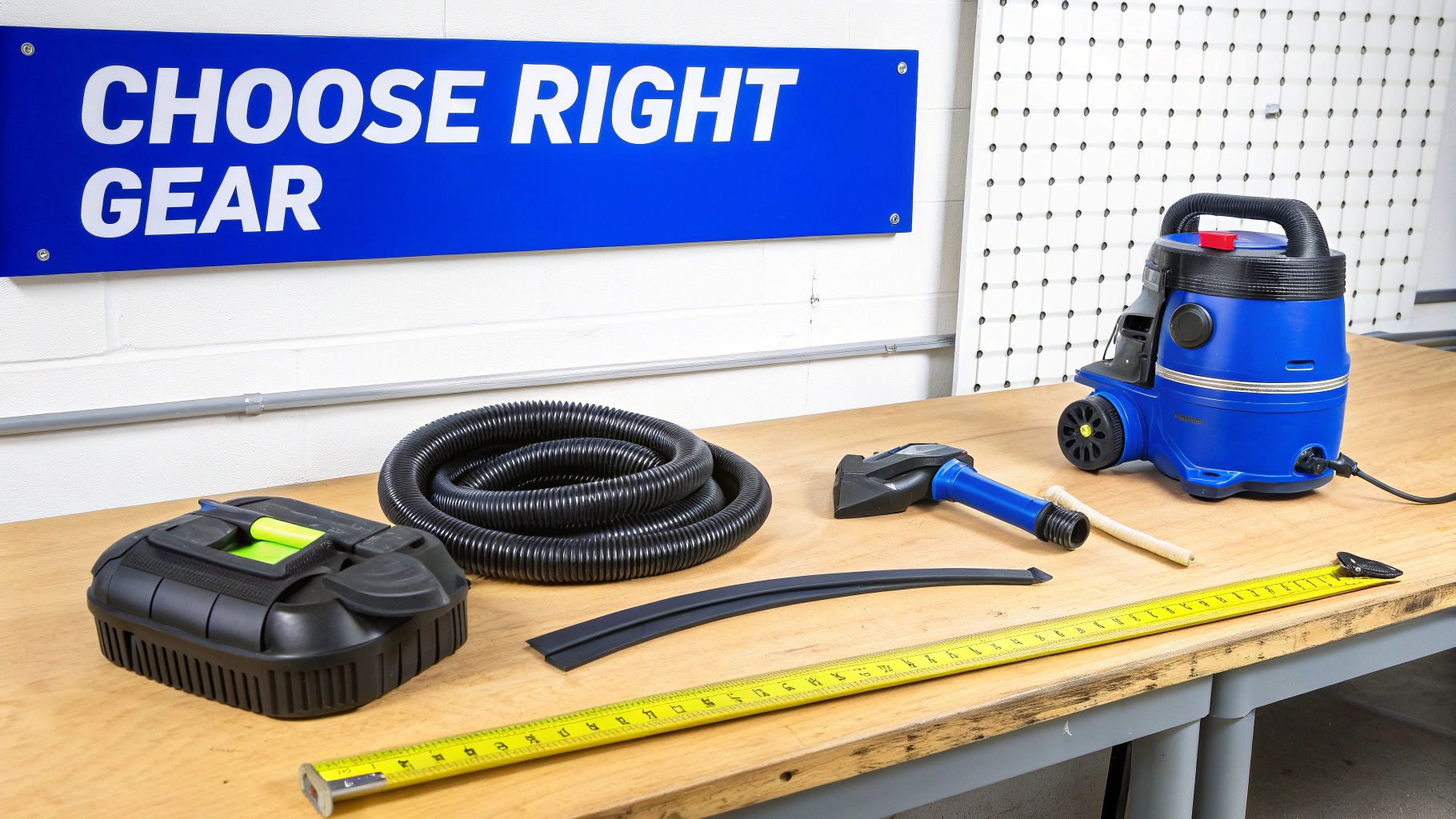
Let's be clear: not all shop vacs are built the same. When you're staring down a serious job like digging or heavy-duty yard care, the equipment you choose makes all the difference. Picking the right vacuum starts with understanding the numbers on the box, because those specs directly translate to real-world performance.
Think of it like buying a truck—you wouldn't try to haul a ton of gravel with a light-duty pickup. You need to match the power to the job. For shop vacs, a few key specifications really tell you what the machine is capable of.
Understanding Key Shop Vac Specs
If you're piecing together a mobile excavation rig, the shop vac is your foundation. Here’s what you absolutely need to look for when you're moving beyond simple workshop cleanup:
- Peak Horsepower (HP): This is the raw muscle. For tidying up sawdust, 2-4 Peak HP will do. But if you need to pull heavy, wet soil or dig through compacted ground, you need a motor with some serious guts. Look for at least 5.0 Peak HP to get the suction you need.
- Tank Capacity: Measured in gallons, this spec dictates how long you can work before you have to stop and empty the canister. A smaller 6-10 gallon tank is easy to haul around, but for bigger jobs, a 12-20 gallon capacity means less downtime and more progress.
- Hose Diameter: This one is critical and often overlooked. A standard 1.25-inch hose is fine for dust, but it will clog instantly with the rocks, roots, and mud you'll encounter when digging. For any kind of excavation, a 2.5-inch diameter wet vac hose is non-negotiable. It allows enough airflow to move a heavy slurry without constant blockages.
Another important metric is CFM (Cubic Feet per Minute), which measures airflow. Generally, a higher CFM means better performance. To dive deeper into this, check out our guide on finding the highest CFM shop vac available.
To help you match the specs to your needs, here's a quick comparison guide for different professional tasks.
Shop Vac Spec Comparison for Professional Tasks
This table gives you a starting point for what to look for, whether you're just cleaning the shop or setting up a small-scale hydro-excavation rig.
| Specification | Light-Duty Workshop | Medium-Duty Construction | Heavy-Duty Hydro-Excavation |
|---|---|---|---|
| Peak Horsepower (HP) | 2.0 - 4.5 HP | 4.5 - 6.0 HP | 5.0 HP or more |
| Tank Capacity (Gallons) | 6 - 10 Gallons | 10 - 16 Gallons | 12 - 20 Gallons |
| Hose Diameter (Inches) | 1.25" - 1.875" | 1.875" - 2.5" | 2.5" (Required) |
| Airflow (CFM) | 80 - 120 CFM | 120 - 175 CFM | 150+ CFM |
As you can see, the demands for hydro-excavation push every spec to the higher end. You need a robust machine that can handle the volume and weight of wet soil without breaking a sweat.
The Tool That Unlocks True Digging Power
A powerful vacuum is only one half of the equation. To truly turn your shop vac into a precision digging machine, you need the right attachment. Standard nozzles are designed to skim surfaces; they are completely useless for breaking up compacted earth.
This is where the Hydrovac Attachment Tool comes in. It's not just another nozzle—it's a purpose-built system designed from the ground up for small-scale hydro-excavation. It cleverly integrates a pressure washer's focused water jet directly with the vacuum's suction stream, making it the perfect mobile tool for pairing with a wet vac hose.
This unique design creates a contained, high-powered system that simultaneously liquefies soil and vacuums the resulting slurry away. It turns what would be a messy, high-effort job into a controlled and efficient process, empowering you to dig fence post holes or expose pipes without damaging them.
By pairing a capable shop vac with this specialized tool, you create the perfect mobile rig for landscaping, residential digging, and other tough outdoor tasks. It’s simply the smarter, safer way to handle small-scale excavation projects without needing a large hydrovac truck.
Essential Safety and Maintenance Tips
Any powerful tool demands a healthy dose of respect, and your shop vac is no exception—especially when you’re pushing it to its limits on a job like residential digging. You’re mixing water and electricity, which means safety isn't just a suggestion; it's a requirement.
Before you even think about flipping the switch, make sure you're plugged into a Ground Fault Circuit Interrupter (GFCI) outlet. This is non-negotiable for any kind of wet cleanup or hydro-excavation. It's the one thing standing between you and a serious electrical shock.
Your personal protective equipment (PPE) is your first line of defense out in the field. When you're wrestling with a wet vac hose and digging through muck, you'll be glad you have it.
- Safety Glasses: A must-have. You never know when debris or high-pressure spray will come flying back at your face.
- Waterproof Gloves: Keep your hands dry, but more importantly, they protect you from sharp rocks, glass, or roots hidden in the soil.
- Sturdy, Closed-Toe Boots: You need solid footing on what will inevitably be wet, slippery, and uneven ground.
Keep Your System in Peak Condition
A well-maintained machine is a reliable machine. Taking a few minutes after a job to clean your gear not only extends its life but ensures it’s ready to perform when you need it next. It's just like how homeowners learn how to clean your dryer vent yourself with a shop vac—it's basic upkeep that prevents bigger problems.
Apply that same preventative mindset to your digging setup with this quick post-job rundown:
- Clean Filters: After every wet job, pull out the foam sleeve filter and give it a good rinse. This stops mold from growing and keeps your suction from dying.
- Inspect Hoses: Give your wet vac hose a quick look-over. Even a small crack or puncture can absolutely kill your suction power.
- Wash the Tank: Don't let sludge sit in the collection tank. A thorough rinse prevents nasty odors and caked-on buildup that’s a pain to remove later.
- Care for Attachments: That Hydrovac Attachment Tool is built from a tough polymer, but you should still rinse it after each use to clear out any lingering grit. A clean tool is an effective tool.
Your Top Questions About Shop Vacs for Digging, Answered
Once you start thinking beyond simple cleanup, a lot of specific questions can pop up, especially when it comes to yard work and small-scale digging. Let's dig into some of the most common ones I hear from people pushing their equipment to the next level.
Can I Really Use Any Wet/Dry Shop Vac for Hydro Excavation?
For the most part, yes—as long as you’re talking about a decent, commercial-grade unit. The key is having enough muscle. You'll want a motor with at least 5.0 Peak HP and a standard 2.5-inch hose to avoid getting clogged up with rocks and mud.
But the vacuum is only half the equation. The real magic happens when you pair it with a purpose-built tool like the Hydrovac Attachment Tool. This is what lets you connect a pressure washer to your vacuum hose, giving you the power to break up soil and suck it away simultaneously, clearing small amounts of debris effectively.
Is It Actually Safe to Dig Around Utilities with a Shop Vac?
It’s far safer than grabbing a shovel or a post-hole digger, that's for sure. This technique is often called "soft digging" for a reason. You're using pressurized water to gently turn the soil into a slurry that the vacuum can easily remove.
Instead of striking a buried line with a steel spade, you're washing the dirt away from it. This non-destructive approach dramatically lowers the risk of damaging fragile pipes, cables, and other utility lines. It’s the go-to method when you know there's stuff buried down there, but always—always—call 811 to get lines marked before you start.
What’s the Cleanup Routine After a Messy, Muddy Job?
Good maintenance is what separates a tool that lasts for years from one that burns out after a season. After sucking up a bunch of mud and slurry, you have to clean your shop vac properly.
First things first, empty and rinse the collection tank thoroughly. If you don't, you’re just asking for mold, mildew, and some seriously funky smells.
Next, give the entire hose a good rinse and check on your filter. For wet jobs, you should be using a foam sleeve filter. Pop it off, wash it with clean water, and let it air dry completely before putting it back. A few minutes of cleanup protects the motor, keeps your suction strong, and makes sure your vac is ready to go next time you need it.
Ready to turn your shop vac into a precision digging machine? The Hydrovac Attachment is the missing piece. It’s a durable, purpose-built tool that connects your pressure washer and wet vac hose into one efficient system. Perfect for setting fence posts, exposing pipes without damage, and tackling any small-scale excavation job with less mess and more control.
Explore the possibilities and order your Hydrovac Attachment today.