


In the hydro excavation industry, efficiency and power are paramount. While professionals often focus on finding the highest CFM shop vac, the real key to effective non-destructive digging lies in creating a balanced system. Raw airflow is just one part of the equation. True field performance is achieved by pairing a high-performance vacuum with a specialized tool like The Hydrovac Attachment Tool, transforming a standard unit into a precision hydrovac machine.
Unlocking Precision Digging for the Hydrovac Industry
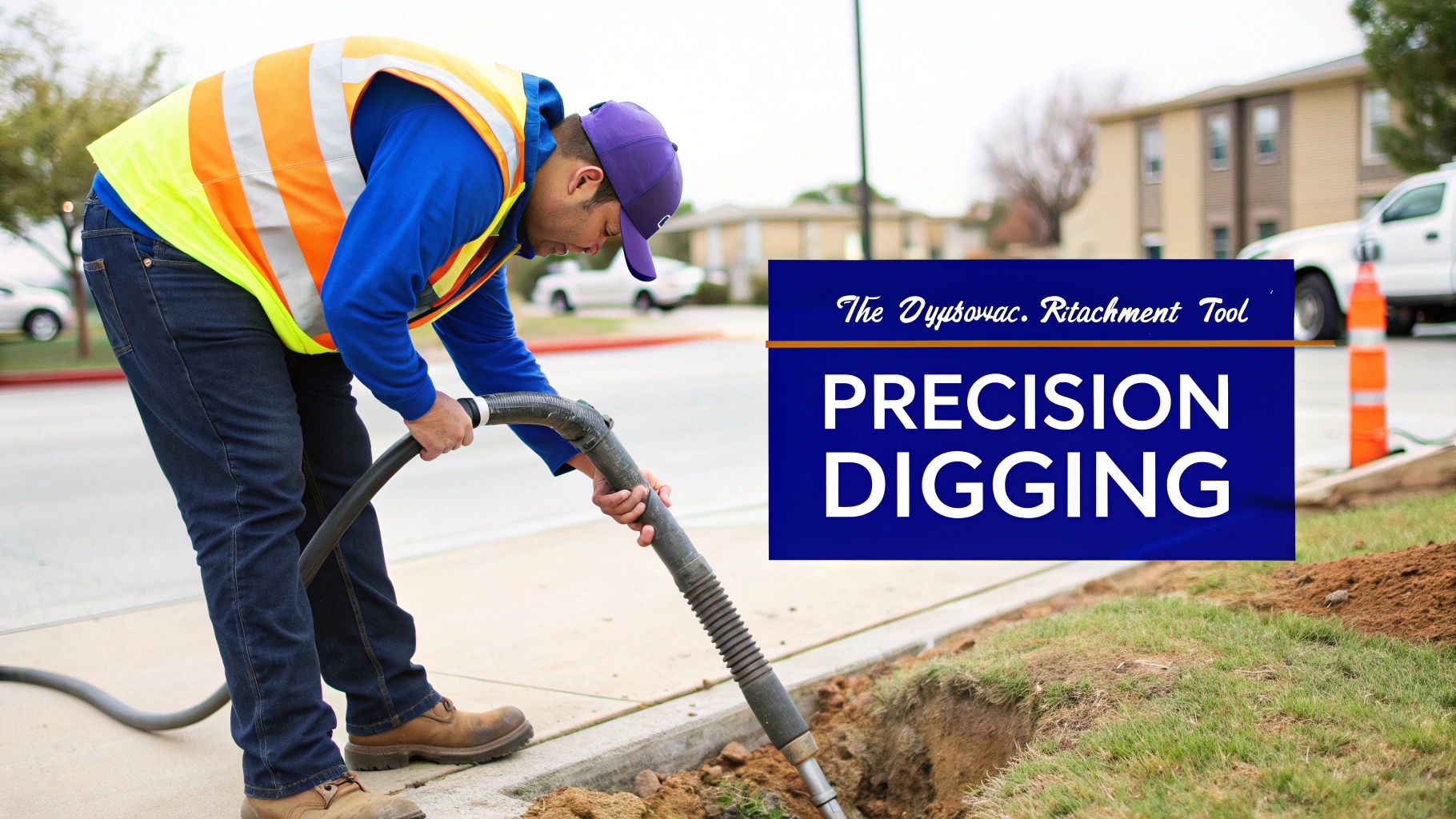
The core of any modern hydrovac setup is a powerful and reliable vacuum source. While the term "highest CFM shop vac" is a common search, industry experts understand that effective hydro excavation requires more than just moving air. It demands the right combination of power, precision, and control to safely and efficiently remove soil.
This is precisely where pairing a high-CFM shop vac with The Hydrovac Attachment Tool revolutionizes the process. This synergy provides a portable, powerful solution for non-destructive excavation, essential for safely working around sensitive utilities or in confined spaces where large hydrovac trucks can't operate.
The Power of a Balanced System
Instead of solely chasing the highest CFM number, the objective for hydrovac professionals is to build a system capable of handling demanding site conditions. The goal isn't just to vacuum sawdust; it's to generate enough force to lift heavy, water-saturated soil and dense slurry.
The Hydrovac Attachment Tool is engineered to create a concentrated suction zone at the point of excavation. It channels water and debris directly into the vacuum stream, minimizing splash-back and maintaining a clear line of sight. This design significantly improves job site safety and operational efficiency.
This combination of a powerful vacuum and a purpose-built tool elevates a simple shop vac into a professional-grade hydrovac system. It is an indispensable asset for contractors, utility locators, and landscapers performing tasks such as:
- Safely exposing underground utilities for verification (daylighting or potholing)
- Trenching in confined areas inaccessible to heavy machinery
- Digging precise post holes without manual labor
For larger-scale operations, upgrading the power source may be necessary. To explore more powerful options, see our guide on the benefits of a gasoline-powered vacuum. A balanced, scalable approach ensures you have the right equipment for any project, from small-scale utility locating to extensive commercial excavation.
Understanding Core Performance Metrics: CFM vs. Water Lift
When selecting a power source for hydro excavation, technical specifications can be misleading. Many professionals assume the highest CFM shop vac is inherently the most powerful. However, for the demanding task of digging, airflow is only one component of performance.
To choose the right equipment, it's crucial to understand the difference between CFM and Water Lift. Both are vital, but they measure distinct aspects of vacuum performance. Mastering this distinction is the key to maximizing the effectiveness of The Hydrovac Attachment Tool.
Decoding CFM (Air Volume)
CFM, or Cubic Feet per Minute, measures the volume of air a vacuum moves. High CFM is excellent for collecting light, low-density debris over a wide area, such as sawdust or dry leaves. It's the metric that defines speed in general cleanup applications.
However, for hydrovac work, high CFM alone is insufficient. While it helps move material through the hose, it lacks the concentrated force needed to lift heavy, water-logged soil from the excavation point.
The Importance of Water Lift (Suction Strength)
This is where Water Lift becomes critical. Also known as static pressure, this metric measures the raw, concentrated pulling power of the vacuum's motor. It is measured in inches and indicates how high the vacuum can lift a column of water—a direct test of its strength against resistance and gravity.
If CFM is airflow volume, Water Lift is lifting force. It provides the necessary power to pull heavy, dense materials like wet clay, gravel, and mud out of the ground. Without adequate water lift, even the highest CFM shop vac will fail to excavate effectively.
For The Hydrovac Attachment Tool to perform optimally, the vacuum must have a strong balance of both metrics. Water Lift provides the initial force to extract heavy slurry, while CFM maintains the flow of material through the hose to the tank. This synergy is what separates effective excavation from simply making mud.
A combined metric, "air watts," can provide a single number representing this balance. To learn more, read our detailed explanation of vacuum suction power and air watts.
Industry data supports this. For example, independent vacuum performance tests on a leading shop vac revealed a water lift of 72 inches and an airflow of 61 CFM, resulting in approximately 515 air watts. This is the type of balanced performance that powers efficient hydro excavation. A professional approach means evaluating the harmony between these specs, not just the highest number.
Comparing Top High-CFM Shop Vacs for Hydrovac Use
Selecting the right shop vac to power The Hydrovac Attachment Tool requires more than just comparing advertised CFM ratings. Hydro excavation demands a robust machine that can withstand the rigors of lifting heavy, abrasive slurry. This means looking beyond surface-level specs to features that ensure sustained performance on the job site.
The market for the highest CFM shop vac includes major brands like Craftsman, Ridgid, and Vacmaster, many offering models rated at 6.5 Peak HP. In performance tests, these units can average around 197 CFM at the hose. However, this raw power must be paired with durability and practical design. For a detailed comparison, explore these findings on high-horsepower shop vac performance.
Key Criteria for Hydrovac Performance
When pairing a vacuum with The Hydrovac Attachment Tool, the specifications on the box are only a starting point. A suitable machine must maintain its power while pulling a continuous stream of heavy, wet material.
Consider these critical factors for hydrovac applications:
- Sustained CFM and Water Lift: How does the vacuum perform when the tank is half-full of heavy slurry? High initial CFM is useless if the machine loses suction under a real-world load.
- Tank Durability and Design: Hydro excavation involves abrasive materials like sand and gravel. A rugged, dent-resistant tank, typically polypropylene or stainless steel, is essential for longevity.
- Efficient Slurry Disposal: A large, strategically placed drain port is crucial. Emptying a 16-gallon tank of mud through a small, poorly designed drain is a significant waste of time and effort on a job site.
- Secure Hose Connection: A locking hose is a must-have. Standard friction-fit hoses frequently detach from the vacuum port during use, causing frustrating interruptions and potential spills.
Shop Vac Performance Comparison for Hydrovac Use
This table highlights how popular high-performance shop vacs meet the specific demands of hydro excavation when used with The Hydrovac Attachment Tool. The focus is on metrics that directly impact digging speed and efficiency.
| Model / Brand | Peak HP | Average Tested CFM | Typical Water Lift (Inches) | Tank Capacity (Gallons) | Hose Diameter (Inches) | Key Feature for Hydrovac |
|---|---|---|---|---|---|---|
| Ridgid NXT Series | 6.5 | 185 - 203 | 75 - 85 | 12, 14, 16 | 2.5 | Secure locking hose system that prevents annoying disconnections. |
| Craftsman XSP Series | 6.5 | 175 - 195 | 70 - 80 | 12, 16, 20 | 2.5 | A large, oversized drain port makes emptying heavy slurry fast and clean. |
| Vacmaster Beast Series | 6.5 | 170 - 190 | 80 - 90+ | 12, 14, 16 | 2.5 | Excellent water lift for pulling dense, saturated material from the hole. |
| DeWalt StealthSonic | 6.0 | 150 - 170 | 65 - 75 | 12, 16 | 2.5 | Noticeably quieter operation reduces job site noise fatigue. |
While a high CFM rating is attractive, practical design features often have a greater impact on daily productivity.
From an industry perspective, a secure locking hose and an efficient drain port often save more time and reduce more frustration than a marginal 10-15 CFM increase.
The "best" shop vac is one that complements your workflow. For crews maneuvering around complex job sites, Ridgid's secure hose connection is a major advantage. For projects generating significant spoil, the easy-emptying Craftsman may be superior. Focusing on these real-world features ensures your vacuum is a reliable partner for The Hydrovac Attachment Tool, not a bottleneck.
Real-World Scenarios with The Hydrovac Attachment
Technical specifications are important, but their true value is measured by performance on the job site. Combining a high-performance shop vac with The Hydrovac Attachment creates a system that delivers precision, safety, and control. This setup is a critical tool in situations where manual digging is too imprecise and a full-sized hydrovac truck is impractical or too expensive.
The key is to prioritize the right vacuum metric for the specific task. It's not always about finding the highest CFM shop vac; often, the raw pulling force of high water lift is the deciding factor.
Exposing Sensitive Utility Lines
Excavating near fiber optic cables, gas lines, or electrical conduits is a high-risk task. A single mistake with a shovel can cause dangerous and costly damage. This is where The Hydrovac Attachment excels. Its focused water jet liquefies the soil, which is then vacuumed away, safely clearing material from around fragile utilities without physical contact—a process known as daylighting or potholing.
For this application, water lift is the most critical specification. You need immense vertical pulling power to lift dense, water-saturated soil and aggregates out of the excavation hole. While CFM helps clear the material through the hose, water lift provides the essential force to break suction and lift the heavy slurry.
This chart illustrates the typical specifications of high-performance shop vacs, showing the interplay between horsepower, airflow, and capacity.
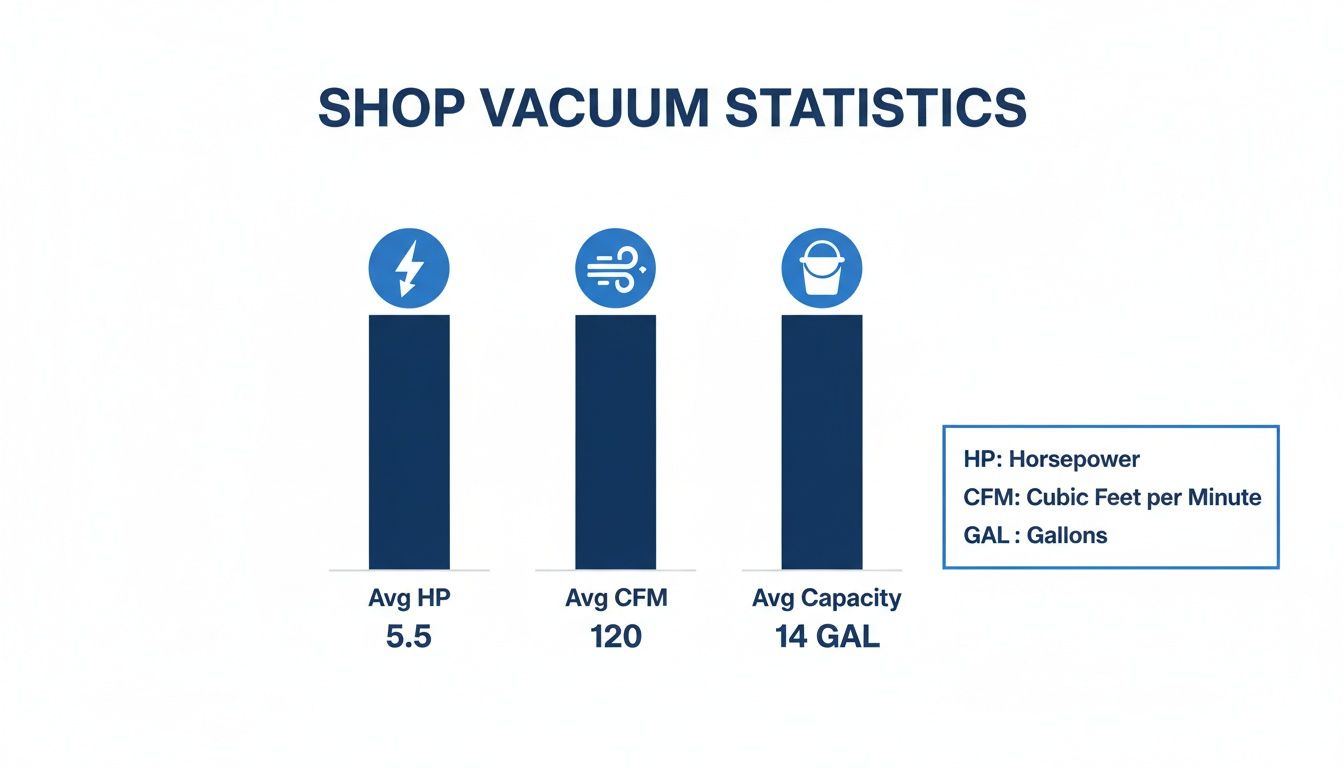
While horsepower is a primary marketing metric, CFM and tank capacity are the practical determinants of on-site efficiency and duration of work.
Trenching for Irrigation and Landscaping
Digging a clean, narrow trench for irrigation or landscape lighting in established turf is challenging with traditional methods. A shovel inevitably creates a wide, messy trench. The hydrovac setup, however, allows for surgical precision, cutting narrow trenches with minimal disturbance to the surrounding landscape.
For trenching, a strong balance of CFM and water lift is ideal. You require sufficient water lift to pull up compacted soil and turf, but you also need consistent airflow (CFM) to keep the material moving smoothly through the hose without blockages.
This non-destructive method is also perfect for sensitive arboricultural work, such as exposing a tree's root flare for health assessments without causing damage. Having a versatile set of shop vac hose attachments is crucial, enabling quick adaptation to different excavation tasks on site.
How to Select the Right Shop Vac for Your Attachment
When selecting a shop vac to pair with The Hydrovac Attachment Tool, avoid the common pitfall of choosing solely based on the highest CFM rating. The optimal machine for professional hydrovac work offers a smart balance of power, practical design, and job-site durability.
The primary goal is to find a vacuum that can sustain suction while pulling a heavy, abrasive slurry of soil and water. This means looking past marketing claims like Peak Horsepower and focusing on specifications and features that directly impact hydro excavation performance. A powerful motor is essential, but the unit must also be built for continuous, messy work.
The Decision-Making Checklist
Use this checklist to evaluate any potential model. These factors are critical for on-site performance and efficiency in the hydrovac industry.
- Target Performance Range: Aim for a shop vac with at least 5.0 Peak HP. More importantly, select a model that provides a minimum of 100 CFM and a water lift rating of 65 inches or higher. This combination ensures sufficient airflow to move spoil and the lifting force required for dense, saturated soil.
- Hose Diameter and Connection: A 2.5-inch hose diameter is the industry standard for high-performance units and is essential for preventing clogs with thick slurry. A secure, locking hose connection is non-negotiable to prevent costly downtime from hose detachment.
- Tank Size and Portability: A tank capacity between 12 and 16 gallons is the ideal balance for most applications. It provides enough volume for sustained work without becoming too heavy to manage and empty. Consider your typical job site; while a larger tank is beneficial in open areas, a more portable unit is invaluable in confined spaces.
The most frequently overlooked yet critical feature is the drain plug. A large, accessible drain at the tank's base is vital for emptying heavy slurry efficiently. Manually lifting and tipping a 100-pound tank is a safety risk and a significant time-waster.
Balancing Power with Practical Features
Leading manufacturers understand this balance. The Ridgid 12-Gallon 5.0 Peak HP NXT is a top choice in the industry, valued for its powerful suction and rugged construction. Similarly, the DeWalt 9-Gallon 5 HP model offers reliable performance with user-centric features like a large drain plug, making it excellent for wet material management.
While comparing manufacturer-stated CFM can be complex, high-quality models in this category typically deliver the power needed for effective hydro excavation. This guide to the best overall shop vacs offers a solid starting point for further research.
Ultimately, selecting the right vacuum means matching its capabilities to your specific workflow. By prioritizing a secure hose, an efficient drain system, and a strong balance of CFM and water lift, you will build a hydrovac system that is productive, reliable, and ready for any digging challenge.
Hydro Excavation: Your Questions Answered
Adapting a shop vac for a specialized application like hydro excavation raises practical questions. Addressing these common concerns will help you maximize the performance of The Hydrovac Attachment Tool and operate with confidence.
Can I Use Just Any Shop Vac for This?
No. While many shop vacs may connect to the attachment, achieving professional hydro excavation results requires a specific class of machine. The vacuum must be powerful enough to lift heavy, wet slurry, not just lightweight debris. This is where focusing solely on the highest cfm shop vac can be misleading.
For effective digging with The Hydrovac Attachment Tool, we recommend a vacuum that meets these minimum specifications:
- At least 5.0 Peak HP for sufficient motor strength.
- A water lift rating over 60 inches for lifting dense, saturated material.
- A wide 2.5-inch hose diameter to prevent clogs and maintain material flow.
CFM provides the volume to move material, but water lift provides the raw power to extract it. Both are essential for hydro excavation.
What Kind of Maintenance Should I Do After Digging?
Using a shop vac for hydro excavation places significant stress on the machine. Regular, post-job maintenance is not optional; it is critical for longevity and sustained performance.
First, clean the filter after every use. Wet soil and clay will cake onto the filter media, severely restricting airflow and crippling suction power. A clogged filter is the most common cause of performance degradation.
Next, empty and rinse the tank thoroughly. Allowing slurry to dry inside the tank creates a difficult cleaning job and can lead to corrosion or damage. Finally, inspect the hose for blockages or cracks that could cause suction leaks.
A clean filter and an empty tank are fundamental to ensuring maximum performance for the next job. Neglecting this routine is the quickest way to lose suction power when it's needed most.
Is a Bigger Tank Always the Better Choice?
Not necessarily. The optimal tank size depends on the scope of your projects. A large 12-16 gallon tank is highly efficient for larger jobs, as it minimizes downtime spent emptying the unit.
However, a full 16-gallon tank of slurry can weigh over 100 pounds, making it difficult to transport and empty. For smaller, precise jobs like utility potholing or working in constrained residential areas, a more agile 8-10 gallon unit is often the smarter, more manageable choice. The key is to balance capacity with the practical demands of portability and disposal.
Ready to transform your shop vac into a precision digging machine? The Hydrovac Attachment provides the control and efficiency you need for any excavation task.
Explore The Hydrovac Attachment Tool and upgrade your workflow today.