


That standard 2 1/2 shop vac hose you've got coiled up in the garage? It’s the key to unlocking a surprisingly precise and non-destructive way to dig for all sorts of yard care and residential projects. When you pair it with the right gear, like the Hydrovac Attachment Tool, that everyday hose turns your simple wet/dry vac into a mobile hydro excavation system—a game-changer for homeowners, landscapers, and small contractors. This isn't for industrial hydrovac trucks; it's a portable solution for clearing small amounts of debris with precision.
More Than Just a Cleanup Tool
Your 2-1/2 inch shop vac hose isn’t just for sawdust and spills. It's the core component of a modern digging method that's gaining serious traction for residential jobs. People are moving away from risky digging with shovels, especially when working around buried pipes or sprinkler systems where a mistake can be costly. This is exactly where the simple, effective power of your wet vac, enhanced with a tool like the Hydrovac Attachment, truly shines.
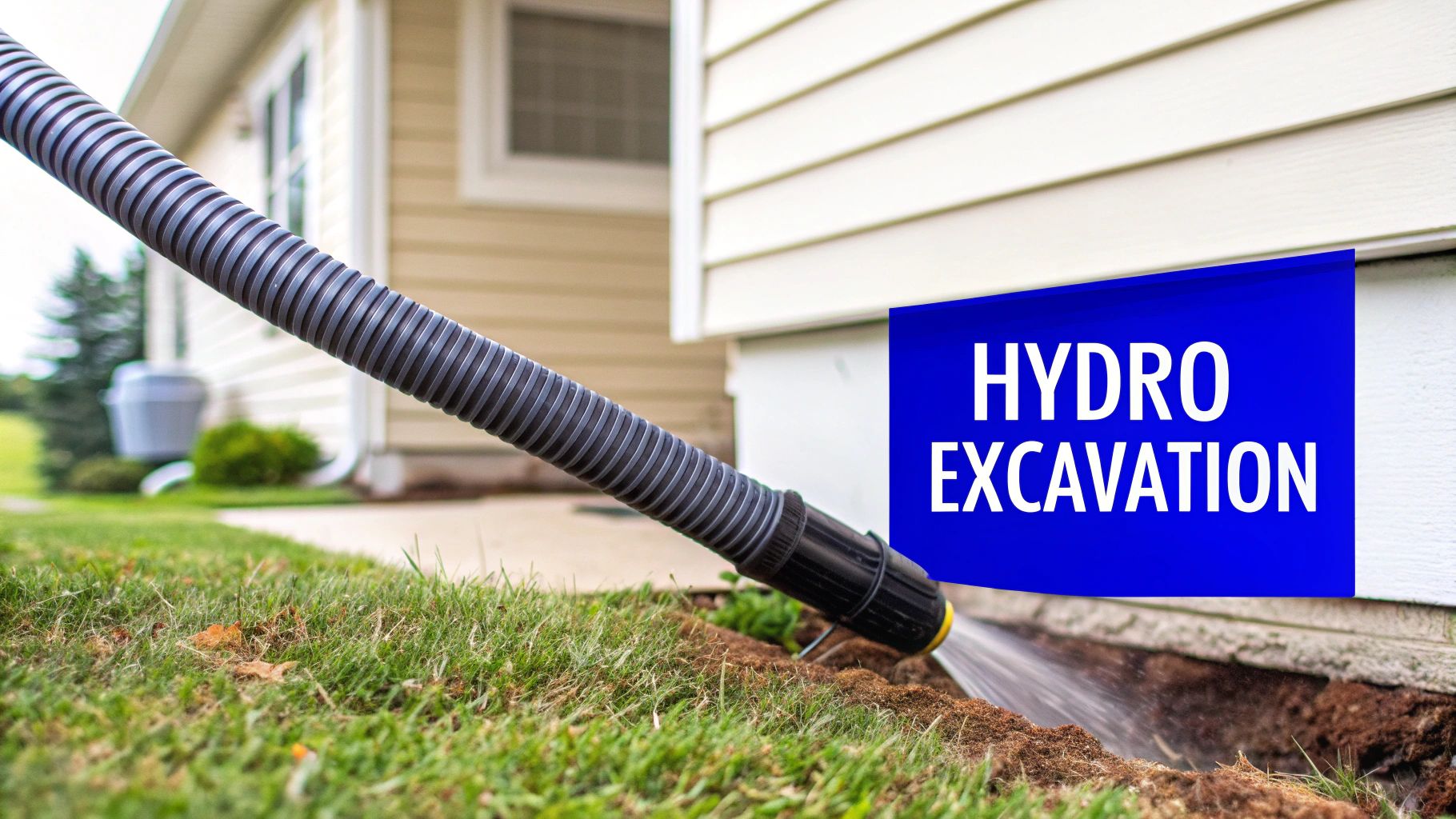
The 2.5-inch diameter is the sweet spot for this kind of work. It provides enough suction to pull a thick slurry of wet soil and debris but is still flexible enough to navigate around delicate utilities and landscaping. This opens the door to tackling jobs like digging up pipes without damage or carefully setting fence posts.
A Smarter Way to Dig at Home
When you connect a specialized tool like the Hydrovac Attachment, your shop vac setup essentially becomes a mini hydro excavator. You’re combining pressurized water to break up the soil with powerful vacuum suction to clear it away, letting you dig with near-surgical precision. It's the perfect solution for sensitive jobs where hitting a buried utility line is a major worry.
Think about these common yard care and digging scenarios:
- Setting Fence Posts: You can dig clean, perfect holes for fence posts without the fear of accidentally severing a sprinkler line or a low-voltage lighting cable just beneath the surface.
- Digging Up Pipes Without Damage: Need to get to a busted irrigation pipe? This lets you safely expose it for repair without risking more damage from a misplaced shovel strike.
- Trenching in Awkward Areas: It's ideal for cutting a neat, narrow trench for landscape wiring or drainage, especially in those tricky spots between a house and a concrete patio.
This method completely changes how you approach residential digging. It transforms a high-risk, back-breaking job into a controlled, clean, and efficient process. You get less property damage and a much faster cleanup.
Tapping Into a Growing Industry Trend
The push for safer digging isn't just a niche idea; it's a major shift in the excavation and wet vac hose industry. The global Hydrovac Trucks and Hydro Excavation market was valued at $513.53 million in 2021 and is on track to hit $880.94 million by 2033.
This explosive growth, with North America holding 27.86% of the market share, points to one thing: a massive demand for precise vacuum excavation that reduces mess and improves safety. You can get more details on the expansion of hydro excavation technologies on Cognitive Market Research. A portable, mobile tool like the Hydrovac Attachment directly answers this call for smarter, safer digging on residential and small-scale commercial jobs, turning your wet vac into the solution.
Picking the Right Hose and Attachments for the Job
Not all shop vac hoses are created equal, and this really hits home when you're trying to suck up a slurry of wet soil and gravel. For precision digging, getting the right 2 1 2 shop vac hose is every bit as important as the vacuum motor itself.
That flimsy, standard-issue vinyl hose that came with your shop vac might be fine for sawdust in the workshop, but it just won't cut it for the tough demands of digging. It's simply not built for the job.
You need a hose that can take a beating. I always recommend looking for a crush-proof polymer hose. These heavy-duty options are designed to resist kinking and collapsing under the intense suction needed to pull dense, wet material. That resistance is key—it guarantees you maintain consistent, powerful airflow for effective digging instead of fighting with a collapsed hose.
The Perfect Match: Your Hose and the Hydrovac Attachment
The real magic happens when you pair a high-quality hose with the right tool. The Hydrovac Attachment is engineered specifically for this kind of work, turning your powerful wet vac and pressure washer into a single, cohesive digging system. It’s not just a nozzle; it's a purpose-built system designed from the ground up to create a secure, leak-proof connection, providing the perfect solution for effective digging.
Getting a perfect seal means understanding how these parts work together:
- The Base Connector: This is the piece that slides snugly right into the end of your 2-1/2 inch hose. This creates your primary connection point.
- The Hose Clamp: Once that connector is in place, you’ll use this heavy-duty clamp to tighten everything down. This is what creates the airtight seal and prevents any frustrating loss of suction.
- The Nozzle Cap: This final piece fits securely over your power washer wand, directing both the high-pressure water stream and the resulting slurry straight into the vacuum's airflow.
This integrated design is what separates a professional-grade setup from a leaky, DIY workaround. Any air leak or loose connection will kill your suction power, turning an efficient job into a slow, frustrating mess. If you want to dive deeper into selecting components, check out our guide on shop vac hoses and fittings.
Here's a pro tip from the field: If you're working with a particularly stiff hose, try gently warming the end with a heat gun or hairdryer before inserting the base connector. Just a little bit of heat makes the material more pliable, helping you achieve an even tighter and more reliable seal with the hose clamp.
When selecting your hose, it's important to understand the trade-offs between a standard hose and a heavy-duty one for this specific application.
2-1/2 Inch Shop Vac Hose Feature Comparison
| Feature | Standard Hose | Crush-Proof/Heavy-Duty Hose | Best For |
|---|---|---|---|
| Material | Thin Vinyl or Plastic | Thick, crush-proof polymer | Hydro Excavation: Heavy-duty polymer is a must. |
| Flexibility | Very flexible, but prone to kinking | Stiffer, but highly kink-resistant | High Suction: The stiffer hose prevents collapse. |
| Durability | Low resistance to abrasion and punctures | High resistance to abrasion and job site wear | Job Site Use: Crush-proof hoses withstand being stepped on. |
| Airflow | Can collapse under high suction, reducing flow | Maintains shape for consistent, maximum airflow | Performance: A non-collapsing hose is critical for power. |
Ultimately, a heavy-duty hose is a small investment that pays off big in performance and longevity for this type of digging.
A secure, high-suction connection is the absolute foundation of effective hydro excavation. It ensures that every ounce of power from your shop vac is focused on one thing: pulling debris out of the ground. Taking a few extra moments to assemble these components correctly will pay you back tenfold in performance and safety on the job.
Setting Up Your Hydro Excavation System: A Pro's Guide
Transforming your everyday wet/dry vac into a powerful hydro excavation tool is simpler than you might think. It all comes down to a few key steps for creating a high-suction, leak-free system for digging up pipes without damage or setting fence posts with precision.
But before we even touch a hose, let's talk about the single most important part of the job: site preparation. Your first move, every single time, should be to call 811. This gets all the underground utilities professionally marked. Honestly, skipping this is just not an option—it can lead to thousands in damage or, worse, serious injury. Make it a hard-and-fast rule for any digging project.
With the site cleared and marked, you can turn your attention to the gear. The whole idea is to build a high-suction, leak-free system. This starts and ends with getting a rock-solid connection between your 2 1/2" shop vac hose and the Hydrovac Attachment.
Creating an Airtight Seal for Maximum Suction
The secret to making this whole setup work? A completely airtight seal. I can't stress this enough. Even a tiny leak will kill your suction power, and you'll end up fighting with mud and slurry instead of letting the vacuum do the heavy lifting.
This is exactly why the Hydrovac Attachment was designed the way it was—to eliminate those performance-robbing leaks and provide the solution. The components are meant to fit together perfectly.
Here’s a quick visual of how it all comes together to create that secure system.
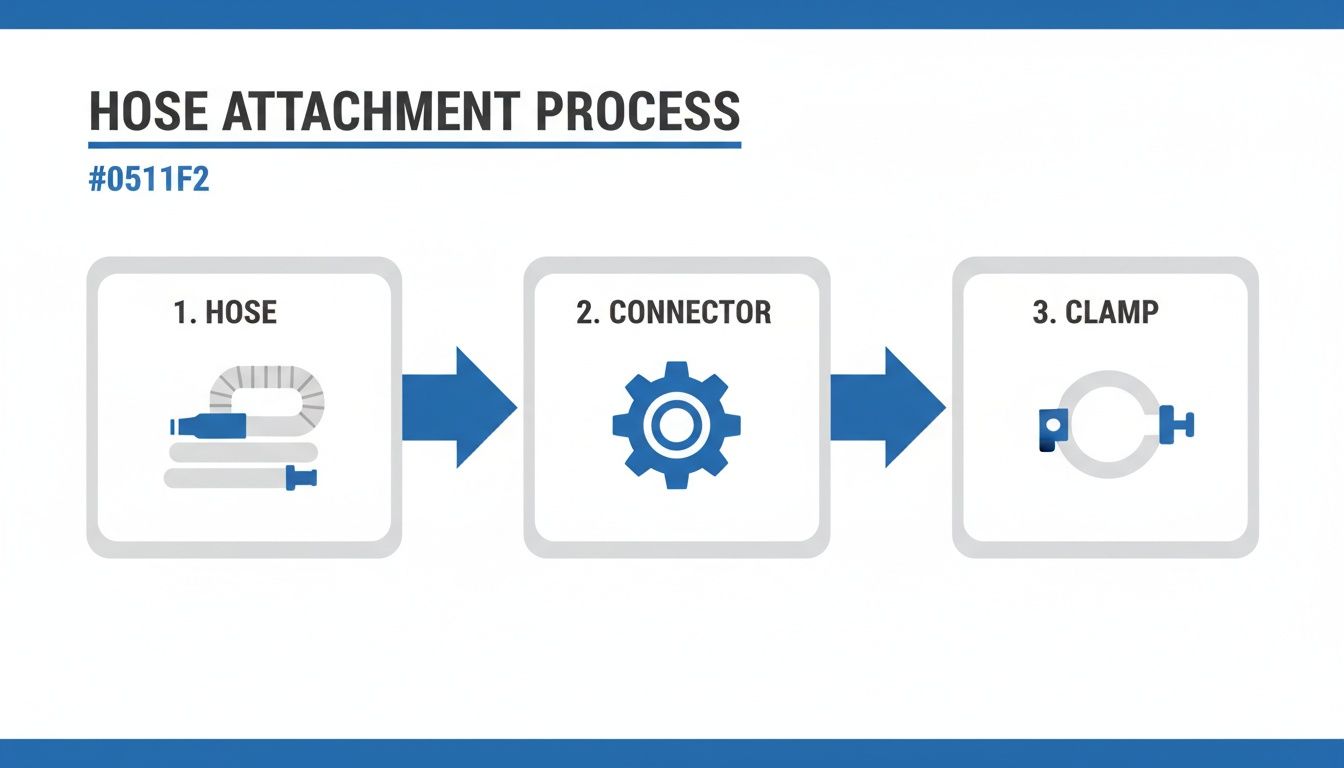
As you can see, getting that powerful, leak-proof seal is just a matter of connecting the hose, connector, and clamp in the right order.
First, slide the base connector snugly into the end of your shop vac hose. Then, slip the hose clamp over that connection point and tighten it down firmly—you want it good and snug so no air can escape. Lastly, fit the nozzle cap over your power washer wand. That’s it. This quick assembly creates a direct path for water and debris to flow straight into your wet vac.
Tips for Success on the Jobsite
Once you're all hooked up, a few practical habits will make a world of difference. Always double-check that your shop vac is set up for wet use. For most models, that means taking out the paper filter (so you don't destroy it) and making sure the float ball or mechanism is in place to prevent overfilling.
Think about your hose layout, too. A straight shot from your digging spot to the vacuum is always best. Sharp bends, kinks, or extra loops will restrict airflow and reduce suction just as badly as a leaky connection.
Pro Tip: Keep your hose runs as short and straight as possible. I've seen it time and again—a shorter, more direct path from the hole to the tank is way more efficient than a long, snaking hose.
This kind of portable, high-efficiency setup isn't just for DIYers; it's a reflection of a bigger trend in professional excavation. The global vacuum truck market is projected to grow by $411.1 million between 2026 and 2030, with North America leading the charge. Mobile tools like the Hydrovac Attachment bring that same powerful technology to a smaller scale, turning a standard wet vac hose into a tool that can cut cleanup time by 50% and let you work precisely in tight spots.
By following these steps, you'll have your equipment ready to tackle just about any digging job, whether you're setting fence posts or carefully exposing buried pipes. For more ideas on getting the most out of your setup, you can also check out our article on the versatility of a shop vacuum hose adapter.
Bringing Your Digging Setup to Life: Real-World Scenarios
Alright, you've got the gear: the 2 1/2 shop vac hose, a solid wet vac, and the Hydrovac Attachment. Now it’s time to put that setup to work on the kind of yard care and residential digging jobs that used to be a major headache. Let's look at a few common projects where this combination really proves its value as the solution.
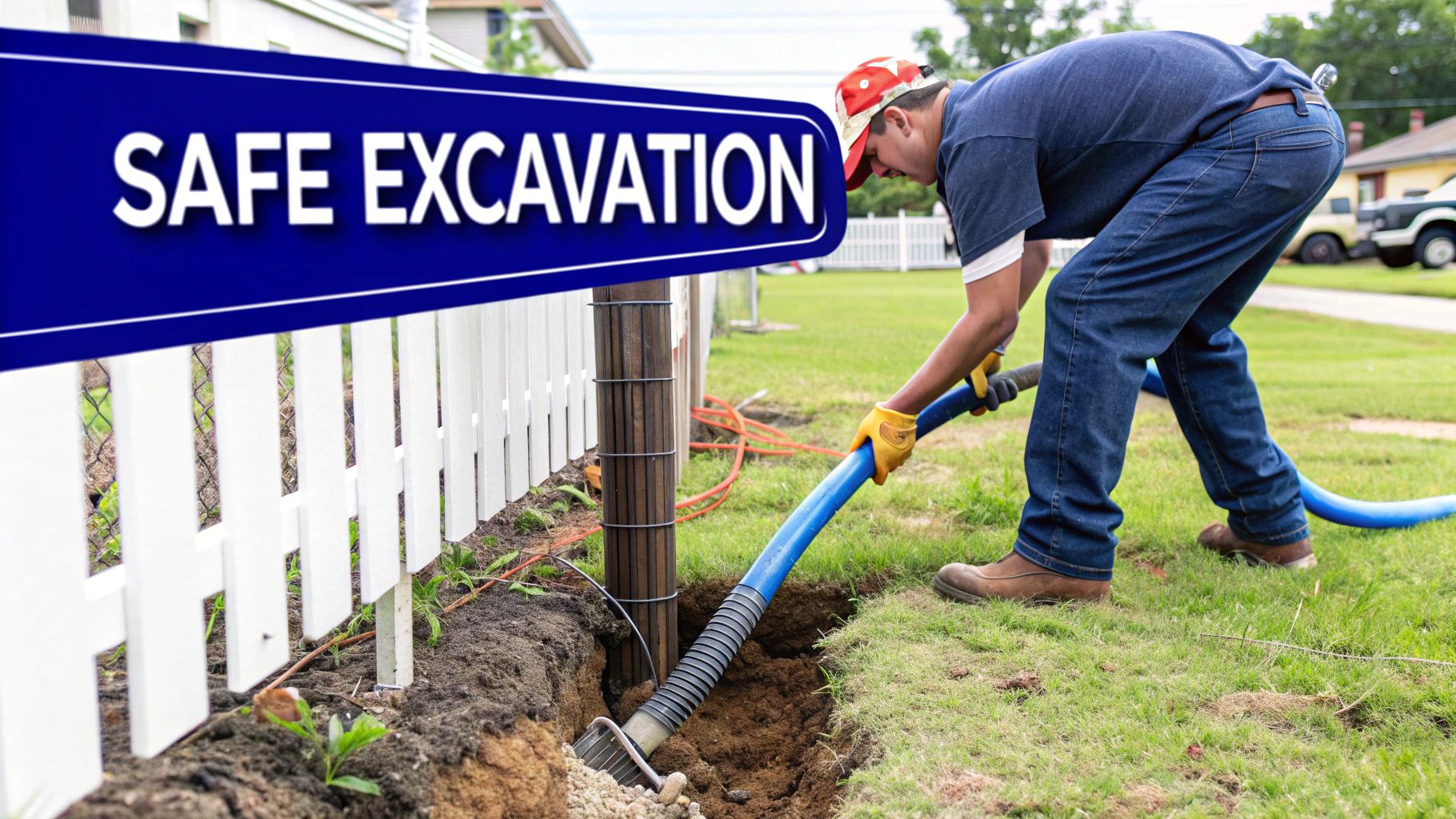
Setting Fence Posts Near Buried Lines
We've all been there. You're ready to install a new fence, but the property survey shows a sprinkler line running right where you need to dig. One wrong move with a post-hole digger, and you're looking at a geyser in your backyard and an expensive repair bill.
This is the perfect job for your mobile hydro excavation rig.
The Hydrovac Attachment uses a focused stream of water to liquefy the soil, and the powerful suction from your wet vac whisks the slurry away instantly. You can carefully carve out a perfect fence post hole, inch by inch, exposing that delicate PVC pipe without ever making contact. It’s clean, precise, and completely eliminates the risk of impact damage.
Trenching and Exposing Utilities in Tight Spots
Here's another classic problem: you need to dig up a pipe for repair or run a new irrigation line between the house foundation and a concrete patio. The space is too tight for a mechanical trencher, and using a shovel is a great way to scrape and damage your foundation's waterproofing.
This is where your setup shines. You can cut a neat, narrow trench by methodically loosening the soil and vacuuming it out. You have total control over the depth and width, something you just can't get with a shovel.
It’s also the safest way to "daylight" or expose buried utilities. Need to locate an electrical conduit before you start a big landscaping project? This non-destructive method lets you see exactly what you're dealing with, removing the terrifying prospect of a shovel strike.
This approach fundamentally changes what you can do. It turns high-risk digging around sensitive pipes and cables into a manageable, low-stress task. You're working with precision, not just brute force.
This shift toward smarter, non-destructive digging is happening everywhere. In fact, the global hydro vacuum excavation market is projected to hit $11.26 billion by 2035. It's not just for massive industrial sites anymore; a whopping 68% of providers are focusing on urban projects with complex underground utilities. Here in the US, the market was valued at $797.7 million in 2024, with more crews using wet vac hose-based systems to cut accident risks by 50% compared to old-school mechanical digging.
As you get out there and tackle these jobs, it's interesting to see how your small-scale setup fits into the bigger picture. The ideas discussed in articles like the Top 10 Construction Technology Trends are all about working safer and more efficiently. The Hydrovac Attachment is a perfect example of this, bringing industrial-level precision down to a scale that contractors and homeowners can actually use. It’s a smarter tool for solving everyday problems.
Keeping Your Equipment in Top Condition
Proper maintenance isn't just about protecting your investment in good tools; it's about making sure everything is reliable and ready to go the moment you need it for the next job. Spending just a few minutes on care after each project is the secret to getting peak performance out of my 2 1 2 shop vac hose and Hydrovac Attachment every single time. A simple post-job routine is all it takes to guarantee longevity.
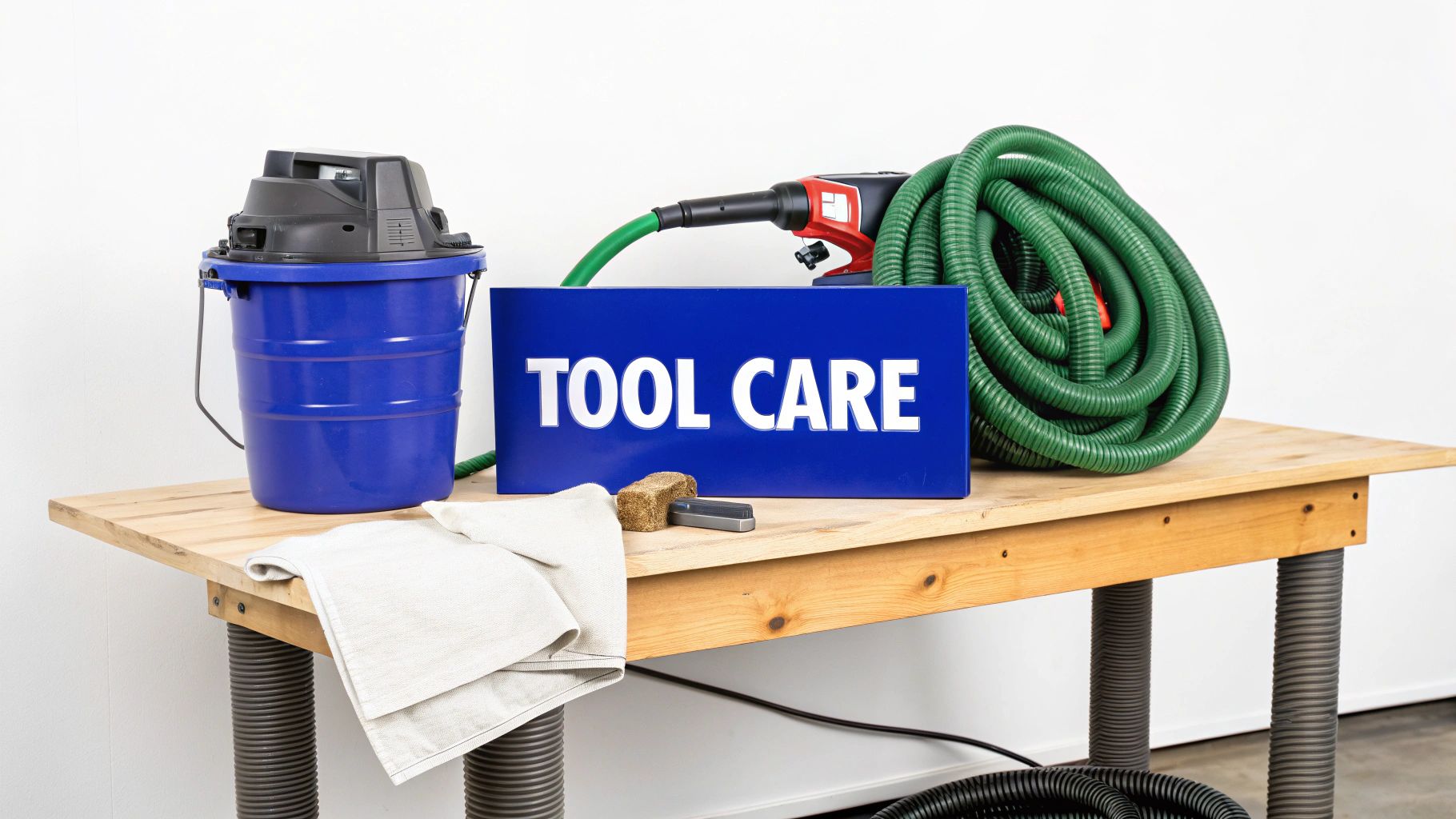
The single most critical thing you can do is flush the hose immediately after you finish. Seriously, don't let that wet slurry of soil, clay, and gravel sit in there. It can dry into a solid, concrete-like blockage that not only kills your suction but is also an absolute nightmare to remove later.
Just run clean water from a garden hose through your shop vac hose until it comes out clear. This quick rinse does more than just prevent clogs; it also stops abrasive grit from slowly wearing down the interior lining of the wet vac hose.
A Simple Post-Job Checklist
Once it's flushed, a quick once-over can save you from much bigger headaches down the road. Take a minute to check your equipment for any signs of wear and tear you might have picked up on the job site. This proactive habit keeps everything running smoothly.
- Inspect the Hose: Run your hand along the entire length. You're feeling for any cuts, punctures, or tears. Even a small nick can quickly become a major suction leak.
- Clean the Attachment: Pop apart the Hydrovac Attachment and give the base connector and nozzle cap a thorough rinse. Make sure to check the nozzle itself for any packed-in debris that could block water flow.
- Check Your Connections: Take a look at the hose ends and the connectors on the attachment. For a deeper dive into getting this right, we've got some great tips in our article on properly using vacuum hose clamps.
A key takeaway from my experience in the field: pay close attention to that hose clamp. If you overtighten it, you can actually damage the hose. But if it's too loose, you’re just creating a massive suction leak. All you need is a firm, snug fit.
How you store your gear is just as important as how you clean it. Instead of coiling your hose into a tight little circle, lay it down in large, loose loops. This simple trick prevents the kinks and flat spots that permanently restrict airflow and weaken the hose over time.
Finally, give your Hydrovac Attachment a little protection. It's built tough from an industrial-grade polymer, but leaving it out in direct sunlight isn't a great idea. Prolonged UV exposure can eventually degrade the material. Storing it in a shed, garage, or even a toolbox keeps it out of the elements and ready for years of reliable service. Trust me, those few extra minutes of care make all the difference.
Got Questions About Digging with Your Shop Vac?
When you're gearing up to connect a 2 1/2 shop vac hose to the Hydrovac Attachment, a few questions are bound to come up. Getting the right answers upfront is the key to confidently digging fence post holes or carefully exposing buried pipes.
Let's walk through some of the things people ask most often.
"Will This Work with My Shop Vac?"
This is easily the number one question I hear. People want to know if they need a specific, high-end brand of wet vac to get the job done.
Here’s the good news: the Hydrovac Attachment was built for versatility. It’s designed to fit the standard 2-1/2 inch hose cuff you’ll find on almost every major brand out there, including Ridgid, DeWalt, and of course, Shop-Vac. The brand name on the side of the machine isn't what matters. What really counts is the vacuum's performance—its CFM (cubic feet per minute) and water lift ratings. Those are the specs that tell you if it has the muscle to suck up wet, heavy soil and debris.
"What's the Right PSI for My Power Washer?"
Another big question revolves around the power washer. It's a balancing act—you need enough power to dig, but not so much that you cause damage.
For most residential digging jobs, like working in tough clay or tightly packed soil for fence posts, a pressure washer that puts out between 2,000 and 3,000 PSI is the sweet spot. That’s plenty of force to break up the ground effectively without being so aggressive that you risk damaging nearby utility lines or even your home's foundation. A good quality residential power washer is all you need for this kind of work.
"How Deep Can I Actually Dig with This Thing?"
Finally, let's talk about realistic expectations. How far down can you go? The truth is, it depends on two things: the type of soil you're working with and how powerful your vacuum is.
With a solid setup, you can realistically expect to dig down 3 to 4 feet. This is perfect for everyday projects like setting fence posts or unearthing shallow pipes and irrigation lines. The main thing holding you back will be your wet vac's ability to lift that heavy, water-logged slurry all the way from the bottom of the hole to the canister.
Think of this as a precision tool for smaller-scale, non-destructive residential digging. It's not meant to replace a full-sized hydrovac truck, but it excels in situations like fence post digging or safely exposing pipes where you need total control and want to avoid making a huge mess.
Once you have a handle on these details, you can set yourself up for success. The whole idea is to have a clean, controlled digging solution right in your own garage, and it all starts with matching the right tools to the job at hand.
Ready to turn your shop vac into a serious digging machine? The Hydrovac Attachment is engineered to make your toughest jobs safer and cleaner. Get yours today at hydrovacattm.com and see what you've been missing.