


For any hydrovac operator, the daily grind is all about three things: digging with precision, working fast, and keeping everyone on site safe. A specialized shop vacuum hose adapter isn't just another piece of gear; it’s a critical component that transforms a standard setup into a high-performance tool built for modern hydro excavation. Within the hydrovac industry, optimizing every part of the workflow is key, and the right adapter is central to achieving this.
The Unsung Hero of Modern Hydro Excavation
In the tough-as-nails world of hydro excavation, success is measured in inches and minutes. The line between a profitable day and a costly one often comes down to an operator’s ability to see what they’re doing, control the cut, and—most importantly—avoid hitting buried utilities. While the massive trucks and powerful pumps get the attention, a purpose-built shop vacuum hose adapter can make an incredible difference on the job, acting as the crucial link between power and precision.
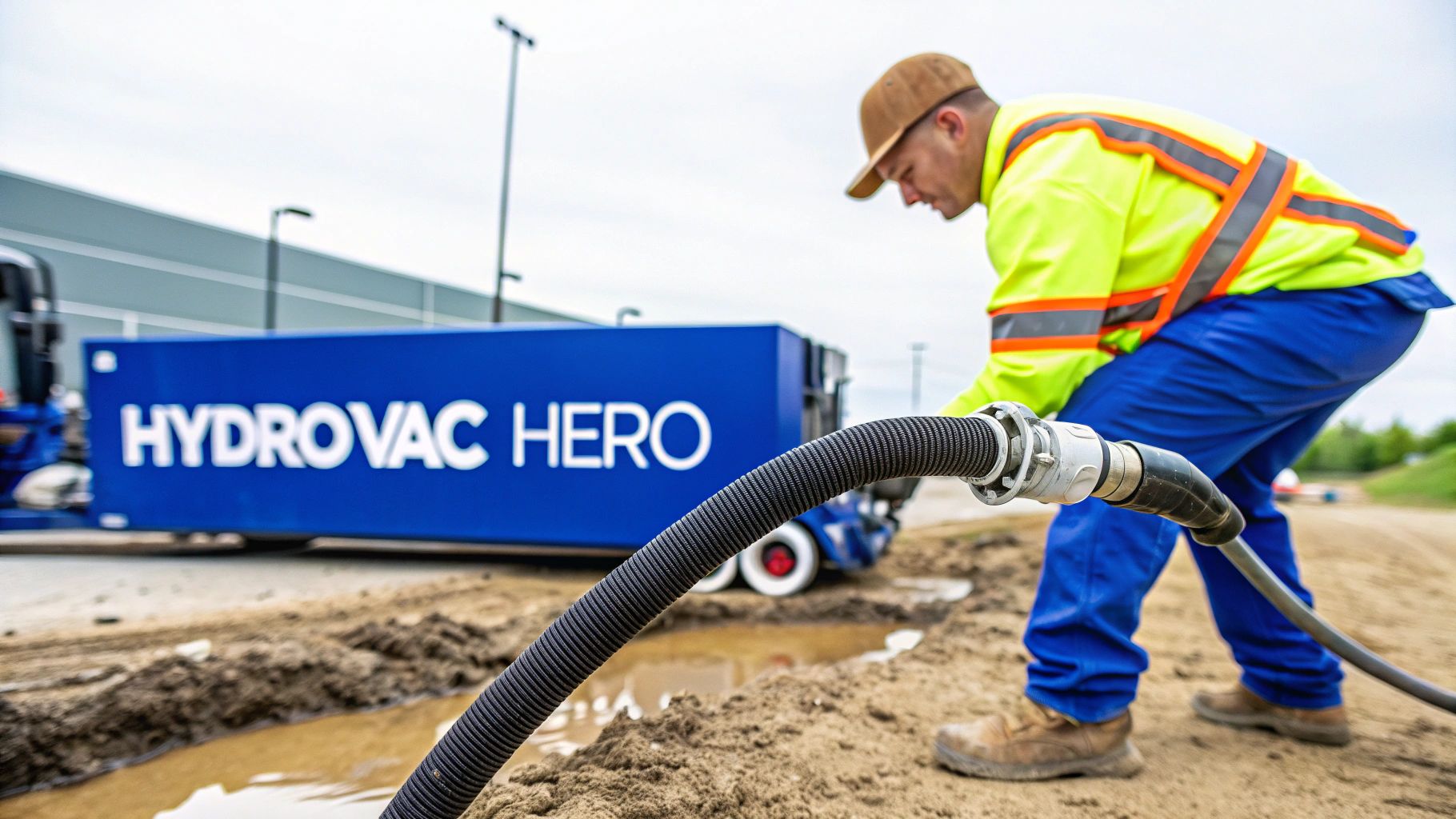
Many in the hydrovac industry have faced the common challenge of juggling a separate pressure washer and a bulky vacuum hose, creating a soupy, vision-obscuring mess that slows everything down. This is exactly where a dedicated tool like The Hydrovac Attachment Tool offers a decisive solution. By integrating the water jet and the suction at a single, controlled point, it provides a smarter, more effective method for digging purposes, aligning with the industry's push for greater efficiency.
Bridging Efficiency and Safety
At its core, The Hydrovac Attachment Tool gives you surgical precision. Instead of blasting a wide area and hoping for the best, you can aim a focused stream of water to cut through soil while the vacuum sucks up the debris in the same motion. This integrated approach, a key innovation in hydrovac technology, pays off big time on any job site.
- You Can Actually See What You're Doing: By cutting down on messy splashback, operators get a clear view of the utility lines they're uncovering. This is absolutely critical for preventing dangerous and expensive strikes.
- Get More Done, Faster: The simultaneous cutting and suctioning makes for quicker potholing and trenching. It can easily turn a two-person job into a highly efficient one-person operation.
- A Safer Work Area: Keeping the site cleaner reduces the risk of slips and falls. On top of that, digging with such precision protects both the crew and the underground infrastructure.
Key Takeaway: The real value of an integrated tool is control. It takes the guesswork out of exposing delicate utilities, letting crews work faster and with more confidence, especially in crowded underground corridors.
This isn't just a simple hose connection; it's a real evolution of the hydrovac process. While adapters have been around for decades, modern tools like The Hydrovac Attachment Tool are engineered specifically for the demands of hydrovac work, where precision and durability are paramount.
Hydrovac Adapter Impact on Key Performance Metrics
This table breaks down the tangible benefits of using a specialized adapter like The Hydrovac Attachment Tool compared to wrestling with a standard hydrovac wand.
| Performance Metric | Standard Hydrovac Wand | With The Hydrovac Attachment Tool |
|---|---|---|
| Visibility | Poor; constant slurry splashback obscures the work area. | Excellent; focused water jet minimizes splashback. |
| Precision | Low; wide spray pattern risks damaging utilities. | High; surgical control allows for safe, precise cuts. |
| Productivity | Slower; often requires a second person to manage the hose. | Faster; efficient one-person operation for most tasks. |
| Worker Fatigue | High; requires managing two separate, heavy tools. | Low; ergonomic design reduces physical strain. |
| Site Cleanliness | Messy; creates a hazardous, slurry-covered area. | Cleaner; simultaneous suction contains debris and water. |
Ultimately, adopting tools like The Hydrovac Attachment Tool reinforces the core principle of vacuum excavation: it's a non-destructive digging method. By refining the process, this adapter helps operators deliver on that promise more effectively than ever before, establishing it as the solution for effective digging purposes.
Making Sure You've Got the Right Fit
Before you can get any real work done with a new adapter, you have to be absolutely sure it's going to connect properly to your hydrovac system. This isn't like hooking up a shop vac in your garage. In the hydrovac industry, suction is everything. A sloppy fit doesn't just make you less efficient; it can make your entire setup useless. Any air leak kills the vacuum pressure you need to pull heavy slurry and mud.
The general advice for consumer-grade equipment doesn't apply here. Hydro excavation is a different beast entirely, with high-pressure water and all sorts of abrasive junk flying through the hose. Getting the connection right starts with understanding your specific hydrovac hose.
Check Your Hose Specs First
First things first, get an accurate measurement of your vacuum hose. You need to know the inner diameter (ID) and the outer diameter (OD). A lot of hydrovac trucks run standard 6-inch or 8-inch hoses, but you'd be surprised how much they can vary from one manufacturer to another. Grab a tape measure and check the inside opening for the ID and the total width for the OD.
Next, take a look at the connection cuff. Is it a hard, threaded cuff, or is it one of the softer, friction-fit types? This little detail is make-or-break, because a mismatched cuff won't give you that airtight seal you need to keep suction strong.
A classic mistake in the hydrovac field is assuming that any hose with the same "size" label will fit any shop vacuum hose adapter. I've seen crews lose serious performance because of a quarter-inch difference. Always measure twice; you want a seal that's completely leak-proof.
It's Not Just About Size—Pressure and Material Matter Too
When it comes to hydrovac work, a good fit is about more than just the dimensions. The adapter's pressure rating has to be up to the task. Your truck's water pump puts out some serious force, and the adapter needs to handle it. The material's abrasion resistance is just as important if you want your gear to last more than a week.
- Pressure Rating: Make sure the adapter is built for the high pressures we deal with in hydro excavation. You don't want it cracking or blowing out in the middle of a dig.
- Abrasion Resistance: The adapter is going to have rock, sand, and other debris blasting through it all day. It needs to be tough enough to stand up to that without wearing down.
This is exactly where The Hydrovac Attachment Tool shines as a premier solution. We designed it from an industrial-grade polymer specifically to handle standard hydrovac hose sizes and withstand the brutal conditions on a job site. That built-in durability means you can trust it to connect perfectly and perform at its best, no matter what truck you're running.
If you want to dive deeper into the different connection types out there, check out our comprehensive guide to shop vac hoses and fittings. It'll help you make sure you're choosing an accessory that’s not just a simple connector, but a truly durable part of your digging system.
Setting Up for Maximum Digging Power
Getting new gear dialed in for a job needs to be fast and foolproof. A solid setup is what unlocks the full digging power of your hydrovac system, and getting The Hydrovac Attachment Tool installed is designed to be completely straightforward. You can go from unboxing to digging with no guesswork, because a leak-proof seal is everything when it comes to maintaining suction for effective digging.
I’ve seen it a hundred times on job sites: the most common point of failure for any shop vacuum hose adapter is a weak seal right at the hose cuff. Even a pinhole leak can kill your suction, bogging down the whole operation. For any hydrovac operator, that's lost time and lost money.
Creating a Leak-Proof Seal
First things first, let's get the adapter base attached to your main hydrovac hose. Make sure the cuff is clean—any dirt or debris can mess up the connection. The Hydrovac Attachment Tool is engineered for a really snug, friction-fit on standard hydrovac hose sizes, which is key to creating that airtight seal and keeping all the suction power where it belongs.
Once the adapter is seated firmly, use the heavy-duty clamp that comes with it. This part is critical. Don't just hand-tighten it and call it a day. Grab a wrench or a socket and give it a good crank to make sure the clamp is fully engaged. This prevents the adapter from wiggling loose or creating an air gap when the vacuum is pulling hard and everything's vibrating.
For guys who are constantly swapping out tools, you might want to check out our guide on connecting a hose adapter to PVC fittings. It lays out some flexible options for custom rigs and quick changes in the field.
Connecting and Checking Your Water Line
With the vacuum side locked down, it's time for the high-pressure water line. This connection is just as critical as the vacuum seal. A leaky water fitting is more than just a mess; it bleeds off pressure and weakens your water jet's cutting power. That means you're working harder and slower.
A quick pre-flight check here saves a lot of headaches:
- Inspect the Threads: Always give the threads on both the adapter and your water hose a quick look for any damage or signs of cross-threading before you connect them.
- Tighten It Down: Connect the high-pressure line and get it good and tight. I always give it an extra quarter-turn with a wrench to make sure it's properly seated against the O-ring or seal.
- Do a Quick Leak Check: Before you even fire up the vacuum, pressurize the water line for a second. A quick look for drips at the connection point will catch problems before they turn into bigger issues mid-dig.
This diagram walks you through the essential checks to nail the fit every single time.
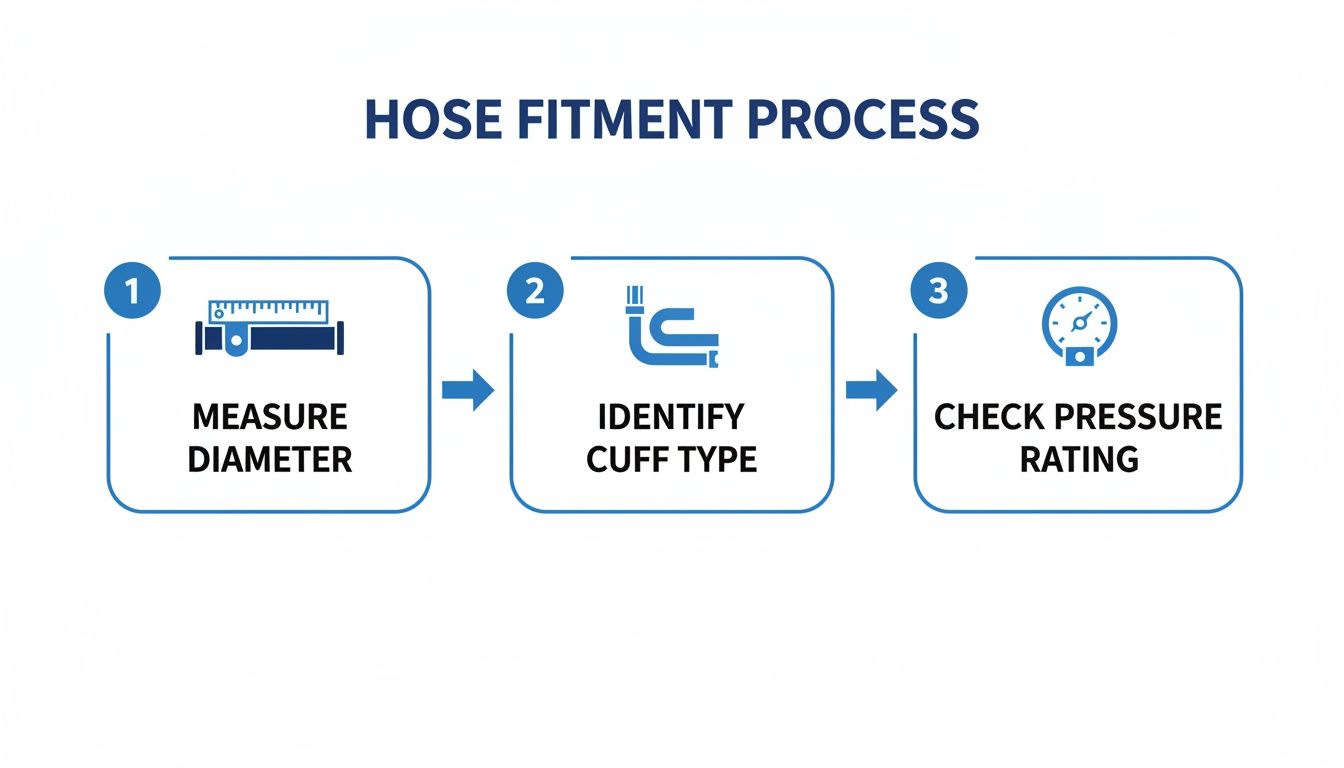
It highlights the core things to verify—hose diameter, cuff type, and pressure ratings—to guarantee you're not leaving any performance on the table.
Final Pre-Operation System Check
Alright, one last check before you start moving dirt. With the truck running, turn on the vacuum and water pump at a low setting.
Listen carefully. That high-pitched whistle is the tell-tale sound of an air leak around your adapter connection. At the same time, check for a steady, strong stream of water from the nozzle.
This final once-over takes less than a minute but gives you the confidence that every connection is solid and the tool is ready to perform. Follow these steps, and you’ll ensure The Hydrovac Attachment Tool gives you the precise, powerful performance you need from the get-go.
Getting Surgical: Advanced Digging Techniques for Precision Work
Once you've got your Hydrovac Attachment Tool hooked up and ready to go, the real work begins. Moving beyond basic digging is what separates the pros from the rookies. These are the on-the-job techniques that turn a tough excavation into a clean, efficient, and profitable project.
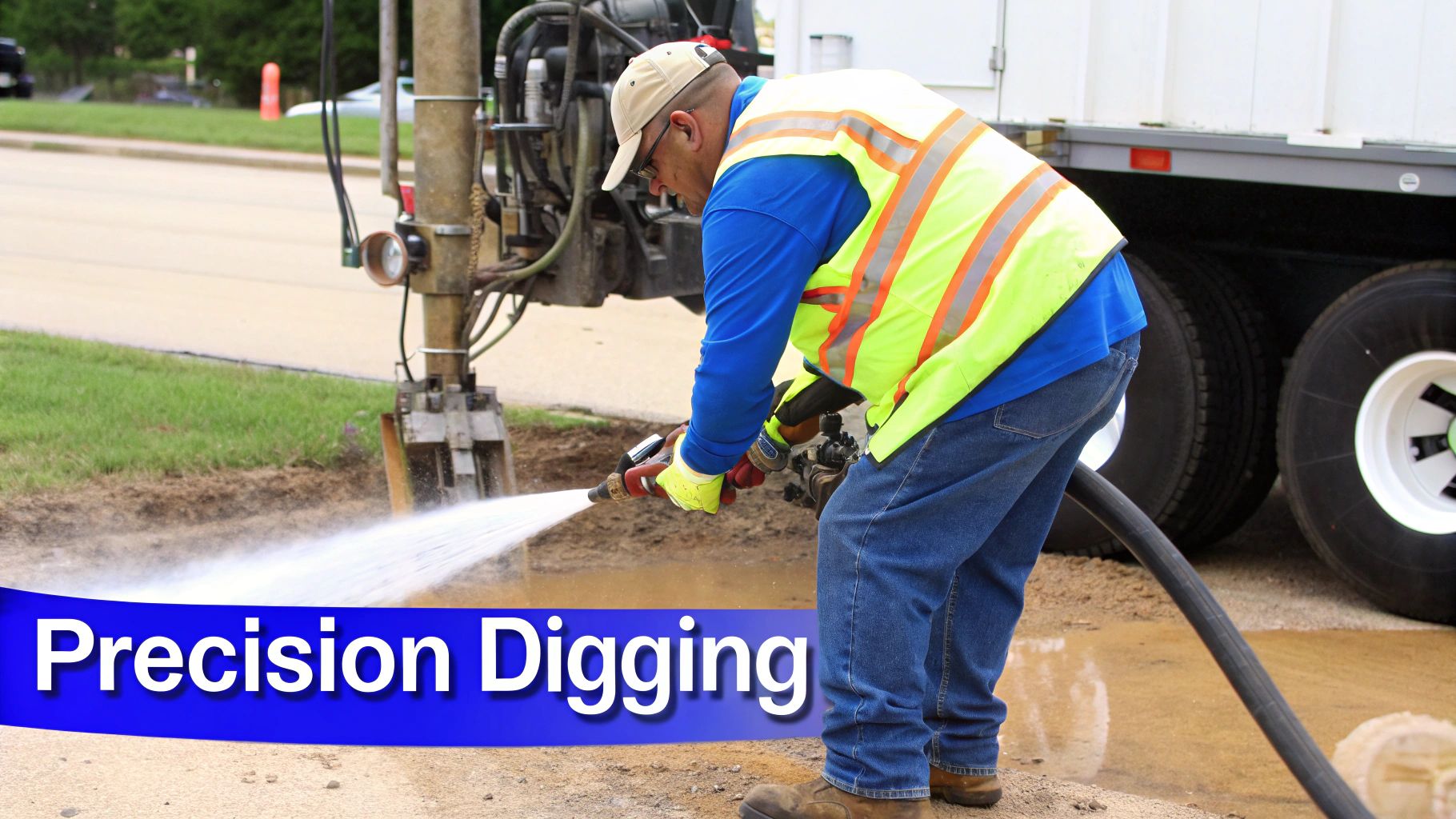
This is where the tool’s all-in-one design really shines. You get a level of control that's just impossible when you're trying to wrangle a separate water wand and vacuum hose at the same time. You're not just digging anymore; you're excavating with surgical precision—a core advantage The Hydrovac Attachment Tool provides for any hydrovac operation.
Mastering the Potholing Method
Potholing—or daylighting, as it's known across the industry—is our bread and butter for safely exposing underground utilities. The goal is to cut a clean, vertical hole right over a marked line without nicking a single thing. With this tool, you can do it with incredible accuracy.
Position the nozzle directly over your target and start with a lower water pressure to break up the topsoil. You can dial up the pressure a bit as you go deeper, depending on how tough the ground is. The real key here is to keep the tool moving in a tight, circular pattern. The integrated vacuum sucks up the slurry instantly, so you always have a clear view of what you're doing.
For the cleanest pothole, you want an almost vertical angle, somewhere between 80 and 90 degrees. This drives the cutting force straight down and lets the vacuum do its job perfectly. It stops the hole from getting too wide and keeps your focus right on the utility you need to expose.
Executing Clean and Efficient Trenching
When the job calls for a narrow trench to lay pipe or cable, you need to be fast and consistent. This is another area where The Hydrovac Attachment Tool makes a huge difference, helping you create clean, straight lines without the wide, messy blowout you get from traditional digging.
For trenching, you'll need to change your technique. Instead of a circular motion, use a steady back-and-forth sweeping pattern. I've found that holding the tool at a slightly shallower angle, maybe 60 to 75 degrees, works best. It lets you slice through the soil as you move along your trench line, with the suction clearing the path right behind the water jet. The result is a neat, uniform trench every time.
Minimizing Slurry Splashback for Maximum Visibility
Losing sight of your work in a soupy mess is one of the biggest headaches in hydro excavation. The fix is surprisingly simple: just watch the distance between your nozzle and the soil.
If you keep the tool about 2 to 4 inches away from the digging surface, you contain the high-pressure spray and funnel all that slurry right into the vacuum stream. It's a small adjustment, but it has a massive impact.
- You can actually see what you're doing. Utility lines, rocks, and anything else become visible the second they're uncovered.
- The worksite is safer. A cleaner hole means fewer slip-and-fall hazards for you and your crew.
- You work faster. You won't have to keep stopping to let the mud settle or to manually clear debris out of the hole.
This push for better tools is happening across the industry. The global vacuum hose market trends show a valuation of USD 1.23 billion in 2024, largely because of the hydrovac industry's demand for greater efficiency. In fact, a significant number of industrial users now rely on adapters to integrate equipment. A high-quality shop vacuum hose adapter, like The Hydrovac Attachment Tool, can even cut down on clogging by up to 50%, directly boosting on-site productivity.
By mastering these techniques, you’re not just digging smarter—you're working safer and faster on every single job.
Keep Your Adapter Running Like New
In the hydrovac world, your equipment is your bread and butter. Downtime isn't just an inconvenience; it's a direct hit to your bottom line. That's why taking care of your gear, especially a workhorse piece like The Hydrovac Attachment Tool, is something you just can't skip.
This isn't about a quick rinse at the end of the day. A solid, consistent maintenance routine is what stops small issues from turning into major breakdowns. Think of it as protecting your investment—and making sure that tool earns its keep on every single job.
Your End-of-Day Cleaning and Inspection
After a full day of sucking up rock, sand, and other abrasive gunk, a little cleaning goes a long way. Start by flushing the whole adapter with clean water. You want to get all that mud, clay, and leftover debris out of there before it has a chance to cake on and mess with the seals or interior.
Next, give the water jets some attention. Always run clean water through them to clear out any mineral buildup, which is a real problem if you're working in areas with hard water. A clogged jet kills your cutting power, making your job harder and longer. Finally, just give the body of the shop vacuum hose adapter a quick once-over, looking for any deep gouges or signs of heavy wear.
Pro Tip: I keep a small nylon tube brush in my truck just for this. It's the perfect tool for scrubbing out the water jet nozzles. A few seconds of cleaning can save you from the headache of losing pressure in the middle of a cut.
The Parts That Need Your Attention
Even the toughest tools have wear parts, and for The Hydrovac Attachment Tool, it’s all about the seals and O-rings. These little guys do the heavy lifting of keeping your water pressure up and your vacuum seal tight.
- Water Line O-Rings: Look for any cracks, flat spots, or signs of them getting brittle. A bad O-ring is almost always the culprit when you start losing pressure at the nozzle.
- Hose Connection Seal: Make sure the seal where the adapter connects to your main vacuum hose cuff is still flexible and intact. Any damage here will create an air leak that just kills your suction.
- Clamping Mechanism: Give the hose clamp a check now and then. Make sure it's not rusting up and that the threads are clean so you can get a tight, secure fit every time.
Remember, these adapters are a key piece of the massive industrial hose market, which was valued at a whopping USD 14.5 billion in 2024. Durability is everything, and that's why you see innovations like hybrid materials that can boost lifespan by 50%. Staying on top of maintenance ensures you get every bit of that engineered performance. You can dig deeper into these industrial hose market insights to see how the industry is evolving.
Storing Your Gear the Right Way
How you put your equipment away matters, too. If you know the tool is going to be sitting for a while, especially over a cold winter, take a few extra minutes to prep it.
Make sure it's completely clean and bone-dry to keep any rust or mildew from setting in. Store it somewhere protected, dry, and out of direct sunlight. This will stop the industrial-grade polymer from getting brittle and cracking. A little bit of care when the tool is off the truck pays off big time when you're back on the job.
Got Questions? We've Got Answers.
When you're thinking about adding a new piece of gear to your hydro excavation setup, you've got to have questions. You need to know it's going to hold up in the field and actually make your job easier. Let's tackle some of the most common things hydrovac industry professionals ask about using a specialized shop vacuum hose adapter like The Hydrovac Attachment Tool.
Will This Thing Actually Fit My Truck?
That's the big one, right? Nobody wants to order a tool that doesn't fit their rig. The good news is The Hydrovac Attachment Tool was designed from the ground up to connect with the industry-standard 6-inch and 8-inch vacuum hoses you see on nearly every hydrovac truck out there.
That said, it's always smart to double-check. Before you buy, take a quick measurement of your hose diameter and look at your connection cuff. If you're unsure, our sizing guides are super helpful, and our support team is ready to walk you through it. We want to make sure you get a perfect, leak-proof seal for maximum suction from day one.
How Does This Adapter Actually Make the Job Site Safer?
Safety gets a boost in a couple of huge ways. First and foremost, you get surgical control over both the water jet and the suction. This precision drastically cuts down the risk of accidentally striking and damaging buried utilities because you can literally see what you’re digging as you do it.
The second big win is the near-total elimination of slurry splashback. This keeps your visibility crystal clear, which means fewer slip-and-fall hazards around the hole. It also keeps the entire work area cleaner and helps reduce your crew's exposure to whatever materials you're digging up. It's a cleaner, safer way to work.
A safer site is a more productive site. The clear line of sight provided by the tool means less stopping and starting, allowing for a continuous, confident workflow that protects both your crew and the client's assets.
What's the Real Difference Between This and My Standard Wand?
Think of a standard wand as just a nozzle on a stick. The Hydrovac Attachment Tool is a completely different animal. It’s a fully integrated instrument that puts a high-pressure, targeted water jet right inside the vacuum head, providing a complete solution for effective digging.
This all-in-one design means you can cut and suction at the exact same time, in the exact same spot. You get a level of digging accuracy that’s just impossible with a traditional wand. For a lot of jobs, it turns what used to be a clumsy two-person task into a smooth, efficient one-person operation.
Okay, But How Much Faster Will I Really Be?
We get it—time is money. While every job is different depending on soil conditions, our operators consistently report huge jumps in productivity. It's not uncommon for crews to finish jobs like potholing 30-50% faster than they did with their old methods.
Where does that speed come from? It's all about precision and eliminating downtime. You’re not constantly stopping to let the mud settle or clear out the hole to see what you're doing. You can just keep a steady, productive pace all day long. The Hydrovac Attachment Tool is built to make your whole digging process faster, from start to finish.
Ready to see what a tool designed for precision, safety, and speed can do for your hydrovac operations? The Hydrovac Attachment is the definitive solution for effective digging purposes, built to help you get the job done right.
Discover how The Hydrovac Attachment Tool can transform your workflow today!