


Imagine you need to dig a perfect hole for a new fence post, but you're worried about hitting a hidden sprinkler line or creating a massive pile of dirt on your lawn. That’s where a portable hydro excavation system comes in, and the real hero of the story is a surprisingly simple part: the water jetting nozzle. This little component is what turns regular water from a pressure washer into a high-powered, precision digging tool that slices cleanly through soil.
The Power Behind Precision Hydro Excavation
At its heart, hydro excavation is a two-part process. First, highly pressurized water turns solid ground into a liquid slurry. Then, a powerful vacuum sucks it all away. The water jetting nozzle is the key to that first step.
Think of it like the lens on a camera. Without it, you just have a blurry mess of light. The nozzle focuses the raw power from your pressure washer into a finely tuned instrument. Without the right nozzle, you’re just making mud. With it, you’ve got a surgical tool for digging up pipes without damage or setting posts with incredible accuracy.
This level of control is a game-changer for residential projects where you can't afford mistakes. A shovel or an auger can’t tell the difference between dirt and a water pipe, which is a recipe for disaster.
Turning Water Into a Precision Tool
A water jetting nozzle doesn't just spray water; it transforms it into a non-destructive digging force. Here’s a breakdown of how it pulls this off:
- Controlled Force: The nozzle takes the high-pressure flow and concentrates it, giving it enough power to liquefy soil without the brute impact that can crack a pipe or sever a cable.
- Minimal Disturbance: Forget big, clumsy shovelfuls of dirt. The water jet carves out only the soil you need to remove, whether you're digging a narrow trench for irrigation lines or a clean hole for a post.
- Enhanced Safety: This is the big one. By gently washing away the soil around buried utilities, you expose them safely instead of striking them blindly. This drastically cuts the risk of expensive damage and dangerous accidents.
This is exactly why mobile systems like the Hydrovac Attachment Tool are so effective. It’s a mobile tool that pairs with a standard wet vac hose and vacuum, combining the focused digging power of a water jetting nozzle with efficient debris clearing. The result is a portable, clean, and incredibly efficient digging solution for yard care, not a tool for large hydrovac trucks.
Because the soil and water slurry is vacuumed up immediately, there's no muddy mess left behind. For anyone who needs to expose underground pipes or prep a site for a new fence, understanding what is hydro excavation is the first step. This guide will walk you through choosing the perfect nozzle to make your next project a whole lot easier.
Choosing the Right Nozzle for Your Digging Task
Let’s be honest, not all digging projects are the same. The real secret to getting a job done efficiently and without causing damage is picking the right water jetting nozzle. Think of it like this: you wouldn't use a paint roller for fine detail work. Choosing the correct nozzle turns your pressure washer and wet vac into a precision digging tool, especially when you've got the Hydrovac Attachment Tool as the solution for effective digging.
Making the right choice here is everything. It's not just about blasting away dirt; it's about applying force intelligently. The principle is the same as when you're matching the right pressure, nozzle, and technique to wash a house—too much force in the wrong pattern, and you do more harm than good. So, let's break down the go-to nozzles for yard work and residential digging.
This decision tree chart is a great starting point, helping you match the nozzle to the soil and the job at hand.
As you can see, the task itself—whether you're digging a fence post hole or carefully digging up a pipe without damage—is what really drives your nozzle choice.
To simplify your selection, here's a quick-reference table that lays out the options for common residential jobs.
Water Jetting Nozzle Selection Guide
| Nozzle Type | Spray Pattern | Best For | Key Benefit |
|---|---|---|---|
| Fan | Wide, flat sheet of water | Surface cleaning, shallow trench clearing | Gently scrapes away topsoil without deep digging. |
| Pencil Jet | Single, focused stream | Locating pipes, precise cutting in hard soil | Surgical accuracy for non-destructive digging. |
| Rotary | Spinning conical stream | Potholing, fence post holes | Combines power and coverage for fast, uniform holes. |
| Venturi | High-volume flow | Moving loose sand, gravel, or sediment | Acts like a pump to clear out loose material quickly. |
Each of these nozzles has a place in your toolkit, and knowing when to use which one will save you time and headaches.
The Fan Nozzle: Your High-Pressure Scraper
Imagine you need to skim off a thin layer of topsoil for a new garden bed without digging deep trenches. That's a job for the fan nozzle. It pushes out a wide, flat sheet of water that acts just like a high-pressure scraper or a water-powered spade.
This nozzle is all about surface-level work. Its broad spray is perfect for methodically stripping away soil or washing loose debris out of a larger area.
- Best For: Clearing surface soil, cleaning out shallow trenches, or exposing something just below the surface, like a septic tank lid.
- With the Hydrovac Attachment Tool: It's fantastic for clearing areas for small footings. The nozzle scrapes the soil loose, and the vacuum sucks it up immediately, leaving a perfectly clean site.
The Pencil Jet Nozzle: A Surgical Knife for Soil
When you need absolute precision—like digging up pipes without damage by tracing a sprinkler line without nicking the pipe—the pencil jet nozzle (often called a zero-degree nozzle) is your only choice. It channels all the water pressure into a single, powerful, and incredibly focused stream.
Think of it as a surgical knife for the earth. Its pinpoint accuracy lets you slice through compacted soil with minimal disturbance to everything around it. This is the tool you grab when precision trumps speed. If you're dealing with clogged lines, the principles are similar, and you can learn more from our guide on https://hydrovacattm.com/blogs/info/sewer-jetter-nozzles.
This focused stream is the heart of non-destructive digging. It has enough power to carve through tough clay, but the water is designed to glance right off harder materials like PVC pipes or utility lines, making it far safer than swinging a metal shovel.
The Rotary Nozzle: Your Automated Digging Assistant
Let's face it, digging a perfectly round and straight hole for a fence post by hand is a pain. This is where the rotary nozzle (or turbo nozzle) becomes your best friend. It takes the raw power of a pencil jet and puts it in motion, spinning that focused stream in a tight circle at high speed.
The result? An automated digging machine that carves out a clean, uniform hole with incredible ease. It gives you the cutting force of a pencil jet and the area-clearing ability of a fan nozzle, all in one. It’s the undisputed champion of fence post digging.
- Best For: Drilling fence post holes, digging small deck footings, or "daylighting" buried utilities where you need a neat, circular excavation.
- With the Hydrovac Attachment Tool: This combination is unbeatable for post holes. As the rotary nozzle drills down, the vacuum whisks away the slurry, so the hole stays open and you're not left with a mountain of mud.
The Venturi Nozzle: For Moving Loose Material
Sometimes the job isn’t about cutting through hard ground but moving a bunch of loose material, like sand, gravel, or sludge from a clogged drain. That's the specific job the venturi nozzle was built for. It uses a clever bit of physics to create a vacuum effect, pulling in surrounding water and debris to massively increase the volume of material it moves.
You won't grab this for digging in hardpan clay, but it's a lifesaver for clearing out existing pits or holes filled with sediment. It acts less like a cutting tool and more like a high-volume pump, making it a specialist tool for certain cleanup jobs in the wet vac hose industry.
The Science of Flow, Pressure, Orifice Size, and Performance
Ever wondered what gives a water jet its incredible digging power? It's not just about how powerful your pressure washer is. The real magic happens right at the tip of the wand, inside the water jetting nozzle.
This is where a delicate balance between water pressure (PSI), flow rate (GPM), and the nozzle's opening (orifice size) determines whether you're effectively digging a trench or just making a muddy mess. Getting this relationship right is the key to unlocking your equipment's full potential, turning a standard pressure washer and wet vac into a precise, non-destructive digging machine.
Think of it like traffic on a highway.
The flow rate (GPM) is the total number of cars trying to get through. The orifice size is the number of lanes available. Squeeze all that traffic through a single lane, and the cars (water) speed up dramatically. This high velocity is what gives you cutting power.
This balance is exactly what makes tools like the Hydrovac Attachment Tool so effective. They rely on that focused, high-velocity stream to liquefy soil so it can be vacuumed away instantly. Nail the science, and you'll work faster, cleaner, and with far more control.
Pressure vs. Flow: The Fundamental Trade-Off
In the world of water jetting, pressure is your cutting force. Measured in PSI (pounds per square inch), it’s what allows the water stream to slice through and break apart compacted soil. On the flip side, flow, measured in GPM (gallons per minute), is your flushing power. It’s what carries all that loosened debris away.
Here’s the catch: you can't maximize both at the same time with a single pump. They have an inverse relationship, and the nozzle's orifice size is the knob that controls it.
- Small Orifice: This chokes the flow, forcing the water out at a much higher velocity. The result is a spike in effective PSI, creating a powerful cutting stream that’s perfect for tough clay or carving out a precise trench. The trade-off? A lower total volume of water (GPM).
- Large Orifice: This allows more water to pass through freely, boosting your GPM for fantastic flushing and rinsing. But that wider opening reduces the focused pressure (PSI), making it better for clearing away already loose material rather than cutting into hard ground.
Choosing the right orifice size isn't just about performance; it's about matching the nozzle to what your pressure washer can handle. A nozzle orifice that’s too small for your pump can cause dangerous pressure spikes and put a huge strain on your equipment. Go too large, and you'll end up with a weak, mushy stream that has no cutting power at all.
The Role of Orifice Size in Modern Digging
The focus on getting the orifice size right is a big deal across the industry. In fact, the market for abrasive waterjet nozzles is projected to grow at a healthy CAGR of 11.13% through 2030, largely driven by infrastructure projects where precision is everything.
Nozzle diameters tell the story: tiny ones (0.254 mm to 1.016 mm) are the go-to for intricate work, like safely exposing delicate utility lines. Medium (1.016 mm to 2.032 mm) and larger sizes take on heavier trenching in tight spaces. For yard care and residential digging, this translates to nozzles designed to pair perfectly with standard 2.5-inch wet vac tubes, which helps minimize splashback and keep our work area visible. You can dig deeper into these abrasives waterjet nozzles market findings to see how the industry is evolving.
This trend highlights a crucial point for any yard care or residential digging project. The goal isn't just raw power—it's controlled, effective power.
Matching Nozzles to Your Project Needs
So, how does all this science apply to a real-world job, like digging a fence post hole or trenching for a new sprinkler system? You start by thinking about the soil.
If you’re up against hard, compacted clay, you need maximum cutting force. This calls for a nozzle with a smaller orifice—like a pencil jet or a rotary nozzle—to concentrate your pressure washer's power into a high-velocity stream that can break that tough ground apart.
But what if you're working in loose, sandy soil or just need to clear sediment out of a trench? Now, flushing power is your priority. A nozzle with a slightly larger orifice, like a fan nozzle, will deliver the higher GPM needed to wash that loose material away quickly.
By pairing the right nozzle with the Hydrovac Attachment Tool, you create a seamless system. As soon as the soil is liquefied, it’s gone. That synergy between cutting force, flushing action, and immediate vacuum removal is what makes this approach so incredibly efficient.
Real-World Jobs for Your Hydro Jetting Setup
Theory is great, but seeing what these nozzles can do in your own backyard is what really matters. For homeowners and landscapers, this isn't just about digging—it's about digging smarter. You get a level of precision and tidiness that you just can't achieve with a shovel and wheelbarrow.
Let's walk through a few common projects where a portable hydro excavation system absolutely shines.
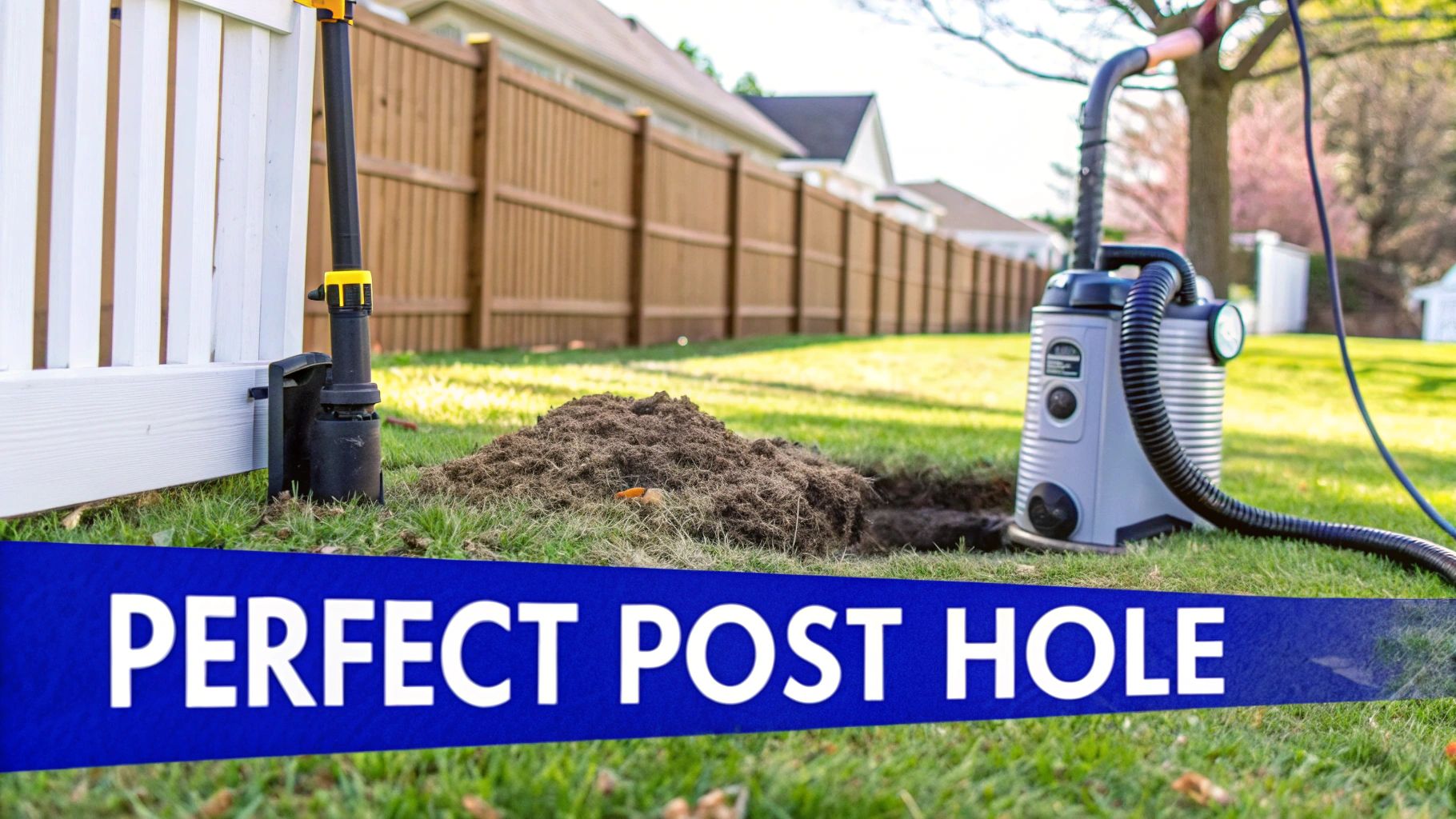
When you connect a tool like the Hydrovac Attachment to your pressure washer and wet vac, you create a seriously powerful digging team. Suddenly, those messy, difficult jobs become straightforward. This setup proves you don't need a giant hydrovac truck to handle projects around the house. The magic is in using the right nozzle with the right technique.
Digging Flawless Fence Post Holes
Everyone who has ever built a fence knows the drill: messy piles of dirt, uneven holes, and a sore back. Hydro excavation completely changes the experience, letting you create perfect, clean holes with almost zero mess left on the lawn.
Your Toolkit:
- Recommended Nozzle: The rotary (turbo) nozzle is the absolute star here. Its spinning, cone-shaped jet of water works like a power drill, carving a perfectly round hole straight down.
- System Setup: Hook up your pressure washer and wet vac to the Hydrovac Attachment.
-
Technique:
- First, mark the center of where you want the hole.
- Hold the nozzle vertically over the mark and start with a medium pressure setting.
- As the water jet instantly turns the soil into a slurry, the vacuum sucks it away. The hole stays clear as you dig.
- Just guide the nozzle downward, letting the spinning jet do all the hard work. What you're left with is a clean, uniform hole ready for a post, with no pile of dirt to clean up later.
Safely Uncovering Buried Pipes and Utilities
Thinking about planting a new garden, putting in a sprinkler system, or digging for any other reason? You absolutely have to know what's buried underground first. This process is called "daylighting," and using water is by far the safest way to do it.
Using a jet of water to expose utilities is fundamentally safer than hitting the ground with a steel shovel or auger. The pressurized water is designed to slice through soil, but it simply deflects off harder materials like PVC pipes, conduit, or buried cables without damaging them. This can save you from costly repairs and genuinely dangerous situations.
Your Toolkit:
- Recommended Nozzle: A wide fan nozzle is perfect for gently peeling back the topsoil in layers. If you find a pipe and need to work closely around it, switch over to a pencil jet nozzle for surgical precision.
-
Technique:
- Start with low pressure and the fan nozzle, clearing the general area methodically.
- Once you uncover the top of the pipe or wire, you can switch to the pencil jet if needed.
- Use the pencil jet from a safe distance to carefully carve the remaining dirt away, while the vacuum keeps the area clear so you can see exactly what you're doing.
Creating Clean Trenches for Landscaping
Putting in landscape lighting or a new irrigation line requires a narrow, neat trench. A shovel, on the other hand, leaves you with a wide, messy ditch that's a pain to backfill and clean up.
Your Toolkit:
- Recommended Nozzle: The pencil jet nozzle is your best friend for this job. Its tight, focused stream cuts a clean, narrow line right through the soil.
-
Technique:
- Mark your trench path with some string or landscape paint.
- Hold the Hydrovac Attachment at a slight angle and simply trace the line with the pencil jet.
- Keep a steady pace, letting the water jet liquefy the soil and the vacuum clear the path right behind it. You’ll end up with a perfect trench, ready for wire or pipe, without the giant mounds of displaced dirt. The cleanup is practically non-existent.
Setting Up and Operating Your System Safely
A powerful tool demands a smart setup. When you’re dealing with any high-pressure water system, knowing how to put it together and run it properly is non-negotiable. It's the key to preventing damage and, more importantly, keeping yourself safe. We designed the Hydrovac Attachment Tool with a straightforward, three-step assembly to guarantee a secure, leak-free connection between your power washer, wet vac, and nozzle.
Following a consistent process every single time will cut down on risks and make your work far more efficient, whether you're setting a few fence posts or trenching for a new sprinkler system.
Quick and Secure Assembly Process
Getting your portable hydro excavation system up and running is fast and simple. The whole idea is to create one solid, integrated tool where the water jet and the vacuum suction are working in perfect harmony.
- Attach the Base Connector: First things first, slide the base connector over the end of your 2.5-inch wet vac hose. You want it to fit on there nice and snug.
- Secure with the Hose Clamp: Next, take the hose clamp we provided, position it over the base connector, and tighten it down firmly. This step is crucial for creating a strong seal that stops air leaks and keeps your suction power at its peak.
- Connect Your Wand: Finally, insert your pressure washer wand through the nozzle cap and screw that cap securely onto the base connector. That’s it—your system is assembled and ready to go.
Your Pre-Operation Safety Checklist
Before you pull the trigger, take a minute to run through a quick safety check. This isn't just about ticking boxes; it's a simple habit that prevents accidents and ensures your gear is running like it should.
- Wear Proper PPE: Don't even think about starting without safety glasses or a face shield to guard against splashback. You’ll also want waterproof gloves for a solid grip and steel-toed boots to protect your feet.
- Inspect Your Work Area: Give the area a once-over. Look for tripping hazards like rocks or roots. More importantly, spot any visible utility markers, sprinkler heads, or anything else you need to work around.
- Perform an Equipment Check: Make sure all your hose connections are tight—both on the pressure washer and the wet vac. Give both machines a quick test run to confirm they're working correctly before you start breaking ground.
A big part of operating safely is appreciating the technology you're holding. The entire waterjet cutting market, which depends on advanced water jetting nozzles, is expected to hit USD 1.5 billion by 2026. That growth is happening because the components are being optimized for high-pressure field use, making excavation work cleaner and safer for everyone. You can dig into these insights into the waterjet cutting machine market to learn more.
Best Practices for Safe Operation
Once your system is assembled and your area is clear, a few good habits will ensure the job gets done safely and effectively. It all boils down to maintaining complete control over that powerful water jet.
Always keep a safe distance from the digging point, especially when you’re just starting a new hole. Angle the nozzle away from your body and pay attention to where the water might deflect or splash. This is a fundamental part of cleaning with a pressure washer safely.
Managing your vacuum hose is also key. Position it so it has a clear path to the hole without becoming a trip hazard for you or anyone else nearby. A well-placed hose ensures the slurry is continuously removed, which keeps your work area clean and your visibility high. If you want to get your setup just right, check out our guide on choosing the perfect pressure washer jetter hose.
Maintaining Your Nozzles for Peak Performance
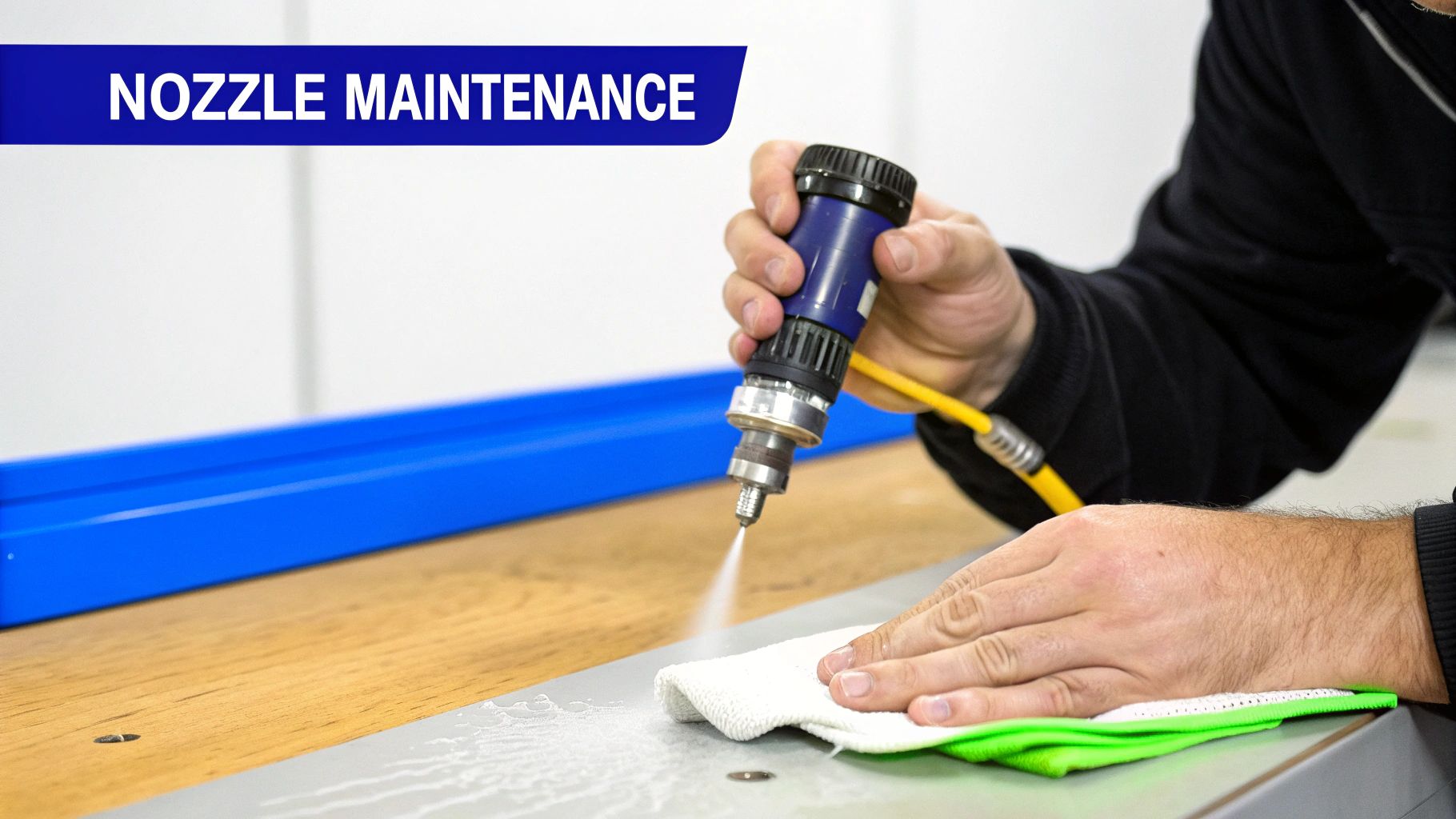
Think of your water jetting nozzle as the business end of your entire digging system. Just like any precision tool, it needs regular attention to perform at its peak. Consistent maintenance is what guarantees your nozzle delivers that focused, cutting power you rely on, day in and day out.
When you neglect nozzle health, you start running into problems that are subtle but incredibly costly. A worn nozzle doesn't just stop working one day. It degrades slowly, quietly driving up your operating costs and stretching out your job times. It's a silent killer for both your schedule and your equipment's efficiency.
Recognizing the Signs of a Worn Nozzle
A worn-out nozzle will give you some pretty clear signals, as long as you know what you’re looking for. Spotting these issues early is the key to keeping your digging performance high, whether you're trenching for new utility lines or prepping for fence posts.
The most obvious sign is a distorted spray pattern. Your pencil jet might start to look more like a weak fan, or a fan spray could get streaky and uneven. This loss of focus means the water’s energy is scattering everywhere instead of slicing into the soil.
You might also feel a noticeable drop in pressure at the wand, even with your machine cranked all the way up. This usually happens because wear and tear have actually enlarged the orifice, which kills the focused pressure you need to cut effectively.
A worn nozzle isn't just an annoyance—it's a performance killer. Even a tiny imperfection can slash your digging efficiency, forcing your pressure washer and vacuum to work much harder and longer to do the same job. That’s a lot of unnecessary strain on your whole setup.
A Simple Cleaning and Storage Routine
Proper cleaning and storage can make a world of difference in how long your water jetting nozzles last. Mineral scale from hard water and tiny bits of debris are their worst enemies, clogging the orifice and messing up the water flow.
Here’s a straightforward, effective cleaning routine to follow:
- Disconnect the Nozzle: First things first, always take the nozzle off the pressure washer wand before you start cleaning.
- Check for Blockages: Hold the nozzle up to a light and look through the orifice to see if there's any gunk you can spot.
- Soak If Needed: If you see stubborn mineral deposits, let the nozzle soak in a 50/50 mix of white vinegar and water for an hour or so.
- Use a Tip Cleaner: Gently use a dedicated nozzle tip cleaner—it’s a small, stiff wire tool—to poke out any leftover debris. Whatever you do, don't use a drill bit or a nail; you'll permanently damage the orifice.
- Rinse and Dry: Give the nozzle a good rinse with clean water and let it air dry completely before putting it away.
Once it's clean, store your nozzles in a dry, protected case. Tossing them in a toolbox is a recipe for nicks, dings, and corrosion, all of which can ruin that precise spray pattern you paid for.
Finally, always try to use manufacturer-recommended parts. For example, if you're using a system like the Hydrovac Attachment Tool, sticking with their genuine components ensures everything fits perfectly and maintains the system's performance, safety, and warranty. It's a small detail that goes a long way in protecting your investment.
Got Questions About Water Jetting? We've Got Answers.
Even with the right gear, it's natural to have a few questions when you're getting started with residential hydro excavation. Let's tackle some of the most common things people ask about water jetting nozzles and portable systems. My goal here is to give you straightforward, practical answers so you can get to work with total confidence.
Can I Just Hook Up Any Power Washer to My Hydrovac Attachment?
In theory, yes, but the results you get are only as good as the power washer you’re using. Think of it like pairing an engine with a car – you need a good match. The key is to make sure your pressure washer's PSI (pressure) and GPM (gallons per minute) line up with what your nozzle is designed for.
Most residential power washers will do the trick, but you have to check the nozzle's recommended operating range. If you run a nozzle with a pressure washer that's too powerful, you’ll wear it out in no time. On the flip side, if your machine is too weak, you won't get enough force to break up the soil effectively. You'll just end up with a soupy mess instead of a clean hole. Always double-check the specs on both your nozzle and your power washer to make sure they're a solid pair.
How Do I Make Sure I Don't Hit Underground Pipes or Cables?
This is where water jetting really shines. It's what we call a "non-destructive" digging method. The focused stream of water is powerful enough to cut through dirt and clay, but it's designed to wash right over harder surfaces like PVC pipes, conduit, and buried utility lines. That's a huge safety advantage you just don't get with a sharp shovel.
Pro Tip for Safety: Always start with a lower pressure setting. Use a wider fan nozzle to gently wash away the soil in thin layers. Once you can actually see the utility line—a process we call daylighting—you can work around it carefully. Never, ever point a high-pressure pencil jet directly at a utility line you've uncovered.
What's the Best Way to Deal With All the Mud and Slurry?
That’s the exact problem the Hydrovac Attachment Tool was built to solve. It creates a closed-loop system by combining the water jet and your wet-vac hose into a single tool. This sets up a powerful suction field right where you're digging.
As the water jetting nozzle turns the soil into a liquid slurry, the vacuum sucks it up immediately. This keeps it from pooling and making a disaster of your yard. For the cleanest results, keep the vacuum running the whole time and hold the nozzle cap close to the ground. It's a simple trick, but it drastically reduces splash-back and makes sure all that muck goes straight into your vac, leaving you with a surprisingly tidy worksite.
Ready to take the guesswork out of your next digging project? Hydrovac Attachment gives you the tools for clean, precise, and safe excavation. See how the right attachment can completely change your workflow at https://hydrovacattm.com.