


A pressure washer jetter hose isn't just another piece of equipment; it's the lifeline of your hydro excavation setup. This specialized hose channels your pressure washer's raw power into a focused, soil-slicing jet of water. For professionals in the hydrovac industry, selecting the right hose is non-negotiable for executing jobs safely, efficiently, and profitably.
Selecting the Right Pressure Washer Jetter Hose
Success in hydrovac excavation begins with ensuring your gear is perfectly matched for the task. The jetter hose is the critical link between your pressure washer and the ground you need to break. An improperly specified hose can diminish pressure, cripple performance, and introduce significant safety risks. This is especially true when integrating a specialized tool like The Hydrovac Attachment Tool, which requires a consistent, high-pressure stream to perform precise, non-destructive digging.
Matching PSI and GPM to the Job
The two most critical specifications for any hydrovac professional are PSI (pounds per square inch) and GPM (gallons per minute). These metrics determine the cutting force and the speed at which you can clear soil and debris.
For precision hydrovac applications—such as potholing for utility locates or daylighting sensitive infrastructure—a hose rated between 3,000 to 4,000 PSI is the industry standard. This range provides sufficient power to cut through compacted soils without the excessive force that could damage buried pipes or cables.
A common operational error is pairing a high-PSI pressure washer with an underrated hose. This not only restricts water flow but creates a hazardous situation. A burst hose under pressure is a serious safety incident that can cause severe injury. The primary goal is to create a balanced system where the hose's specifications align perfectly with your machine's output, ensuring both safety and peak digging effectiveness.
Before procurement, use this checklist to ensure any considered hose meets professional hydrovac standards.
| Specification | Recommended Range | Why It Matters for Hydrovac Operations |
|---|---|---|
| Pressure Rating (PSI) | 3,000 - 4,000 PSI | Delivers optimal cutting force for non-destructive digging without compromising the integrity of buried utilities. |
| Flow Rate (GPM) | Up to 4 GPM | Guarantees adequate water volume to liquefy soil and transport debris efficiently from the excavation point. |
| Inner Diameter | 1/4" or 3/8" | Prevents hydraulic friction loss, maintaining consistent pressure and cutting power at the nozzle for effective digging. |
| Material | Rubber or Polyurethane | Provides the necessary durability, abrasion resistance, and flexibility required for demanding job site conditions. |
Verifying these four specs against your pressure washer's capabilities is a crucial step in maintaining efficient and reliable hydrovac operations.
Why Hose Material and Diameter Matter
Pressure ratings are only part of the equation. The hose's construction directly impacts its field performance and service life on a hydrovac job site.
- Materials: Most professional-grade hoses are made from either rubber or polyurethane. Rubber offers excellent durability and flexibility in cold weather but can be heavy. Polyurethane is lighter and non-marring, making it suitable for sensitive environments, though it may become less flexible in lower temperatures.
- Diameter: The internal diameter—typically 1/4" or 3/8"—is critical for managing flow and pressure drop. An undersized hose will choke the water flow, starving The Hydrovac Attachment Tool of the power it needs and turning a quick potholing job into a slow, inefficient process.
Industry data provides key insights: hoses rated for 1,501-3,000 PSI constitute 46% of sales to hydrovac operators, delivering up to 4 GPM for effective sediment clearing. This flow rate is an ideal match for The Hydrovac Attachment Tool's 2.5-inch vacuum tube. Furthermore, field trials across 50 utility sites demonstrated that crews using a correctly matched jetter hose reduced daylighting time by 42%, yielding significant labor cost savings. You can dive deeper into the pressure washer market with this research.
Assembling Your Hydrovac System for Peak Performance
Time is a critical asset on any job site, and inefficient equipment setup directly impacts profitability. For hydro excavation, the goal is a system that is not only powerful but also rapidly deployable. The objective is to merge a pressure washer and a vacuum into a single, precise digging instrument without unnecessary complexity.
The design of The Hydrovac Attachment Tool prioritizes this efficiency, enabling operators to transition from transport to trenching in minutes. The assembly process is engineered for a secure, airtight system. It begins by sliding the attachment’s base connector over a standard 2.5-inch wet vac tube. A heavy-duty hose clamp is then tightened to create a leak-proof seal—a critical step, as any air leak compromises suction power. Finally, the nozzle cap is secured, holding the pressure washer wand firmly in place.
These three steps establish the foundation of a controlled and highly effective hydro excavation system, allowing crews to maximize their time on productive digging tasks.
Pro Tips for Optimal Field Assembly
Extensive field use reveals operational nuances that significantly enhance performance. These industry best practices can make a substantial difference.
- Strategic Nozzle Orientation: The wand's placement is not arbitrary. Angle the nozzle so the water jet complements the vacuum's suction, creating a cyclonic upward flow. This immediately pulls the slurry from the excavation point, maintaining clear visibility.
- Effective Hose Management: A tangled pressure washer hose is a major impediment to workflow. Excessive slack can lead to kinks, which restrict water flow and can cause permanent hose damage. Maintain a relatively straight line with enough play for free movement without straining connections.
- Mandatory Pressure Test: Before commencing any digging, perform a brief test spray away from the excavation zone. This essential step confirms that all connections are secure and that the system is delivering the expected pressure, preventing high-pressure leaks or sudden performance drops near sensitive utilities.
This pre-operational test spray is a crucial safety and quality control measure. It can prevent a high-pressure leak that could cause injury or property damage, and it confirms the system is ready for the precision work required around delicate infrastructure.
Selecting the right hose is the foundational step. This chart outlines the key decision-making criteria.
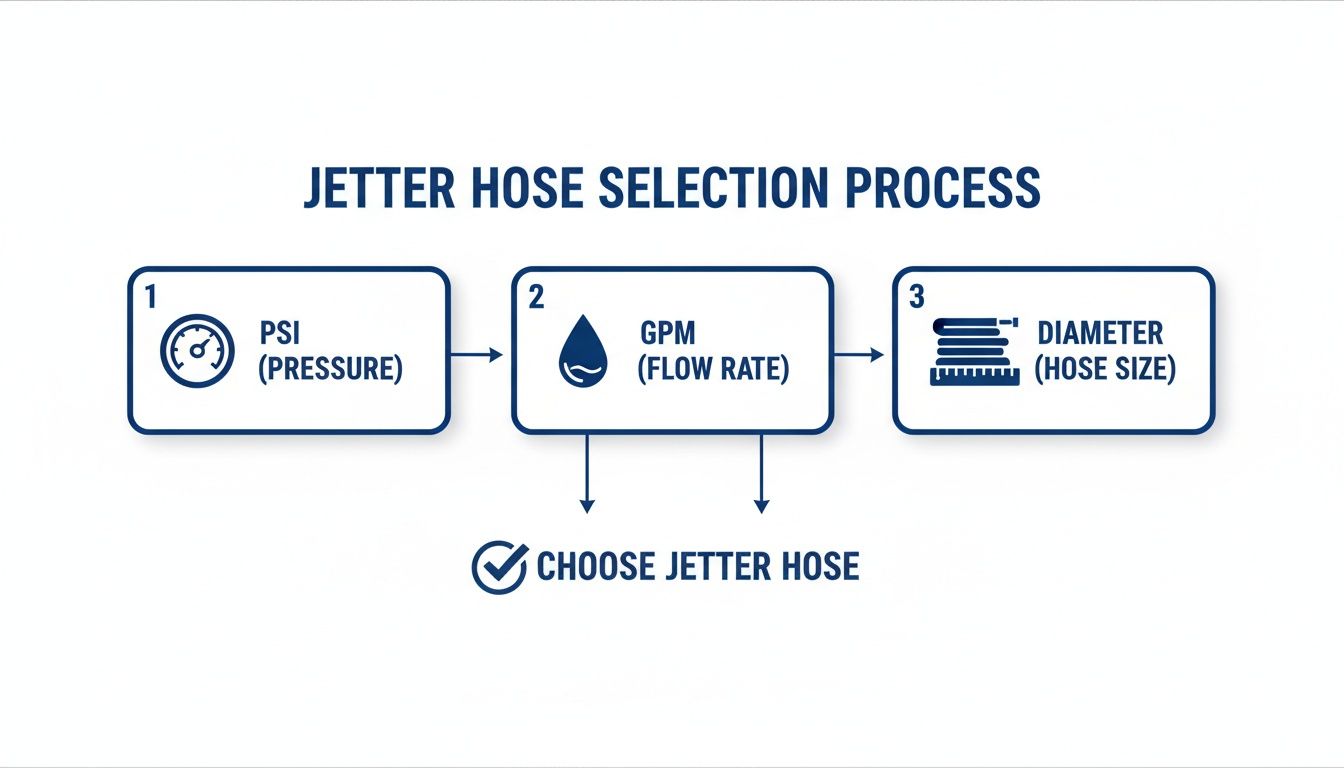
As illustrated, system balance is paramount. You need the PSI for cutting power, the GPM to clear debris, and the correct hose diameter to ensure unrestricted flow from the pressure washer to the nozzle.
Putting It All Together: A Practical Scenario
Consider a typical industry scenario: a utility locate requires daylighting a fiber optic line adjacent to a commercial building's foundation. Manual digging is too risky, and deploying a full-size hydrovac truck is not cost-effective and risks damaging the surrounding landscape. This is an ideal application for The Hydrovac Attachment Tool.
After the quick assembly, excavation begins with surgical precision. The water jet and resulting slurry are instantly contained and removed by the vacuum tube. This eliminates messy overspray that could damage the building's facade or landscaping, leaving a clean, precise pothole that safely exposes the utility line. This method of effective digging is the core value proposition of the tool.
For crews building more customized hydrovac solutions, our guide on connecting a hose adapter to PVC offers valuable insights. To ensure an adequate mobile water supply, understanding tank integration is key; this resource on how to install a polyethylene tank provides an excellent overview.
Getting the Right Nozzle and Technique for Precision Digging
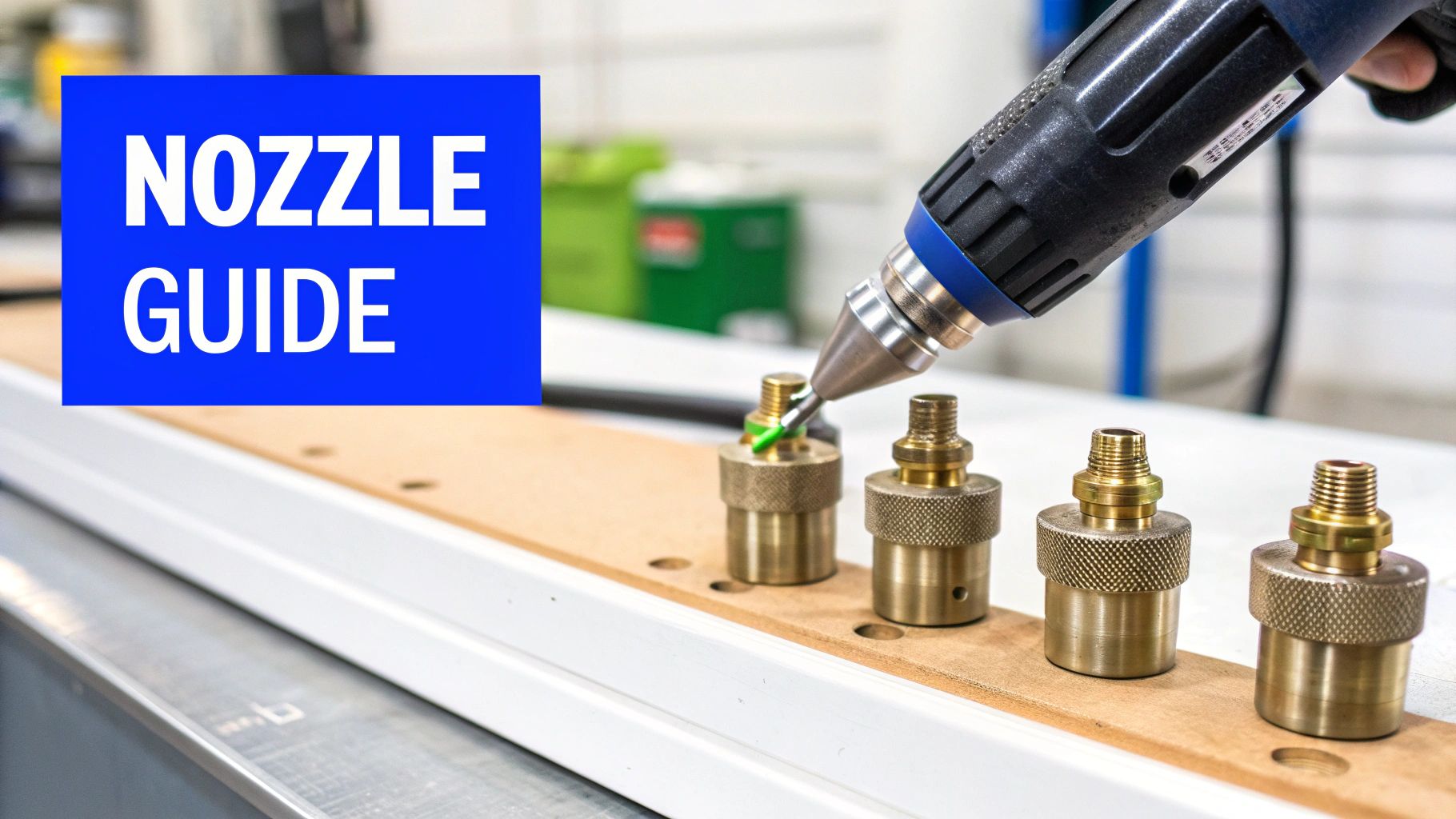
The efficacy of a hydrovac system is determined at the tip of the pressure washer wand. Nozzle selection is a critical strategic decision that dictates the shape, force, and impact of the water stream. It transforms the jetter hose from a simple conduit into a precision digging instrument, differentiating a clean, efficient excavation from a slow, messy one.
Choosing the right nozzle is about matching the tool to the soil conditions. For highly compacted or challenging soils, a rotating nozzle (or turbo nozzle) is indispensable. It projects a zero-degree stream in a cone pattern, acting as a high-speed mechanical agitator to pulverize hard ground for effective digging.
For initial surface penetration during potholing, a penetrating nozzle with its focused, solid stream is ideal. When working around delicate utilities or clearing loose soil, a fan-spray nozzle provides a wider, less aggressive spray pattern, functioning more like a hydraulic scraper than a drill.
Finding Your Dig-and-Vac Rhythm
With the correct nozzle selected, success depends on technique. The key is establishing a smooth "dig-and-vac" rhythm, synchronizing the water jet from the hose with the powerful suction of The Hydrovac Attachment Tool. This is a coordinated process, not just random blasting and vacuuming.
The optimal technique involves angling the wand so the water jet loosens soil and directs it toward the vacuum tube's opening. This creates an immediate slurry that is instantly evacuated, keeping the hole clear and maintaining visibility of the excavation target. A consistent rhythm prevents the work area from becoming a flooded, unmanageable pit.
This level of control is precisely why hydrovac excavation is the preferred method for non-destructive digging. A focused water jet liquefies soil only in the target area, which is critical for safely exposing buried utilities while minimizing site disruption.
Mastering this technique ensures you are leveraging your equipment to its maximum potential, completing jobs faster with minimal cleanup.
Matching the Nozzle to the Task
Every hydrovac job presents unique challenges, and a versatile nozzle kit is a hallmark of a professional crew.
Here are a few common industry scenarios:
- Utility Potholing: Begin with a penetrating nozzle to break the surface. If hard-packed clay is encountered, switch to a rotating nozzle to break it up. Finish with a gentle fan-spray to clear the final layer of soil from around a pipe or cable without causing impact damage.
- Trenching for Irrigation: A narrow fan-spray or a rotating nozzle is effective for carving clean, defined trenches without widespread turf damage.
- Debris and Sludge Removal: For cleaning catch basins or clogged lines, a high-flow flushing nozzle is required. It is designed to move a large volume of water to push accumulated debris toward the vacuum source.
For hydrovac crews, operating a pressure washer jetter hose at 3,001-4,000 PSI is the sweet spot for efficiency. At this pressure, operators can clear 90% of typical sewer line debris in under 10 minutes. More importantly, a key industry study revealed that this technology reduced the risk of utility strikes by 40% during potholing, saving industries an estimated $1.5 billion annually in repair costs.
To learn more about specific nozzle options, explore our in-depth guide on choosing the right water jetting nozzle.
Essential Safety Protocols for High-Pressure Hydro Excavation
In the hydrovac industry, high pressure demands high responsibility. Safety is not a procedural formality; it is the foundation of every operation, particularly when utilizing a pressure washer jetter hose capable of several thousand PSI. The margin for error is minimal, making strict adherence to safety protocols non-negotiable for every team member.
Beyond basic PPE, it's crucial to address the specific hazards of hydro excavation. High-pressure injection injuries, where water penetrates the skin causing severe subcutaneous damage, are a primary concern.
This risk underscores the need for total control of the wand at all times and for verifying every connection before pressurizing the system. A poorly secured fitting can eject with lethal force under pressure.
Maintaining a Safe and Controlled Work Zone
A secure job site is built on situational awareness and clear communication. The wand operator and the vacuum operator must work in perfect sync. This teamwork is fundamental to preventing accidents and ensuring a safe, efficient workflow.
Key practices for professional hydrovac crews include:
- Establish a Communication Protocol: Before starting, agree on clear hand signals or verbal cues for starting, stopping, and adjusting water flow. This ensures the vacuum operator is always prepared.
- Respect Approach Distances: Adhere strictly to minimum safe approach distances for all marked utilities. The pressure washer jetter hose should be used to wash away soil from a safe distance, never blasting directly at a utility line.
- Ensure Proper Grounding: Electrical hazards are a significant risk. All equipment must be properly grounded, especially when working near known electrical infrastructure, to prevent electrocution.
The Hydrovac Attachment Tool inherently enhances job site safety. Its contained system dramatically reduces aerosolized contaminants and flying debris. This creates a cleaner, more controlled work area, protecting the crew, adjacent property, and the public.
Mitigating Unique Hydrovac Hazards
Every job site presents unique variables, from unstable soil conditions to unmarked utilities. The contained design of a system utilizing The Hydrovac Attachment Tool provides a significant advantage in managing these unknowns.
By immediately vacuuming the water and soil slurry, the system prevents the work area from deteriorating into a muddy, hazardous pit. This ensures stable footing for the crew and maintains a clear line of sight into the excavation.
This controlled methodology is the essence of non-destructive digging. It harnesses the power of a pressure washer and transforms it into a precision instrument, enabling your team to safely uncover subsurface infrastructure without creating new hazards. These are the practices that define professional hydrovac operations and ensure every team member returns home safely.
Keeping Your Gear in Top Shape and Fixing Problems on the Go
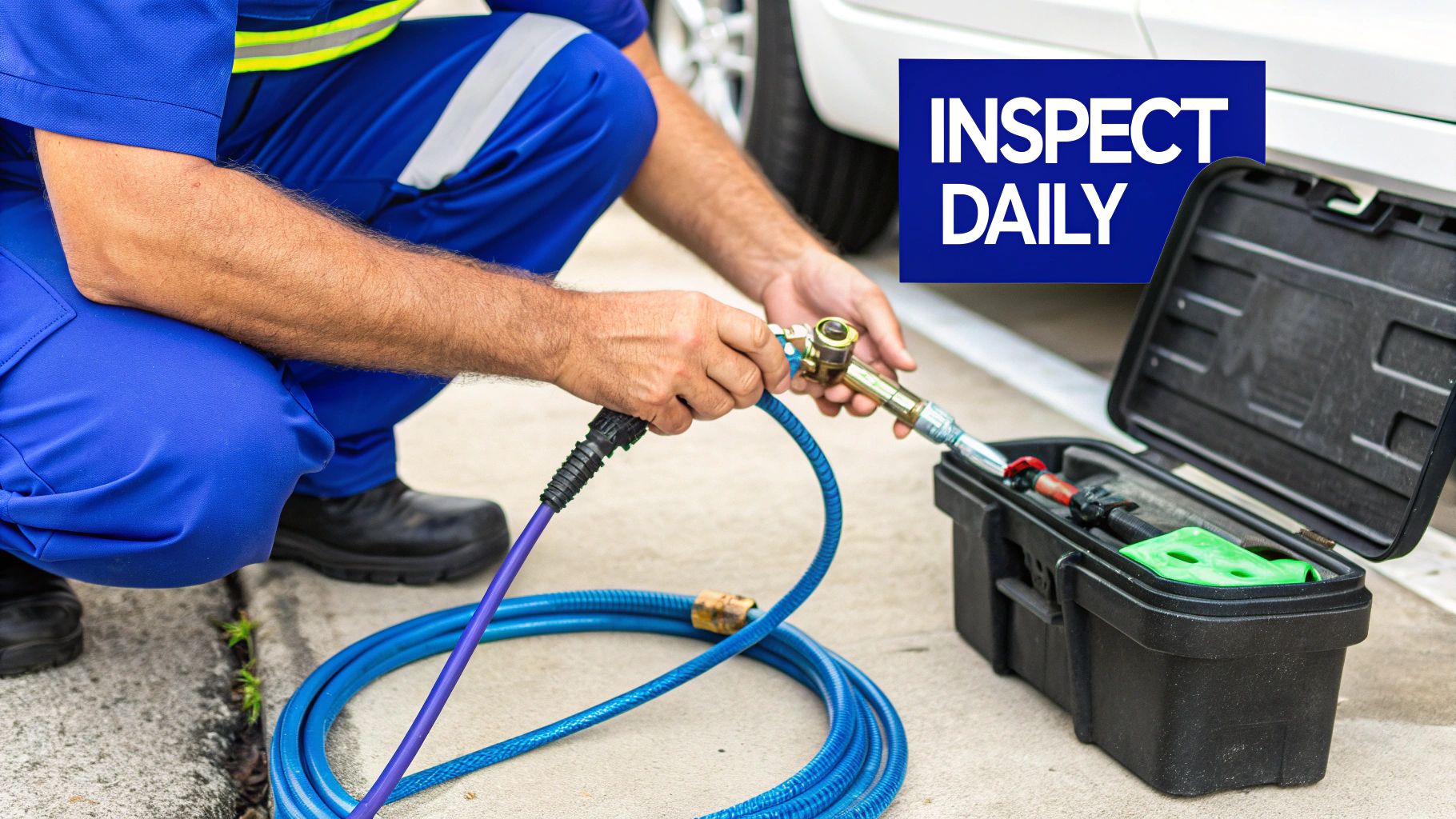
Reliable equipment is not bought; it is created through diligent maintenance. In the hydrovac industry, unplanned downtime is a direct hit to profitability. Proactive maintenance of your pressure washer jetter hose and The Hydrovac Attachment Tool is the most effective strategy to prevent costly equipment failures.
This is not about extensive shop time. It's about integrating quick, daily inspections into your operational routine. A simple check at the start of each day can identify a minor issue before it evolves into a major problem that sidelines your entire crew.
The Daily Pre-Flight Check
Before connecting any hose, conduct a brief but thorough inspection of your equipment. This five-minute routine can prevent hours of field-based frustration.
- Walk the Hose: Inspect for visible signs of wear—abrasions, cuts, blisters, or bulges. Running a gloved hand along the entire length can often detect soft spots or weaknesses that are not visually apparent.
- Check Your Connections: Ensure all fittings are tight. Pay close attention to the O-rings within the connectors, as a cracked or missing O-ring is a leading cause of pressure loss.
- Inspect the Nozzle: A small piece of debris lodged in the nozzle orifice can severely degrade performance. A quick visual check ensures a clear passage for a powerful, consistent spray pattern.
This routine is your first line of defense against unexpected failures. To formalize this process for your team, consider using a preventive maintenance schedule template.
Quick Fixes in the Field
Despite rigorous maintenance, field issues can arise. The ability to diagnose and resolve common problems on-site is a critical skill for professional operators.
If you experience a sudden loss of pressure, the nozzle is the first and easiest component to check for blockage. If it's clear, inspect all connections for leaks. Even a minor drip from a loose fitting can cause a significant drop in PSI. For The Hydrovac Attachment Tool, a poor seal at the vacuum tube is a common cause of performance loss; ensure the clamp is secure. For more on this, see our guide to vacuum hose clamps.
A leak at the wand or pressure washer connection is frequently caused by a worn O-ring. Maintaining a small kit of spare O-rings in your service vehicle is a best practice. This simple, inexpensive part can get you back to effective digging in minutes, preventing a complete shutdown for the day.
The North American hydrovac market is expanding rapidly, driven by proven efficiency gains. Teams report 37% productivity increases when using jetter-vac systems. This translates to completing an additional 12 potholes in a standard 8-hour shift. The equipment is robust, with hoses rated to handle 200°F water for cutting through grease and frozen ground. When paired with The Hydrovac Attachment Tool's three-step clamp system, setup time is reduced from an average of 15 minutes to under 3.
Got Questions About Jetter Hoses and Hydrovac Tools? We’ve Got Answers.
Integrating new tools into an existing equipment fleet naturally raises questions. Hydrovac operators and contractors need clear, direct information to make sound decisions. Here are answers to some of the most common questions about using a pressure washer jetter hose with vacuum excavation tools like The Hydrovac Attachment Tool.
Will My Hose and Wand Fit the Tool?
This is a critical question of compatibility. The Hydrovac Attachment Tool was designed for broad compatibility with industry-standard equipment, but verification is essential for both performance and safety.
First, your hose must have a pressure rating between 2,000 and 4,000 PSI to achieve effective cutting power in typical soil conditions.
Second, the physical fit is paramount. The pressure washer wand must slide securely into the attachment's nozzle cap. The system is engineered to accommodate standard professional pressure washer wands and 2.5-inch wet vac tubes.
Always confirm a secure fit before operation. A tight connection is crucial for preventing dangerous high-pressure leaks and ensuring maximum digging efficiency.
The Hydrovac Attachment Tool is designed to create a sealed, high-suction environment. A loose-fitting wand creates a significant vacuum leak, dissipating suction power and transforming a precision digging tool into an inefficient, messy sprayer.
What’s the Best Pressure for Working Around Utilities?
Calibrating pressure is key when excavating near underground utilities. Excessive pressure risks damaging infrastructure—a costly and dangerous error—while insufficient pressure wastes time and money.
For daylighting and potholing, the industry sweet spot is typically between 2,500 and 3,500 PSI. This provides ample force to liquefy compacted soil while significantly mitigating the risk of damaging pipes, cables, or conduits.
A flow rate of 2.5 to 4 GPM is ideal. This volume is sufficient to create a manageable slurry that your vacuum can easily remove without flooding the excavation site. The best practice is to start at the lower end of the pressure range and gradually increase as dictated by soil conditions.
How Does This Compare to a Full-Size Hydrovac Truck?
This system is not a replacement for a large hydrovac truck; it is a specialized tool for a different set of applications. It offers a nimble, cost-effective solution for precision tasks and sites with limited access.
A pressure washer and wet vac equipped with The Hydrovac Attachment Tool excels in scenarios where a large truck is impractical or impossible to use:
- Tight residential properties for utility locates
- Sensitive landscaping projects
- Interior or limited-access trenching
While a dedicated hydrovac truck offers immense power and debris capacity for large-scale projects, this agile setup provides unmatched speed and maneuverability for precision work. It leverages equipment you already own into a powerful, effective digging solution without the substantial capital investment.
What Kind of Maintenance Does My Jetter Hose Need?
Maintaining your pressure washer jetter hose is straightforward but absolutely essential for safe, long-term operation.
- Pre-Operation: Conduct a visual inspection of the entire hose length, looking for cuts, abrasions, or bulges that indicate potential weak spots.
- Post-Operation: Flush the hose with clean water after every use to remove debris that can harden internally and clog nozzles.
- Periodic Checks: Regularly inspect the O-rings on your connectors. Replace any that appear dry, cracked, or flattened to prevent pressure-robbing leaks.
A few minutes spent properly coiling and storing your hose out of direct sunlight can prevent a dangerous high-pressure failure on the job. This is time well invested.
Ready to make your excavation work faster, cleaner, and more precise? The Hydrovac Attachment Tool is engineered to integrate with your existing pressure washer and wet vac, delivering serious, effective digging power without the massive price tag.