


In the hydrovac industry, the water jetting nozzle is the critical point of contact where a truck's power becomes digging performance. It’s the single most important component for turning your hydrovac's raw GPM and PSI into a focused, high-velocity stream capable of precise, efficient excavation.
Think of it as the business end of your entire hydrovac operation. The nozzle controls the force, shape, and speed of the water jet, directly dictating the efficiency and profitability of any vacuum excavation project you tackle.
Why Your Water Jetting Nozzle Is Your Most Important Tool
It's easy to overlook such a small part, but your water jetting nozzle is like the lens on a high-powered camera. Your hydrovac pump generates a massive amount of potential energy, but it's the nozzle that sharpens this power into a precise, effective digging force.
For hydrovac operators, choosing the right nozzle is often the difference between a smooth, profitable day and a long, frustrating one fighting against the soil. This component is a strategic tool that directly impacts your most critical numbers. Getting it right isn't just a matter of convenience; it’s a decision that echoes through your entire workflow, from water consumption to job completion times.
The Impact of Nozzle Selection
Picking the right water jetting nozzle has a direct and immediate effect on the job. Here's where you'll see it:
- Digging Speed and Efficiency: The right nozzle tears through soil, letting your crew finish jobs faster. The wrong one just seems to fight the ground, slowing progress to a crawl and burning fuel.
- Water Consumption: An optimized nozzle uses every drop of water for maximum impact, not waste. This is huge for your bottom line—it means fewer trips for refills and more time digging.
- Profitability: It’s simple math. Faster jobs plus less water used equals more money in your pocket. Every hour you save and every gallon of water you conserve makes the operation more profitable.
The nozzle is the final translator of your truck's horsepower into real-world performance. It dictates how efficiently your machine's power is applied to the soil, making it a pivotal factor in the success of any hydrovac job.
At the end of the day, the nozzle is where the complex mechanics of vacuum excavation meet the ground. Understanding how this one part turns your truck's potential into actual results is the first step to mastering any soil condition you come across.
Whether you're digging in loose sand or trying to break through tough frost, your nozzle selection sets the stage for success. This is especially true for systems like The Hydrovac Attachment Tool, which provides a self-contained digging environment that amplifies the effectiveness of any nozzle. It serves as the ultimate solution for effective digging, proving that the right tip paired with the right system makes all the difference.
Matching Nozzle Types to Job Site Conditions
Choosing the right water jetting nozzle isn't just about raw power; it’s about control. In the hydrovac industry, you wouldn't use a sledgehammer to drive a finishing nail. The same logic applies on the job site. Different soil types and excavation tasks demand specific nozzles to get the job done cleanly, quickly, and without causing damage to underground utilities.
Not all nozzles are built the same. In the hydrovac world, they generally fall into three main categories, each with a unique spray pattern designed for a specific job. Knowing the difference is what separates a frustrating day from a productive one. It’s how you match the right tool to the terrain.
The nozzle is really the business end of the whole operation. It takes all the energy generated by the pump and focuses it into a powerful, cutting force.
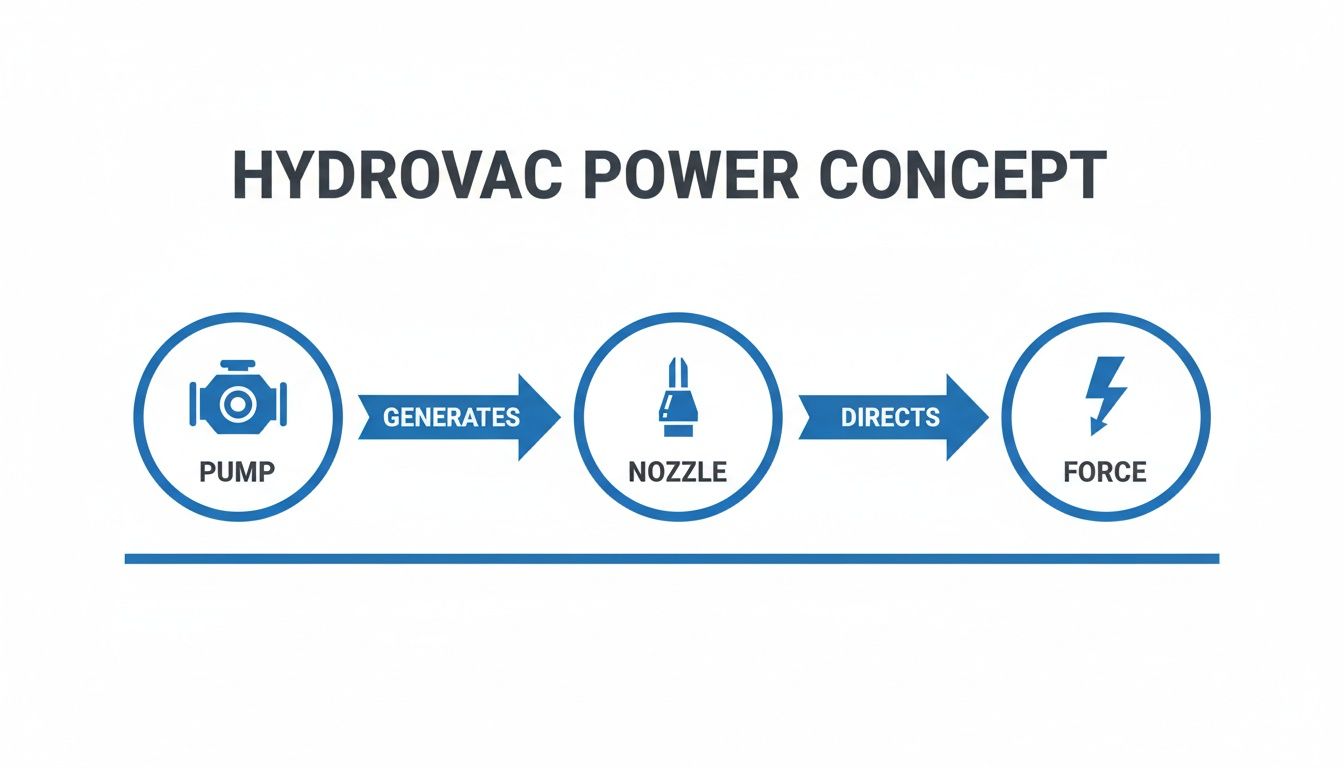
Without the right nozzle, all that pressure from the pump is just a high-volume water hose. With it, you can slice through the ground.
The Three Primary Nozzle Types
To make the right call in the field, you need to know your go-to options. Let’s break down the main players and where they really shine in hydro excavation.
- Straight Jet Nozzles (0-Degree): These are the scalpels of hydrovacing. They shoot a single, pinpoint stream of water that delivers maximum force to a tiny spot. This makes them perfect for precise work like potholing, cutting straight lines, or punching through a tough layer of material.
- Fan Jet Nozzles (Varying Degrees): Think of a fan jet like a high-pressure scraper. It creates a wide, flat sheet of water, ideal for surface cleaning, clearing away loose soil from a large area, or gently peeling back layers without digging too deep in one spot.
- Rotating Nozzles (Spinner Nozzles): Meet the jackhammers of the hydrovac world. A rotating nozzle spins a straight jet stream at an incredible speed. This creates an aggressive, pulsating cone of water that’s unmatched for breaking up hardpan, dense clay, or even frozen ground.
A nozzle’s design dictates its function. A straight jet gives you precision, a fan jet gives you broad coverage, and a rotating nozzle delivers the brute force you need for the toughest jobs.
Selecting the Best Nozzle for the Job
The soil you’re up against is the biggest factor in your nozzle choice. Industrial cleaning nozzles are a huge part of the USD 291.9 million cleaning nozzle market for a reason—they work. And industry data shows that rotary designs can boost digging efficiency by 40-60% compared to standard static jets. Those numbers prove that picking the right tool directly impacts your bottom line. You can read more about market trends for industrial cleaning nozzles at kingsresearch.com.
Here’s a quick-reference table to help you match the right nozzle to your next hydrovac job.
Water Jetting Nozzle Application Guide
| Nozzle Type | Spray Pattern | Best For (Soil Condition) | Primary Task |
|---|---|---|---|
| Straight Jet | Single, focused stream | Compacted dirt, some clays | Potholing, trenching, cutting |
| Fan Jet | Wide, flat sheet | Loose sand, topsoil, mud | Surface cleaning, shallow soil removal |
| Rotating (Spinner) | Conical, pulsating jets | Frozen ground, hardpan, dense clay | Bulk excavation, breaking up hard materials |
This table gives you a solid starting point, but always remember to assess the conditions on-site before you start digging.
While traditional wands and nozzles get the job done, modern systems like The Hydrovac Attachment Tool offer a solution that takes performance to the next level. This tool creates a contained environment that makes any nozzle work better. By capturing the water jet and slurry right at the point of excavation and sending it straight up the vacuum hose, it magnifies the natural strengths of each nozzle. The result is less mess, faster digging, and better performance, no matter what kind of ground you're in.
Understanding Nozzle Specs for Your Hydrovac Truck
Choosing the right water jetting nozzle can feel like trying to crack a code. You're staring at a bunch of numbers—PSI, GPM, and orifice size—and they all have to line up perfectly with your hydrovac truck's specs. Getting these specs right is the key to unlocking your truck’s real power and avoiding some seriously expensive mistakes.
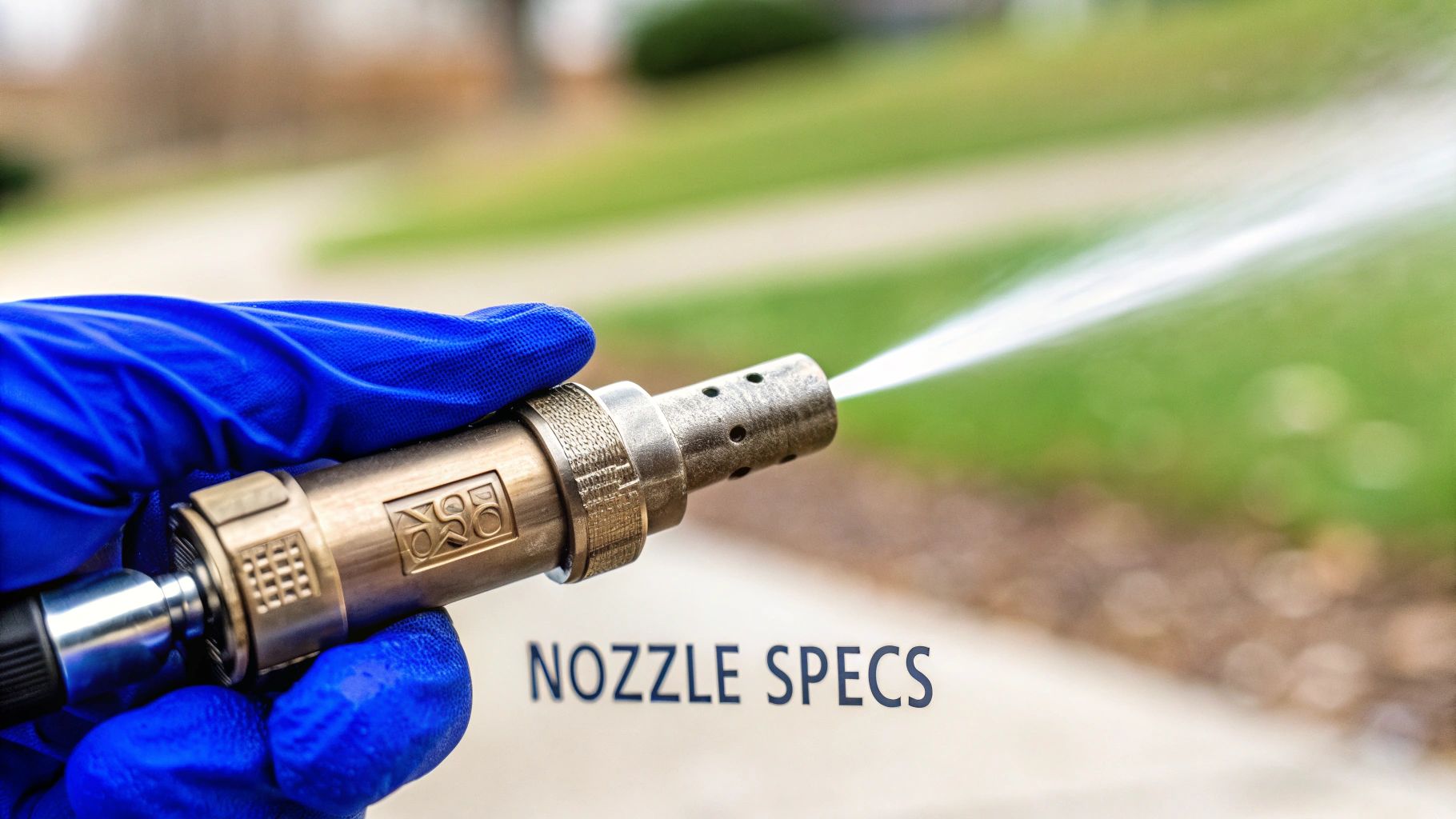
It’s a lot like a simple garden hose. When you put your thumb over the end, the water shoots out faster and harder (that's your pressure), but you're not getting as much water out overall (that's your flow). A nozzle is just a more sophisticated way of doing the same thing, finding the sweet spot between pressure and flow to create the perfect digging stream for hydrovac applications.
This balancing act is exactly where things can go wrong. If your nozzle and pump aren't a good match, you’ll see it in your digging performance. Worse, you could be putting a massive strain on your equipment, leading to premature wear and the kind of downtime nobody can afford.
The Critical Trio of Nozzle Specifications
To get this right every time, you need to know how three core specs work together to match your pump's output.
- PSI (Pounds per Square Inch): Think of this as the force of the water jet. Higher PSI means more impact, which is what you need for blasting through tough clay or frozen ground.
- GPM (Gallons Per Minute): This is all about volume. A higher GPM flushes away more material, which is great for speeding up the job in softer, looser soils.
- Orifice Size: This is the tiny hole the water fires through. It’s the control point that dictates the PSI and GPM your system actually produces at the tip.
The orifice is the single most important factor. It must be sized correctly for your pump's specific GPM and PSI ratings. An orifice that's too large will cause a significant pressure drop, while one that's too small will overwork your pump.
The level of engineering that goes into these little components is pretty incredible. In the broader world of industrial waterjet cutting, nozzles made from materials like sapphire can handle pressures up to a staggering 60,000 psi. That market was valued at USD 1.03 billion back in 2019, which just goes to show how vital nozzle technology is. You can read more about the growth of the waterjet cutting market on fortunebusinessinsights.com.
For hydrovac operators, nailing this balance means you can walk up to any job with confidence. You’ll know immediately if a certain water jetting nozzle is going to work with your truck or fight against it.
When you pair a correctly matched nozzle with a solution like The Hydrovac Attachment Tool, the results are even better. The attachment’s design contains the high-pressure spray, making sure every bit of that optimized pressure and flow is focused on digging. It’s that combination—the right specs and the right tool—that takes your performance to the next level.
Beyond the Nozzle: A Smarter Way to Dig
Picking the right nozzle is a huge part of the puzzle, but what if you could change the entire game? Let's be honest, even with the perfect nozzle, hydrovac operators still fight the same old battles: splashback, messy sites, and the constant back-and-forth of spraying and vacuuming. It can slow you down. This is where you have to think bigger than just the tip of the wand and look at the whole system.
The real goal isn't just to manage the headaches of hydro excavation—it's to eliminate them. The ideal solution shouldn't just spray water; it needs to create a clean, controlled, and fast-moving work zone. That's precisely the thinking behind The Hydrovac Attachment Tool, a solution designed for effective digging.
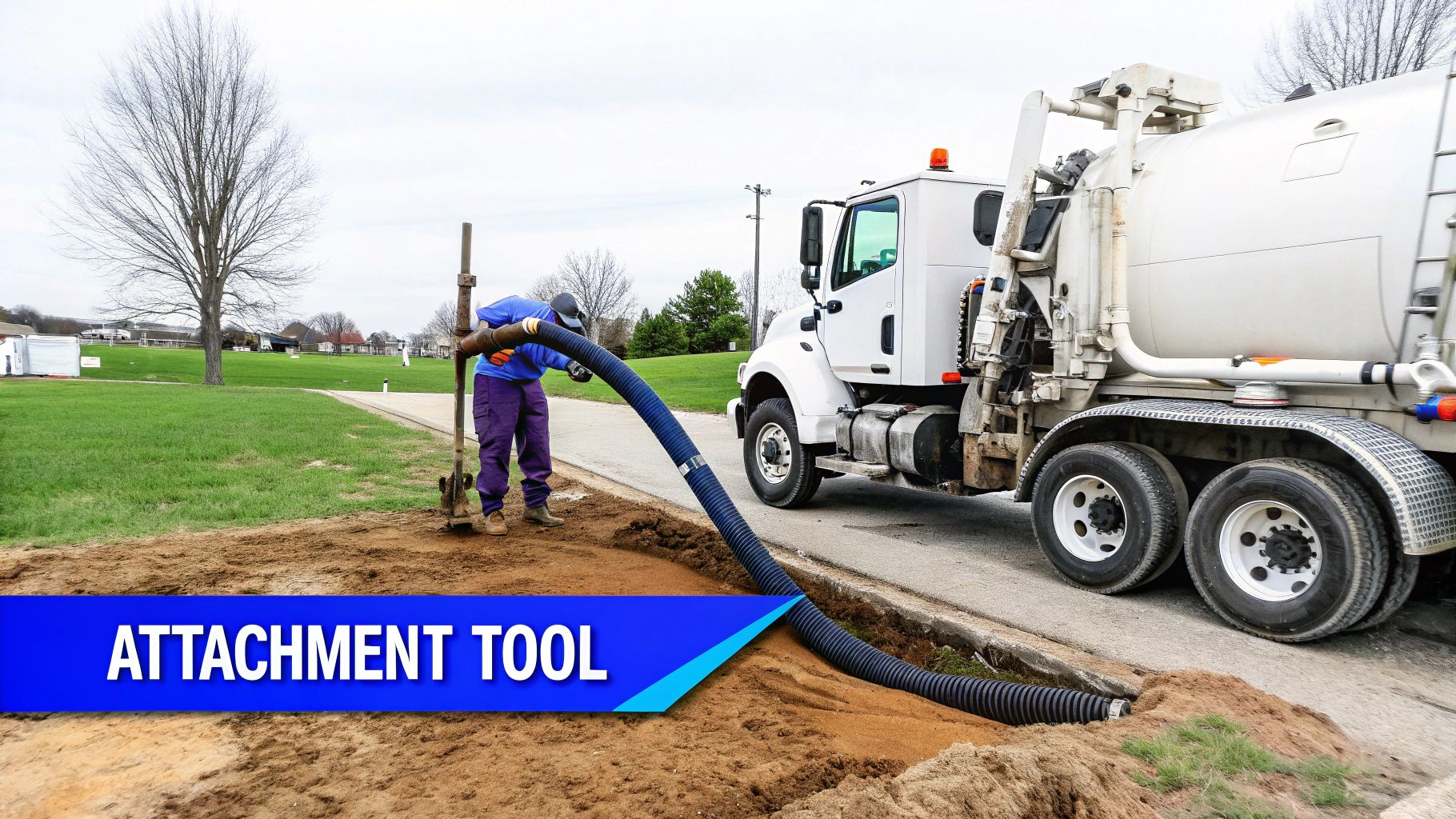
This isn't just another nozzle. Think of it as a complete digging system that snaps onto the equipment you already own. It cleverly connects your power washer wand directly to the wet vac hose, creating a self-contained suction zone right where the digging happens.
A Leap Forward in Hydrovac Efficiency
This simple, integrated design immediately closes the performance gaps that individual nozzles just can't fix. Instead of blasting water and mud all over the site, the attachment funnels everything directly up the vacuum hose. It’s a straightforward concept, but the results on the ground are immediate.
Operators in the hydrovac industry report getting jobs done way faster, especially when they hit tough conditions like dense clay or heavily compacted soil. All the energy from the water jet is focused on breaking up the ground, and the instant vacuuming means the slurry is gone in a flash, giving you a clear view of what you're doing.
The Hydrovac Attachment Tool turns the old two-step "spray, then vac" routine into a single, seamless action. This cuts down job time, slashes water usage, and makes the entire site more productive.
This idea of small system optimizations leading to huge gains isn't new. Take the textile industry, for example. Innovations in water jet loom nozzles, like making the orifice size adjustable, have been shown to cut fabric defects by 15% and help factories run 24/7. It’s about making the whole system work smarter.
What This Means for You in the Field
Adopting a tool like this isn't about theory—it's about making your day easier and more profitable. Crews who have made the switch consistently point to a few key improvements that change how they work.
Here’s what you can actually expect:
- Less Water, More Digging: Because every drop of water is contained and put to work, you're not wasting it on overspray. That means fewer trips to refill the tank and more time on the job.
- Cleaner, Tighter Excavations: The tool gives you surgical precision. You can dig right around sensitive utilities without disturbing the surrounding soil, cutting the risk of expensive damage.
- A Safer Work Environment: With virtually no splashback, you're not getting covered in mud and debris. This keeps you cleaner, safer, and gives you a much better view of the excavation site.
At the end of the day, this attachment is a strategic upgrade for any hydrovac crew. It takes the power your truck already has and focuses it for maximum impact. If you're looking for a solution to make your digs faster, cleaner, and more efficient, check out the Hydrovac Attachment V2 and its features on our product page. It’s built to unlock your equipment's true potential out in the field.
Field Guide to Safe and Efficient Nozzle Operation
Getting the best performance out of your water jetting nozzle isn't just about cranking up the pressure; it's about control, precision, and most importantly, safety. A tool this powerful demands a disciplined hand. A few fundamental practices can be the difference between a clean, successful job and a costly disaster, protecting both your crew and the critical infrastructure you’re there to expose.
Think of it as your pre-flight check. Before that pump even kicks on, every operator on site needs to be on the same page. This is especially true when you're digging anywhere near sensitive targets like gas lines or fiber optics. That quick huddle to review the plan is a simple step that sets the tone for a safe, professional operation.
Core Safety and Performance Practices
Boosting your digging speed while keeping the site safe boils down to a few hard-and-fast rules. Make these second nature for your crew, and you'll be running like a well-oiled machine.
-
Keep Your Distance: Never let that nozzle tip get right up on a utility line. Maintaining a safe standoff distance is your best insurance against accidentally slicing into something you shouldn't.
-
Gear Up Every Time: The right PPE is non-negotiable. We're talking hard hat, safety glasses or a full face shield, waterproof steel-toed boots, and gloves. High-pressure water isn't just water; it can cause severe injection injuries in an instant.
-
Master Your Potholing: When daylighting, don't just point and shoot. Use a gentle sweeping or circular motion to wash the soil away. This approach removes material effectively without hammering one spot with concentrated force.
Your first line of defense against a slow, dangerous job is a simple nozzle inspection. A worn or damaged nozzle wastes water, kills your digging power, and can create an unpredictable spray pattern that puts everyone on site at risk.
The Importance of Regular Inspection
Let's be clear: a water jetting nozzle is a wear item. It's designed to be used up and replaced. Over time, that relentless flow of high-pressure water will slowly but surely erode the orifice, making the opening larger. It might seem like a tiny change, but it completely wrecks the jet's performance, turning your precision cutting tool into a glorified garden hose.
Get in the habit of giving your nozzle a quick visual check before each shift. Look for any visible cracks, dings, or an orifice that looks oval or irregular instead of perfectly round. If you see any signs of wear, swap it out. A fresh nozzle keeps your digging power at its peak, conserves water, and keeps the job site predictable and safe.
Pairing these habits with the right gear, like the tools covered in our guide to essential vacuum hose accessories, elevates your entire operation. And for operators running The Hydrovac Attachment Tool, these safety protocols are even more critical—that tool's focused power demands your full attention and respect.
Troubleshooting Common Water Jetting Nozzle Issues
Every hydrovac operator, no matter how experienced, eventually runs into trouble in the field. One minute you're digging efficiently, the next you're staring at a sudden pressure drop or a spray pattern that's all over the place. When a profitable job suddenly grinds to a halt, the problem often points right back to one small component: the water jetting nozzle.
Knowing how to troubleshoot these issues on the spot is what separates the pros from the rookies. You can save yourself a ton of downtime if you can diagnose and fix the problem in minutes, rather than waiting for a mechanic or making a trip back to the shop. This guide is your field-ready cheat sheet for figuring out what's wrong and getting back to digging.
Most nozzle problems boil down to just a few common culprits, and each one has its own tell-tale signs. If you can learn to spot them, you're already halfway to a solution.
Diagnosing Performance Problems
When your nozzle starts acting up, don't just guess. Run through this quick diagnostic checklist to pinpoint the real issue.
-
Problem: The Spray Pattern is Messy and Inconsistent
- Likely Cause: Nine times out of ten, this is a simple clog. Even a tiny speck of debris can partially block an orifice, which completely messes up the water flow and gives you a weak, erratic spray.
- Solution: First, safely shut everything down and disconnect the nozzle. Grab a proper nozzle tip cleaner or a small piece of soft wire and gently clear the blockage. Whatever you do, never use a drill bit or a hard metal tool—you’ll destroy the precisely engineered orifice in a second.
-
Problem: You're Gradually Losing Pressure Over Time
- Likely Cause: This is the classic sign of a nozzle that's simply worn out. The high-pressure water acts like liquid sandpaper, slowly eroding the orifice and making the opening bigger. As the hole widens, your pump can no longer supply enough water to maintain pressure.
- Solution: The easiest way to check is to compare the suspect nozzle with a brand-new one. If the orifice on your old nozzle looks obviously larger, oval-shaped, or distorted, it's done. It's time to replace it. A worn nozzle doesn't just cut your performance; it burns through extra water and fuel.
A huge mistake we see operators make is cranking up the pump pressure to try and compensate for a worn nozzle. This is a temporary fix that creates a much bigger problem. It puts massive strain on your pump and other system components, turning a simple nozzle replacement into a very expensive repair bill. Always fix the nozzle first.
For anyone running The Hydrovac Attachment Tool, keeping that nozzle in perfect shape is absolutely critical. That tool's incredible digging power comes from its contained, focused spray pattern. Any issue with the nozzle directly kills the attachment's efficiency, so making regular checks part of your routine isn't just a good idea—it's essential for getting the performance you paid for.
Got Questions? We've Got Answers.
We get a lot of questions from operators in the hydrovac industry about water jetting nozzles. Here are some of the most common ones we hear, along with some straight answers from the pros.
How Often Should I Be Swapping Out My Nozzles?
There's no magic number, but it really boils down to how hard you're working it, the quality of your water, and the pressure you're running. The best rule of thumb is to give your nozzle a quick once-over every single day.
Look for a wonky spray pattern or a feeling that you're losing digging power. If that hole (the orifice) looks egg-shaped, bigger, or just plain chewed up, swap it out immediately. A worn-out nozzle is just throwing water—and money—away.
What's the Go-To Nozzle for Frozen Ground?
When you hit frozen dirt, you need something with more muscle. A rotating or spinner nozzle is hands-down your best bet.
Think of it like a tiny, high-powered jackhammer. That spinning jet smashes and pulverizes hard, frozen soil in a way a standard nozzle just can't touch. It’s the industry standard for a reason when the temperature drops.
Answering these questions really drives home a key point: your nozzle's performance is directly tied to your success on the job site. When you pair a well-maintained nozzle with an advanced system like The Hydrovac Attachment Tool, you're not just digging—you’re getting the absolute most out of your hydrovac for faster, cleaner, and more profitable work.
Ready to make every dig count? See how The Hydrovac Attachment Tool can seriously upgrade your workflow. Learn more at hydrovacattm.com.