


Vacuum line fittings are the crucial connectors in any residential digging or yard care project. They are the hardware that creates a rock-solid, airtight seal between your wet vac and its hose, ensuring you get the full suction power needed for tough jobs.
Whether you're carefully digging fence post holes near utility lines or clearing debris from a tight spot, the right fittings make all the difference. Without a perfect seal, air seeps in, your suction power plummets, and your project grinds to a halt.
Why a Secure Fitting is Your Best Friend for Residential Digging
Think of it like trying to drink a thick milkshake through a straw with a crack in it. It’s frustrating and you get almost nothing for your effort. A loose or improper vacuum fitting does the same thing to your wet vac—it kills the suction, turning a powerful tool into an inefficient mess.
When you can’t lift soil, water, or debris effectively, the whole job is compromised. For landscapers, fence installers, or homeowners digging around delicate utilities, this isn't just annoying; it costs you time and money. That’s why getting the fittings right is non-negotiable for jobs like:
- Digging fence post holes right next to fragile sprinkler lines.
- Exposing underground pipes without the risk of a shovel strike.
- Cleaning out valve boxes or irrigation heads with pinpoint accuracy.
More Than Just Power—It's About Safety
A solid connection is about more than just maintaining peak performance; it's a critical safety measure. Imagine a hose suddenly disconnecting under full power. It can whip around violently or spill its contents, creating a real hazard on site.
This is especially true in environments where air quality is a concern. For tasks that require [accurate air monitoring for silica dust](https://occhygiene.com.au/air-monitoring-for- silica-dust/), a completely sealed vacuum system isn't just a "nice-to-have"—it's an absolute must to keep the air safe.
The industry gets it. The global market for vacuum fittings hit USD 2.5 billion for a reason, and it's on track to keep growing. Professionals know that reliable gear is the foundation of efficient work, as highlighted in this detailed industry report.
At the end of the day, a solid connection gives you control. It’s what allows a tool like the Hydrovac Attachment, when hooked up to a standard wet vac, to become a precise, non-destructive digging machine that harnesses the full force of water and suction.
Decoding the Different Types of Vacuum Fittings
Choosing the right vacuum line fittings can feel like navigating a maze in a hardware store. There are endless options, but for most residential digging and yard care, a few key players do all the heavy lifting. Knowing the difference is what keeps your vacuum pulling with consistent, powerful suction—the kind you need for digging fence post holes or carefully exposing buried pipes.
What happens when you use the wrong fitting? You get suction loss and frustrating clogs. A tiny air leak at a connection point might seem insignificant, but it can slash the performance of your wet vac, turning a precision tool into a paperweight and bringing your project to a grinding halt.
The Workhorses of Wet Vac Connections
For most mobile wet vac setups, especially those using the Hydrovac Attachment Tool, you'll really only need to get familiar with three main types of fittings. Each one has a specific job when it comes to connecting your 2.5" wet vac hose to different tools and extensions.
- Camlock Couplings: These are the champions of speed and convenience. The female fitting has two "arms" that snap securely into a groove on the male fitting, letting you swap hoses in seconds without any tools. If you’re a contractor constantly switching attachments, these are a lifesaver.
- Pin-Lug Connectors: Think rugged and secure. These fittings require a spanner wrench to tighten, creating an incredibly tight, vibration-resistant seal. They're perfect for demanding jobs where the connection has to hold strong despite constant movement and jostling.
- Adapters and Reducers: These are the problem-solvers of your toolkit. A reducer lets you step down from a larger hose to a smaller one for more detailed work. An adapter acts as a bridge, connecting different fitting types or sizes so all your gear can play nicely together.
This concept map really brings home how much the right fittings matter for performance, safety, and getting the most out of your setup.
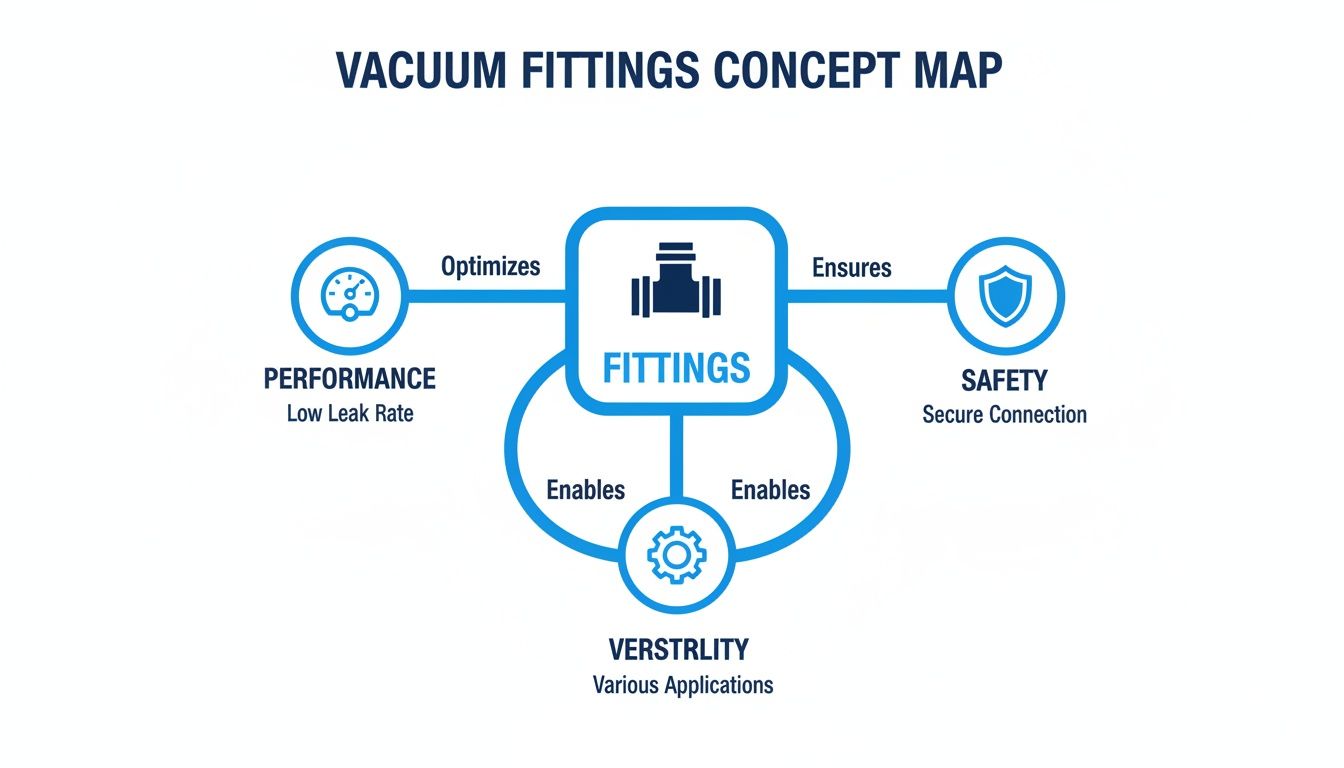
As you can see, fittings aren't just simple connectors. They’re central components that have a direct impact on how effective and safe your entire vacuum system is.
Practical Applications in the Field
It's not just about picking the right type of fitting—it's about knowing how to use it. For example, a simple 90-degree elbow fitting is a non-negotiable when you need to dig right up against a house foundation. It lets your hose navigate a sharp corner without kinking, which would kill your suction instantly.
In the same way, popping on a reducer fitting helps concentrate the vacuum's power. This is perfect for more delicate jobs, like clearing out a clogged irrigation head without disturbing the surrounding area.
A secure, leak-proof connection is the foundation of efficient hydro excavation. Even the most powerful vacuum is rendered useless by a poor fitting, which is why professionals prioritize quality components for every connection point.
If you want to dive deeper into one of the most common types, you can learn more about camlock fittings and see how they're used in different setups. At the end of the day, your goal is to create a seamless, airtight path from the nozzle all the way to the tank, making sure every ounce of power from your vacuum translates into productive work.
Choosing the Right Fitting Size and Material
When you're setting up for precision digging, two choices really make or break the job: the fitting’s size and the material it's made from. These aren't just minor details; they directly control your suction power, how long your gear lasts, and how effective you are in the field, whether you're trenching for sprinklers or carefully exposing a buried pipe.
For any kind of mobile, residential hydro excavation, the 2.5-inch wet vac hose is the undisputed champion. It’s the industry standard for a reason. This size hits the sweet spot, giving you enough airflow to move a serious amount of mud and water without being so clunky you can't get it into tight spots.
This is exactly why tools like the Hydrovac Attachment are built to work seamlessly with this hose size. It’s all about making sure you can connect your existing shop vac and get every ounce of performance out of it.
Matching Material to the Task at Hand
Once you've locked in the 2.5-inch size, you need to think about what your fittings are made of. The material has to stand up to the abuse of your typical job site. Your main choices are modern polymers or classic metals, and each has its own strengths.
-
Durable Polymers: Don't let the word "plastic" fool you. Modern polymer fittings are impressively tough, lightweight, and completely rust-proof. For most landscaping and residential digging, they're the perfect fit, especially since they're constantly exposed to water. No rust and no chemical breakdown mean less maintenance and a longer life.
-
Heavy-Duty Metals: When you need sheer strength, nothing beats metal like stainless steel or aluminum. They're heavier, sure, but a metal fitting is the way to go if you're working in extreme temperatures or if the connection is going to take a lot of physical hits and scrapes.
The huge growth we're seeing in vacuum excavation for things like clean energy projects and city maintenance is all about having reliable, leak-proof connections. In fact, fitting failures dropped quite a bit after 2020, largely thanks to better polymers like those used in the Hydrovac Attachment’s three-part system.
Choosing the right material isn't just about longevity—it's about performance. A polymer fitting won't corrode and jam after a wet day of digging, while a metal one provides the unyielding strength needed for more industrial applications.
In the end, it’s a balancing act between cost, weight, and durability. For the vast majority of yard work and residential utility jobs, modern polymers offer a combination of performance and value that’s hard to beat. Taking a deeper look at different shop vac hoses and fittings can help you dial in the perfect setup for your specific tasks. Get this choice right, and you’ll ensure all of your vacuum's power goes exactly where you need it—right to the end of the hose.
How the Hydrovac Attachment Maximizes Standard Fittings
You've already invested in good gear—a powerful wet vac, solid hoses, and reliable fittings. The Hydrovac Attachment isn't here to make you replace all that. Instead, it’s a smart addition that works with your existing setup to give it a whole new capability: precision digging.
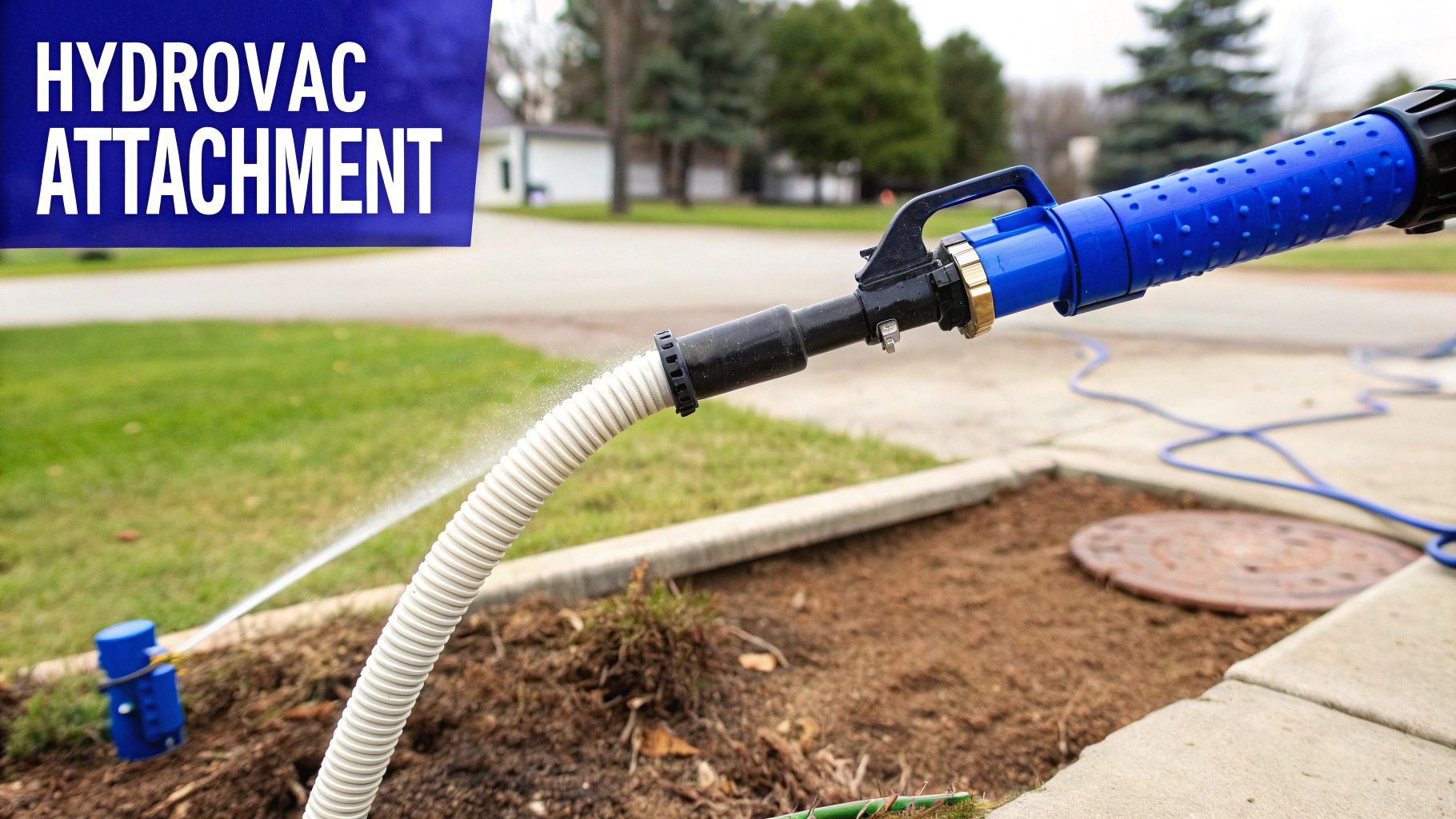
Think of it as turning your standard wet vac into a surgical digging tool. It’s perfect for those delicate jobs around the house where bringing in a shovel feels like taking a huge risk. By integrating directly with the industry-standard 2.5-inch wet vac hose, this attachment transforms your equipment into a compact, highly controlled hydro excavation system. No need to buy into a whole new, proprietary ecosystem of parts. Your current couplers, adapters, and hoses are the backbone of this system.
A Patented System for Precision Control
The real genius of this tool is its patented three-part design. This isn’t just a random collection of pieces; it’s an engineered system designed to create a secure, clean connection between your pressure washer and your vacuum’s suction.
- The Base Connector: This is the heart of the system. It locks onto your 2.5-inch wet vac hose with the fittings you already use, creating a tight, leak-proof seal. This ensures all of your vacuum's suction power is channeled right where you need it.
- The Hose Clamp: Built tough, this clamp firmly grips your pressure washer wand. By keeping the wand from wobbling or shifting, it gives you complete command over the water jet, allowing for almost surgical accuracy when you're digging.
- The Nozzle Cap: This is the final piece of the puzzle. It directs both the high-pressure water spray and the resulting slurry of soil and water straight into the vacuum hose. This creates a self-contained digging zone, which means less splashback and a much cleaner job site.
This straightforward, three-part assembly is what makes it so effective. It combines pressurized water and powerful suction into a single, cohesive tool, giving you a clear line of sight as you work. That kind of visibility is absolutely crucial when you're potholing to find a utility line or trying to dig a fence post hole just inches from a buried sprinkler system. You can literally see what you're digging, as you dig it.
From Brute Force to Surgical Precision
Let's be honest, digging by hand in an established yard is always a bit of a gamble. You're always worried about hitting a pipe, slicing through a root system, or just leaving a giant mess that takes forever to clean up. The Hydrovac Attachment offers a much smarter, more controlled way to get the job done.
By maximizing the potential of standard fittings, the Hydrovac Attachment bridges the gap between a simple shop vac and a professional hydro excavator. It provides a focused, low-impact digging solution without the cost and complexity of a full-sized truck.
Seeing the two approaches side-by-side really highlights the advantages. Here’s a quick comparison of how the Hydrovac Attachment stacks up against traditional digging for common jobs around the home.
Hydrovac Attachment vs Traditional Hand Digging
| Feature | Hydrovac Attachment Method | Traditional Hand Digging |
|---|---|---|
| Precision | Pinpoint accuracy for small holes and trenches | Creates large, messy holes with imprecise boundaries |
| Safety | Safely exposes underground utilities without contact | High risk of striking and damaging pipes or cables |
| Cleanup | Minimal soil disturbance and debris splashback | Requires extensive cleanup of displaced dirt and mud |
| Speed | Quickly liquefies and removes soil for faster digging | Slow, labor-intensive process, especially in hard soil |
| Impact | Preserves surrounding lawn and landscaping | Causes significant damage to turf and plant roots |
When you break it down, the Hydrovac Attachment simply makes every part of your existing setup work better. Your vacuum provides the raw power, the hose gets it to the worksite, and your vacuum line fittings make sure the connections are solid. The attachment just focuses all that power with incredible precision, letting you achieve professional hydro-excavation results with the equipment you already own and trust.
Keeping Your System Sealed and Running Strong
Nothing kills a project's momentum faster than downtime, especially when you're digging around sensitive utilities. When it comes to your vacuum setup, proper installation and routine maintenance of your vacuum line fittings are the difference between a smooth, profitable day and a frustrating one spent chasing down leaks. That perfect, airtight seal doesn't just happen—it's built on a solid, repeatable process.
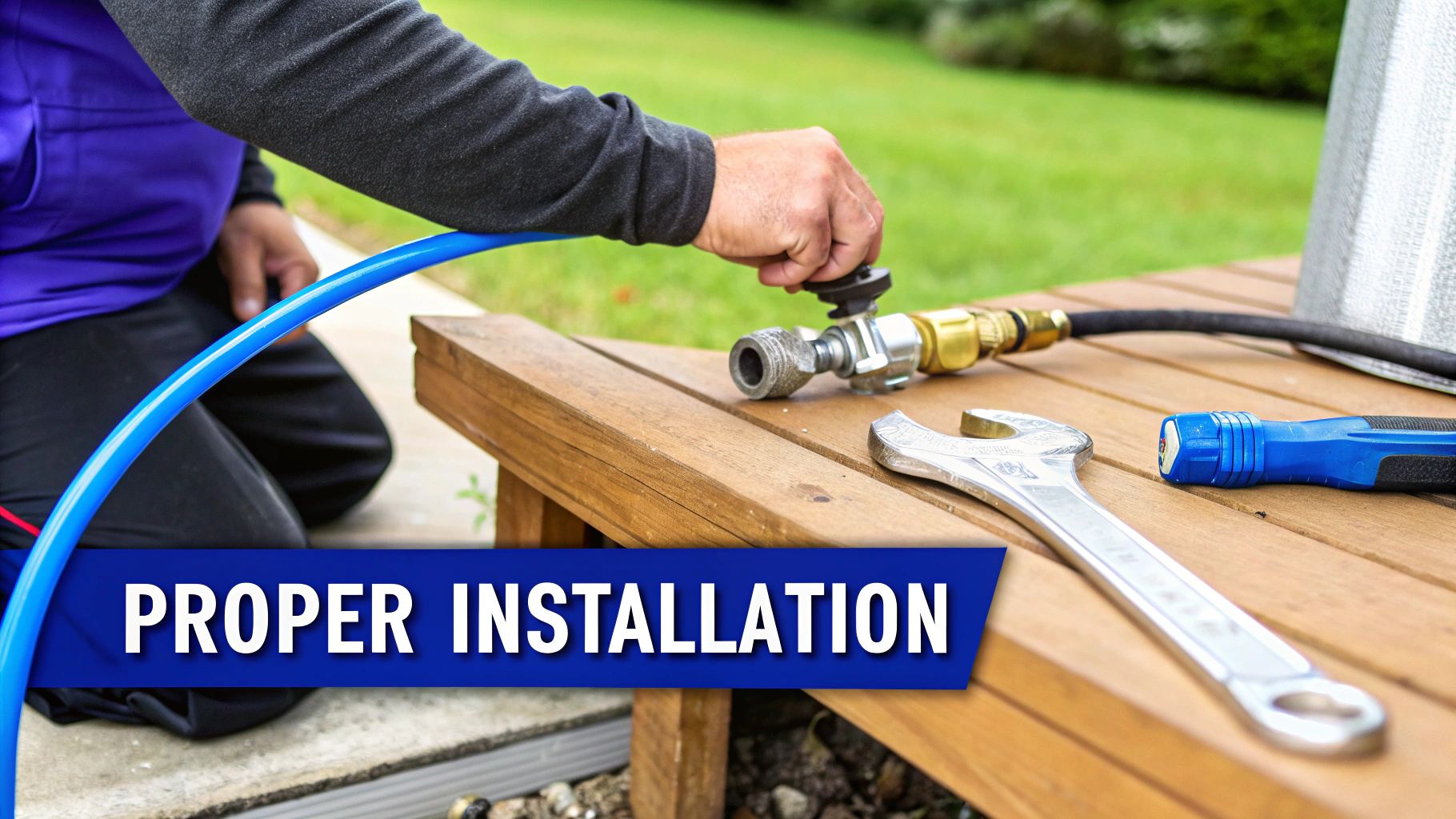
It all starts with a clean connection. Before you even think about attaching a fitting, take a second to wipe down both the hose and the inside of the fitting. You want to get rid of any dirt, mud, or grit. Even a tiny piece of debris can create a microscopic gap, and that's all it takes to cause a major drop in suction power.
How to Get a Rock-Solid Seal Every Single Time
With your surfaces clean, it's time to secure the connection. This is where your technique really matters. A good seal ensures every bit of your vacuum’s power goes directly to the job at hand.
-
Get Your Positioning Right: Always slide the clamp over the hose before you push the hose onto the fitting. Then, position the clamp about a quarter-inch from the very end of the hose. You don't want it sitting right on top of the fitting's raised barb, as this allows the hose to compress more evenly for a much better seal.
-
Tighten with Care: Grab a nut driver or a torque wrench to tighten the clamp. The key here is to avoid going overboard. If you overtighten, you can easily cut into the hose or even crack polymer fittings. Your goal is a snug fit—tight enough that you can't twist the hose by hand, but not so tight that you see the connection start to deform.
-
Do a Final Check: Before firing up your wet vac, give the connection a quick tug and a visual once-over. Make sure the clamp is straight and the hose is fully seated. This simple pre-check takes five seconds but can save you from a connection blowing off in the middle of a critical job. For a deeper dive into this crucial step, check out our guide on vacuum hose clamps.
Smart Habits for Long-Term Reliability
Consistent performance isn't about luck; it's about building simple, repeatable maintenance habits. Vacuum line fittings are the unsung heroes of hydrovac efficiency, a field that's seeing explosive growth. This surge is driven by the construction industry's demand for precise tools like the Hydrovac Attachment, which lets you clamp hoses in just three steps for clean, safe utility exposure.
One of the best things you can do to extend the life of your gear is to flush your hoses and fittings with clean water after each job. This simple step prevents mud and debris from hardening inside, which is a leading cause of clogs and premature wear.
A five-minute cleanup at the end of the day can save you hours of downtime and hundreds of dollars in replacement parts over the life of your equipment.
Make a habit of regularly inspecting all your fittings for cracks, warping, or stripped threads. A damaged fitting isn't just a leak risk; it's an accident waiting to happen. Catching wear and tear early ensures your system runs like a top, so you can focus on the work, not on your equipment.
Troubleshooting Common Fitting Problems on the Job
Nothing kills job site momentum faster than a sudden loss of suction. When your wet vac starts whining instead of working, the problem almost always traces back to something simple with your vacuum line fittings. Leaks, loose connections, and clogs are frustrating, but you can usually track them down and fix them in just a few minutes.
The number one culprit? A bad seal. Even a pinhole leak can cripple your vacuum's performance, turning a powerhouse machine into a loud paperweight. Before you start thinking your vac motor is shot, do a quick visual and physical check of every single connection.
It's best to work methodically from the tool end—whether it's a wand or the Hydrovac Attachment—and follow the line all the way back to the vacuum unit itself. A systematic check like this makes sure you don't overlook something obvious.
Quick Field Diagnostics for Suction Loss
When your suction suddenly disappears, don't start guessing. Just run through this simple checklist to find the real problem and get back to work.
-
Check for Obvious Leaks: First, just listen. Can you hear a high-pitched hissing or whistling sound anywhere? That's the tell-tale sign of an air leak. Gently wiggle each fitting; if one feels loose or wobbly, you’ve probably found your problem.
-
Inspect Gaskets and Seals: Pop open the connection that seems suspicious and take a hard look at the gasket. Is it dried out, cracked, or flattened? Sometimes, a bit of dirt or grit is all it takes to break the seal. This is one of the most common failure points.
-
Look for Clogs: A partial clog in the hose or a fitting can feel exactly like a loss of suction. Disconnect the hose and try to look through it. It’s amazing how easily small rocks, twigs, or other gunk can get jammed up, especially in tight bends like elbow fittings or reducers.
When you're troubleshooting, always start with the easiest fix first. Nine times out of ten, a power drop is caused by a loose clamp or a dirty seal, not some major equipment failure.
Solving Persistent Fitting Issues
What if you have a fitting that’s always giving you trouble? If the same connection keeps coming loose or failing to seal properly, it's time to dig a little deeper.
- Worn or Damaged Threads: For any threaded fittings, check to see if the threads are stripped or corroded. Damaged threads will never lock down securely, no matter how much muscle you put into tightening them.
- Mismatched Components: Double-check that you’re using the right fitting and clamp for the hose. A clamp that’s too big or too small will apply uneven pressure, which is a guaranteed recipe for a leak.
- Over-Tightening Damage: It’s tempting to crank down hard on a clamp, but this can actually damage your gear. Overtightening can cause hairline cracks, especially in polymer fittings, creating slow leaks that are a nightmare to find. Remember, you just need a snug, secure fit.
Got Questions About Vacuum Line Fittings? We've Got Answers.
When you're out in the field trying to get a job done, the last thing you want is a surprise equipment issue. Getting your vacuum line fittings right is key to keeping things running smoothly. Here are some of the most common questions we hear from operators.
Can I really use any standard 2.5-inch fitting with the Hydrovac Attachment?
Absolutely. We designed the Hydrovac Attachment to be as straightforward as possible, which means it’s built to work with the 2.5-inch wet vac hoses and couplers you already have. There’s no need to hunt down special proprietary parts—it just works with your existing gear, making your mobile hydrovac setup simple and reliable.
What’s the best way to stop air leaks at the connection points?
Air leaks are the enemy of good suction. The secret to a tight seal is starting with a clean slate. Before you connect anything, wipe down the fittings to get rid of any dirt or grit. Then, give your gaskets a quick look-over for any wear and tear.
Quick Tips for a Rock-Solid Seal
- Good Gaskets are a Must: Don't skimp here. A high-quality gasket compresses properly and creates a much more reliable seal.
- Perfect Clamp Placement: For the best grip, position your clamp about 1/4 inch from the very end of the hose.
- Don't Overdo It: Tighten clamps until they're snug, but don't crank them down with all your might. Over-tightening can damage the fitting or hose, causing more problems down the road.
How do I know when it's time to replace my fittings?
You have to trust your eyes and your hands. For plastic or polymer fittings, look for any hairline cracks or signs of stress. On metal ones, keep an eye out for corrosion or damaged threads.
The real test is the connection itself. If a fitting feels loose, wobbles, or just won't hold tight anymore, it's time to swap it out. A secure connection is what gives you powerful suction and, most importantly, keeps your digging safe.
Ready to upgrade your setup? You can order the Hydrovac Attachment directly from our website today.