


For any crew in the hydrovac industry, the frustration of a makeshift excavation setup is a familiar story. Without the right equipment, you're left with a muddy, chaotic mess that slows down the job and introduces unnecessary risk. This is where a purpose-built vacuum hose adapter becomes critical. It's not just an accessory; it's the core component that elevates standard gear into a precise, non-destructive digging tool.
Why the Right Vacuum Hose Adapter is a Game Changer in the Hydrovac Industry
Let's be direct. Attempting to jury-rig a power washer to a wet vac without a proper adapter is a recipe for inefficiency and danger. The result is an uncontrolled slurry that completely obscures the utility lines you're trying to expose. This isn't just slow; it's how costly and hazardous utility strikes happen. A specialized adapter, designed for the hydrovac industry, directly solves this problem.
Instead of battling a constant spray of mud, the right adapter creates a closed-loop, controlled system for effective digging. This is precisely the function of tools like The Hydrovac Attachment. It’s not a simple connector but an engineered solution that integrates a wet vac and power washer into a single, cohesive hydro-excavation unit. By focusing on this integration, it provides the control needed for sensitive digging purposes.
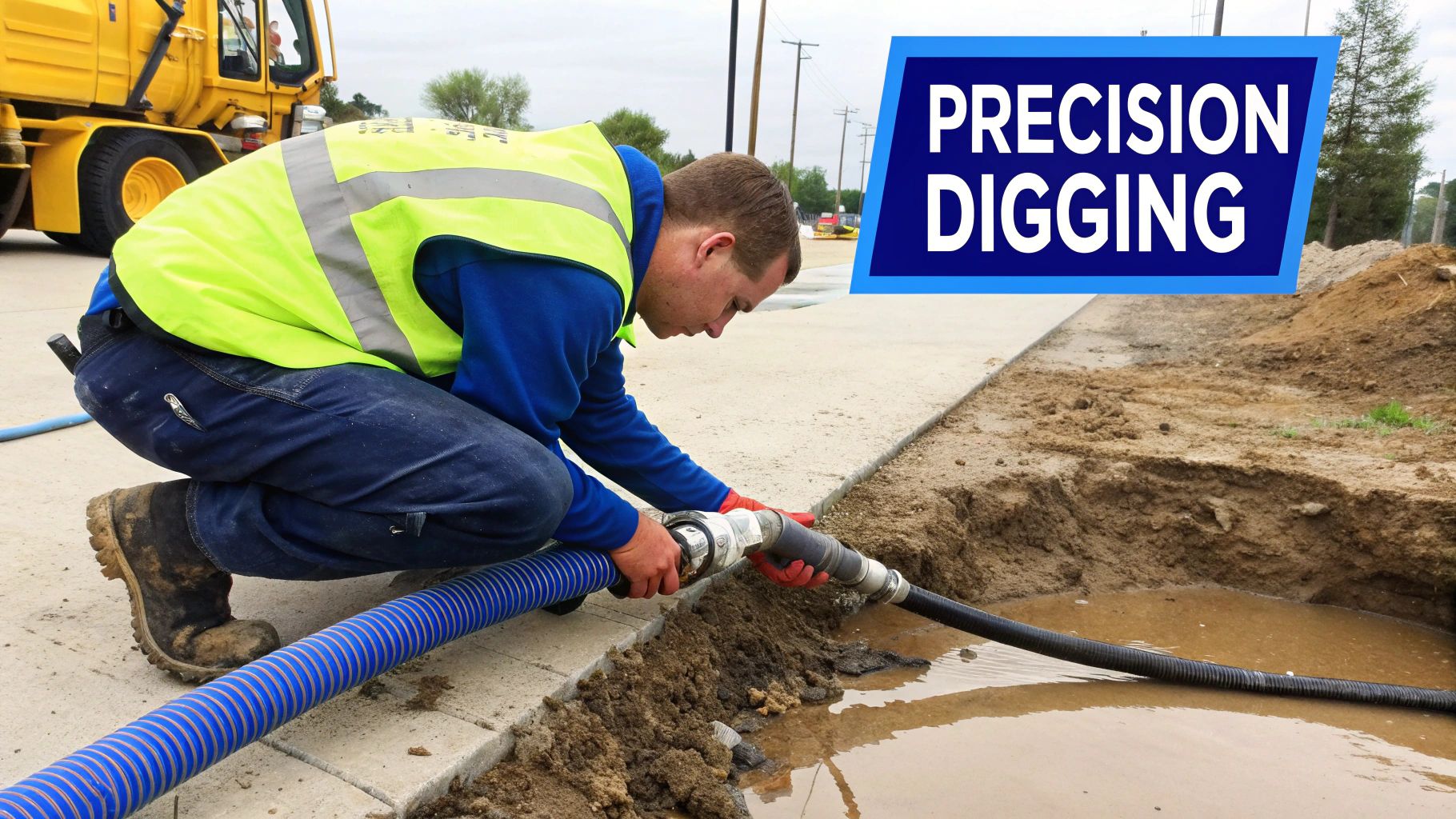
Improving Safety and Efficiency On-Site
The most immediate benefit of a professional-grade adapter is a significantly cleaner and safer job site. By channeling high-pressure water and spoil directly into the vacuum hose, crews gain several key advantages crucial to the hydrovac industry:
- Crystal-Clear Visibility: Operators can maintain a clear view of utility lines as they are uncovered, a critical requirement for potholing or daylighting projects.
- Drastically Reduced Cleanup: Containing the mess at the point of excavation eliminates hours of site restoration, allowing crews to complete jobs faster and move to the next.
- Surgical Precision: The focused water jet and immediate suction provide the accuracy needed to trench near sensitive foundations, landscaping, or existing infrastructure without causing damage.
This level of control is rapidly becoming the standard in hydrovac excavation. It’s clear why vacuum hose adapters are now essential for any crew involved in utility locating, trenching, or debris removal.
Industry insights confirm this trend. The global market for these connectors was valued at USD 1.6 billion and is expected to grow at 5.9% through 2030, according to market analysis. This growth is driven by demand in construction, mining, and oil & gas—sectors where operators rely on adapters to connect power washers to 2.5-inch wet vac hoses. The Hydrovac Attachment is the ideal solution for this exact application, transforming standard equipment into a tool for effective digging. You can explore hose-to-equipment adaptors market trends on OpenPR.
The real shift is from brute force to surgical precision. A proper adapter doesn't just connect two hoses; it creates a controlled environment where water does the work without creating chaos, fundamentally changing how safely and quickly a job can be completed.
How a Specialized Adapter Transforms Hydrovac Tasks
The difference between a makeshift connection and a purpose-built adapter is night and day. Here's a quick look at common challenges and how the right tool, like The Hydrovac Attachment, provides the solution.
| Operational Challenge | Makeshift Method Problem | Specialized Adapter Solution |
|---|---|---|
| Exposing Utilities | Uncontrolled water spray creates a soupy mess, obscuring the view of buried lines and increasing strike risk. | A focused water jet and immediate vacuum suction keep the area clear, providing constant visibility of the utility. |
| Job Site Cleanup | Slurry and mud are flung across the work area, requiring extensive, time-consuming cleanup and site restoration. | Spoil is contained and suctioned directly into the wet vac tank, leaving a clean site and minimal post-job work. |
| Operator Safety | Flying debris and slippery, muddy ground create significant slip-and-fall hazards for the entire crew. | The contained system minimizes airborne particles and keeps the immediate work zone dry and stable. |
| Digging Precision | A wide, messy spray makes it impossible to dig a clean, narrow trench, often disturbing more ground than necessary. | The tool allows for surgical accuracy, enabling precise trenching near sensitive structures or in tight spaces. |
Ultimately, using a specialized adapter isn't about convenience—it's about professionalism, safety, and efficiency. It is the solution for getting hydrovac jobs done right.
What to Look for When Choosing a Vacuum Hose Adapter
Not all vacuum hose adapters are created equal, especially for the demanding hydrovac industry. A brittle, off-the-shelf plastic part is a recipe for failure, often cracking mid-job and causing a critical loss of suction. When your work requires precision, selecting the right adapter is an investment in your operational efficiency and safety.
The first consideration is material. For professional hydrovac work, an adapter must withstand high-pressure water and abrasive debris. Look for options constructed from an industrial-grade polymer. This material is engineered for toughness and impact resistance, far outlasting generic plastics that shatter under real-world field conditions.
A purpose-built tool like The Hydrovac Attachment exemplifies this quality. Its robust polymer construction is designed specifically to handle the daily grind of excavation, providing a reliable solution for effective digging without failing under pressure.
Connection Standards and Smart Design
After durability, the fit is everything. The industry standard for professional wet vacs is a 2.5-inch hose. A quality adapter must create a snug, secure seal to prevent air leaks that kill suction power. Any wobble or looseness is a red flag, indicating a poor design that will compromise performance.
For a deeper dive into achieving the perfect connection, our guide on shop vac hose fittings provides more detail.
Beyond fit, smart design separates professional tools from cheap alternatives. An effective adapter should enhance control over the excavation process.
A well-designed vacuum hose adapter does more than just link your equipment; it creates a controlled suction zone. This integration of water pressure and vacuum is what allows for precise, non-destructive digging, turning a powerful duo of tools into a single, surgical instrument.
Look for features that manage airflow and reduce splashback. The Hydrovac Attachment, for example, uses a patented three-part system. This design is engineered to create an environment where the water jet and vacuum stream work in harmony. This synergy is the solution to minimizing the messy slurry that obscures vision and creates hazardous site conditions.
When evaluating any vacuum hose adapter, keep these key points in mind:
- Material Science: Is it made from a durable, industrial-grade polymer that can handle field abuse?
- Fit and Seal: Does it provide a tight, leak-proof connection to a standard 2.5-inch wet vac hose?
- Design Ingenuity: Does the design actively control suction, manage water flow, and reduce mess and operator fatigue?
By focusing on these factors, you can confidently invest in a tool that meets the tough demands of hydrovac work and delivers the reliable performance needed for effective digging.
Getting Your Adapter Set Up for a Perfect Connection
A solid, leak-proof connection is the foundation of efficient hydrovac work. A correct setup ensures you avoid lost suction and frustrating leaks on the job, allowing your crew to start digging in minutes.
The Hydrovac Attachment was designed with this principle in mind. Its patented, three-part system ensures a fast and secure attachment to your wet vac and power washer. Each component—the base connector, hose clamp, and nozzle cap—is engineered to create a perfect suction zone. This design is the solution for channeling water and debris directly into the vacuum stream with minimal mess.
Assembling for Peak Performance
The initial setup is straightforward. The base connector slides snugly onto any standard 2.5-inch wet vac hose, creating the primary seal.
Next, you secure it with the heavy-duty hose clamp. This component ensures the connection remains airtight, even under the powerful suction of a commercial vacuum.
The final piece, the nozzle cap, fits over the end of your power washer wand. This crucial part directs the high-pressure water precisely while the vacuum captures all displaced material. The entire assembly should feel solid and integrated, preventing the splashback common with DIY setups. If you're working with different hose types, it's worth checking out our guide on how to connect a hose adapter to PVC.
A proper connection isn’t just about joining two pieces of gear. It’s about creating a true seal that maximizes your vacuum’s power. Even a tiny air leak can kill your suction, forcing the equipment to work overtime and slowing the whole job down.
Once assembled, the unit functions as a single, seamless tool. The operator can control both the water jet and the vacuum with one hand, enabling precise control over the dig. This integration transforms a standard wet vac and power washer into a professional-grade hydrovac system—the solution for a faster, cleaner, and safer job site.
Getting It Done in the Field: Real-World Scenarios
Theory is one thing, but how these vacuum hose adapters perform on a real job site is what truly matters. In the hydrovac industry, crews need solutions that solve daily frustrations and improve workflow. A professional setup like The Hydrovac Attachment is designed for exactly that.
Imagine daylighting utilities in a cramped urban area. With limited space, a makeshift connection creates a soupy slurry, making it impossible to see the lines you're exposing. In this scenario, precision is essential for effective digging purposes.
A fast, foolproof, and secure connection is the first step.
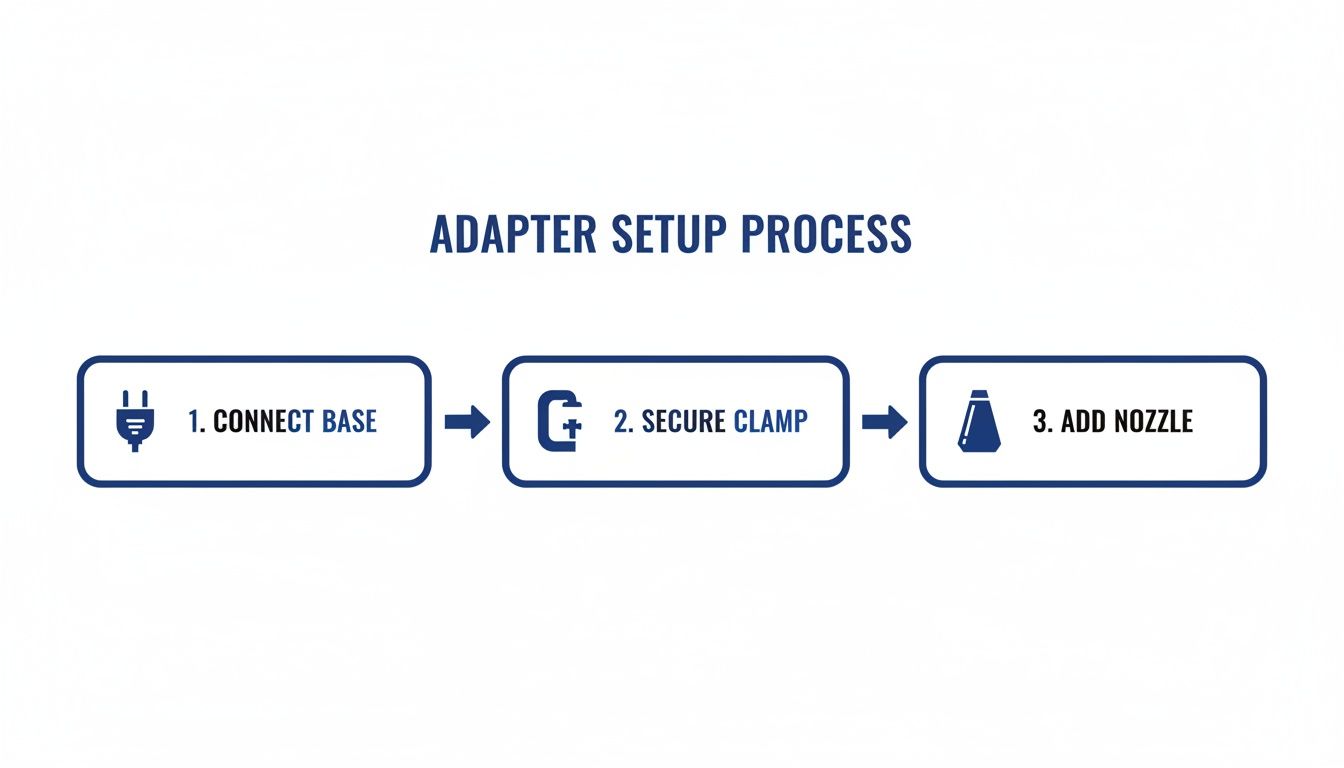
As you can see, a system designed for this work goes together quickly and securely, providing a trusted connection so you can get to work immediately.
Precision Trenching for Landscaping
Consider another common task: cutting a trench for an irrigation system across a manicured lawn. A shovel is too disruptive, and even a mini-excavator creates a significant mess.
Here, The Hydrovac Attachment provides the perfect solution. It allows you to carve a clean, narrow trench with surgical accuracy. By adjusting the water pressure, you can slice through soil while the vacuum instantly removes it, leaving surrounding turf and garden beds undisturbed. This not only satisfies the client but also saves your crew hours of cleanup.
For those longer runs or awkward spots, pairing the tool with a vacuum wand extension can give you that extra reach and control to make the job even easier. Find out more at: https://hydrovacattm.com/blogs/info/vacuum-wand-extension
When you're running a hydrovac, control is everything. The real skill comes from being able to adjust on the fly—backing off the pressure for delicate locates or hitting it hard for compacted dirt. The right adapter makes that feel second nature, not like you're fighting the equipment.
The demand for this efficiency is growing. The vacuum hose kit market recently hit USD 1.45 billion globally, driven by construction and municipal crews seeking better methods. With 70% of hydrovac work occurring in tight spaces, the right adapters can cut cleanup time by 40% and significantly lower injury risks from flying debris. Dataintelo.com has some great insights into the vacuum hose market if you want to dig deeper.
Tackling Different Soil Conditions
A skilled hydrovac operator knows how to adapt their technique to different ground conditions.
- Dense Clay: Higher water pressure and a focused nozzle are needed to break up the material. Work in small chunks to prevent heavy clumps from clogging the hose.
- Loose Sand or Gravel: Reduce water pressure significantly. The goal is to gently fluidize the material for the vacuum to lift, preventing voids and ground destabilization.
- Compacted Soil with Roots: Use a pulsing action with the water jet to carefully work around roots without causing damage—a crucial skill when working near valuable trees.
By mastering these techniques with a reliable tool like The Hydrovac Attachment, crews can confidently handle any site condition, ensuring effective digging every time.
Simple Maintenance for Lasting Performance
Your hydrovac adapter is a workhorse. Like any essential tool in the hydrovac industry, a little upkeep ensures it’s ready for every job. A few simple habits can prevent problems before they start, keeping your gear primed for everything from clearing tough sediment to detailed foundation work.
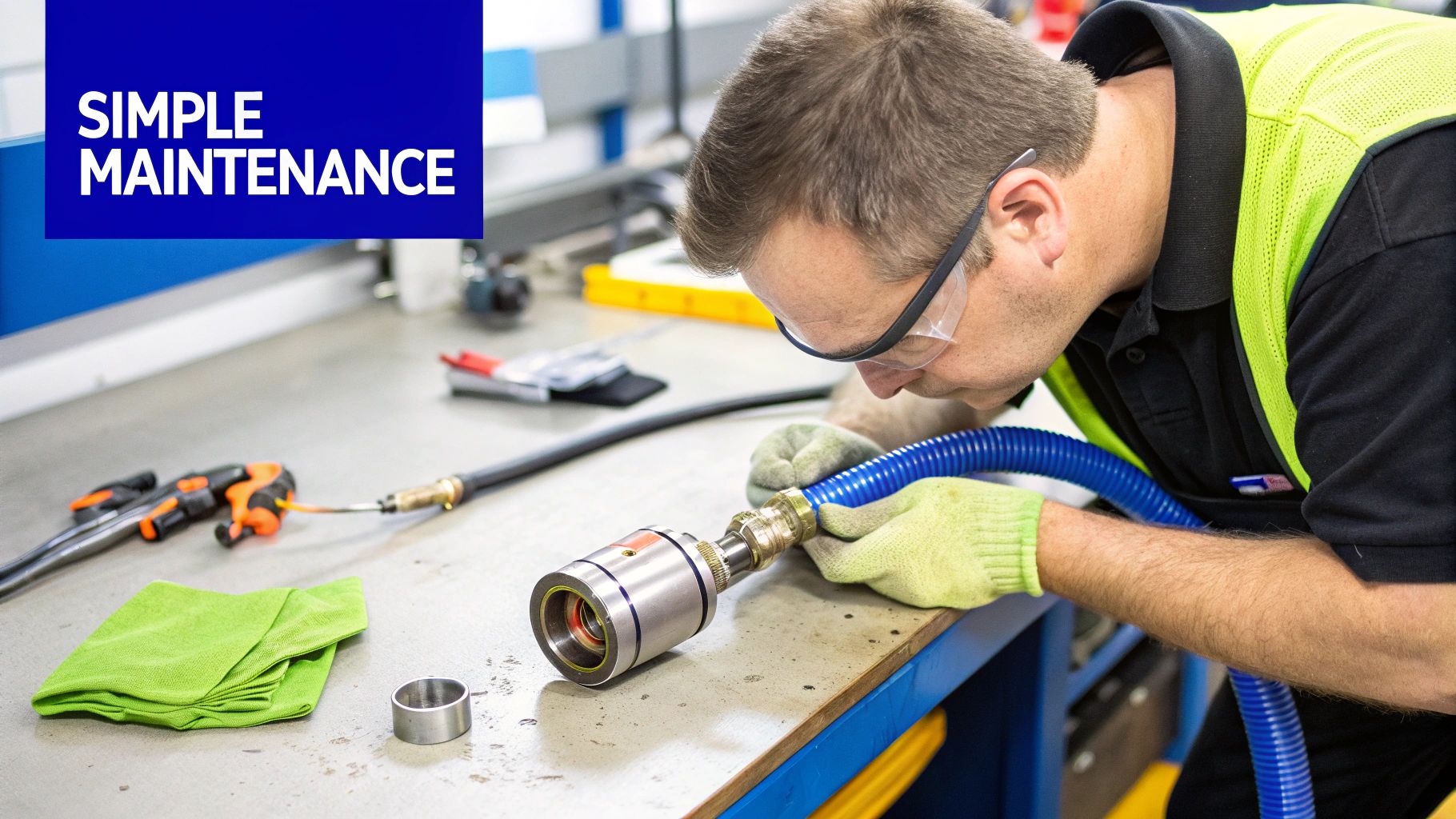
The single most important maintenance step is cleaning the adapter immediately after use. Allowing mud, clay, and other debris to harden inside will create clogs and kill your suction power. A quick rinse with a garden hose is usually sufficient to keep passages clear.
Quick Inspection Habits
Before starting up your equipment, perform a quick 30-second inspection of your adapter. This preventative check can spot small issues before they become major operational delays.
Examine the industrial-grade polymer body of The Hydrovac Attachment for any signs of major wear or hairline fractures, paying close attention to connection points. These tools are built tough, but regular inspection is smart practice for on-site safety and reliability.
A secure, leak-free connection is the heart of an efficient hydrovac system. Regularly checking your hose clamp and seals isn't just about maintenance; it’s about making sure every ounce of your vacuum's power is hitting the target, not escaping through tiny leaks.
This check should also include the hose clamp. Ensure it tightens properly and provides a solid grip on your 2.5-inch wet vac hose. A loose clamp is a common cause of suction loss, so confirming its function is key to maintaining peak power.
Protecting Your Connections
Connection points are potential weak links in any vacuum system. Keeping them clean and ensuring a tight fit will significantly extend the life of your vacuum hose adapters.
Follow this simple checklist:
- Rinse After Use: Always flush the adapter with clean water to remove lingering debris.
- Inspect the Seals: Check seals and connection surfaces for nicks or damage that could compromise the airtight fit.
- Check the Clamp: Ensure the hose clamp mechanism operates smoothly and is not stripped or bent.
Adhering to these habits ensures The Hydrovac Attachment is always ready to perform. Consistent care protects your investment and keeps your jobs running smoothly, providing a lasting solution for effective digging.
Troubleshooting Common Issues on the Job
Even with the best equipment, fieldwork can present challenges. Unpredictable conditions are part of the hydrovac industry, but knowing how to react quickly minimizes downtime and keeps your crew productive.
A sudden loss of suction is the most common issue. Before dismantling equipment, check for the simplest cause: a loose connection.
A slightly misaligned hose clamp on your vacuum hose adapters can create a small air leak, which is often enough to cripple your vacuum’s efficiency. Ensure your adapter, like The Hydrovac Attachment, is seated firmly and the clamp is fully secure.
Clogs are another frequent problem, especially when digging in dense clay too aggressively. The solution is to work in smaller, manageable sections, allowing the vacuum to clear loosened material before breaking up more.
Adapting to Different Soil Types
Effective digging requires adapting your technique to the ground conditions. A one-size-fits-all approach is inefficient and can be counterproductive.
-
Dense Clay: Use a focused, higher-pressure water stream to break the heavy material into a manageable slurry for your vacuum.
-
Loose Sand or Gravel: Significantly reduce water pressure. The goal is simply to fluidize the material for lifting, not to blast it away and create an unstable void.
This adaptability extends to equipment choices. The industrial hose market, critical to hydrovac setups, reached USD 14.5 billion and is projected to hit USD 28.25 billion by 2033. This growth reflects the industry's demand for more durable, high-performance components. A well-engineered tool like The Hydrovac Attachment is a direct response to this need. You can dive deeper into the global industrial hose market with this report.
Quick diagnosis is everything when it comes to downtime. A sudden, complete pressure drop is almost always a loose connection right at the adapter. A gradual loss of suction, on the other hand, usually means a clog is forming somewhere in the hose. Knowing that difference saves you a ton of time.
By anticipating these common hurdles and knowing the right response, you can keep your projects on track and avoid costly delays, making your crew more efficient.
Frequently Asked Questions
When you're out in the field, you need straight answers. Here are the most common questions we get from hydrovac operators and contractors about The Hydrovac Attachment.
What Gear Do I Need to Run This Attachment?
The Hydrovac Attachment was designed to work with the standard equipment you likely already own. It fits the industry-standard 2.5-inch wet vac hose, making it compatible with most professional-grade wet vacuums from brands like Ridgid, DeWalt, and Milwaukee.
For the water jet, the nozzle cap accepts most standard power washer wands. This allows you to integrate our solution with your existing gear and start your digging tasks without investing in a whole new system.
How Does This Actually Make the Job Safer?
On-site safety is about control, and this is where The Hydrovac Attachment provides a clear solution. It enhances safety in two key ways:
- Reduces Splashback: By creating a contained suction zone at the point of contact, it dramatically cuts down on flying debris and high-pressure water. This protects the operator and maintains a clear line of sight on the utility being exposed.
- Prevents Utility Strikes: This is its most critical safety feature. The precision it affords enables true non-destructive digging. When daylighting a delicate fiber optic line or gas main, that surgical control is paramount, massively reducing the risk of a dangerous and costly utility strike.
We've all seen what happens when hydro-excavation gets messy. By containing the whole process right at the point of contact, this tool turns a potentially hazardous job into a controlled, predictable operation. It’s less about brute force and more about surgical precision.
Is This Thing Tough Enough for a Real Job Site?
Absolutely. The Hydrovac Attachment is molded from a rugged, industrial-grade polymer designed for the harsh realities of the hydrovac industry.
It has been field-tested against high-pressure water and constant abrasion from rock, dense clay, and other challenging ground conditions. It’s built as a reliable solution to withstand the daily grind of a professional construction site.
Ready to make your digging safer and more precise? The Hydrovac Attachment delivers the control and efficiency your jobs demand. Find out more and grab yours at HydrovacAttm.com.