


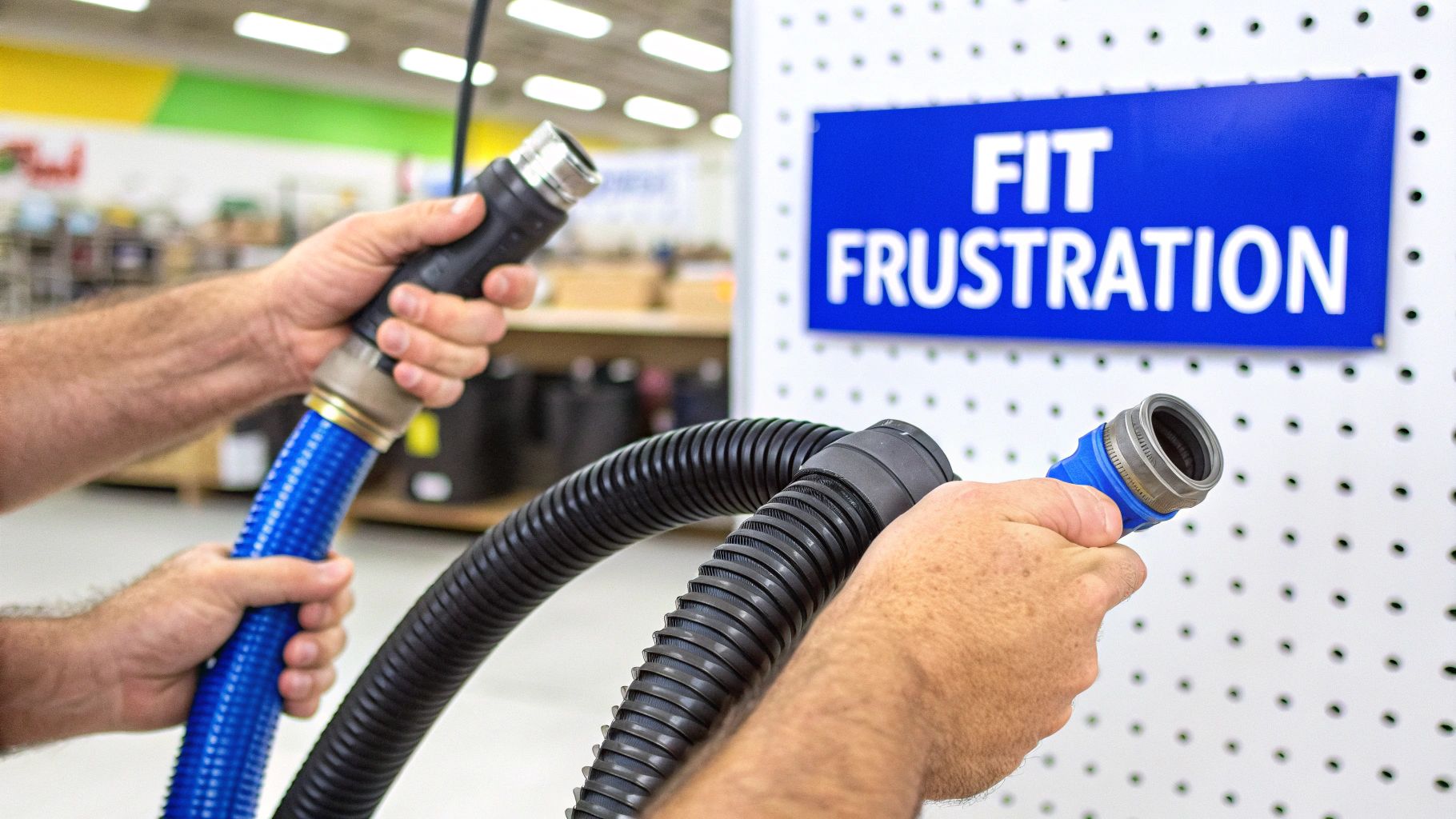
It should be simple, right? A 2.5-inch hose should slide perfectly onto a 2.5-inch port. But anyone who has ever tried to connect a shop vac to a new accessory knows it’s rarely that easy. What you usually get is a frustrating puzzle of proprietary sizes and mismatched ends that just won't cooperate.
This problem is a universal headache for everyone from seasoned contractors in the hydrovac industry to weekend DIYers. It’s that all-too-familiar moment of standing in a hardware store aisle, completely baffled.
Why Don't Shop Vac Hoses Just Fit?
The root of the issue is a glaring lack of standardization. Most manufacturers create their own little ecosystem of hoses, wands, and attachments. They use unique locking tabs, oddly shaped friction-fit cuffs, or specific thread patterns, often with the deliberate goal of keeping you locked into their brand.
This creates chaos for the user. A hose marketed as "2.5-inch" might be referring to its inner diameter (ID), while the tool you're trying to connect it to is measuring its outer diameter (OD). The result? A connection that's either so loose it has no suction or so tight you can't even get it on.
Understanding how to navigate this mess is the key to turning your shop vac from a simple cleanup tool into a seriously versatile machine. Once you get the connections right, you can hook it up to just about anything—from fine-dust-producing sanders to specialized hydro-excavation tools for precision digging.
The demand for reliable connections isn't just a workshop problem; it's a huge industrial need. Shop vac hose fittings are a critical component of the industrial hose market, a sector projected to grow from USD 12.47 billion to USD 19.76 billion by 2035. You can read more about these industrial hose market trends to see the bigger picture. In demanding fields like hydro-excavation, a secure, leak-free connection can significantly improve digging efficiency and reduce project downtime.
For pros in the hydrovac industry, a solid connection is everything. It's not about convenience—it's about raw performance. Every bit of suction lost to a leaky fitting kills the power needed for precision digging and fast debris removal.
A Quick Guide to Common Fittings
To help you figure out what you're working with, here's a quick rundown of the most common fitting types you'll encounter. Identifying the connection style is the first step to finding the right adapter.
Common Shop Vac Hose Fitting Types and Their Uses
| Fitting Type | Primary Use Case | Typical Diameter (Inches) | Connection Style |
|---|---|---|---|
| Friction-Fit | General-purpose floor nozzles, wands | 1.25", 1.875", 2.5" | Tapered end held by friction |
| Locking Tab | Power tools, heavy-duty attachments | 1.25", 2.5" | Clicks into place with a spring-loaded tab |
| Threaded Cuff | Securing hose to the vacuum port | 1.875", 2.5" | Screws onto the vacuum body or another hose |
| Hose-to-Hose Coupler | Extending hose length | 1.25", 2.5" | Connects two hose ends (friction or threaded) |
Knowing these basics makes it much easier to diagnose connection problems and find the right solution at the hardware store.
Unlocking Your Shop Vac's True Potential
When you finally master your fittings, you can create custom setups for any job imaginable. For example, adapting your wet vac allows you to use highly specialized tools like The Hydrovac Attachment Tool. This innovative device connects a high-pressure water source directly to your vacuum's suction hose, transforming a standard wet/dry vac into a precise hydro-excavation machine for effective digging.
Suddenly, you can dig post holes, trench for irrigation lines, or safely expose underground utilities without back-breaking manual labor. Getting the fittings right isn't just a minor detail—it's the gateway to unlocking this kind of advanced capability.
How to Measure for a Perfect Connection Every Time
Getting a perfect seal all starts with a perfect measurement, but it’s rarely as simple as just grabbing a tape measure. When you're dealing with high-powered suction for jobs like hydro-digging, just eyeballing the connection or trusting the size printed on the box is a surefire way to end up with leaks and lost power. Precision is everything.
The best tool for the job is a set of digital calipers. A tape measure just isn't accurate enough to tell the difference between a 2.45-inch port and a 2.5-inch hose cuff. That tiny gap might seem insignificant, but in the hydrovac industry, it's more than enough to cause a major sealing problem and kill your suction power.
Where to Take Your Measurements
Knowing what to measure is just as critical as how you measure it. I've seen countless people get frustrated because they measured the wrong part of a fitting, only to buy an adapter that doesn't work.
To sidestep that common headache, just remember these two simple rules:
- For the Hose Cuff: Always measure the inner diameter (ID). This is the part that will slide over your tool.
- For the Tool Port: Always measure the outer diameter (OD). This is the part the hose cuff needs to fit around.
This simple ID-to-OD approach ensures you’re matching the part of the hose that fits over the tool’s port. If you're trying to connect two hoses together, you’d simply measure the ID of one cuff and the OD of the other to find the right adapter. We dive deeper into this in our guide to finding the perfect shop vac hose connector.
Another mistake I often see is measuring a tapered end. A lot of fittings are designed with a slight taper to make connections easier. To get a true reading for a snug fit, always measure the widest point of the tool’s OD and the narrowest point of the hose cuff’s ID.
Pro Tip: Never assume your vacuum's port and its hose are the exact same size. Measure both independently. A shop vac might be advertised with a 2.5-inch port, but the hose it came with often has a slightly different cuff diameter designed for a tight factory friction fit.
This need for precision is only growing. Shop vac hose fittings are a key part of the broader vacuum fittings market, which was valued at USD 1.5 billion and is expected to climb to USD 2.8 billion by 2033. This surge is fueled by industries like construction and hydro-excavation, where having the right fit is non-negotiable for job site performance. You can find more data on the industrial hose market on gminsights.com.
Ultimately, taking a few moments to measure correctly with calipers will save you hours of guesswork. A precise measurement is the foundation of a leak-proof connection, making sure your setup—whether for simple workshop cleanup or specialized work with The Hydrovac Attachment Tool—runs at peak efficiency for effective digging.
Creating Your Own Hydro-Excavation System
This is where things get really interesting. When you know how to properly connect your gear, you can turn a standard shop-vac from a simple cleanup tool into a seriously powerful digging machine. The whole idea is to pair your wet-vac with a pressure washer, creating a DIY hydro-excavation system that's perfect for tricky, precise jobs.
The secret sauce holding it all together is The Hydrovac Attachment Tool. It's a specialized fitting built to merge the high-pressure water from your pressure washer wand with the powerful suction of your shop-vac hose. The result? You get a controlled digging method that liquefies soil and immediately vacuums it away—the core principle of hydro-excavation.
Assembling Your Hydro-Excavation Setup
Getting this system up and running is surprisingly straightforward. The attachment was designed to work with the industry-standard 2.5-inch wet-vac hose—that size really hits the sweet spot for airflow and debris capacity for this kind of work.
Your first move is to securely connect your 2.5-inch shop-vac hose to the base connector on The Hydrovac Attachment Tool. A snug fit is non-negotiable; any air leaks will kill the suction power required to lift heavy, water-logged soil and gravel. Once the hose is locked in, you just slide your pressure washer wand through the designated port on the attachment.
The infographic below really nails down the basic principle of measuring for a solid fit, which is the starting point for any good connection.
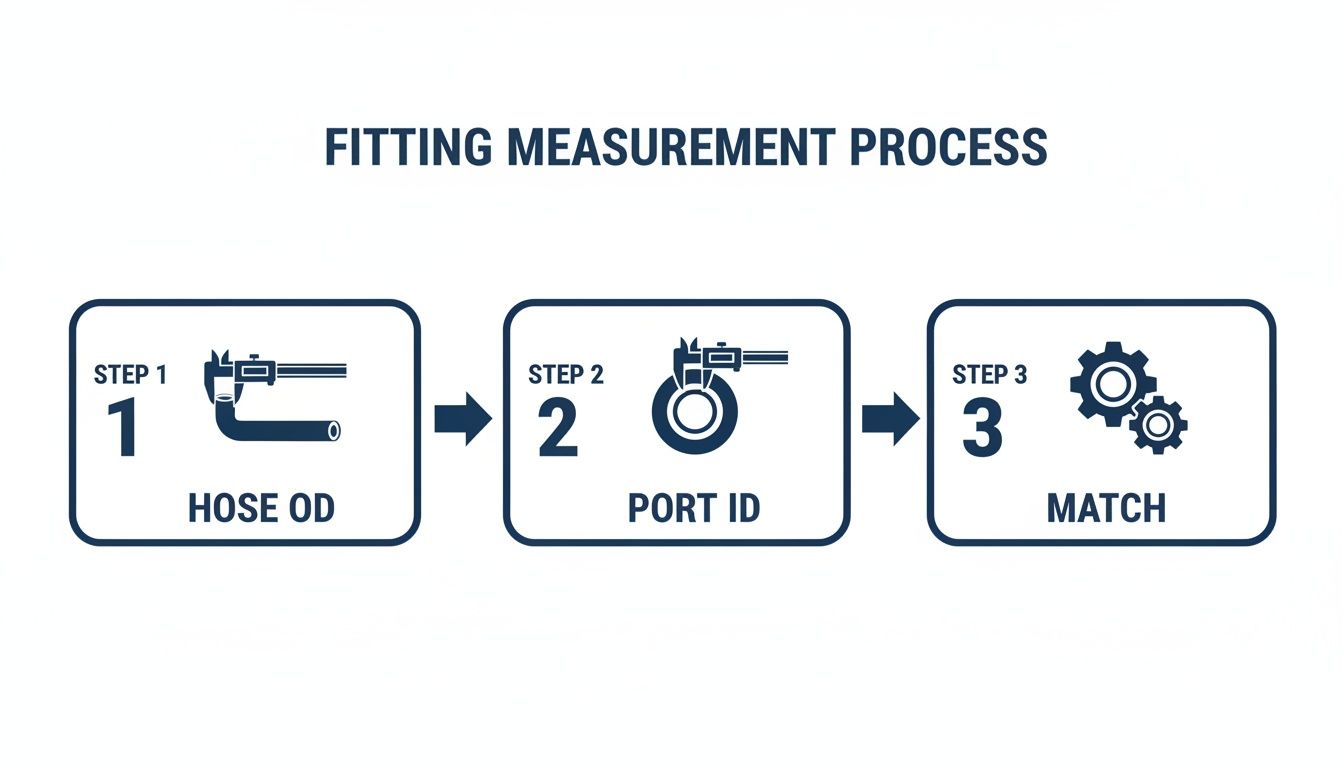
As you can see, it breaks the process down into three key actions: measuring the hose's outer diameter (OD), the port's inner diameter (ID), and then matching them up. This is how you guarantee a leak-proof seal every time.
Real-World Applications For Your DIY System
With this setup, you can suddenly take on jobs that used to require heavy machinery or hours of back-breaking work with a shovel. Think about digging perfectly clean post holes for a new fence without leaving a mountain of dirt behind. Or trenching for sprinkler lines and landscape lighting with surgical precision, even in tight spots where you could barely fit a hand trowel.
One of its most valuable uses is safely exposing buried utilities. The gentle power of hydro-excavation lets you clear soil from around pipes and cables without the risk of nicking them with a metal shovel—a critical safety measure in the utility and construction industries.
The real game-changer with The Hydrovac Attachment Tool is control. It creates a contained suction zone that keeps splashback to a minimum and the work area clean. You'll spend a fraction of the time on cleanup compared to traditional digging.
This level of control comes from a deep understanding of air and fluid dynamics—the same principles that power the massive global market for industrial hoses and fittings. That market was valued at around USD 23.77 billion in 2023, and it's still growing. Shop-vac fittings are a small but crucial part of that, especially with the huge demand for flexible and cheap PVC materials perfect for moving air, water, and chemicals.
If your projects get more complex, you might find yourself needing to adapt your hose to different pipe sizes. Our guide on creating a hose adapter to PVC walks you through the practical steps for making those custom connections. This keeps your setup versatile, ensuring you're ready for whatever the job throws at you. You're basically turning two common tools into a safe, efficient, and budget-friendly solution for professional-grade digging.
Choosing Fittings and Clamps That Won't Fail
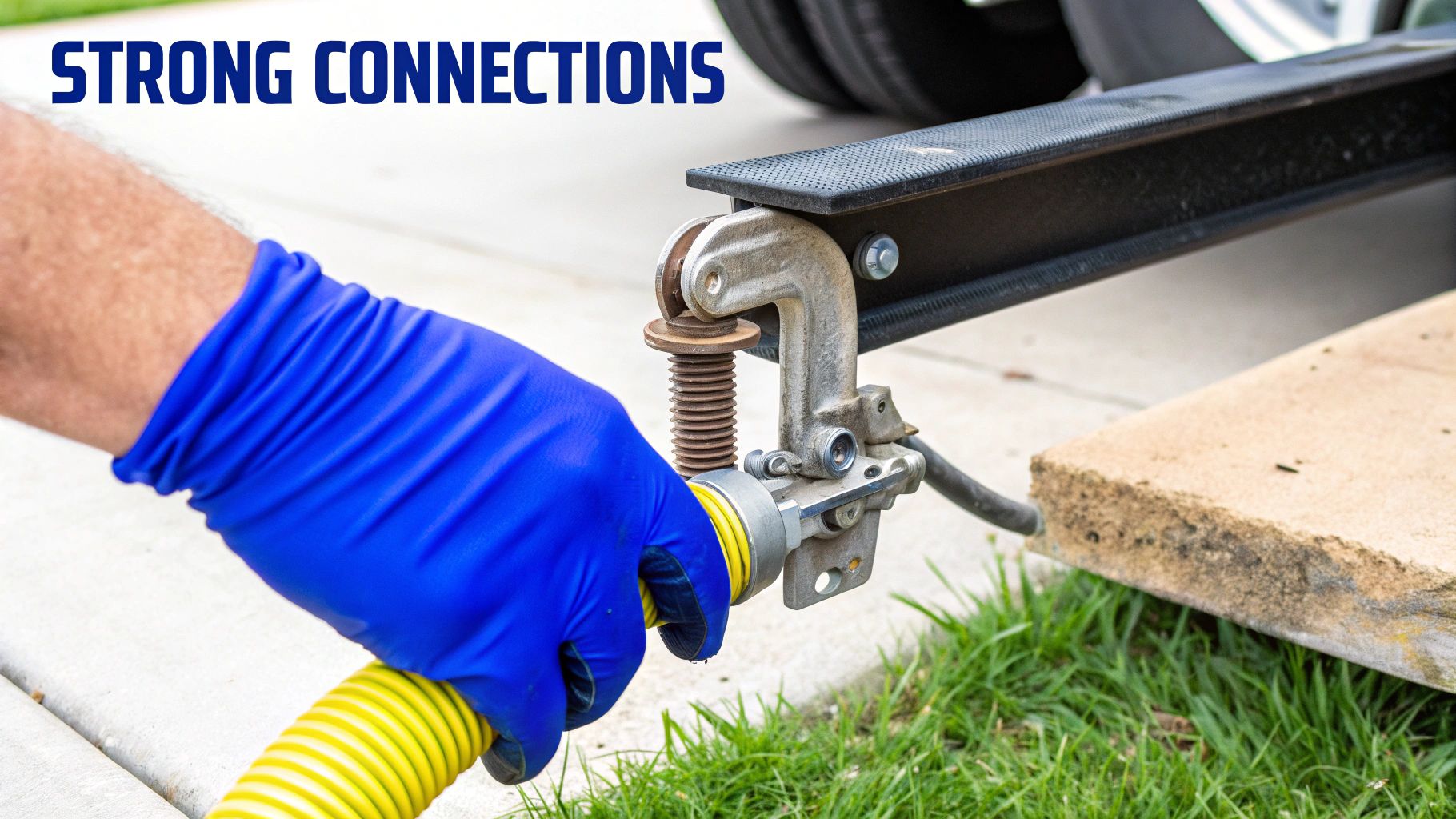
Your entire setup is only as strong as its weakest link. For something as demanding as hydro-excavation, that weak spot is almost always a cheap plastic fitting or a flimsy clamp. Trust me, material choice isn't just a minor detail—it’s the difference between a tool you can rely on and a failure that stops your project cold.
When you hook up The Hydrovac Attachment Tool to your wet vac, the powerful suction and the constant flow of wet, abrasive debris put a ton of stress on every single connection point. That standard, thin-walled plastic fitting might be fine for sucking up sawdust, but it can easily crack or collapse when you’re pulling water-logged soil and gravel through it.
Picking the Right Fitting Material
The material you choose for your fittings has to match the intensity of the job. For creating custom shop vac hose fittings for hydro-excavation, a couple of options stand out.
- Flexible Rubber Couplers: These are fantastic for absorbing the vibrations that a powerful vacuum motor kicks out. They also give you a bit of wiggle room if you need to connect components at a slight angle. The flexibility creates a forgiving, yet surprisingly tight seal, even if the diameters aren't a perfect match.
- Rigid PVC or ABS Adapters: When you need a perfectly straight, unbending connection for an extension or a diameter reducer, rigid plastic is your go-to. It provides real structural integrity and won't flex or collapse under heavy suction, which is key for maintaining consistent airflow during a dig.
For a hydrovac setup, I often find a heavy-duty rubber coupler is the best bet for connecting the hose to the main unit because it helps dampen all that vibration. On the other hand, you might need a rigid adapter to connect to specific tools like The Hydrovac Attachment Tool, especially if you're building a custom transition.
Why Your Clamp Choice Is Critical
A top-notch fitting is pretty useless if you don't have the right clamp holding it in place. Those standard worm-gear clamps you see everywhere are okay for light-duty stuff, but they just can't handle the constant strain from a powerful wet vac. They tend to apply uneven pressure, which can create tiny air leaks that slowly kill your suction power.
A bridge clamp is a much better choice for hydrovac work. It’s designed with an inner band that distributes 360-degree uniform pressure. This creates a perfect seal all the way around without pinching or digging into your hose. You get every ounce of suction power delivered right to the tool, where you need it.
Making the right call on clamps is absolutely essential for a leak-proof system. If you want to dive deeper into the specifics, this guide on vacuum hose clamps breaks down how different styles perform under real-world pressure.
At the end of the day, investing a few extra bucks in durable, high-quality fittings and clamps isn't negotiable for serious work. It protects your equipment from damage, saves you the frustration of dealing with leaks, and ensures your whole system runs safely and effectively every single time.
Troubleshooting Common Connection Headaches
Even when you've measured twice and bought the perfect parts, things can still go wrong. It happens to all of us. You're ready to work, and instead, you hear that tell-tale hiss of an air leak or watch your hose pop off an attachment at the worst possible moment. Maybe the most frustrating problem of all is a sudden, dramatic drop in suction power that brings your project to a dead stop.
Don't worry, these headaches are common, and the fixes are usually surprisingly simple. A little bit of smart troubleshooting is all it takes to get your system airtight and pulling hard again—especially critical when you need every ounce of power for effective digging with your Hydrovac Attachment Tool.
What to Do When Suction Disappears
A sudden loss of power is the number one complaint, and nine times out of ten, it’s either a blockage or a leak. Before you start thinking the vacuum's motor is shot, let's check the easy stuff first.
Start by disconnecting the hose completely and giving it a good look-through. It’s amazing how a single rock or a clump of wet clay can get wedged in there and choke off your airflow. After that, inspect your fittings, paying close attention to any reducers or adapters you're using. These create natural bottlenecks where clogs love to form.
If you don't find a blockage, you're almost certainly dealing with an air leak.
That high-pitched whistle you hear? That’s the classic sign of an air leak. It means your motor is working overtime for less power, which can lead to overheating and burn it out faster if you ignore it.
To find the source, turn the vacuum on and run your hand carefully along each connection point. You'll literally feel the suction where air is being pulled into the system. This trick lets you zero in on the exact spot that needs fixing.
Quick Fixes for Shop Vac Fitting Issues
Once you've diagnosed the problem, the solution is usually right at hand. A rock-solid, airtight seal is non-negotiable for hydro-excavation, as even a tiny leak can kill the vacuum's ability to lift heavy, saturated soil and debris.
When you run into a fitting failure, it's often a simple mismatch or a loose connection. This table breaks down the most common issues you'll face with shop vac hose fittings and how to get them sorted out quickly.
Quick Fixes for Shop Vac Fitting Issues
| Common Problem | Likely Cause | Recommended Solution |
|---|---|---|
| Hissing or Whistling | A poor seal at a connection point. | Wrap the male end of the fitting with a layer or two of electrical tape. This builds it up just enough for a tighter friction fit. |
| Hose Pops Off Tool | Vibration and a loose friction fit. | Swap the basic friction cuff for a screw-on or locking adapter if one is available for your tool. A bridge clamp is also great for securing a flexible coupler. |
| Weak Suction | A hidden clog in a fitting. | Take apart all your adapters and reducers. Use a dowel or a long screwdriver to clear any debris that's gotten jammed inside those tight spots. |
| Fitting Feels Loose | Slight size mismatch between brands. | Gently warm a flexible rubber coupler with a heat gun on low. This makes it more pliable, letting you get a much snugger fit before clamping it down. |
Keeping these simple tricks in your back pocket will help you solve problems on the fly. You'll spend less time fiddling with your setup and more time getting the job done.
Common Questions About Shop Vac Hose Fittings
Getting your shop vac hose fittings just right can be tricky, especially when you're pushing your vacuum into more demanding jobs like hydro-excavation. Let's tackle some of the most common questions and roadblocks I've seen people run into when trying to get a solid, leak-proof setup.
Can I Connect Hoses From Different Brands?
Yes, you absolutely can, but don't expect them to click together out of the box. You'll almost always need a universal adapter or, my personal preference, a flexible rubber coupler. Different brands seem to go out of their way to use unique hose end dimensions, which causes a lot of headaches.
The best way to handle this is to get out your calipers. Measure the outer diameter (OD) of one hose's cuff and the inner diameter (ID) of the one you're connecting it to. Then, find a coupler that bridges that exact gap. Flexible rubber couplers are a lifesaver here because they have some give and can be cinched down tight with hose clamps for a seal you can trust.
How Do I Stop My Hose From Collapsing Under Suction?
Ah, the dreaded hose collapse. This happens when your vacuum's suction is simply too much for the hose's structural strength, a common problem with long hose runs or really powerful vacuums. Your first and best defense is to buy a quality, crush-proof hose built for high suction.
Also, be mindful of your hose layout. Sharp bends and kinks create weak points that are just begging to collapse. If you need to step down the hose size, put that reducer as close to the tool end as you can. This keeps the airflow velocity high where it counts and reduces the overall strain on your main hose, helping it maintain its round shape.
A Quick Note from the Field: In the professional hydrovac world, a hose collapse is a showstopper. It instantly kills your suction and brings the job to a screeching halt. This really drives home how crucial it is to use tough, purpose-built gear for high-demand work.
Are Standard Fittings Strong Enough for Hydro-Excavation?
For most homeowners using The Hydrovac Attachment Tool, a good set of high-quality plastic or rubber shop vac hose fittings will do the job just fine. What’s most important is making sure every single connection is watertight and clamped down securely. You're dealing with a constant flow of water and gritty debris, so there’s no room for leaks. Always match the attachment with a sturdy, 2.5-inch crush-proof hose.
That said, make it a habit to check your fittings for cracks or wear before you start a project. The abrasive slurry in hydro-excavation is tough on equipment, and finding a weak spot before it fails can save you from a major mess and unexpected downtime. A solid connection is everything for effective digging.
Ready to turn your wet vac into a precision digging tool? The Hydrovac Attachment is the key to connecting your pressure washer and vacuum for safe, effective hydro-excavation.