


On a demanding job site, a standard shop vac hose connector is often the first component to fail. The stock connector that came with your wet-dry vac was designed for residential use, not the punishing demands of hydro excavation or industrial cleaning. For hydrovac industry professionals, this mismatch between consumer-grade equipment and industrial application leads directly to equipment failure, project delays, and costly downtime.
Why Your Hose Connector Is Failing on the Job Site
Generic plastic connectors were never engineered to handle the abrasive slurry and constant vibration inherent in hydrovac operations. For contractors and utility locators, this is a common point of failure. During a critical excavation, a sudden loss of suction power can often be traced back to a flimsy connection point that cannot withstand a professional workload.
These failures are more than a simple inconvenience; they have a direct financial impact. Every minute spent reattaching a hose or attempting to repair a cracked connector is a minute of lost productivity and revenue.
The Real-World Cost of a Weak Connection
In the hydrovac industry, operational efficiency is paramount. A cheap, stock shop vac hose connector introduces multiple failure points that undermine performance. These issues manifest in ways that disrupt workflow and can even create on-site safety hazards.
Common field observations include:
- Persistent Suction Loss: Flimsy plastic connectors rarely achieve a truly airtight seal, especially under the intense vacuum pressure required for hydro excavation. This gradual but constant leak reduces suction, forces the vacuum motor to work harder, and slows down the entire project.
- Sudden, Disruptive Downtime: When a connector fails completely, the operation comes to a halt. Whether it's a brittle component snapping under pressure or a friction-fit end vibrating loose, the result is the same: an unplanned and costly delay.
- Material Fatigue and Breakage: Most stock connectors are made from low-grade polymers that become brittle with UV exposure and can easily crack in cold temperatures. They lack the durability required for daily industrial use.
A connector failure is never a "minor inconvenience" in a professional setting. It is a direct blow to a project's timeline and budget, turning a routine task into a significant operational challenge.
This is precisely why investing in a purpose-built solution is a necessity, not a luxury. A system like The Hydrovac Attachment Tool, for example, was engineered specifically for these harsh environments. It replaces the unreliable stock connector with a robust, secure interface designed to handle the rigors of hydro excavation. This turns a liability into a high-performance asset optimized for effective digging.
This shift towards specialized components is an industry-wide trend. The demand for better, more durable connections is growing across all industrial sectors. The hose connector market was valued at around USD 2.21 billion in 2024 and is projected to grow, driven by industrial automation and construction. This trend highlights a clear need for high-performance connections that standard equipment cannot provide. You can discover more insights about the growing hose connector market to explore the data further.
Matching Your Connector to Your Hose and Task
Selecting the right shop vac hose connector involves more than matching specifications on a data sheet. In a hydrovac context, a "close enough" fit guarantees failure. Achieving a perfect, leak-proof seal is critical for maximum suction power, and that requires looking beyond a simple diameter measurement.
Real-world variables such as the deep corrugations of a ribbed hose, its wall thickness, and material flexibility all play a significant role. This is where a standard, off-the-shelf connector fails under the intense pressure of hydro excavation, leading to slippage or suction loss at critical moments. An effective connection must account for these details.
Decoding Hose and Connector Compatibility
A connector designed for a smooth, thin-walled dust collection hose cannot properly grip the rugged, corrugated surface of an industrial vacuum hose. The contact points are fundamentally different. For hydrovac work, a connector must be engineered to engage with these ribs and create a seal that remains secure despite constant vibration and the flow of heavy slurry.
Material selection is another critical factor. Standard PVC is adequate for light-duty applications but becomes brittle and cracks under professional strain. Rugged polymers, however, are designed to handle abrasion, temperature fluctuations, and exposure to wet soil and debris. This durability is non-negotiable for preventing connection failures that halt operations.
The objective is to select a connector that creates a perfect seal, not just a close fit. This is the difference between a tool that enhances performance and one that creates constant operational friction.
The Hydrovac Attachment Tool exemplifies this engineering philosophy. It was designed specifically for the common 2.5-inch industrial hoses used by professionals, ensuring it locks securely onto the deep ribs of these heavy-duty hoses. It is a purpose-built solution that eliminates guesswork. You can explore our detailed guide for more on pairing your shop vac hose coupler with the right equipment for maximum efficiency.
This focus on robust, application-specific equipment reflects a broader industry trend. The global market for industrial hoses and fittings is projected to reach nearly USD 23.8 billion by 2030. This growth is driven by the increasing demand for reliable, leak-proof connections that professionals can depend on, confirming the need for equipment that can meet job site demands.
Shop Vac Hose Connector Compatibility Checklist
Before purchasing any connector, verify its suitability for your specific setup. This reference table outlines key considerations to avoid common errors and identify a connector truly built for professional hydrovac work.
| Measurement Check | What to Look For | Pro Tip for Hydrovac Use |
|---|---|---|
| Hose Profile & Rib Depth | Does the connector engage with the deep grooves of your hose, or does it just sit on top? | You need a deep-socket connector that can grip between the ribs for a rock-solid, no-slip connection. |
| Material Hardness & Flex | Is the connector made from a rigid, brittle plastic or a durable, industrial-grade polymer? | Go for a rugged polymer. It won't crack under pressure or from being dropped, and it can handle the abrasion from slurry. |
| Operational Demands | Will this connector just handle air, or will it see abrasive materials and high-pressure water? | For hydrovac work, it must be rated for wet, abrasive slurry. A standard dust port connector will wear out in no time. |
By considering these points, you can avoid the frustration of a connector that fails mid-job. It is about matching the tool to the specific, demanding conditions of hydro excavation.
Getting an Airtight Seal for Maximum Suction
The most powerful vacuum is ineffective without a perfect, airtight seal at every connection point. In hydro-excavation, any leak, however small, results in a direct loss of digging force. Industry professionals understand this and rely on specific techniques to establish a leak-proof connection that holds under pressure.
A basic friction fit—simply pushing the connector onto the hose—is unreliable for hydrovac applications. The constant vibration and weight of the slurry will inevitably work the connection loose. For any serious industrial work, a secure mechanical clamping system is essential.
This diagram highlights the three key factors for a secure fit: the hose's diameter, its material, and the application itself.
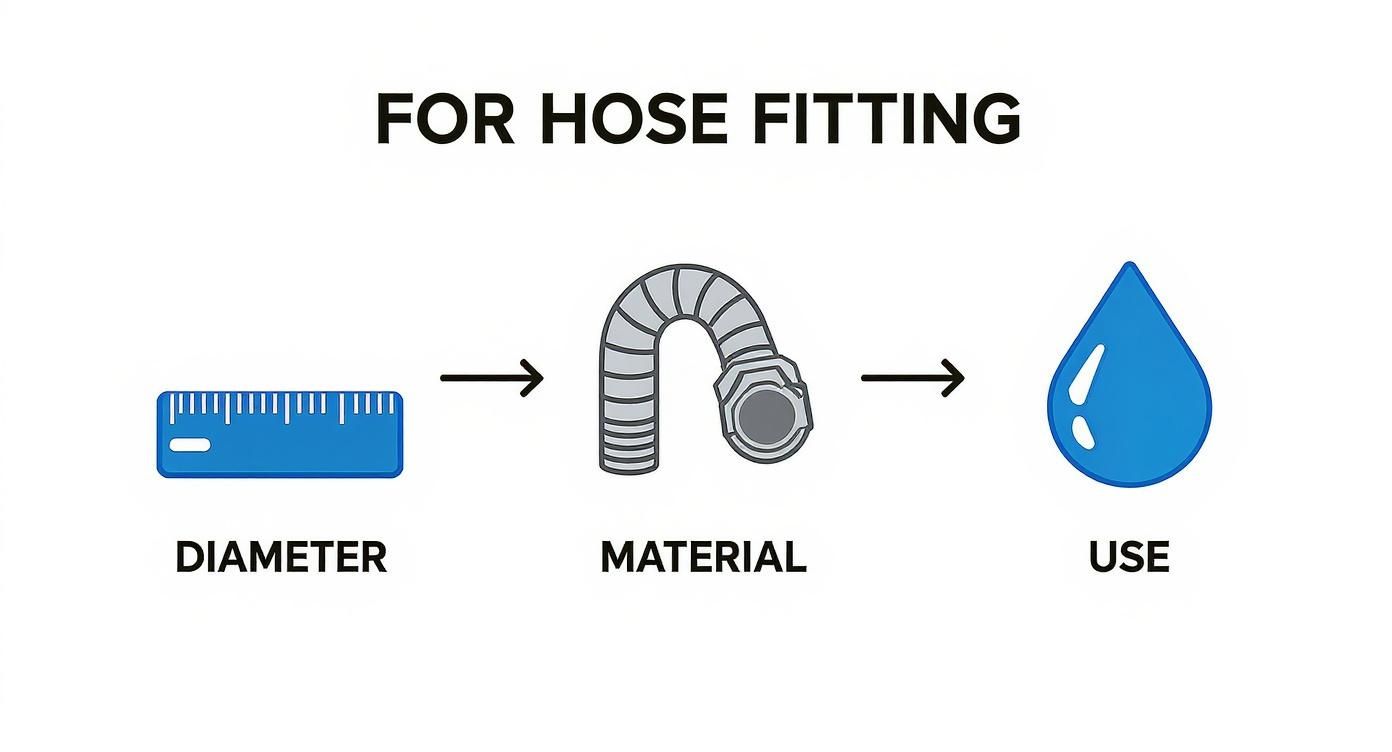
It serves as a reminder that a solid connection depends on more than just size. The connector must be matched to the hose material and the job's demands, especially when dealing with abrasive slurry.
Locking Down Your Connection for Field Operations
On a job site, heavy-duty screw clamps are the industry standard for good reason. They encircle the hose and apply consistent, even pressure, cinching it tightly onto the connector’s barb. This creates a powerful mechanical grip that resists vibration and pulling forces, maintaining strong suction throughout the operation.
Even with a high-quality clamp, an older, worn hose can present challenges. If a hose has become stiff or lost its shape, performance may suffer. A useful field technique is to gently warm the end of the hose with a heat gun before attaching the connector. This increases the material's flexibility, allowing it to conform perfectly to the connector for a much tighter seal once clamped. You can find more practical advice in our guide on shop vac hoses and fittings.
An airtight seal is not just about raw power; it's about control. It ensures the water jet and the vacuum work as a cohesive unit, preventing slurry splash-back and maintaining a cleaner, safer work site.
This focus on a perfect seal is driving growth in the market for high-quality vacuum connectors, which is projected to reach $397.2 million by 2025. This expansion is fueled by industries that cannot tolerate vacuum leaks. A reliable shop vac hose connector for hydrovac use is built on these same principles of integrity and performance.
A Real-World Hydrovac Scenario
Consider a common hydrovac task: potholing to expose a delicate fiber optic line. This requires surgical precision, not a wide, disruptive trench. A specialized tool like The Hydrovac Attachment Tool, when paired with a pressure washer, is ideal for this scenario. The success of this setup depends entirely on its connection to your 2.5" shop vac hose.
Securing the tool with a rugged screw clamp creates a fully sealed, closed-loop system. As the water jet liquefies the soil, the vacuum instantly removes the slurry. There is no drop in suction, no messy overspray, and no risk of the hose detaching during a critical dig. This secure, dependable connection is what transforms a standard shop vac into a precision hydro-excavation machine, providing the control needed to complete the job correctly.
Out in the Field: Real-World Scenarios for Hydrovac Crews
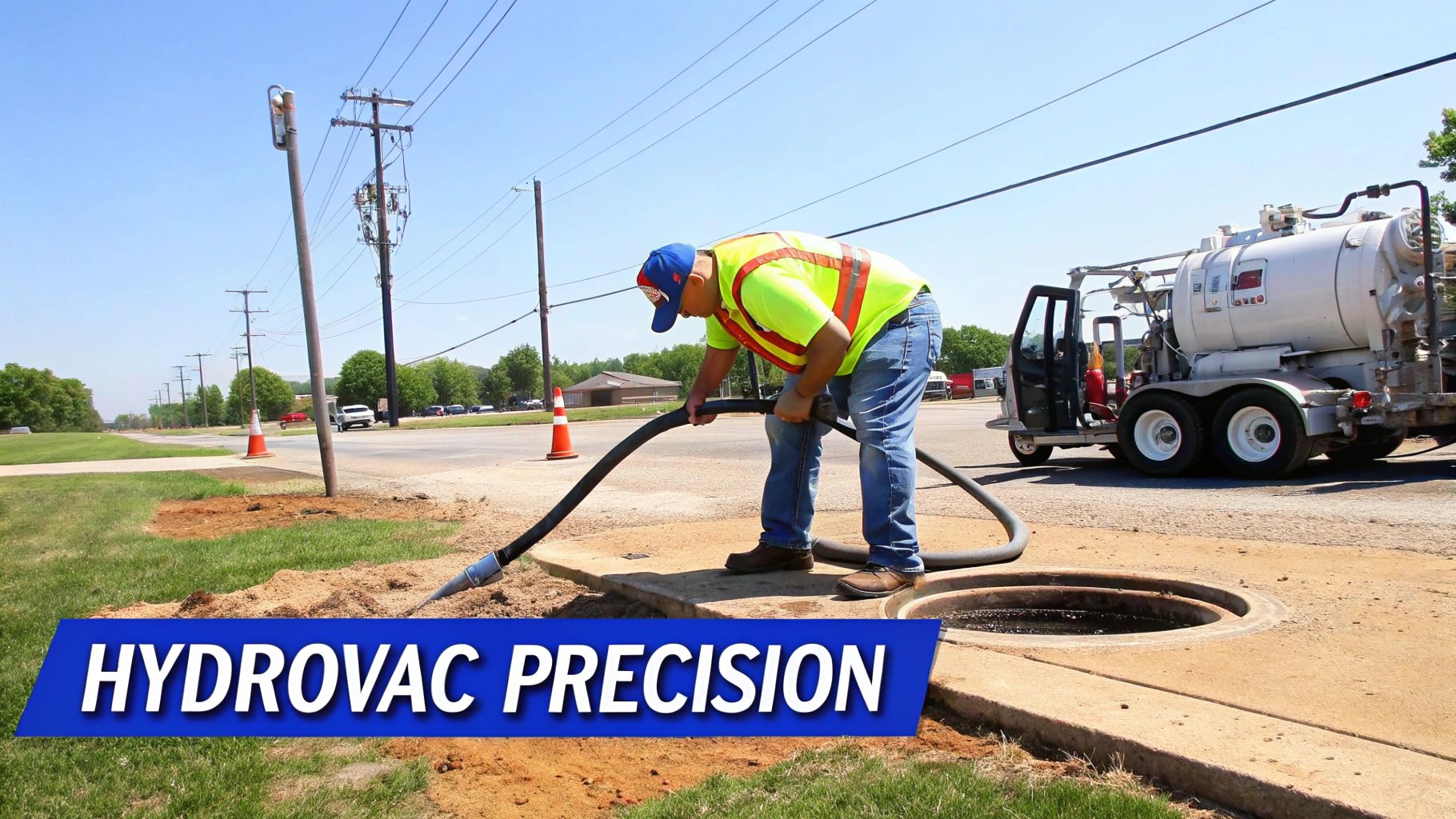
In hydro excavation, every task depends on precision and reliability. The connection point between the hose and the tool is where operational success is determined. A weak or leaky shop vac hose connector can turn a straightforward potholing task into a frustrating battle with mud, slurry, and wasted time.
A proper connection transforms standard equipment into a specialized digging machine. It provides the confidence to tackle challenging jobs by ensuring consistent suction, minimal mess, and maximum efficiency—all critical when working against tight deadlines around sensitive underground utilities.
Precision Digging for Utility Potholing
Imagine needing to expose a bundle of fiber optic cables buried beneath a city sidewalk. Deploying a full-sized hydrovac truck is often impractical and risks collateral damage. This is where a portable, high-powered setup excels, but only if every component is securely connected.
By clamping The Hydrovac Attachment Tool onto a 2.5-inch shop vac hose, operators create a surgical digging instrument. The secure fit ensures that all water pressure from the wand is matched by immediate, powerful suction. This allows for the precise removal of soil layer by layer without damaging delicate utilities. A subpar connector would leak, causing suction loss and turning the area into a muddy pit. A solid, clamped connection contains the slurry, maintaining visibility and control.
Cleaning Out Stubborn Valve Boxes and Drains
Municipal crews frequently encounter valve boxes and storm drains clogged with years of compacted debris. These are often in tight, awkward locations where brute force is not an option. The obstruction must be cleared without damaging the surrounding infrastructure.
Here, a robust connection proves its value. With The Hydrovac Attachment Tool securely locked onto the hose, a high-pressure jet of water can be directed deep into the box to break up the blockage. Simultaneously, the powerful vacuum created by the airtight seal extracts all dislodged material immediately.
For operators, a secure hose connection is more than just a convenience; it's a productivity multiplier. It allows smaller, more agile equipment to perform tasks that would otherwise require heavy machinery, saving both time and money.
Without this solid link, operators would face significant backsplash, suction loss, and a messy, inefficient process. The slurry would churn instead of being removed, prolonging the task and causing frustration.
Trenching in Tight or Sensitive Spots
Trenching for irrigation lines through a landscaped garden or adjacent to a building's foundation requires a delicate approach. A mini-excavator is often out of the question due to the high risk of damage and space constraints.
This is an ideal application for a precision hydrovac setup. Pairing a pressure washer with a powerful wet vac allows for the creation of clean, narrow trenches with minimal ground disturbance. The key to this operation is effective slurry management, which hinges on the integrity of the shop vac hose connector. A reliable connection guarantees a smooth, clog-free flow of soil and water. As any experienced operator knows, even a minor interruption can cause a slurry backup, creating a significant cleanup challenge. With The Hydrovac Attachment Tool, the system remains sealed and efficient, demonstrating the value of an optimized setup for delicate, space-constrained jobs.
Troubleshooting Common Connection Failures
Nothing disrupts job site momentum like an unexpected hose detachment or a sudden loss of suction. When power drops or a connection fails, it is typically a symptom of a simple, fixable issue, provided you know what to look for.
Most connection problems stem from a few common culprits. A gradual decline in performance often indicates a compromised seal. Air infiltration weakens the vacuum, frequently occurring when a generic connector fails to properly grip the deep grooves of an industrial hose.
A complete hose disconnection, however, is almost always a mechanical failure. This could be due to a clamp that has vibrated loose or, more commonly, a cheap plastic connector that has cracked under operational stress.
Pinpointing the Root Cause
Identifying the cause of failure is essential to preventing a recurrence. A quick inspection of your setup can provide answers:
- Is the connector material failing? Low-grade plastics become brittle with UV exposure. Look for hairline cracks or a chalky appearance, which are clear signs of material degradation.
- Is the clamp providing a secure grip? An improperly seated clamp will not apply even pressure, creating a persistent air leak. Ensure it is positioned correctly and tightened securely. For best practices, you can learn more about selecting and using vacuum hose clamps to guarantee a solid connection.
- Could it be a sizing mismatch? This is the most common error. A connector that is even slightly too large or too small will never create a dependable seal. It may feel secure initially, but the powerful suction of a professional-grade vacuum will quickly expose the flaw.
The most effective way to "troubleshoot" these issues is to prevent them entirely. Investing in a quality, purpose-built connector system eliminates common failure points, saving significant time, money, and frustration on site.
This is why a dedicated system like The Hydrovac Attachment Tool is so effective. It is engineered from an industrial-grade polymer that withstands UV damage and physical abuse. More importantly, it was designed specifically for the common 2.5-inch hydrovac hose profile. It creates a perfect mechanical lock that removes guesswork, providing a leak-proof connection you can rely on under pressure.
Got Questions About Hose Connectors? We've Got Answers.
Even with the best equipment, questions arise on the job. Here are answers to common issues faced by hydrovac crews and contractors aiming to optimize their setup.
Can I Just Use an Adapter for Different Hose Sizes?
While technically possible, using adapters is strongly discouraged in professional hydrovac applications. Every adapter introduces another potential leak point. Each connection is a seam where suction power can be lost.
For serious hydrovac work, standardizing your equipment around a single, robust connector size, such as the industry-standard 2.5-inch format, is the best practice. If an adapter must be used in an emergency, use a single, high-quality reducer. Stacking multiple adapters is a recipe for a blowout during a critical operation.
What’s the Best Way to Lock Down My Connection?
A simple friction fit is insufficient for hydrovac work. The combination of vacuum vibration and the weight of moving slurry will quickly work such a connection loose.
The industry standard is a heavy-duty screw clamp. It provides 360-degree compression, securely cinching the hose onto the connector's barb for a mechanical lock that will not fail under load.
For the tightest seal:
- Use a clamp that is wide enough to get a substantial grip on the connection point.
- Tighten it securely, but avoid over-tightening, which can damage the hose.
A secure clamp does more than just prevent detachment; it creates a perfect, airtight seal. This seal ensures that 100% of your vacuum's power is delivered to the nozzle, where it is needed for effective digging.
How Much Does a Good Connector Really Affect Digging Speed?
It has a significant impact. A solid, leak-free shop vac hose connector ensures that all of your vacuum's power is focused at the point of excavation. With no suction loss along the hose, soil and slurry are removed much faster and more efficiently.
This translates directly to completing jobs like utility potholing or cleaning catch basins in less time. When you use a tool designed for the task, like The Hydrovac Attachment Tool, you achieve consistent, powerful suction. It allows the water jet and the vacuum to work in perfect synchronization, resulting in less messy backsplash and a clearer view of the work area—enhancing both safety and precision.
Ready to eliminate leaky connections and maximize your digging power? The Hydrovac Attachment was engineered for professional hydrovac work, guaranteeing a perfect seal with your 2.5-inch hose every time. Learn more and order yours today at hydrovacattm.com.