


A shop vac hose coupler might seem like a small component, but in the demanding world of hydro excavation, it’s the critical link that ensures operational integrity. This connector joins hoses or attaches specialized tools, providing extended reach and, most importantly, a secure, airtight seal. For hydrovac operators, this isn't just a part—it's the linchpin that translates raw vacuum power into precise, effective digging force.
This simple connector is often the only thing standing between full suction power and a frustrating, inefficient mess, especially when you're tackling sensitive utility locates or clearing stubborn debris.
Why the Right Hose Coupler Is Non-Negotiable in Hydrovac Operations
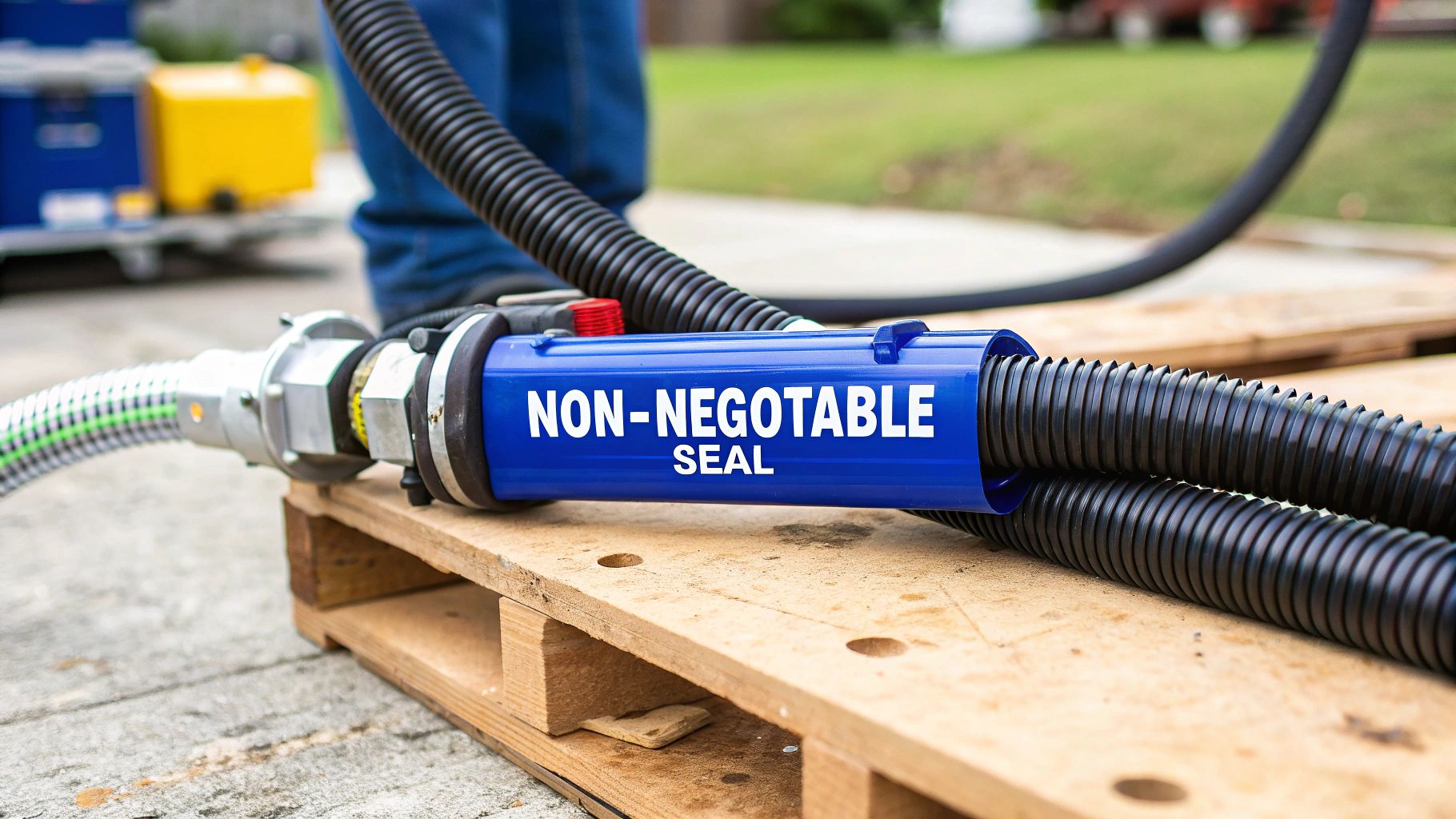
Selecting the right hose coupler isn't just about making two ends meet; it’s about building a fail-safe system for the high-stakes environment of hydrovac excavation. Think of it as the foundation of your suction assembly—if it fails, the entire operation is compromised. This leads to lost power, unexpected downtime, and significant frustration on the job site.
A generic fitting from a hardware store may suffice for workshop cleanup, but it will inevitably fail under the pressures of hydrovac work. The constant vibration, abrasive slurry, and intense negative pressure will cause a flimsy coupler to crack, leak, or disconnect entirely.
The True Cost of a Weak Connection in the Field
A faulty connection is more than an inconvenience; it has direct operational and safety consequences. A leaky or insecure coupler directly sabotages your vacuum's performance, forcing the motor to overwork for substandard results and impacting your bottom line.
This leads to several critical issues for hydrovac professionals:
- Significant Suction Loss: A minor air leak can reduce a vacuum's effective power by up to 20-30%. Your industrial-grade machine suddenly performs like an underpowered unit, unable to lift heavy slurry.
- Increased Job Times: Weak suction means slower excavation. Potholing utilities or clearing a trench takes longer, putting projects behind schedule and over budget.
- Critical Safety Hazards: Imagine a hose disconnecting under full suction. It can whip around violently, posing a serious danger to operators and surrounding infrastructure, especially in confined spaces.
A secure, leak-proof connection is the absolute backbone of any professional hydrovac setup. Skimping on the shop vac hose coupler doesn't just reduce efficiency; it actively undermines your operation and introduces unacceptable safety risks.
Achieving Peak Performance with Specialized Tools
For precision tasks, that connection becomes even more critical. Consider The Hydrovac Attachment Tool, which is engineered to transform a standard shop vac into a powerful, precise hydro-excavator. The tool focuses high-pressure water and intense suction into a concentrated area, enabling delicate, non-destructive digging around sensitive utilities.
A high-quality shop vac hose coupler ensures that every bit of your vacuum's power is channeled directly into the attachment. Without a solid, locking connection, the controlled suction zone collapses, rendering the tool ineffective and compromising the entire purpose of non-destructive digging. This is why a performance-grade coupler isn't an "upgrade"—it's a baseline requirement for leveraging specialized hydrovac equipment to its full potential.
Selecting a Coupler for Peak Hydrovac Performance
Look, the simple plastic coupler that works for workshop dust is going to fail spectacularly in a muddy hydrovac trench. Choosing the right shop vac hose coupler isn't just about fit; it's about matching the component to the extreme demands of the job. This decision directly impacts your operational efficiency, safety protocols, and the performance of your specialized hydrovac tools.
When dealing with high-suction, heavy-slurry applications, the selection criteria boil down to two key factors: material composition and the locking mechanism. A standard plastic coupler might seem adequate initially, but the constant vibration and impacts on a professional job site will quickly lead to cracks and air leaks, killing your suction power right when you need it most.
Material Matters: Durability Under Pressure
Your first checkpoint is the coupler's material. For light-duty tasks, basic plastics suffice. But for industrial hydrovac use, you need something far more robust to handle abrasive materials and harsh conditions.
- Impact-Resistant ABS Plastic: A significant upgrade from standard PVC, ABS offers excellent rigidity and can handle the bumps and drops of a busy work site without shattering. It represents a strong balance of durability and cost for hydrovac applications.
- Heavy-Duty Aluminum: For maximum durability, nothing beats metal. Aluminum couplers resist crushing, chemical exposure, and temperature extremes, making them ideal for the most challenging hydrovac environments.
The industry trend confirms the need for such robust components. The global market for quick couplers, which is central to hydrovac operations, is seeing significant growth as professionals demand more reliable and durable connection solutions to prevent downtime and enhance safety.
From Friction-Fit to Fail-Safe Locks
Even more critical than the material is the locking system. The method a coupler uses to secure the hose determines its ability to hold under the intense negative pressure of a powerful vacuum, especially when paired with tools like The Hydrovac Attachment Tool. A simple friction-fit connector is a recipe for disaster in hydrovac applications; the suction force alone can pull it apart.
A locking coupler isn't just a feature; it's a non-negotiable safety and performance requirement for any high-suction hydrovac job. It's the difference between a controlled, efficient excavation and a sudden, hazardous failure.
Secure locking systems are the only way to guarantee an airtight seal when your equipment is under maximum load.
- Twist-Lock Systems: These couplers feature threads or grooves that create a secure mechanical connection with a simple twist, preventing disconnection from strong pulling forces.
- Cam-Lock Systems: Recognized by their two clamping "arms," these provide an even stronger, faster connection. They are a staple in industrial fluid transfer for their unmatched reliability.
To help you decide, here’s a quick comparison tailored to the hydrovac industry.
Shop Vac Hose Coupler Feature Comparison
| Feature | Standard Workshop Use | Heavy-Duty Industrial Use | Recommended for Hydrovac Attachment |
|---|---|---|---|
| Material | Standard PVC or Plastic | Impact-Resistant ABS, Aluminum | Impact-Resistant ABS or Heavy-Duty Aluminum |
| Locking System | Friction-Fit (Push-on) | Twist-Lock, Cam-Lock | Twist-Lock or Cam-Lock (Mandatory) |
| Durability | Low - Prone to cracking | High - Resists impacts, chemicals | Very High - Must withstand constant vibration & debris |
| Seal Integrity | Moderate - Prone to air leaks | Excellent - Maintains suction under load | Critical - Airtight seal is essential for performance |
Choosing the right features isn't about overspending; it's about preventing failure and maximizing the power of your equipment.
For a tool like The Hydrovac Attachment Tool, a secure locking coupler is absolutely mandatory. This attachment channels immense suction into a precise area, and any air leak from a weak connection completely undermines its digging power. By investing in a robust, locking shop vac hose coupler, you ensure every bit of your vacuum's force is delivered right where it counts, transforming your workflow from frustrating to incredibly effective. For a deeper dive, check out our guide on essential shop vac hose attachments.
Installing Your Coupler for an Airtight Seal
The connection point is where your vacuum’s power is won or lost. You can have the best shop vac on the market, but if that coupler leaks air, your performance tanks. Let's walk through how to create a genuinely airtight seal that's tough enough for any job site, because a solid shop vac hose coupler installation means all that suction power goes right where you need it.
This isn't just about pushing two ends together. It's about thinking through the job, the material you're moving, and what kind of locking mechanism will give you a rock-solid fit.
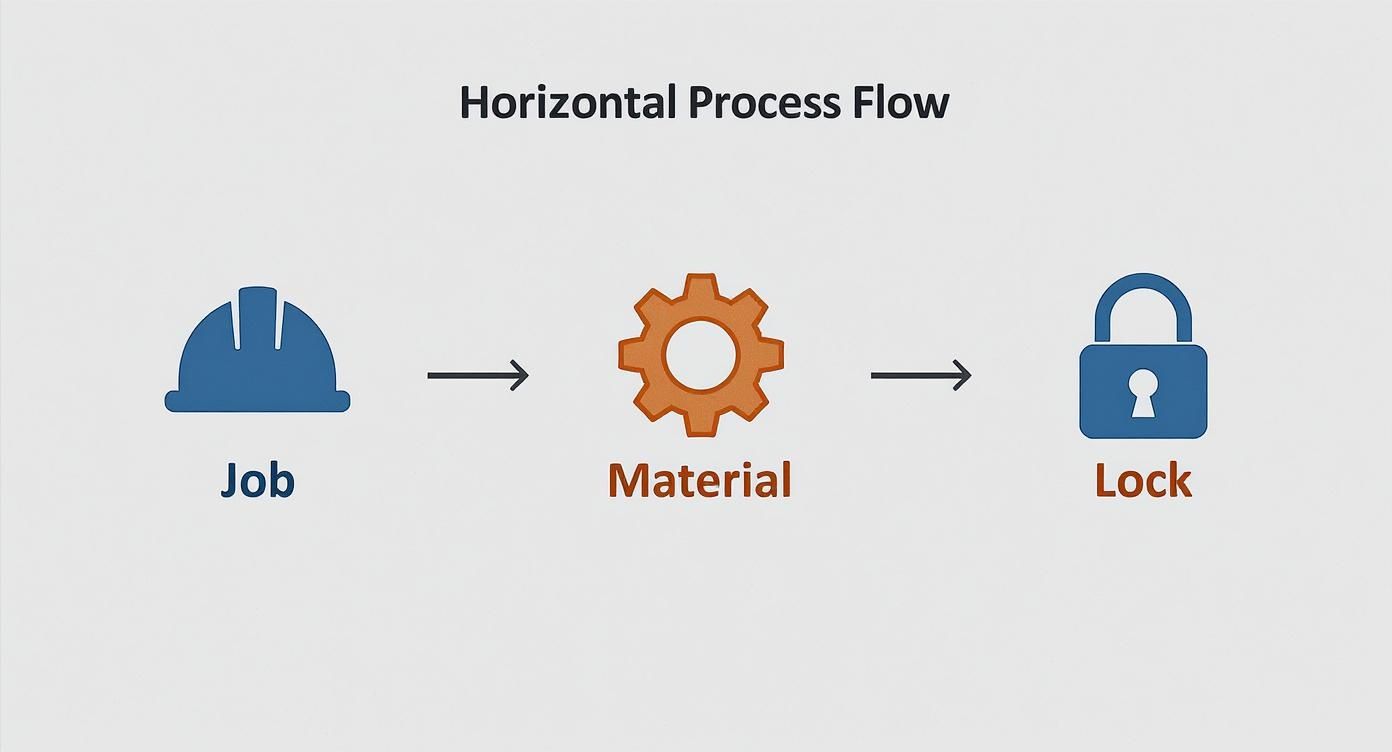
As you can see, the job itself tells you what material and locking system you'll need for a connection you can count on.
Start with a Quick Hose Inspection
Before you even grab the coupler, take a close look at the ends of your hose. This is a simple habit that pros swear by because it stops connection problems before they even start. After being dragged across concrete and gravel, hose ends get brittle, frayed, and warped.
Just run your fingers along the last few inches of the hose cuff. Can you feel any tiny cracks, deep nicks, or spots where the plastic is out of shape? A damaged hose end will never seal properly, no matter how good your coupler is.
If you find any real damage, don't hesitate to trim off the bad section with a sharp utility knife. Giving the coupler a clean, flat surface to bite onto makes all the difference in the world for a tight seal.
Getting the Fit Just Right
When you're putting the coupler on, you're aiming for a snug, firm fit—not a death grip. One of the most common mistakes I see is people cranking down on plastic couplers, which just strips the threads or cracks the housing.
- Threaded Couplers: Always start by hand-tightening. It should spin on smoothly. If you feel it catch or bind, back it off and try again to make sure you're not cross-threading it. Once it’s hand-tight, just give it one last little nudge to secure it.
- Cam-Lock Couplers: First, check that the gasket inside the female end is clean and sitting flat. Then, slide the male end in and close both arms at the same time. You should feel a satisfying snap as they lock, but you shouldn't have to wrestle with them.
The real secret to an airtight seal that lasts isn't brute force. It's a clean, perfectly aligned connection. Forcing it is the quickest way to break your gear and create a nagging air leak that saps your vacuum's power.
A Special Note for The Hydrovac Attachment Tool
Connecting The Hydrovac Attachment Tool is a whole different ballgame. The intense suction and constant vibration from digging will find any weak spot in your setup. This is non-negotiable—you need a high-quality, locking shop vac hose coupler. That connection has to withstand the real-world forces of hydro excavation without popping off or starting to hiss.
Sometimes you're connecting to different systems on-site. If you're running into a more complex setup, our guide on using a hose adapter to PVC has some great pointers.
Once you’re all hooked up, do a quick test before you start the real work. Fire up the vac and cover the end of the attachment with your hand. You should feel a massive, steady pull. More importantly, listen right at the coupler. Any hissing is the tell-tale sign of an air leak that you need to fix before you start digging.
Couplers in Action on Hydrovac Job Sites
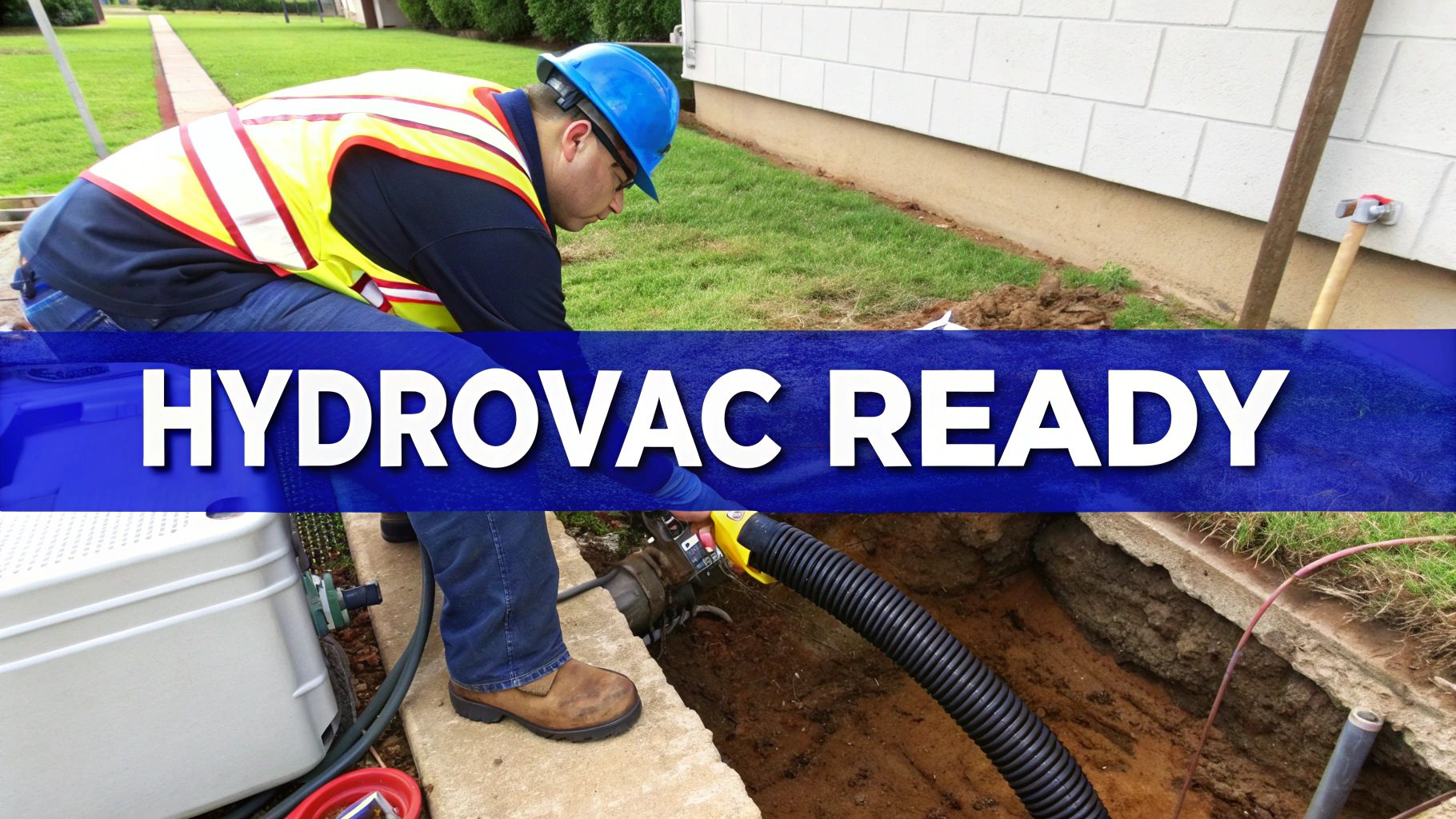
On a live hydrovac job site, a high-quality shop vac hose coupler proves its worth. It’s the critical link enabling the use of specialized tools for precision tasks. Without a secure, airtight connection, the entire system, including powerful attachments like The Hydrovac Attachment Tool, becomes practically useless for effective digging.
Imagine daylighting a sensitive fiber optic line buried beneath concrete. This requires surgical precision, not brute force. A robust, locking coupler ensures that The Hydrovac Attachment Tool receives the full, uninterrupted suction power from your vacuum, allowing you to methodically peel away soil and slurry with absolute control. A cheap, friction-fit coupler leaking air or—worse—popping off mid-dig turns a controlled excavation into a hazardous and costly mess.
Unlocking Versatility in Confined Spaces
Much of today's hydrovac work occurs in spaces inaccessible to large hydrovac trucks. This could be clearing an underground valve box in a narrow alley or managing slurry in a building's cramped mechanical room. In these scenarios, a portable shop vac setup is indispensable, but only if its connections are fail-safe.
Field operators depend on robust couplers to prevent hose blowouts, which are not just an annoyance but a serious safety risk and a direct cause of expensive delays. A hose whipping around under pressure in a tight space can cause significant injury and damage.
A reliable shop vac hose coupler is what unlocks your equipment’s true potential. It turns a standard shop vac into a precise, powerful tool ready for anything from small-scale utility locates to major commercial projects.
Real-World Applications and Industry Insights
The impact of a solid connection is evident in everyday hydrovac tasks:
- Precision Potholing: When daylighting utilities, operator confidence is key. A secure coupler provides consistent suction, allowing for precise work without the fear of equipment failure at a critical moment.
- Debris Removal: Clearing compacted mud, gravel, and debris from storm drains or utility vaults demands sustained, high-power vacuum performance that a leaky connection simply cannot deliver.
- Slurry Management: A locked-in coupler ensures all slurry is effectively removed from the work area, which is vital for maintaining a clean, safe, and efficient site for the crew.
Industry professionals will confirm that the coupler is a common point of failure—or success. It is counterintuitive to undermine thousands of dollars of high-performance equipment with a cheap connector. For operators who cannot afford downtime, the right shop vac hose coupler isn't an accessory; it's a non-negotiable part of their toolkit. To learn more about the systems these couplers integrate with, check out our guide to essential hydrovac excavation equipment.
This simple component is what allows specialized solutions like The Hydrovac Attachment Tool to perform as designed, proving that in hydrovac operations, the smallest part often makes the biggest difference.
Troubleshooting Common Connection Failures
Even the most robust hydrovac setup has potential weak points, and on a demanding job site, the shop vac hose coupler is often the first component to show signs of wear. If your vacuum’s performance suddenly degrades, that connection is the first place to inspect. It is a critical junction where suction power can bleed away, turning a productive day into a frustrating struggle against inefficiency.
Learning to spot common failures isn't just about reactive maintenance—it's about proactive operational management. Identifying a potential issue before it leads to a full-blown failure saves valuable time and keeps the job moving, especially when you’re relying on a precision tool like The Hydrovac Attachment Tool.
Diagnosing Gradual Suction Loss
The most insidious problem is a slow, creeping loss of power. The vacuum motor sounds like it's running at full capacity, but the suction at the nozzle is weak. In nine out of ten cases, this is caused by a small, often invisible air leak at the coupler.
A quick diagnostic is to run the vacuum and carefully feel around the entire connection. You can often feel a slight draft where air is being sucked in. Another field trick is to lightly mist the area with a spray bottle; if there's a leak, you'll see the water droplets pulled directly into the crack or faulty seal.
- Check the Gasket: A worn, dirty, or compressed gasket is the primary culprit. Disconnect the coupler and inspect the rubber seal for cracks, embedded debris, or loss of pliability.
- Inspect for Hairline Cracks: Plastic couplers can develop micro-fractures from constant vibration or impact. These are difficult to spot but can be a major source of suction loss.
- Verify Hose Fit: Ensure the hose end itself isn't warped or damaged where it inserts into the coupler, as this will prevent a proper seal from forming.
When Couplers Pop Off Under Load
Nothing halts a hydrovac operation faster than a coupler blowing off under high suction. This is more than inefficient; it's a significant safety hazard. This type of failure is almost always due to using a friction-fit coupler or a damaged locking coupler that cannot withstand the intense negative pressure.
If this occurs, the coupler is compromised and must be replaced. It is a clear indication that the locking mechanism is broken or the material has warped. The only professional solution is an immediate replacement with a secure, locking-style coupler designed for heavy-duty hydrovac use.
A coupler that disconnects under load is a critical failure. Do not risk a temporary fix—replace it immediately. A makeshift duct tape patch might last five minutes, but it is guaranteed to fail again, likely at the worst possible moment.
The importance of a solid connection cannot be overstated. Quick couplers are such a vital component that the global market was valued at $1.7 billion in 2023 and is projected to reach $2.9 billion by 2032. This growth is driven by professionals in industries like hydrovac who demand safe, leak-free, and reliable connections. You can find more insights about the quick couplers market on alliedmarketresearch.com.
For any hydrovac operator, a dependable connection is paramount. A high-quality shop vac hose coupler is what allows The Hydrovac Attachment Tool to deliver consistent, powerful digging performance, job after job.
Your Toughest Coupler Questions, Answered
On any hydrovac job site, questions are inevitable, even with top-tier equipment. When maintaining maximum suction and avoiding costly downtime, the small but mighty shop vac hose coupler often becomes a key topic. Here are direct answers to the most common questions from professionals in the hydro excavation industry.
This isn't theory; it's practical knowledge gained from years in the field.
What’s the Best Coupler for Hydro Excavation?
For any hydro excavation work, a locking-style coupler is non-negotiable. Standard friction-fit connectors from hardware stores cannot withstand the intense, continuous suction and vibration inherent to hydrovac operations. They will leak air, reduce digging power, and eventually disconnect.
Specify a cam-lock or twist-lock coupler made from impact-resistant ABS plastic or heavy-duty aluminum. These create a secure mechanical bond that won't fail under pressure, which is absolutely critical when operating precision tools for effective digging.
Consider this: The Hydrovac Attachment Tool is engineered to concentrate immense suction force for non-destructive digging. Its performance depends entirely on a secure, locking coupler to deliver that power consistently and prevent a hose from whipping around, ensuring both efficiency and safety. A standard coupler will choke its performance every time.
How Do I Make Sure a Coupler Fits My 2.5-Inch Shop Vac Hose?
Perfect sizing is essential for an airtight seal. While most heavy-duty shop vacs use a standard 2.5-inch hose, you should always confirm the inner diameter (ID) the coupler is designed for.
- Measure First: Before purchasing, use calipers or a tape measure to get the precise outer diameter of your hose cuff—the part the coupler will grip.
- Check the Specs: Match your measurement to the coupler manufacturer's specifications. Do not guess.
- Match the Ends: Some hoses have threaded ends, while others are smooth. Ensure your coupler is compatible with your hose type for a proper grip.
While universal adapters exist, for professional hydrovac work, nothing beats a purpose-built 2.5-inch coupler. It is the only way to guarantee a reliable, leak-free connection.
Can I Use a Generic Coupler with The Hydrovac Attachment Tool?
While you could likely force a generic hardware store coupler to connect, it is strongly advised against for both performance and safety reasons. The Hydrovac Attachment Tool generates a level of focused suction that will immediately exploit any weak link in your system.
A standard-duty coupler will almost certainly:
- Leak air, crippling its digging power.
- Develop hairline cracks from operational vibration.
- Disconnect unexpectedly, creating a significant safety hazard.
To achieve the effective digging performance you need, pair this solution with an industrial-grade shop vac hose coupler built for high-stress hydrovac jobs.
How Often Should I Replace My Hose Coupler?
In a professional hydrovac setting, a coupler is a consumable item, not a permanent part. For safety and efficiency, conduct a quick visual inspection of your coupler before every job.
Look for any visible cracks, warping, or damage to the locking mechanism. A more thorough check should be done weekly. The rule is simple: replace it immediately if you find any damage or if the seal feels compromised. For heavy hydrovac use, it is best practice to replace couplers every 6-12 months as part of a preventive maintenance schedule to avoid failure during a critical task.
Ready to build a hydrovac setup you can rely on? The Hydrovac Attachment is engineered for professionals who demand efficiency and power for effective digging. Learn how to transform your workflow today at hydrovacattm.com.