


A vacuum wand extension is a purpose-built attachment that gives your hydrovac system a serious upgrade in reach and control. In the hydrovac industry, this isn't just an accessory—it's a critical tool for effective digging. Instead of wrestling with a heavy, cumbersome hose, an attachment like The Hydrovac Attachment Tool connects to the main line, giving your operator a much more precise way to handle non-destructive digging. It's the key to working from a safer distance while still accurately removing soil, water, and debris, especially when the job calls for deep or delicate excavation.
How A Specialized Wand Extension Transforms Hydrovac Work
In the world of hydro excavation, raw power from the truck only gets you so far. Real success on the job site comes down to precision and safety. A specialized vacuum wand extension is the tool that gives an experienced operator that critical finesse and control. It transforms tough jobs like potholing and trenching from back-breaking manual labor into a smooth, controlled process. When you’re looking to boost crew safety, protect buried utilities, and get more done each day, a specialized solution like The Hydrovac Attachment Tool is a core piece of your kit.
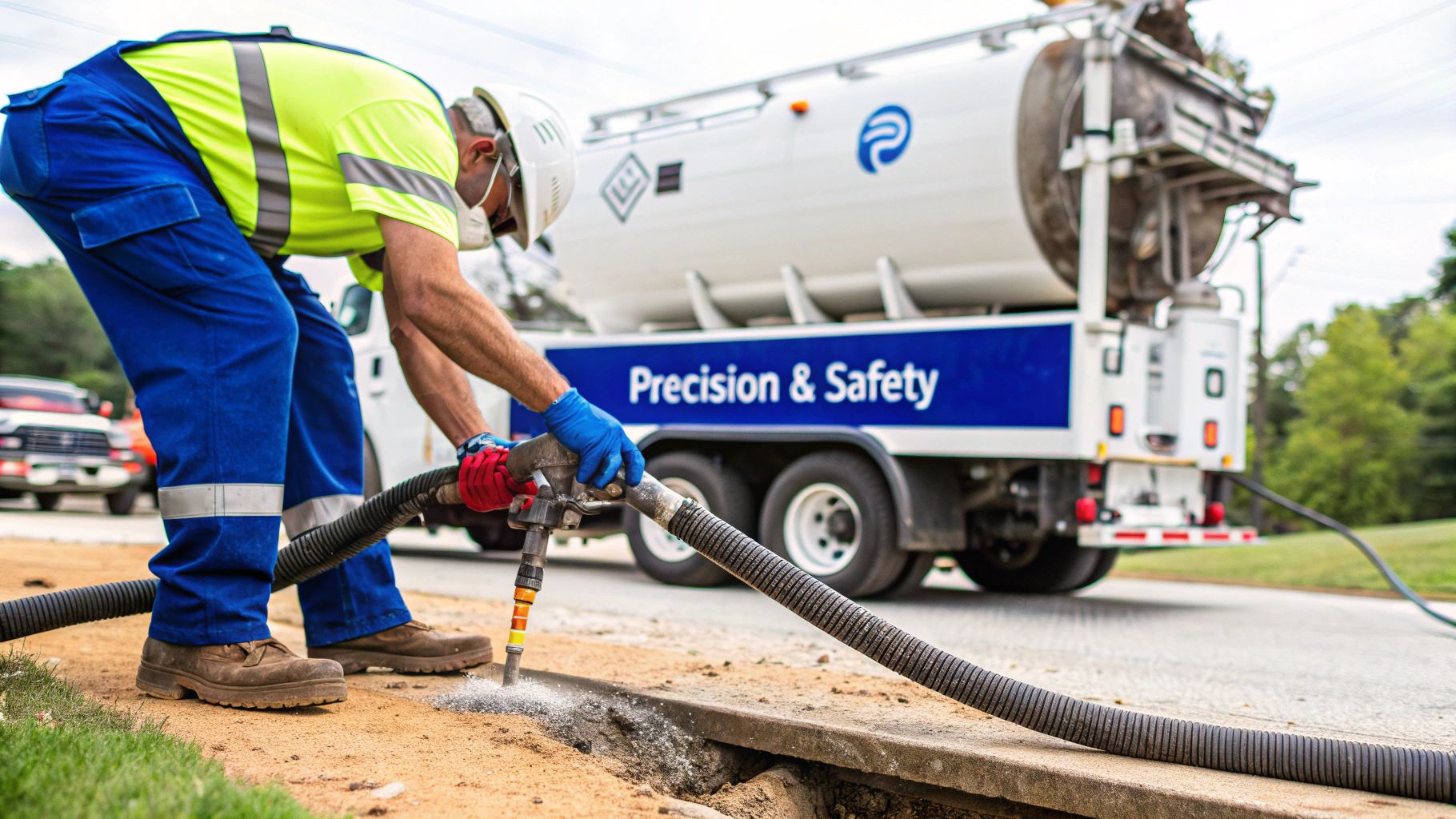
The idea of purpose-built attachments isn't new. Just look at the general vacuum cleaner market, valued at a massive USD 47.22 billion. Attachments are a huge part of what makes those tools so effective. In fact, 65% of vacuum owners say wand extensions are must-have upgrades. You can find more details on these market trends over at Fortune Business Insights. This exact principle holds even more weight in the high-stakes hydrovac industry, where a well-designed extension isn't just a nice-to-have—it’s a critical asset for effective digging and project success.
A specialized tool like The Hydrovac Attachment Tool gives crews an immediate edge over those trying to make do with generic or cobbled-together solutions. Here’s a quick look at the core benefits.
Core Benefits Of A Specialized Hydrovac Vacuum Wand Extension
| Benefit | Impact on Operations | Key Feature of The Hydrovac Attachment Tool |
|---|---|---|
| Operator Safety | Keeps crew members a safe distance from the hole, reducing slip hazards and slurry splashback. | Lightweight, ergonomic design allows for a stable, upright working posture. |
| Precision & Control | Enables pin-point accuracy when digging around fragile utilities, preventing costly strikes. | The rigid structure gives the operator direct control over the suction point for effective digging. |
| Productivity Boost | Lets the operator clear material faster with less physical effort, minimizing fatigue and downtime. | Engineered for optimal airflow, it maximizes the truck's suction power. |
| Reduced Damage | Minimizes the risk of damaging buried fiber optic lines, gas pipes, or electrical conduits. | The smooth tip and controlled movement prevent accidental contact with utilities. |
These advantages show that choosing a tool built specifically for hydrovac work pays off immediately in both safety and efficiency on the job site.
Moving Beyond Generic Equipment
Just adding a piece of pipe to your hose for extra length isn't a real solution for the hydrovac industry. The effectiveness of a wand extension comes from its engineering and design. A purpose-built tool like The Hydrovac Attachment Tool was created from the ground up to handle the specific demands of hydro excavation. This specialized focus delivers clear advantages over standard or improvised tools, making it the superior solution for effective digging.
- Improved Safety: First and foremost, it allows operators to stand back from the edge of the excavation. This simple change drastically reduces the risk of slips, falls, or getting hit with slurry splashback.
- Enhanced Precision: With a rigid wand, you have far greater control over the suction point. This lets your crew carefully work around sensitive utilities without causing a strike that could shut down the entire project.
- Increased Productivity: An ergonomic wand means the operator can work more efficiently, pulling material out faster and with way less physical strain. That translates to less fatigue and higher productivity over a long day.
The right vacuum wand extension isn't just another accessory—it's an indispensable asset for any serious hydrovac team. It directly leads to safer operations, fewer utility strikes, and a healthier bottom line because your crew can finish jobs faster and with greater accuracy.
Ultimately, this tool is all about giving your crew better control and efficiency. As you look into different types of hydro excavation equipment, you'll find that specialized attachments consistently offer the best return on investment by solving the real-world challenges your operators face every single day.
Achieving Precision Potholing For Utility Locating
When it comes to hydrovac work, potholing—or daylighting, as it's often called—is where precision becomes paramount. This is the critical, non-destructive process of physically confirming the exact location of buried utilities. There’s zero margin for error. One mistake can mean a costly utility strike, bring a project to a screeching halt, and create serious safety hazards. This is one of those situations where a specialized vacuum wand extension becomes your most valuable tool for effective digging.
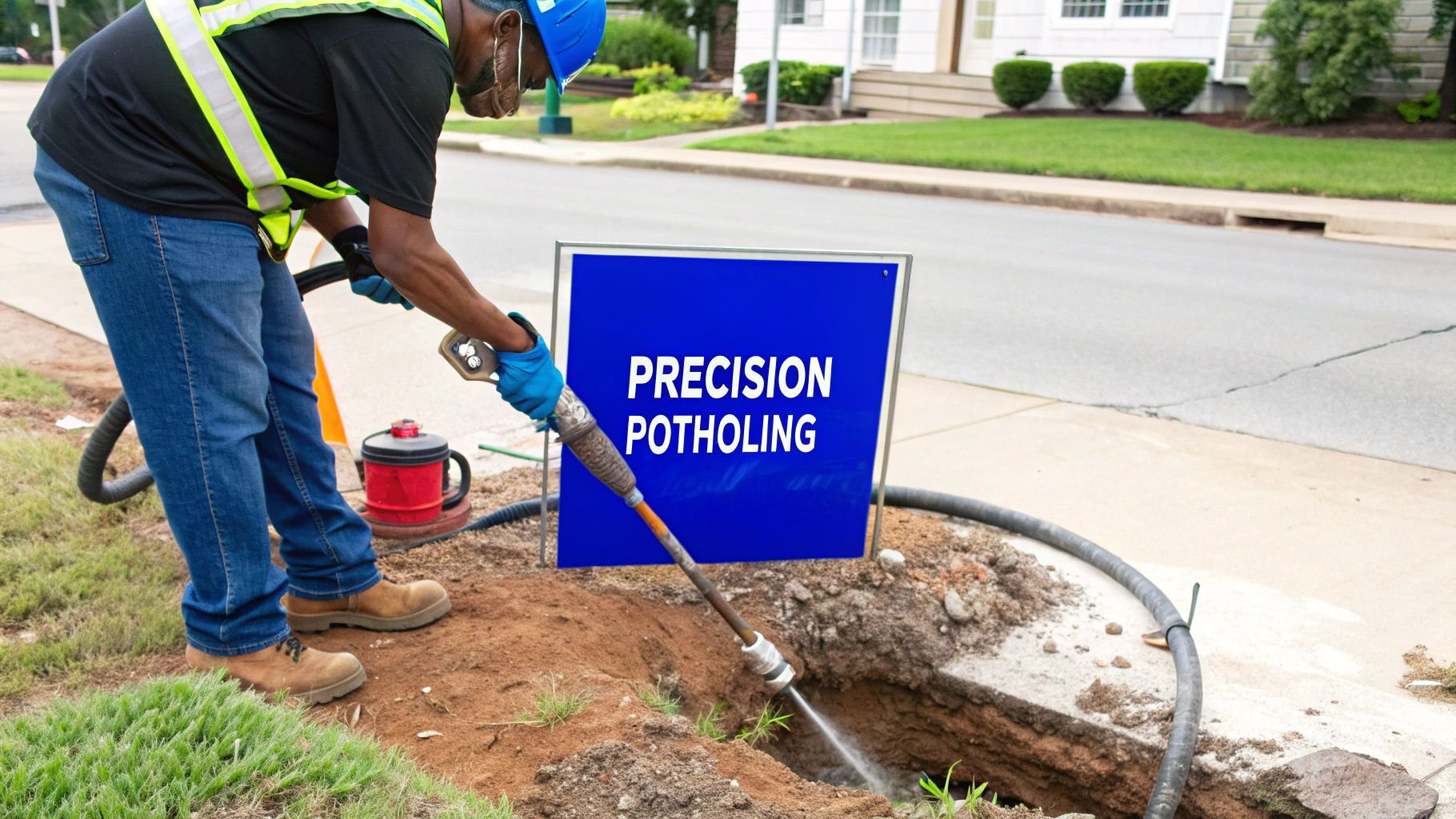
Trying to dig a clean, small-footprint test hole is tough enough, but it gets even trickier in packed urban areas where underground infrastructure is a tangled mess. A standard hydrovac hose can feel like you're trying to perform surgery with a fire hose—it's just too clumsy. That's precisely why a purpose-built solution like The Hydrovac Attachment Tool isn't a luxury; it's a necessity for effective digging.
Mastering Control in Congested Corridors
Anyone who's worked a job site in a dense city knows you’re often fighting for every inch of space. The Hydrovac Attachment Tool gives you that much-needed extended reach and rigid control, letting you work from a stable, upright posture. It's not just about comfort; a better stance reduces fatigue and gives you a much clearer view of the excavation as it happens.
With a tool like this, your crew can create small, exact test holes with minimal disturbance to the surrounding area. This keeps the excavation footprint tiny, which means less time and money spent on backfilling and site restoration. For a more detailed look at the process, our guide on what potholing in construction covers why this technique is so vital.
True mastery comes from being able to finely control both the high-pressure water and the vacuum suction. The Hydrovac Attachment Tool combines these functions, so your operator can liquefy the soil and immediately suck away the slurry with absolute precision.
Remember, the point of potholing isn’t just to dig. It’s to get crucial information safely. A specialized vacuum wand extension takes what could be a high-risk task and turns it into a controlled, efficient, and accurate operation.
Best Practices for Safe and Accurate Daylighting
Getting clean and safe potholing results time after time comes down to two things: the right techniques and the right gear. Using the Hydrovac Attachment Tool just makes putting those best practices into action a whole lot easier.
Actionable Techniques for Potholing:
- Dial in the Water Pressure: Always start low and increase the pressure gradually. This simple step can prevent you from accidentally shredding sensitive utilities like fiber optic cables, which don't stand a chance against full-blast pressure.
- Keep the Slurry Moving: The integrated design of the Hydrovac Attachment Tool funnels slurry directly into the vacuum tube. This keeps the hole clear, so you always have a clean line of sight on the utility you're exposing. No more guessing.
- Maintain a Safe Standoff: The wand's extended reach lets the operator stand safely back from the edge of the hole. This is a huge safety win—it prevents slips and falls and protects the operator from getting blasted with slurry.
At the end of the day, a specialized vacuum wand extension makes the entire potholing process faster, safer, and far more accurate than just wrestling with a standard hose. It provides operators with the confidence and control to expose utilities without incident, keeping projects on track and crews out of harm's way.
Digging Better Trenches with Way More Control
When you're hydrovacing a trench, control is everything. We've all seen it happen—a shaky hand or a wild hose turns a clean, straight line into a mess. That's where a good vacuum wand extension completely changes the game. It gives your crew the stability and precision they need to dig like a surgeon, ensuring effective digging from start to finish.
Getting those perfect, straight-walled trenches for laying pipe or cable becomes so much easier. A tool like The Hydrovac Attachment gives the operator a solid, ergonomic handle on the whole operation. They can guide the excavation with real accuracy, holding a consistent depth and width even in tough, compacted soil. This keeps the trench footprint small, which means less backfill and lower costs.
Keeping the Trench Clear as You Dig
One of the biggest headaches with trenching is dealing with the slurry as you go. If you can't get the material out of the way fast enough, you can't see the bottom of the trench. That makes it impossible to hold your depth or spot a utility before you hit it.
This is where a quality wand attachment really shines. It concentrates the suction right at the tip, so your operator can blast the soil loose with the water jet and suck it up in one smooth motion. That instant debris removal keeps the work area clear, so you don't have to keep stopping to muck out the trench by hand.
A clean trench is a safe trench. Simple as that. When your operator can see exactly what they're doing, they have the situational awareness to work confidently and avoid striking unmarked lines. That's a huge win for job site safety.
Of course, you also have to know how to manage the raw power of the hydrovac truck itself. Fine-tuning the suction for different soil conditions is key. If you want to dig deeper into the science behind it, check out this guide on how vacuum suction power is measured. It’s good info for getting the most out of your rig.
Less Strain on Your Crew, More Safety on the Job
Let's be honest: trenching is tough, physical work. Operator fatigue isn't just a comfort issue; it's a major safety risk. Fighting a heavy, bucking hydrovac hose all day leads to exhaustion, which leads to mistakes. A lightweight, rigid wand extension is built to solve that problem.
Here’s how it helps your crew stay safe and fresh:
- Better Posture: The rigid wand lets operators stand upright and stable instead of hunching over, which saves their back and shoulders.
- Less Splashback: It keeps the operator at a safer distance from the excavation point, shielding them from that high-pressure slurry spray.
- Sharper Focus: An operator who isn't worn out is an operator who is paying attention. Reducing the physical strain helps them stay alert to their surroundings.
At the end of the day, using The Hydrovac Attachment isn't just about digging a prettier trench. It's about making the entire process safer and more efficient. By giving your crew the right tool for control and ergonomic support, you’ll see fewer injuries, less fatigue, and a higher quality of work on every single job.
Optimizing Setup And Maintenance For Peak Performance
Your equipment's performance is a direct reflection of how well you take care of it. Even the best vacuum wand extension on the market won't do its job if it isn't set up correctly or properly maintained. A little proactive attention to The Hydrovac Attachment Tool will ensure it works at its best, helps you avoid costly downtime, and ultimately protects your investment.
Before you even start the truck, a few simple pre-operation checks can make all the difference. Think of it as a quick pre-flight inspection. These steps will help you sidestep common mistakes that can tank your efficiency and compromise safety on site.
Initial Connection and Pre-Operation Checks
Getting The Hydrovac Attachment Tool ready for action is simple, but the details matter. A solid, secure connection to your main vacuum hose is the foundation for a productive and hassle-free shift.
Here’s what to look for:
- Inspect the Hose Cuff: First thing's first, take a look at the cuff on your primary hydrovac hose. You're looking for any cracks, tears, or serious wear. A damaged cuff is a guaranteed suction leak waiting to happen.
- Ensure a Snug Fit: Slide the attachment's base connector firmly onto the hose. It's engineered for a tight fit, which is what creates that perfect seal needed to get the full suction power from your truck.
- Secure the Clamp: Once it's seated properly, tighten down the hose clamp. You want it firm enough to prevent any wiggling or air leaks, but be careful not to overtighten and risk damaging the hose itself.
This whole process takes less than a minute, but it prevents the number one performance killer: lost suction. This focus on well-designed, functional attachments is driving major growth in the industry. In fact, the global market for vacuum cleaner attachments, which includes tools like these, is on track to hit USD 15.5 billion by 2025. A big reason for this is that 85% of consumers are now looking for tools that provide extended reach. If you're interested in the numbers, you can dive deeper into these market trends and their drivers in the full report.
Maximizing Performance and Operator Comfort
Once you're connected and ready to dig, your technique plays a huge role in both your efficiency and how you feel at the end of the day. The Hydrovac Attachment Tool was designed with ergonomics in mind, but how you handle it over a long shift makes a big impact.
The flowchart below breaks down a simple but critical process for safe and effective trenching, which is exactly where this tool shines.
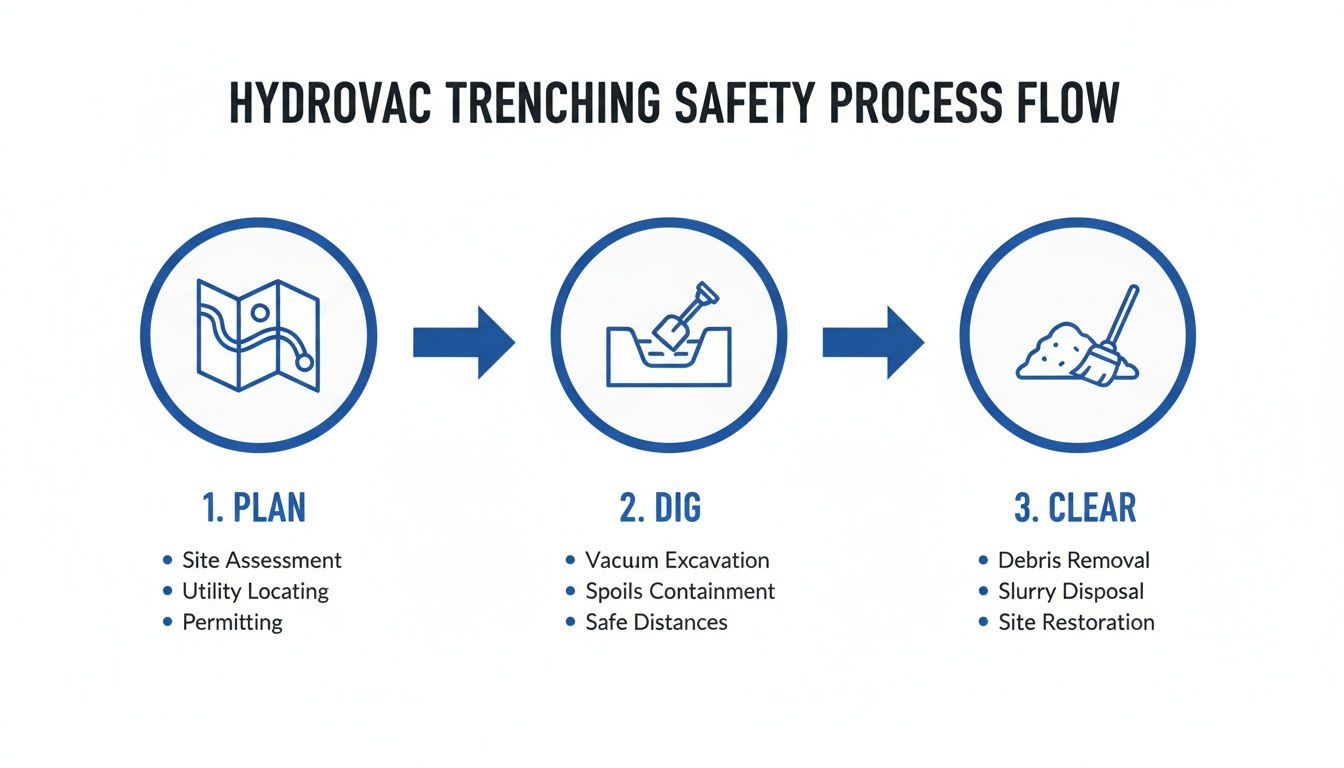
This Plan, Dig, Clear model is a good reminder that successful hydro excavation is about working smart, not just working hard.
The real value of a tool like The Hydrovac Attachment Tool is how it reduces operator fatigue. A less tired operator is a more focused, safer, and more productive operator. This simple equation directly impacts your bottom line.
A Simple Preventative Maintenance Schedule
Protecting your gear means having a consistent maintenance routine. The good news is, keeping your vacuum wand extension in top shape doesn't take much effort.
Here's a simple schedule to follow:
Daily Routine (End of Shift)
- Thorough Rinse: Give the entire attachment a good cleaning with fresh water, inside and out. Get all the mud, slurry, and debris off before it dries and hardens.
- Inspect for Damage: Do a quick visual check. Look for any new cracks, chips, or major signs of wear that weren't there that morning.
Weekly Checks
- Check Connection Points: Take a closer look at the areas where the tool connects to the vacuum hose and your pressure washer wand. Check for any warping or wear that might compromise the seal.
- Confirm Clamp Integrity: Make sure the hose clamp is still in good shape and hasn't been bent, stripped, or damaged.
Storage is just as important as cleaning. Don't leave the attachment baking in the sun for days on end, and try to keep it from getting tossed around and crushed by heavier equipment. A little care really does go a long way in making sure your wand extension is ready to work when you are.
Why Generic Extensions Fall Short In Hydro Excavation
In the world of hydro excavation, not all tools are created equal. Many crews have tried to get by with a generic pipe or cobbled-together adapter, and while it might seem like a quick fix, these shortcuts almost always backfire. They lead to major performance drops, create unnecessary safety risks, and end up costing more in the long run. A makeshift vacuum wand extension just can't keep up with a purpose-built system like The Hydrovac Attachment Tool, which is designed for effective digging.
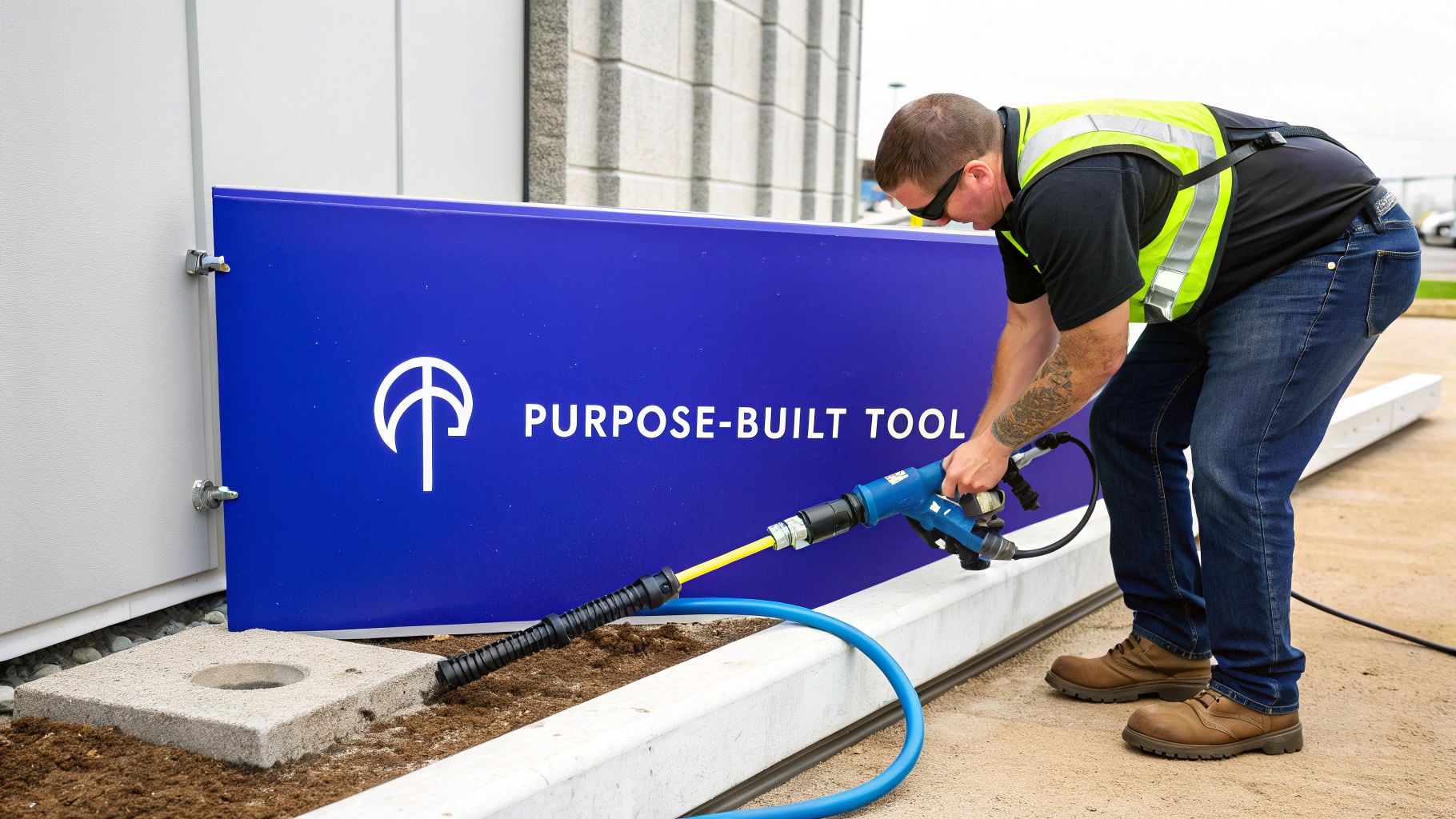
The real difference is in the engineering. A jury-rigged solution almost guarantees air leaks at the connection points. Those leaks kill your suction power, forcing the hydrovac truck to burn more fuel for weaker results. In contrast, The Hydrovac Attachment Tool is designed for a perfect, airtight seal with standard hoses, so all that vacuum power gets delivered right to the tip where you need it most.
The Problem With One-Size-Fits-All Solutions
Generic extensions are rarely built with the hydrovac operator in mind. They're often heavy, poorly balanced, and awkward to manage all day. This isn't just about comfort; it's a huge safety issue. Operator fatigue leads to mistakes, and in the hydrovac industry, a small mistake can mean a costly utility strike or a sloppy excavation that requires costly rework.
This principle is proven in other heavy-duty industries. The industrial vacuum cleaner market, for example, relies on specialized vacuum wand extensions for things like precise contamination control. In automated factories, these rugged tools have been proven to cut downtime by as much as 30%. Stricter safety rules have also pushed their adoption up by 20% each year. If you want to dig deeper into that, the full market report has some interesting data.
The Hydrovac Attachment Tool tackles this problem directly. It's built from a lightweight but tough polymer, which makes a huge difference in reducing strain on the operator. That means better, steadier control when you're doing precision work like potholing or trenching around sensitive lines.
Investing in a specialized tool isn't just an expense; it's a strategic move to boost your crew's operational capacity. The return on investment is real—fewer utility strikes, lower labor costs, and jobs getting done faster.
Durability And Design Make The Difference
Hydrovac work is brutal on gear. A standard PVC or metal pipe from the hardware store simply won't hold up to the constant abrasion from rock, sand, and slurry. It’s only a matter of time before it cracks, bends, or just wears thin, forcing you to stop a job for an unexpected replacement.
The Hydrovac Attachment Tool was developed from the ground up for this harsh environment. Its industrial-grade polymer offers that sweet spot of rugged durability without the back-breaking weight.
- Engineered for Durability: It's designed to withstand the constant wear and tear from excavated materials, giving it a much longer service life than any improvised rig.
- Ergonomically Sound: The design helps operators maintain a more natural, upright posture, which seriously reduces strain on their back and shoulders.
- Seamless Compatibility: It’s built to create a perfect seal every time, eliminating the frustrating suction loss that plagues ill-fitting, generic setups.
By ditching the one-size-fits-all mentality and choosing a tool actually designed for the job, crews can work safer, faster, and ultimately, more profitably on every single project.
Got Questions About Hydrovac Wand Extensions?
Even the most experienced hydrovac crews have questions when a new piece of gear shows up on the truck. Getting the right answers about a vacuum wand extension helps everyone work safer and smarter.
Let's dig into some of the most common things operators ask when they first get their hands on a tool like The Hydrovac Attachment Tool.
Will This Actually Fit My Truck's Hose?
This is always the first question, and for good reason. The last thing you want is a tool that doesn’t connect properly. The Hydrovac Attachment Tool was built to work with the gear you already use every day.
It’s designed to connect directly to standard 2.5-inch wet vac hose cuffs, which you’ll find on the vast majority of commercial hydrovac trucks out there. The connection creates a solid, airtight seal, so you're not losing precious suction power between the truck and the tip of the wand.
How Much Heavier Is This Going to Make My Hose?
We've all been there—fighting a heavy, awkward hose all day is exhausting and slows you down. That’s why The Hydrovac Attachment Tool is made from a lightweight, industrial-grade polymer. It’s tough as nails but won't weigh you down.
This was a deliberate design choice. The goal was to give operators the reach and control they need for effective digging without the back-breaking weight of a steel pipe. You can run this wand extension all shift without the fatigue you’d get from wrestling the main hose, especially on jobs that demand precision.
A good wand extension isn't just about reaching deeper. It’s about giving the operator better control with less physical strain. That means safer, more accurate digging, which is critical when you're potholing around buried fiber optic lines.
What’s the Best Way to Clean and Store This Thing?
Taking care of your gear is just part of the job, and thankfully, this is pretty straightforward. A good rinse with clean water at the end of the day is all it takes to keep slurry and muck from building up inside.
When it comes to storage, just make sure it doesn't get tossed under a pile of heavier equipment in the truck. It’s made from a tough polymer, so rust isn't an issue, but keeping it out of constant, direct sunlight will ensure it lasts for years to come.
Ready to see how a purpose-built vacuum wand extension can make a real difference on your job site? The Hydrovac Attachment Tool is designed to give your crew the precision, safety, and efficiency you need to handle any excavation with confidence. Upgrade your toolkit and see the difference on your next project.