


A 2-inch vacuum hose is the critical link that turns a regular wet vac into a surgical digging tool, especially for yard care and residential projects. It’s what gives you the right mix of powerful suction and easy handling needed for tricky jobs. Hook it up with the right attachment, and you can carefully excavate around sprinkler lines, dig fence post holes, or safely expose pipes without the risk that comes with swinging a shovel.
Why a 2 Inch Hose Is Your Secret Weapon for Yard Work
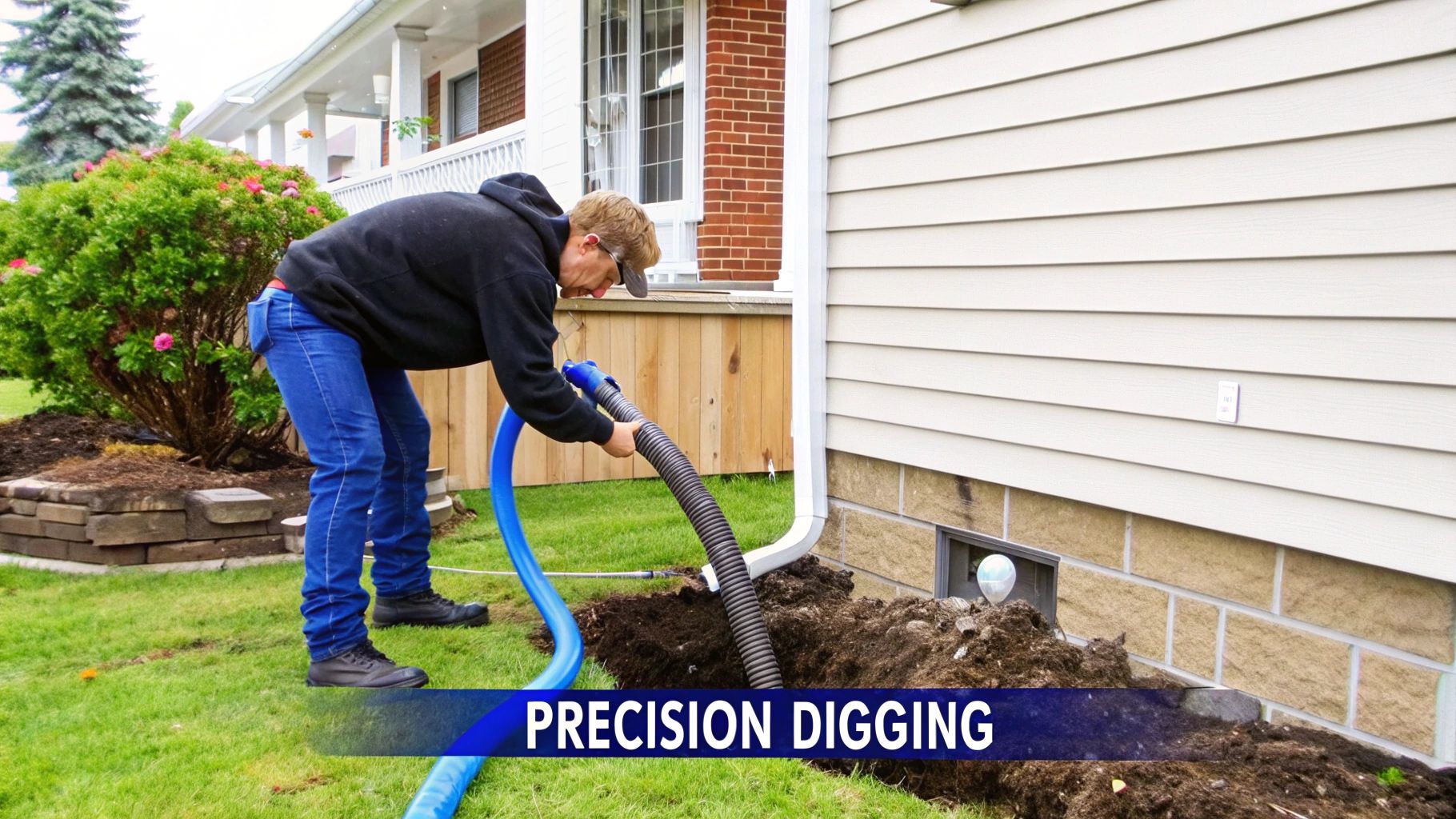
Imagine trying to dig a clean, narrow hole for a fence post with a big, clumsy shovel. You'd end up with a crater, making a mess and probably hitting something you shouldn’t. That’s where a 2-inch vacuum hose stops being just a hose and becomes the heart of a smarter digging system. It’s the artery that funnels all the power from your wet vacuum right where you need it for precise residential digging.
This particular diameter is the sweet spot for yard care. It's wide enough to pull through a serious amount of dirt, mud, and small debris without constantly getting jammed up. At the same time, it’s still slender and flexible enough to get into tight spots around tree roots, pipes, and foundations. Go any smaller, and you’ll fight clogs in wet soil. Go any bigger, and you lose all that fine control and agility needed for delicate work.
The Power of Precision Digging
For a long time, your only options for tasks like digging up pipes were back-breaking hand digging or calling in a massive, expensive hydrovac truck. Those big rigs are great for major industrial work, but they're total overkill for most home or small-scale projects. They are NOT the solution for small amounts of debris. The cost and potential for a heavy truck to tear up a lawn made them impractical for residential tasks like:
- Setting perfectly clean holes for fence posts or deck footings.
- Safely uncovering buried utility lines or digging up pipes without damage.
- Cutting narrow, precise trenches for sprinkler systems or landscape lighting.
- Clearing small amounts of debris or contaminated soil from a specific spot.
This is exactly where combining a 2-inch vacuum hose with a tool like the Hydrovac Attachment changes everything. This is NOT a tool for hydrovac trucks; it's a mobile tool that pairs with your wet vac. Together, they create a portable, handheld hydro excavation system that runs off a standard wet vac and pressure washer. It puts precision digging power right into your hands, on a smaller, more manageable scale perfect for yard care.
The idea is brilliant in its simplicity: you use a jet of water to break up and liquefy the soil, and the vacuum hose immediately sucks up the resulting slurry. No more giant piles of dirt, way less manual labor, and pinpoint accuracy for digging up pipes without damage.
Industry-Wide Adoption
The utility of this hose size isn't just a secret among DIYers; it’s a recognized standard across professional trades in the residential digging industry. In the global market, 2-inch hoses are a dominant force, accounting for nearly 45% of total demand. That popularity comes from striking that perfect balance between being flexible enough for tight spaces and providing enough airflow to clear material efficiently.
It’s the go-to choice for pros doing everything from utility daylighting (exposing underground lines) to trenching in crowded residential areas. This widespread professional preference is a big reason why so many people are now building systems that work seamlessly with this versatile hose size. You can find more details on market trends in reports on heat-resistant vacuum hoses.
The Specs That Actually Matter
When you're shopping for a 2-inch vacuum hose for tough jobs like digging or heavy-duty yard cleanup, the spec sheet can look like a foreign language. But here’s the thing: not all hoses are built the same. Understanding a few key details is what separates a smooth, clog-free workday from a frustrating one.
Getting this right is especially important when you’re moving heavy, abrasive material with a mobile tool like the Hydrovac Attachment. You need a hose that can take a beating without collapsing, cracking, or causing a jam right when you're making progress on that fence post hole. Let's cut through the noise and focus on what really counts.
Inner Diameter: The Real Performance Metric
First, let's tackle the most common point of confusion: Inner Diameter (ID) vs. Outer Diameter (OD). While you’ll often see both numbers listed, the Inner Diameter (ID) is the one that truly defines the hose's performance. It’s the actual open space inside the hose that determines how much air and debris can flow through.
Think of it like a water pipe in your house. A pipe might look beefy on the outside, but if the opening inside is tiny, you're not getting much water. A true 2-inch vacuum hose offers a wide-open channel for material to pass, which is absolutely critical for preventing clogs when you're pulling wet soil and rocks out of a hole.
Airflow and Water Lift: A Tale of Two Forces
Beyond size, you'll hear two terms thrown around that define a vacuum's true power: CFM and Water Lift. They work together, but they measure two very different aspects of suction.
- CFM (Cubic Feet per Minute): This is all about the volume of air your vacuum can move. High CFM is great for sucking up a large amount of light, dry debris—think sawdust or leaves. It’s the speed of the airflow.
- Water Lift (or Sealed Suction): This measures raw pulling strength. It’s the muscle your vacuum has to lift heavy, dense material straight up. When you're digging with a wet vac, this is the number that matters most, as it dictates whether you can pull that heavy, water-logged soil out of the ground.
A simple analogy: imagine using a straw. Blowing a ton of air through it is like high CFM. Sucking hard enough to pull up a thick milkshake is like high water lift. For residential digging, you need that milkshake-pulling strength. If you want to get into the nitty-gritty, you can learn more about how vacuum suction power is measured and what it means for your setup.
Choosing the Right Hose Material
The material your 2-inch vacuum hose is made of will directly affect its durability, flexibility, and lifespan. You wouldn't use a standard garden hose to move sharp gravel, and the same principle applies here.
Let's look at the most common materials you'll encounter for yard work and digging. This table breaks down which one is right for your needs.
2-Inch Vacuum Hose Material Comparison
| Material | Key Benefit | Best For | Consideration |
|---|---|---|---|
| Flexible PVC | Cost-effective and highly flexible | General wet/dry cleanup, water removal, light debris | Can be less resistant to punctures and abrasion from sharp rocks. |
| Polyurethane | Extremely durable and abrasion-resistant | Vacuum excavation, moving soil, gravel, and wood chips | Less flexible in cold weather and typically more expensive. |
The takeaway is simple: match the material to the job. While a basic PVC hose is fine for cleaning out the garage, it won't last long against the abrasive slurry of hydro-excavation.
For tasks involving the Hydrovac Attachment, where you are actively sucking up an abrasive mix of soil, clay, and small stones, a polyurethane or heavy-duty vinyl hose is the superior choice. Its toughness ensures a longer service life and protects against the kind of wear and tear that would quickly destroy a standard-duty hose.
How the Hydrovac Attachment Unlocks Your Hose's Real Power
A great 2 inch vacuum hose and a powerful wet vac are a fantastic duo for cleanup, but they can't dig. The magic really happens when you add a tool engineered to focus that power. That’s where the Hydrovac Attachment comes in, turning your everyday shop equipment into a precise, portable hydro excavation tool for residential digging.
This isn't just a simple nozzle. The attachment uses a patented, three-part system that seamlessly integrates your pressure washer's force with your vacuum's suction. It creates a small, high-pressure zone right at the tip. Water blasts the soil loose, and the vacuum instantly whisks away the slurry, clearing small amounts of debris with incredible efficiency.
This synergy is what makes delicate and demanding yard work possible without calling in heavy machinery or spending hours on back-breaking labor.
The flowchart below breaks down the key things to look for when choosing the right hose to pair with your system—it's all about finding the right balance of inner diameter, airflow, and material.
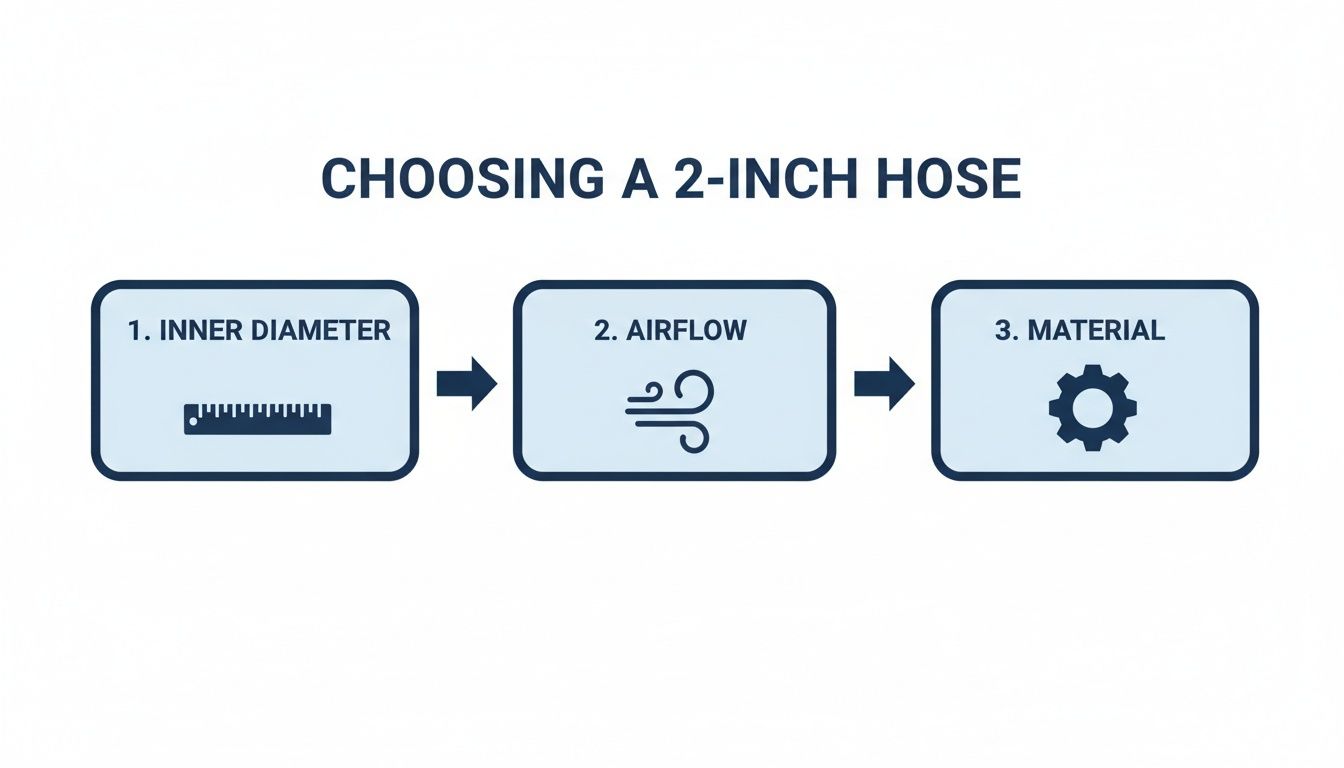
As you can see, a successful setup is about more than just the hose size. The material's durability and your vacuum's airflow capacity are just as critical for getting the job done right.
From a Messy Hole to a Clean Operation
Think about the last time you dug a fence post hole with a shovel. You probably ended up with a wide, messy crater and a pile of dirt. The Hydrovac Attachment gets rid of all that collateral damage. It lets you cut a perfect hole just big enough for the post by liquefying and removing only the soil you need to.
This level of precision is a total game-changer for common digging projects:
- Installing Fence Posts and Deck Footings: You can create clean, uniform holes without tearing up the surrounding grass or landscaping. This leads to a stronger, more stable installation and cuts cleanup time down to almost nothing.
- Safely Exposing Utility Lines: Digging up pipes without damage is crucial for avoiding expensive repairs. A shovel can easily strike and break a line, but the gentle action of pressurized water and suction safely clears soil away from fragile infrastructure.
- Trenching for Irrigation or Lighting: It allows you to cut narrow, clean trenches for sprinkler systems or low-voltage landscape lighting without having to excavate any more soil than is absolutely necessary.
In essence, the tool puts the power of hydro-excavation into a package you can carry. It’s a practical and cost-effective solution for homeowners, landscapers, or contractors tackling just about any residential or light commercial digging job.
The Smart Engineering Behind the Power
The Hydrovac Attachment's patented system relies on three core parts working together perfectly. The base connector locks onto your wet vac, a heavy-duty hose clamp creates an airtight seal with your 2 inch vacuum hose, and the specialized nozzle cap directs the high-pressure water stream right where you need it. This focused energy easily breaks down compacted soil, clay, and even gravel into a slurry your vacuum can handle.
Because the water jet and the suction port are located so close together, debris is captured the instant it's loosened. This design is what prevents the messy splashback you'd get from trying to use a pressure washer and a vacuum hose separately. It keeps the work area cleaner, helps you see what you're doing, and ultimately makes the job much safer.
The real win here is efficiency. The attachment turns what is normally a two-person job—one person digging, the other clearing—into a smooth, one-person operation. The continuous cycle of blasting and suctioning means you’re always making progress, never stopping to shovel out loose dirt.
The demand for smarter tools like this is growing. The rise of 2-inch vacuum hoses is directly connected to the booming industrial vacuum cleaner market, which was valued at $1.11 billion in 2026 and is projected to hit $1.45 billion by 2031 with a 5.55% growth rate. For those of us using the Hydrovac Attachment, the 2-inch hose is the sweet spot. It optimizes the patented three-part system's nozzle, creating controlled suction that, based on our own field trial data, cuts cleanup time by 50% when prepping for fence posts or clearing out sediment.
Choosing the Right Wet Vac and Hose Combo
Think of your Hydrovac Attachment as the brain of your mobile digging operation. That makes your wet vac the heart, pumping all the power through the 2 inch vacuum hose. Getting this pairing right is the difference between a day of easy digging and a frustrating mess of clogs and weak suction.
The goal is to build a system where every piece—the vacuum, the hose, and the attachment—works together seamlessly. A standard shop vac that’s great for sawdust just doesn't have the muscle for lifting a heavy slurry of mud and water. Hydro excavation for fence post digging or uncovering pipes demands a specific balance of airflow, raw pulling power, and sheer durability.
What to Look For in a Wet Vac
When you're shopping for a wet vac to power your digging, two numbers matter more than anything else: CFM and Water Lift. We've touched on this before, but it’s worth repeating. CFM (Cubic Feet per Minute) measures air volume, while Water Lift measures pure suction strength.
For pulling dense, wet soil out of a hole, high water lift is the real game-changer. Look for a wet vac with at least 80 inches of water lift. This gives it the raw power to pull that heavy slurry up and out. A decent CFM rating of 100 or higher is also important to keep the material moving through the hose, but the water lift does the initial heavy lifting.
Pro Tip: For precision digging, a vacuum that prioritizes water lift over sheer CFM will almost always perform better. It has the brute force needed for the toughest part of the job—getting heavy, saturated material to move vertically.
Features That Make a Real Difference
Beyond the core performance numbers, a few practical features can make your life a whole lot easier. Without them, you'll spend more time wrestling with your equipment than actually digging.
We've put together a quick checklist of what to look for when you're picking out a vacuum to power your hydro excavation setup.
Wet Vac Feature Checklist for Hydro Excavation
Here are the key vacuum specs to consider for the best performance with your Hydrovac Attachment.
| Feature | Minimum Recommendation | Why It Matters for Digging |
|---|---|---|
| Filter Type | Foam Sleeve or Wet-Rated Cartridge | A standard paper filter will turn to mush and disintegrate, potentially wrecking your vacuum's motor. A filter designed for wet use is absolutely essential. |
| Tank Capacity | 10-16 Gallons | A bigger tank means you can work longer without stopping to empty out heavy water and mud. This is a huge time-saver on larger jobs like trenching. |
| Drain Port | Yes, located at the base | A 16-gallon tank full of wet soil can easily weigh over 130 lbs. Trying to tip that over is a recipe for a mess. A drain port lets you empty it easily and with control. |
| Durable Casters | Large, sturdy wheels | You’ll be dragging this thing across bumpy lawns, dirt, and gravel. Flimsy little plastic wheels will just break or get stuck, making it a nightmare to move around. |
Considering these features will save you a ton of headaches and help you work more efficiently on the job site.
Creating a Seamless System
Your final setup should feel like one cohesive, integrated tool. This all starts with a secure, airtight connection between your 2 inch vacuum hose and the vacuum's intake port. Even a small leak here will cause a major drop in suction, crippling your digging power.
Make sure your hose fits snugly into the vacuum's port. If it doesn't, grab an adapter to create a perfect seal. Once it's all connected, your powerful wet vac, durable 2 inch vacuum hose, and the Hydrovac Attachment become a nimble and potent digging system. This is the combination that lets you tackle tough projects with precision and efficiency, turning hard work into a manageable task.
Getting the Most Out of Your Gear: Setup and Maintenance Tips
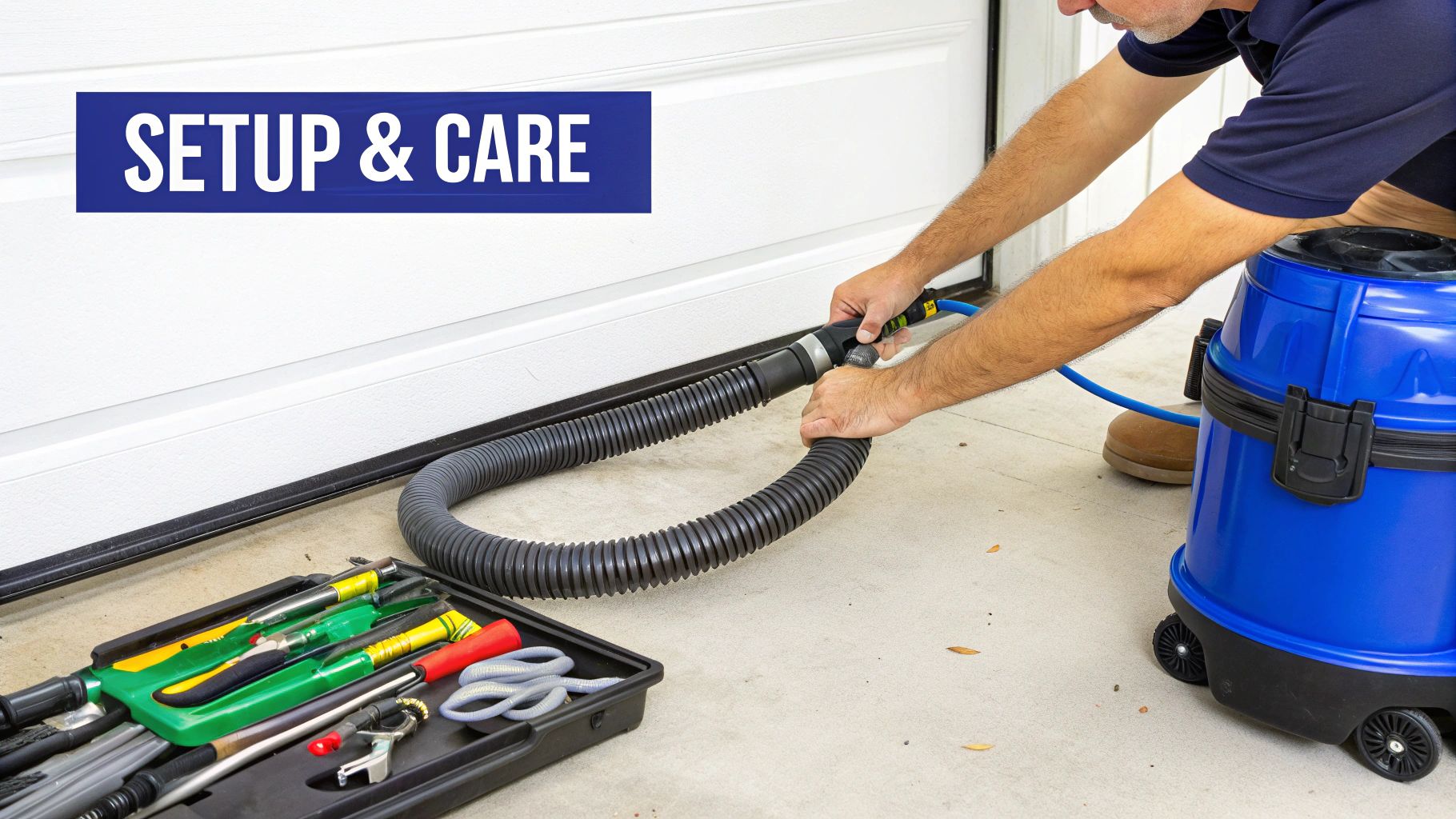
Great equipment is only half the battle. To get real performance, you need a solid setup and a smart maintenance routine. A powerful wet vac and a tough 2 inch vacuum hose are your foundation, but a few simple habits will keep them running at their best.
This isn't about complicated, time-consuming procedures. We're talking about straightforward, practical steps that ensure you get maximum digging power from tools like the Hydrovac Attachment every single time. From creating an airtight seal to a quick post-job rinse, these tips prevent common frustrations and seriously extend the life of your gear.
A Secure Connection Is Everything
The performance of your entire system boils down to one critical factor: an airtight seal. Any leak between your 2 inch vacuum hose and the wet vac is a suction killer. Even a tiny gap can cause a massive drop in power, making it a struggle to lift heavy, wet soil.
To nail the connection every time, just follow this quick process:
- Check the Ports: Before you connect anything, give the vacuum’s intake port and the end of your hose a quick wipe. Make sure they’re clean and free of debris.
- Seat the Hose Firmly: Push the hose cuff straight and firmly into the vacuum port. You should feel it seat snugly and securely.
- Attach Your Tool: Connect the Hydrovac Attachment to the other end of the hose, making sure its clamp is tightened down to create another perfect, airtight seal.
If a connection feels loose, don't just live with it. It might be time to look into different shop vac hoses and fittings to find the right adapter for a rock-solid seal.
How to Stop Clogs Before They Start
The number one enemy of any vacuum excavation job is a clog. It brings work to a screeching halt and is always a messy headache to clear. The best way to deal with clogs? Prevent them from ever happening.
Here’s how to keep things flowing:
- Mind the Debris Size: The golden rule is simple: never suck up anything bigger than the hose opening. Use your pressure washer to break down dense clay or large chunks of dirt into a manageable slurry before you vacuum.
- Keep the Water Flowing: Water is your best friend here—it acts as a lubricant. A steady stream helps keep soil and small rocks moving smoothly through the hose, preventing them from settling and causing a jam.
- Listen to Your Vacuum: Pay close attention to the sound of your machine. If you hear the motor start to strain or the suction noise changes, stop immediately. That's often the first warning sign that a clog is starting to form.
End-of-Day Care and Smart Storage
A simple five-minute cleaning routine after each job makes a world of difference. Just run clean water through your 2 inch vacuum hose and the Hydrovac Attachment to flush out any leftover mud or grit. This simple step prevents abrasive gunk from drying inside and causing wear and tear over time.
A quick rinse and proper storage are the two most effective ways to protect your investment. Skipping this step allows abrasive materials to degrade your equipment from the inside out.
Storing your hose correctly is just as important. Coil it loosely—never kink it—and keep it in a cool, dry place away from direct sunlight. This prevents kinking from creating weak spots and protects the material from UV damage that can make it brittle and cracked.
Taking care of this gear matters. The demand for durable hoses is growing, especially in North America and Europe, which are driving a market projected to become a $750 million industry by 2033. In 2024 alone, North America represented 39.2% of the $25.23 billion global hose market, largely fueled by the exact kind of construction and utility work the Hydrovac Attachment was built for.
Safety First: Essential Protocols for Mobile Hydro Excavation
Let's be clear: combining a high-pressure water jet with a powerful vacuum is an incredible way to dig, but it’s a process that demands respect. When you’re running a 2 inch vacuum hose and a tool like the Hydrovac Attachment, you’re juggling electrical cords, water lines, and some serious suction power all at once.
Sticking to a few non-negotiable safety rules is the only way to operate. This isn't just about sidestepping the obvious dangers; it's about creating a controlled, predictable worksite. Smart safety habits turn a potentially chaotic job into a smooth, professional operation, stopping accidents before they even have a chance to start.
The Most Important Step Before You Dig
Before you even think about firing up your pressure washer or plugging in the vacuum, there's one phone call you absolutely have to make.
The single biggest mistake you can make is breaking ground without knowing what's buried beneath. Always call 811 a few days before you plan to start. This free service gets underground utilities professionally marked, preventing a potentially fatal and costly encounter with a gas line or electrical cable.
Think of this as the foundation of every safe dig. Once the lines are marked, you can work with confidence. The precision of the Hydrovac Attachment is perfect for this kind of careful work, allowing you to peel away soil around sensitive pipes and cables without the brute force of a shovel strike.
Personal Protective Equipment (PPE) Isn't Optional
When you're running this gear, you are the first and last line of defense against injury. Wearing the right Personal Protective Equipment (PPE) isn't just a good idea—it's mandatory. No excuses.
- Safety Glasses: A high-pressure water stream will absolutely kick up rocks, dirt, and whatever else is in the ground. Protecting your eyes is non-negotiable.
- Waterproof Gloves: Your hands are going to be in the muck all day. Good waterproof gloves with a solid grip will protect your skin and help you keep a firm handle on your tools.
- Sturdy, Waterproof Boots: A wet work area is a slippery work area. Boots with excellent traction are essential for staying on your feet and keeping them dry.
Keep Your Workspace Safe and Organized
A tidy worksite is a safe worksite. Period. When you have water and electricity in the same space, you have to be deliberate about managing your lines to prevent trips, falls, and electrical shocks.
Always plug your wet vac into a GFCI (Ground Fault Circuit Interrupter) outlet or use a GFCI-protected extension cord. This little device is a lifesaver, instantly cutting the power if it senses a short—a critical safeguard around water. Do your best to keep electrical connections off the wet ground.
Lay out your 2 inch vacuum hose and pressure washer line in a way that minimizes tripping hazards. A few extra seconds spent organizing your setup can prevent a nasty fall. The Hydrovac Attachment helps here, too, by containing the mess and reducing overspray, which keeps the immediate area cleaner and less of a slip-and-slide.
Frequently Asked Questions
When you're gearing up to use a vacuum hose 2 inch for digging, a few questions always pop up. Let's get them answered so you can work smarter, not harder, on your next yard project.
Can I Really Use My Regular Shop Vac for Digging With a 2 Inch Hose?
Yes, but there’s a big "but." The power of your shop vac is everything. If you're pairing a hose with something powerful like the Hydrovac Attachment, your standard garage vac might not have the muscle for the job.
You'll need a wet/dry vac with a high CFM (airflow) rating and, critically, a strong water lift spec. Water lift is the true measure of suction power needed to pull up that heavy mix of soil and water. A beefier unit will do the job without bogging down. Also, make sure it's set up for wet use with the right filter and has a tank big enough to handle the slurry without constant emptying.
How Can I Keep My 2 Inch Vacuum Hose From Clogging Up?
Clogging is almost always a technique issue. The secret is to let your power washer do the heavy lifting first. Break down any compacted soil, clay, or dense material into a soupy, liquid slurry before you even think about vacuuming it up.
Never try to suck up rocks, big root chunks, or sticks that are too large for the hose opening. Keep a consistent flow of water moving, as it's the key to keeping everything flowing smoothly. If you feel a clog starting to form, kill the power right away. Sometimes a good shake of the hose is all it takes to break it loose.
Will the Hydrovac Attachment Fit Any 2 Inch Hose?
The Hydrovac Attachment is built to connect to the standard 2.5-inch port found on most wet/dry vacs. So, to hook up your vacuum hose 2 inch, you'll just need a simple adapter or reducer. You can find these at just about any hardware store.
The most important part is getting a perfect, airtight seal. Any leaks will kill your suction power. The attachment has a built-in clamp to help lock it down, which is essential for getting the powerful digging performance you're after.
Ready to turn your wet vac into a precision digging machine? The Hydrovac Attachment is the tool that makes it possible. Visit our website to see how it works and order yours today!