


You probably think of your pressure washer as just a surface cleaner. It’s great for blasting grime off the driveway or mildew off the siding, right? But what if that same tool could do something completely different? What if it could become a precision digging instrument for your yard care business or residential projects?
A pressure washer jetting hose is the key to unlocking that potential. This isn't your standard, stiff pressure washer hose. It's built for flexibility and toughness, designed to snake through tight corners and withstand serious pressure, turning your cleaning machine into a far more versatile, precision instrument. Paired with a wet vac hose, it creates a powerful solution for small-scale, controlled digging.
Rethinking What Your Pressure Washer Can Do
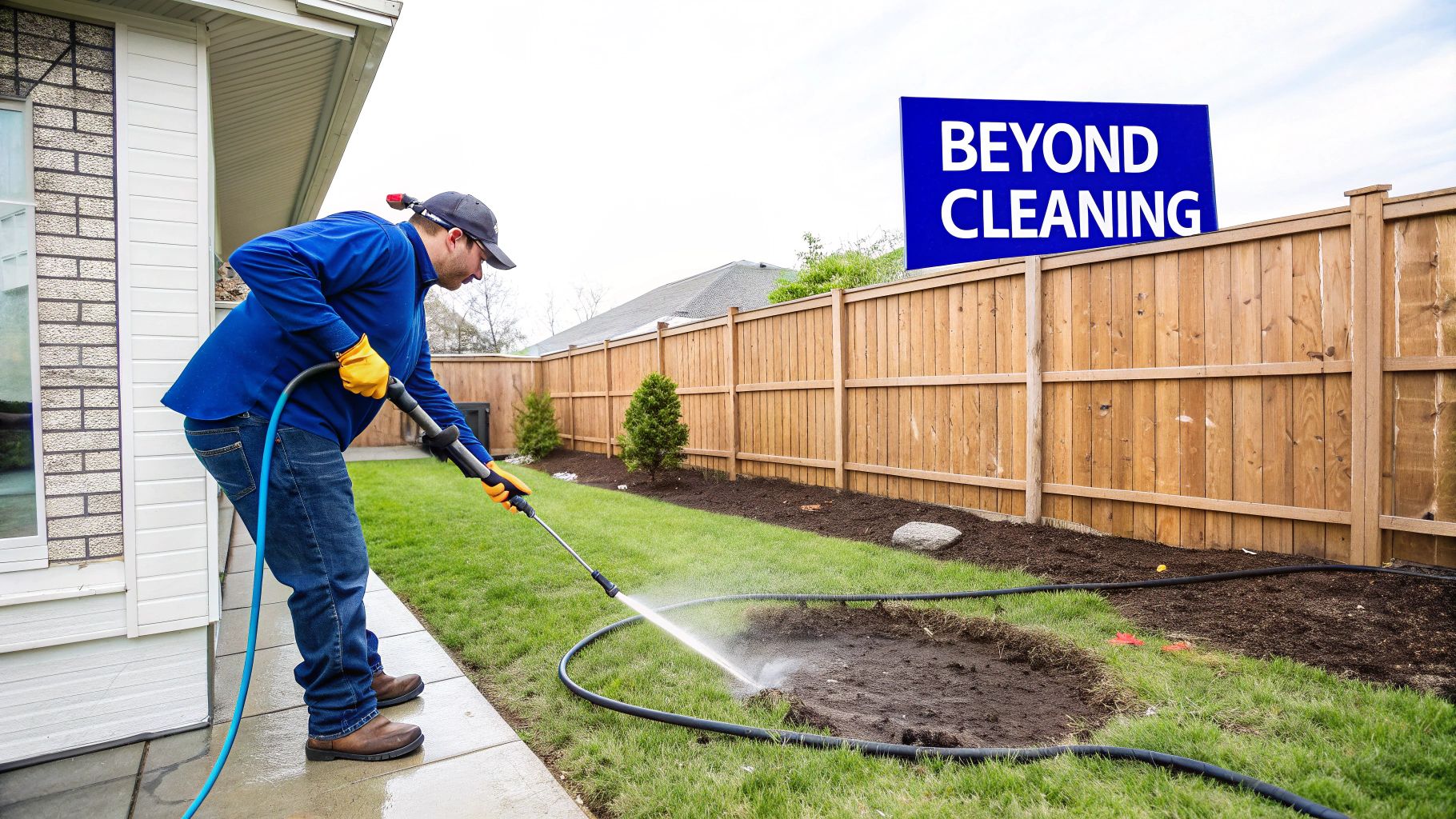
Let’s push past the idea of just cleaning surfaces. Imagine turning your pressure washer into a precision digging tool—one that can excavate soil without breaking your back with a shovel or tearing up your lawn with heavy equipment. That's where things get interesting for the modern yard care industry.
This is the next step for smart residential digging projects. When you connect a specialized pressure washer jetting hose to an innovative tool like our Hydrovac Attachment Tool, you've essentially created your own small-scale, mobile hydro excavation system. The setup is brilliant in its simplicity: high-pressure water turns soil into a liquid slurry, and a powerful wet vac, connected via its wet vac hose, sucks it all away immediately. The result is clean, controlled digging.
Digging Beyond the Surface
Now, this isn't meant to replace the massive hydrovac trucks you see on industrial sites. This is about bringing that same precision technology down to a backyard scale, using a mobile tool for wet vac hoses paired with common vacuums to clear small amounts of debris. It’s the perfect fix for those frustrating jobs that homeowners and landscapers run into all the time.
Think about it:
- Fence Post Digging: You can dig perfectly clean holes for new fence posts without wrecking the surrounding grass or disturbing nearby garden beds.
- Digging Up Pipes Without Damage: Need to find a buried pipe or sprinkler line? This method lets you safely expose it without the risk of accidentally slicing through it with a sharp shovel.
- Precision Trenching: It's ideal for creating narrow, neat trenches for things like irrigation lines or landscape lighting, especially in tight spots where bigger machines can't fit.
The concept is straightforward: water does the hard work of digging, and a vacuum handles the cleanup. The Hydrovac Attachment Tool is the solution that bridges these two tools, giving you a level of accuracy that traditional methods just can't offer, making it a total game-changer for detailed yard work.
By rethinking what your pressure washer is capable of, you open up a whole new world of efficiency. If you're ready to go deeper, you can learn more about the specifics of a jetter hose for a power washer and see why it’s the heart of this system. Let's walk through how you can set up your own mobile digging unit and see just how powerful a combination of everyday tools can be.
What Makes a Jetting Hose Different?
Not all hoses are created equal. If you've ever tried digging up pipes without damage or setting fence posts, you know that grabbing a standard pressure washer hose is a recipe for frustration. It's like trying to navigate a winding cave with a rigid steel pipe—clumsy, inefficient, and guaranteed to get stuck. A proper pressure washer jetting hose is a whole different beast, built from the ground up for the tough, abrasive world of hydro-excavation.
Think about it: your typical pressure washer hose is designed for one thing—blasting water in a relatively straight line across a driveway. A jetting hose, on the other hand, is all about agility and resilience. It has to bend, twist, and slide through rough soil and around unseen obstacles without kinking up or getting torn to shreds. That kind of flexibility doesn't happen by accident; it comes from a very specific multi-layer construction.
The Anatomy of a High-Performance Hose
The secret to a great jetting hose is its layered design, which perfectly balances nimbleness with pure toughness.
- Inner Tube: This is the core, usually made from a slick, chemical-resistant thermoplastic. Its job is to keep water flowing smoothly without any hitches.
- Reinforcement Layer: Here's where the muscle is. This layer is typically a high-tensile braid of textile or even steel wire. It’s what gives the hose its impressive pressure (PSI) rating and keeps it from exploding under thousands of pounds of force.
- Outer Cover: Think of this as the hose's armor. It's made from rugged materials like polyurethane or abrasion-resistant rubber to shield the inner layers from getting scraped, cut, and worn down by sharp rocks and gritty soil.
This robust construction is exactly why a dedicated pressure washer jetting hose is non-negotiable when you're hooking up a tool like the Hydrovac Attachment Tool. It brings the durability you need for effective digging, something your average hose just wasn't built for.
And we're not the only ones who've noticed. The industry is catching on fast. The global market for pressure washer hoses is expected to jump from $0.8777 billion to $1.353 billion over the next ten years. That's a huge leap, and it signals a major shift: pros in yard care and residential digging are ditching old methods for more efficient, specialized gear. You can explore the full market analysis to see just how big this trend is becoming.
Why Material and Ratings Matter
Picking the right hose means looking closely at the specs. A hose with too low of a PSI rating isn't just a bad tool—it's a serious safety hazard. And one made from the wrong material will be shredded after a couple of jobs. For any kind of digging where you're dragging the hose through dirt and around potential snags, you want something with a tough polyurethane or rubber coating.
A classic rookie mistake is getting fixated only on PSI. Gallons per minute (GPM) is just as critical. PSI gives you the raw cutting power to break up compacted soil, but it's the GPM that provides the flow to flush all that debris away, creating the slurry your wet vac can actually suck up.
In the end, the difference is night and day. A standard hose is just a water delivery tube. A jetting hose is a high-performance tool, the essential link that turns your pressure washer from a simple surface cleaner into a precision digging machine.
Creating Your Own Mobile Hydro Excavation System
It might sound complex, but turning your everyday yard tools into a precision digging machine is actually pretty simple. All it takes is your trusty pressure washer and a standard wet vac. The key is connecting them effectively to create a powerful, portable hydro excavation unit that fills the gap between back-breaking shovel work and calling in heavy machinery.
The magic that makes this whole thing work is a clever device called the Hydrovac Attachment Tool. Think of it as the central hub of the operation. It’s what connects your pressure washer jetting hose to your wet vac hose, creating a single, powerful tool for effective digging. Its patented design lets high-pressure water and strong suction work together in perfect sync.
Assembling Your Portable Digging Setup
You don't need a toolbox full of specialized gear for this. The whole system is designed to be put together in just a few minutes so you can get right to work on fence post digging or other projects.
- Connect the Pressure Washer: Your pressure washer wand simply clicks right into its port on the Hydrovac Attachment Tool. This is what focuses the high-pressure water stream precisely where you need it to dig.
- Attach the Wet Vac Hose: Next, slide your wet vac hose (most are a standard 2.5-inch diameter) onto the larger port of the attachment. Use the clamp that comes with it to get a tight, leak-proof seal.
- Activate and Dig: With everything connected, fire up your equipment. The attachment instantly goes to work, aiming the water jet to blast soil into a liquid slurry while the vacuum sucks it all away.
This seamless integration is what makes the system so effective. You’re not just aimlessly spraying water into a hole and making a bigger mess. You’re controlling the entire excavation process from start to finish. The attachment channels the muddy slurry straight into your vacuum, so you don't get the frustrating splashback that makes digging with a hose and shovel so miserable.
The construction of the pressure washer jetting hose itself is a huge part of why this works, especially for digging underground. Its layered build gives it the toughness and flexibility needed to handle the job. The image below breaks down the typical three-layer design that makes these hoses so tough.
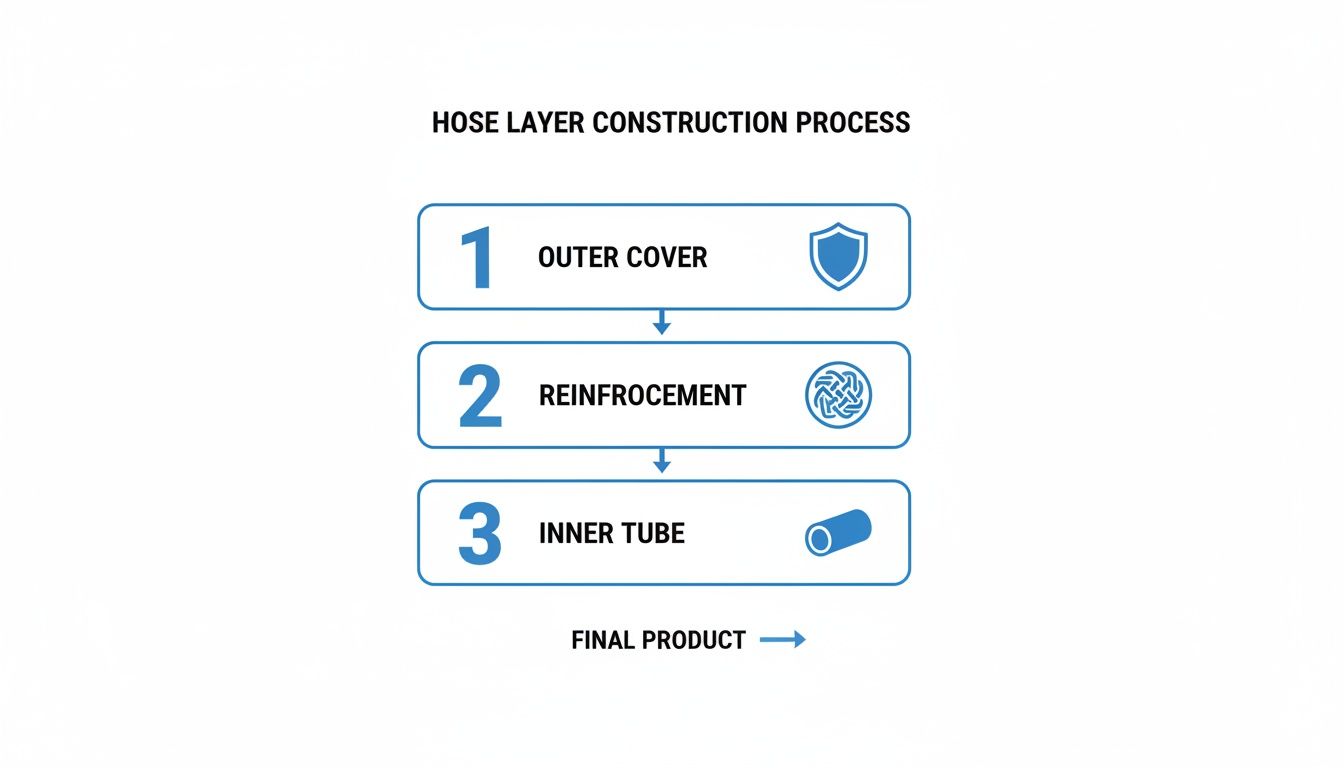
It’s this combination—a smooth inner tube for flow, a braided reinforcement mesh for strength, and a rugged outer cover for protection—that lets the hose handle intense pressure while still being nimble enough to maneuver in a hole.
The Benefits of a Contained System
By creating this closed-loop system, you unlock a few game-changing advantages that old-school digging just can't offer. For starters, cleanup is practically a thing of the past. Since the soil and water are vacuumed up as you dig, you're not left with a giant mud pit. This is a lifesaver when you're working on a nice lawn or around delicate landscaping.
Second, you can actually see what you're doing, which makes the job much safer. With no mud and water flying everywhere, you can keep a clear eye on your progress and spot any buried pipes, cables, or roots before you hit them. That kind of precision helps you avoid expensive mistakes when digging up pipes without damage. This approach fits right in with other smart methods to clear land without heavy equipment, offering more control and less collateral damage.
The real value of this setup is its efficiency. The Hydrovac Attachment Tool transforms two common tools into a specialized system that digs faster, cleaner, and with far more control than a shovel, making it the perfect solution for tasks like setting fence posts or daylighting utility lines.
Real-World Digging Applications You Can Tackle
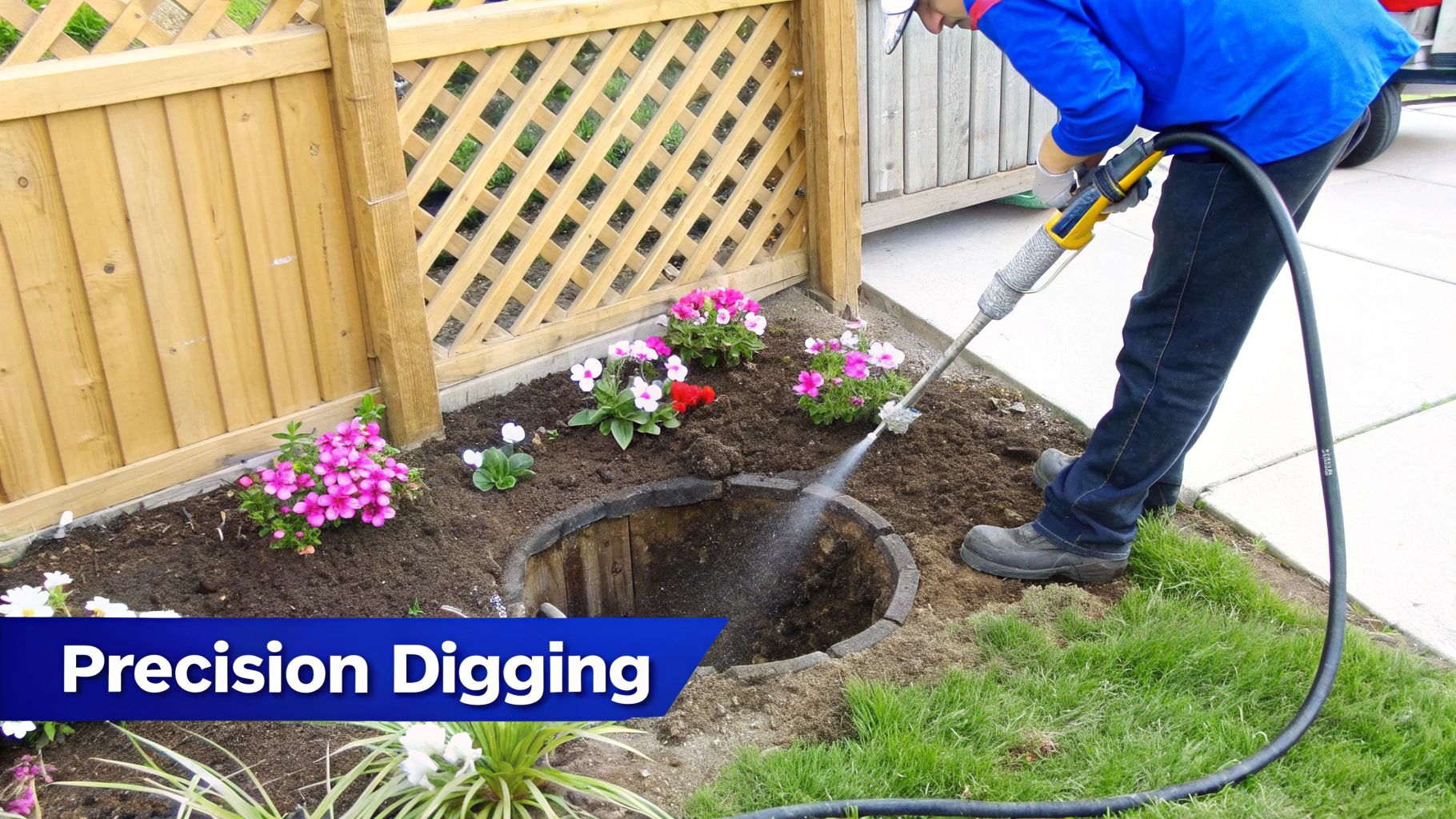
This is where the rubber meets the road. The system really shines in situations where you absolutely need precision and can't afford to make a mess. Combining a flexible pressure washer jetting hose with the Hydrovac Attachment Tool takes jobs that were once dirty and labor-intensive and turns them into clean, controlled operations. It’s a practical answer to the everyday headaches that professional crews and serious DIYers run into.
Think about it. You need to put in a new fence line, but it’s just inches away from the client’s prized rose bush. A shovel or an auger is a disaster waiting to happen—you'll tear up delicate roots and destroy the lawn. With this mobile hydrovac setup, you can perform fence post digging with surgical accuracy, leaving the surrounding landscape untouched. The water jet turns just the right amount of soil into a slurry, and the wet vac pulls it right out. No collateral damage.
Safely Digging Up Pipes Without Damage
One of the most valuable uses for this setup is daylighting—the process of safely uncovering buried utility lines. We’ve all heard the horror stories. Hitting a water main, gas line, or electrical conduit with a shovel can turn a simple residential digging job into an expensive, dangerous emergency.
With this system, you can gently wash away the soil around a suspected utility line. The pressurized water is strong enough to break up compacted dirt and clay but won't slice through a PVC pipe or damage a buried cable. It gives you the clear line of sight you need to work safely, whether you're doing a repair or planning a new installation.
The core benefit here is risk reduction. By using water to dig, you eliminate the guesswork and brute force of traditional methods, protecting both your crew and the client's property from costly accidents. The Hydrovac Attachment Tool is the solution for effective digging that prioritizes safety.
The market is definitely shifting toward smarter, more efficient tools. The US pressure washer market is projected to hit $916.1 million USD, growing at a steady 4.6% each year. And for good reason. Data from a major player like Kärcher shows that pressure washers can use up to 80% less water than a standard garden hose while getting the job done in half the time. This makes the hydrovac setup not just powerful, but an eco-conscious choice, too.
Expanding Your Yard Care and Digging Capabilities
The applications go way beyond just fence post digging. This system gives you a serious advantage for all sorts of yard care and residential jobs where bringing in heavy machinery is either impossible or complete overkill.
You can easily expand your service offerings for various landscaping projects by offering precision work that minimizes disruption.
- Trenching for Irrigation: You can create narrow, clean trenches for sprinkler systems or low-voltage lighting right in the middle of a perfect lawn, without leaving behind wide, ugly scars.
- Clearing Clogged Drains: Blast through stubborn clogs of sediment, leaves, and mud in outdoor drainage pipes while the vacuum simultaneously removes all the gunk you just broke loose.
- Foundation Repair Prep: Need to inspect for cracks or prep for waterproofing? You can precisely remove soil right up against a home's foundation without risking damage.
Ultimately, this method gives you the power to tackle complex digging jobs in tight spaces, turning your pressure washer and wet vac into a seriously versatile excavation tool.
How to Choose the Right Equipment
Putting together the right hydro-excavation setup is a lot like building a high-performance team—every single component needs to work in harmony. When you're connecting a pressure washer jetting hose, a wet vac hose, and the Hydrovac Attachment Tool, you're not just assembling parts. You're building a balanced, efficient system that can dig safely and get the job done right the first time.
Let's start with the heart of the system: the pressure washer. For fence post digging or carefully digging up pipes without damage, you can use either electric or gas models. The real difference comes down to raw power and where you need to work. Gas-powered units almost always deliver more PSI (pounds per square inch) and GPM (gallons per minute), which gives you the muscle needed to break up tough, compacted soil.
Matching Power to the Task
Think of PSI as the sharp edge that cuts into the dirt, while GPM is the water volume that actually flushes it all away. You absolutely need both. For most yard care and residential digging jobs, a pressure washer in the 1,500 to 3,000 PSI range hits the sweet spot. It’s powerful enough to dig effectively but won’t shred a buried utility line on contact.
The pressure washer jetting hose is your lifeline, and it's just as critical as the washer itself. You'll need to consider its length, diameter, and connectors to ensure it works seamlessly with your setup. A longer hose gives you more freedom to move around, but be aware that you might see a small drop in pressure at the nozzle. Double-check that the connectors are a perfect fit for your pressure washer wand—a leaky connection is a frustrating, pressure-killing problem. Our guide to selecting the right water jet nozzles is a great next step for fine-tuning your digging power.
A classic rookie mistake is thinking "more power is always better." When you're digging around sensitive infrastructure, control is everything. The goal is to turn the soil into a slurry for the vacuum to suck up, not to blast it into oblivion.
Checklist for a Complete System
This kind of portable, small-scale hydro-excavation is becoming more and more common. In fact, the global pressure washer market is projected to reach 4.73 billion USD, with a huge demand for versatile, mobile tools for professional yard crews. For this type of work, a hose rated for 1,501-3,000 PSI is ideal, giving you that perfect balance of digging force and safety. You can learn more about the pressure washer market trends to see just how big this shift toward mobile solutions really is.
Ready to build your rig? Here’s a simple checklist to get you started:
- Pressure Washer: Look for a gas model pushing 1,500-3,000 PSI and 2.0-4.0 GPM.
- Jetting Hose: Choose a flexible, tough hose that can stand up to abrasion. Make sure the connectors are right and the length works for your typical job site.
- Wet Vac: Any standard shop vacuum with a 2.5-inch wet vac hose diameter will do the trick.
- The Hydrovac Attachment Tool: This is the key piece that brings your pressure washer and wet vac together into a single, powerful digging tool.
Taking Care of Your Gear: Safety and Maintenance
When you hook up a pressure washer jetting hose to a tool like the Hydrovac Attachment Tool, you're creating a powerful, precise digging system. With that kind of force comes responsibility. Getting the job done right means keeping yourself, your equipment, and the job site safe. A little bit of caution and a simple maintenance routine are all it takes.
Before you even think about starting the pressure washer, your first call is always to 811. This is non-negotiable. Having underground utilities professionally marked is the single most important step in any digging operation. Hitting a buried gas line or electrical cable is a nightmare you can completely avoid.
Suit Up and Stay Safe
Once the utilities are clearly marked, it's time to gear up. High-pressure water will send soil and rocks flying, so personal protective equipment (PPE) is your first line of defense.
- Eye Protection: Don't even think about skipping this. Safety glasses or a full-face shield are a must.
- Good Boots: You'll want waterproof, steel-toed boots to protect your feet from impacts and keep them dry.
- Tough Gloves: A pair of heavy-duty, waterproof gloves will give you a solid grip and save your hands from getting torn up.
Controlling the water pressure is another huge part of working safely. Always start with a lower PSI and slowly ramp it up. This lets you get a feel for the soil and loosen it gently, which is crucial when you're working near sensitive pipes or building foundations.
Think of it like performing surgery on the soil, not demolition. You’re carefully liquefying and removing material, which requires a bit of finesse, not just brute force.
A Quick Maintenance Routine
A little upkeep goes a long way in keeping your gear running reliably and preventing surprise breakdowns in the middle of a job. Just a quick check before and after each use can save you a world of headaches.
After you wrap up, flush the whole system with clean water to get rid of any leftover dirt and grit. Give the pressure washer jetting hose a good look-over for any cracks, bulges, or scuffs. While you're at it, check the seals and connections on your Hydrovac Attachment Tool to make sure everything is tight and secure. For a deeper dive on this, check out our guide on proper vacuum hose clamps.
Finally, when you're done for the day, store your hose and attachment somewhere cool and dry, out of the sun. This simple step will prevent the materials from breaking down and keep your equipment ready for the next job.
Got Questions? We've Got Answers
Thinking about using a pressure washer jetting hose for digging? It's a smart move, but you're not the first to have a few questions. Let's tackle some of the most common ones we hear from pros in the yard care and residential digging industries.
Can I Just Use the Hose That Came With My Pressure Washer?
You could, but you really shouldn't. Think of it this way: your standard pressure washer hose is like a stiff garden hose—great for spraying down a driveway, but not for navigating tight, underground spaces.
A dedicated pressure washer jetting hose is a whole different beast. It's incredibly flexible and wrapped in an abrasion-resistant cover, designed specifically to snake through soil and around obstacles without getting kinked or torn up. That specialized build is what allows it to deliver a concentrated jet of water with enough force to actually break up soil, something your standard hose just isn't cut out for.
What's the Right PSI for Digging Without Damaging Pipes?
This is a big one. For most soil conditions you'll run into on residential jobs, a pressure setting between 1,500 and 3,000 PSI is the sweet spot.
That's enough muscle to cut through compacted dirt and even tough clay, but it's not so aggressive that you risk blasting through a PVC pipe or damaging a metal utility line if you're careful. The best practice is always to start low and slowly dial up the pressure until you get the results you need.
The real secret to safe digging isn't just about pressure—it's about instantly removing the material you loosen. The Hydrovac Attachment Tool creates a sealed suction zone right at the digging point, pulling that muddy slurry into your wet vac the moment it's created. No mess, no dangerous splashback, just clean, precise digging.
When you pair the right jetting hose with a tool like the Hydrovac Attachment Tool, you're not just digging; you're performing surgical excavation. It's the perfect solution for delicate jobs like digging up pipes without damage or setting fence posts right next to a foundation. You get all the power you need with a level of control that traditional digging just can't match.
Ready to turn your pressure washer and wet vac into a precision digging machine? Check out the Hydrovac Attachment Tool and see how it can make your toughest jobs faster, cleaner, and safer. Learn more at hydrovacattm.com.