


Your entire hydrovac operation can hinge on one surprisingly small component: the water jet nozzle. For professionals in the hydrovac industry, getting this choice right is the secret to a productive day, while getting it wrong means fighting the ground every step of the way. It’s the difference between surgical precision for safe digging and just making a muddy mess.
How to Match the Right Water Jet Nozzle to the Job
Picking the perfect nozzle isn’t about finding a one-size-fits-all solution; it's about understanding the ground you're working with and what you need to accomplish. For any hydrovac operator, the job is a constant balance of pressure (PSI) and flow (GPM) to cut, blast, or wash away material effectively. Nail this balance, and you’ll see a dramatic boost in digging efficiency; misjudge it, and you're just wasting time, water, and fuel.
The real decision boils down to the spray pattern. You generally have three choices: a focused straight jet, a wide fan pattern, or a powerful rotating nozzle. Each one has its own personality and excels at different hydrovac excavation tasks.
Breaking Down Nozzle Types and Their Uses
Let's look at the lineup from a hydrovac industry perspective.
A straight jet nozzle—you might hear it called a pinpoint or zero-degree nozzle—is all about force. It channels every bit of water pressure into a single, intense stream. This is your scalpel for hydro excavation. Think carefully exposing a delicate utility line or punching through a stubborn layer of frost. The trade-off? Its tiny footprint makes it a poor choice for clearing large areas.
Then you have the fan pattern nozzle, which spreads the water out in a flat, blade-like sheet. This is your broad brush, perfect for sweeping away loose sand and gravel, washing down surfaces, or general excavation where you need coverage more than cutting power.
Finally, there’s the rotating nozzle, often called a turbo nozzle. This clever tool offers the best of both worlds. It spins a zero-degree jet in a tight circle at an incredible speed, creating a cone of destructive force. This gives you the hard-hitting impact of a straight jet combined with the wider coverage of a fan pattern, making it a beast for breaking up dense, compacted soils like heavy clay—a common challenge in hydrovac work.
Expert Tip: It's a simple relationship to remember. Concentrated streams give you cutting power for tough ground. Wider patterns give you coverage for loose material. Your job is to pick the right tool for the terrain.
This flowchart breaks down the decision-making process, guiding you from soil type to the best nozzle for the job.
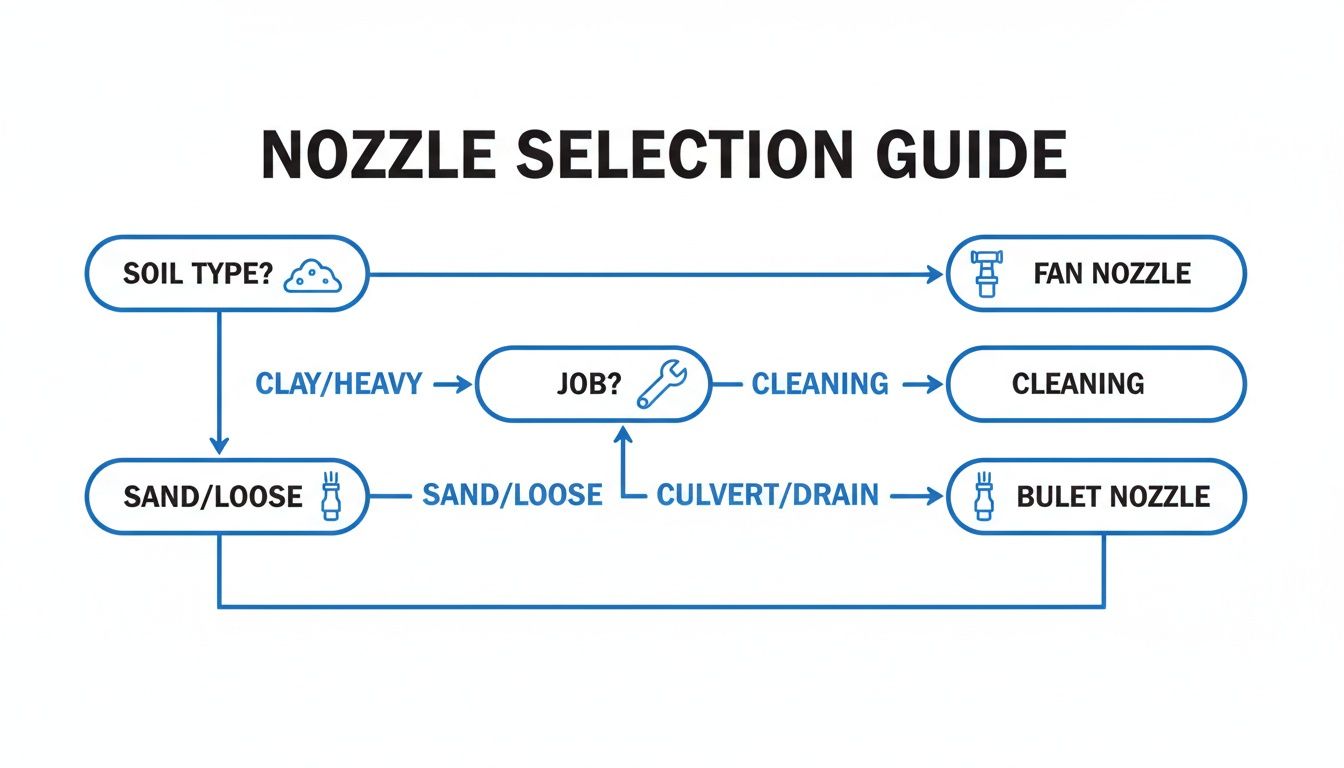
As you can see, the game plan always starts with two questions: How tough is the soil, and am I cutting or cleaning?
Here's a quick reference table to keep the main nozzle types straight.
Hydrovac Nozzle Selection Guide
| Nozzle Type | Primary Use Case | Soil Type Suitability | Key Benefit |
|---|---|---|---|
| Straight Jet (0°) | Precision cutting, potholing, exposing utilities | Tough, compacted soils; frost | Maximum impact force in a small area |
| Fan Pattern (15°-40°) | Bulk excavation, surface cleaning, trenching | Loose soils like sand, gravel, and loam | Wide coverage for fast material removal |
| Rotating (Turbo) | Breaking up stubborn ground, heavy-duty cleaning | Dense clay, heavily compacted materials | Combines high impact with wider coverage |
This table is a great starting point, but experience on the job will always be your best guide.
Simplifying Your Setup for Better Performance
While choosing the right nozzle is crucial, fighting with mismatched equipment on-site is a huge headache. The Hydrovac Attachment Tool is the definitive solution that eliminates this problem by standardizing the connection between your pressure wand and vacuum hose. This lets you stop worrying about compatibility and focus on what really matters: effective digging. A unified system means you can swap out nozzles in seconds with confidence, transforming any setup into an efficient hydrovac digging tool.
This focus on efficiency isn't just a job site concern; it's a global trend. The industrial spray nozzle market is expected to grow from US$13.4 billion in 2025 to US$21.2 billion by 2032. That growth is no surprise when you consider that 70% of manufacturing facilities rely on these same principles for industrial cleaning. You can learn more about these industrial spray nozzle market trends and see how the technology continues to evolve.
At the end of the day, mastering your hydrovac setup is about making smarter, faster decisions in the field. By understanding how each nozzle works and pairing it with a versatile system like The Hydrovac Attachment Tool, you’ll work more efficiently and put less strain on your equipment. To see how this fits into the bigger picture, explore our guide on the highest CFM shop vac to ensure your vacuum power can keep up with your digging.
Mastering Nozzle Operation for Precision and Safety
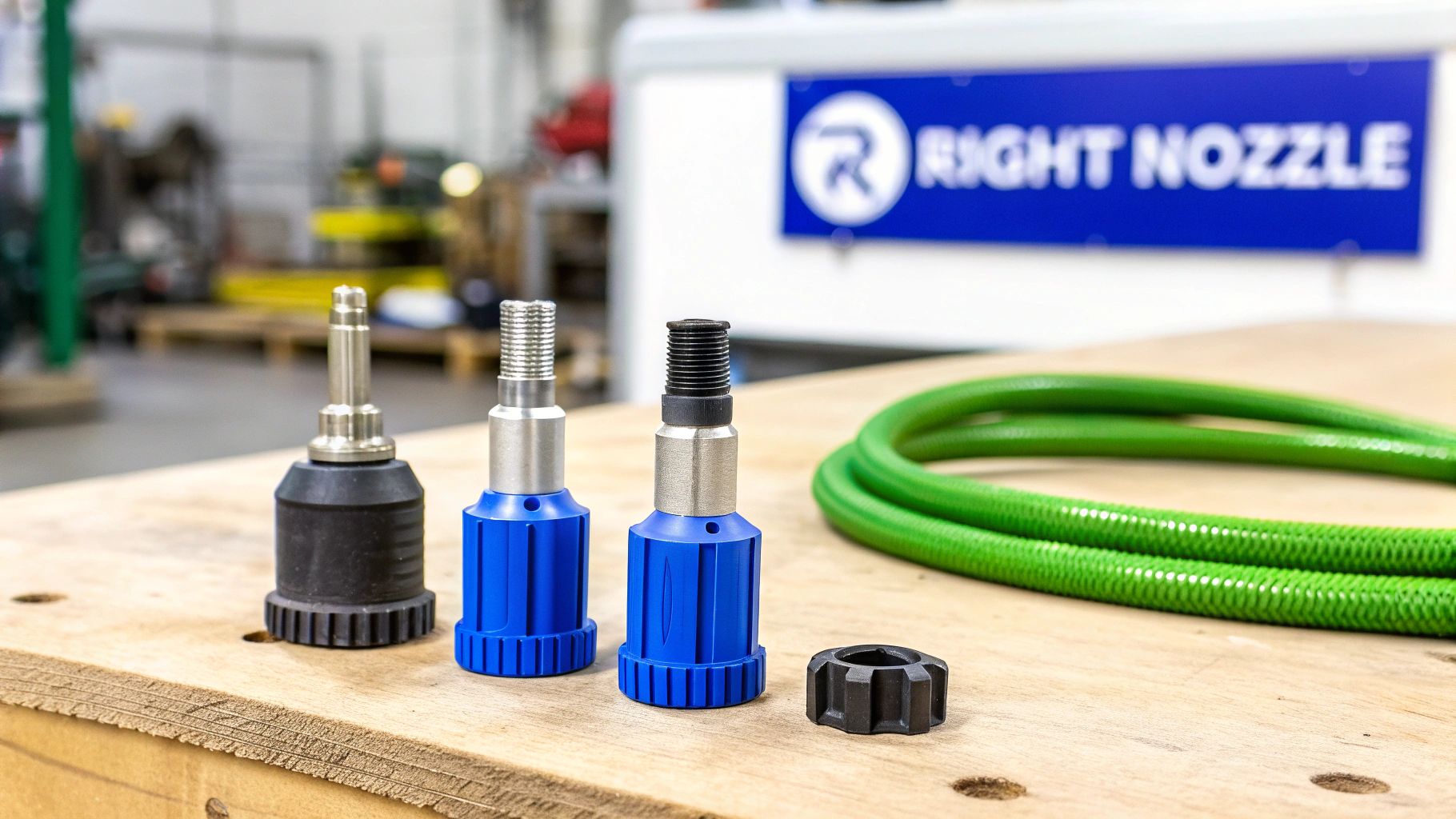
Having the right water jet nozzle is a great start, but it’s how you use it that really counts. True precision in hydrovacing isn't just about raw power; it's a skill you build with experience. It’s about learning to feel what the ground is telling you and using that high-pressure water as a surgical tool, not a sledgehammer.
To get there, you need to master three core variables: standoff distance, sweep speed, and angle of attack. Nailing this trio is what separates the pros from the rookies and turns a powerful jet into an instrument of precision.
Adjusting Your Technique for Different Scenarios
Every hydrovac job demands a different approach. You can’t use the same technique for aggressive trenching that you would for carefully exposing a buried utility line. You have to adapt.
Imagine you're daylighting a fiber optic cable. This is delicate work. You’ll want to increase your standoff distance—the space between the nozzle and the dirt—to soften the water's impact. You'd combine that with a slower, more controlled sweep speed and a shallower angle of attack, almost peeling the soil back layer by layer. The goal here is to gently reveal, not blast away.
Now, picture cutting a trench for a new water main through tough, compacted clay. It's a whole different ballgame. You’ll close that standoff distance to hit the ground with maximum force. Your sweep will be faster and more aggressive, and you'll use a steeper angle of attack to dig in and break that stubborn material apart. The job itself dictates your entire technique.
The Role of the Hydrovac Attachment in Operator Control
Let's be honest: you can't be precise if you can't see what you're doing. A work area filled with flying mud and debris isn't just messy—it’s dangerous and slows you down.
This is where a tool like the Hydrovac Attachment really shines as a solution. Its unique three-part system creates a contained suction area right at the nozzle tip. Instead of slurry exploding everywhere, it’s instantly vacuumed up, providing the controlled environment needed for effective digging.
For operators, this brings two massive benefits:
- A Clear Line of Sight: When you eliminate all that splashback, you can actually see the ground you're cutting. This is absolutely critical for avoiding utility strikes and making sure your excavation is spot-on.
- A Safer Work Zone: Keeping the immediate area drier and cleaner significantly cuts down on the risk of slips, trips, and falls for the whole crew.
When your excavation zone is under control, you can stop fighting the mud and start focusing on your technique. The Hydrovac Attachment Tool lets you dial in your angle and distance with real confidence, leading directly to faster, safer, and better work.
Reading the Soil and Adapting on the Fly
Seasoned hydrovac operators develop a sixth sense for the ground. They can feel subtle changes in soil density and composition right through the wand in their hands. This intuition is what allows them to make critical adjustments in real time.
When you're cutting through hard clay and suddenly hit a soft pocket of sand, an experienced operator instinctively pulls back, widens their sweep, and lets the water do the work. If the ground gets tougher, they know to tighten their pattern and concentrate the nozzle's energy to power through.
It’s this constant feedback loop—reading the ground, adjusting your technique—that defines expert hydrovacing. Equipment like the Hydrovac Attachment makes this process easier by giving you a stable, predictable system. When your gear works consistently, you can focus your attention on the site conditions, making every move of that nozzle precise and purposeful.
When Water Isn't Enough: Bringing in Abrasive Water Jetting
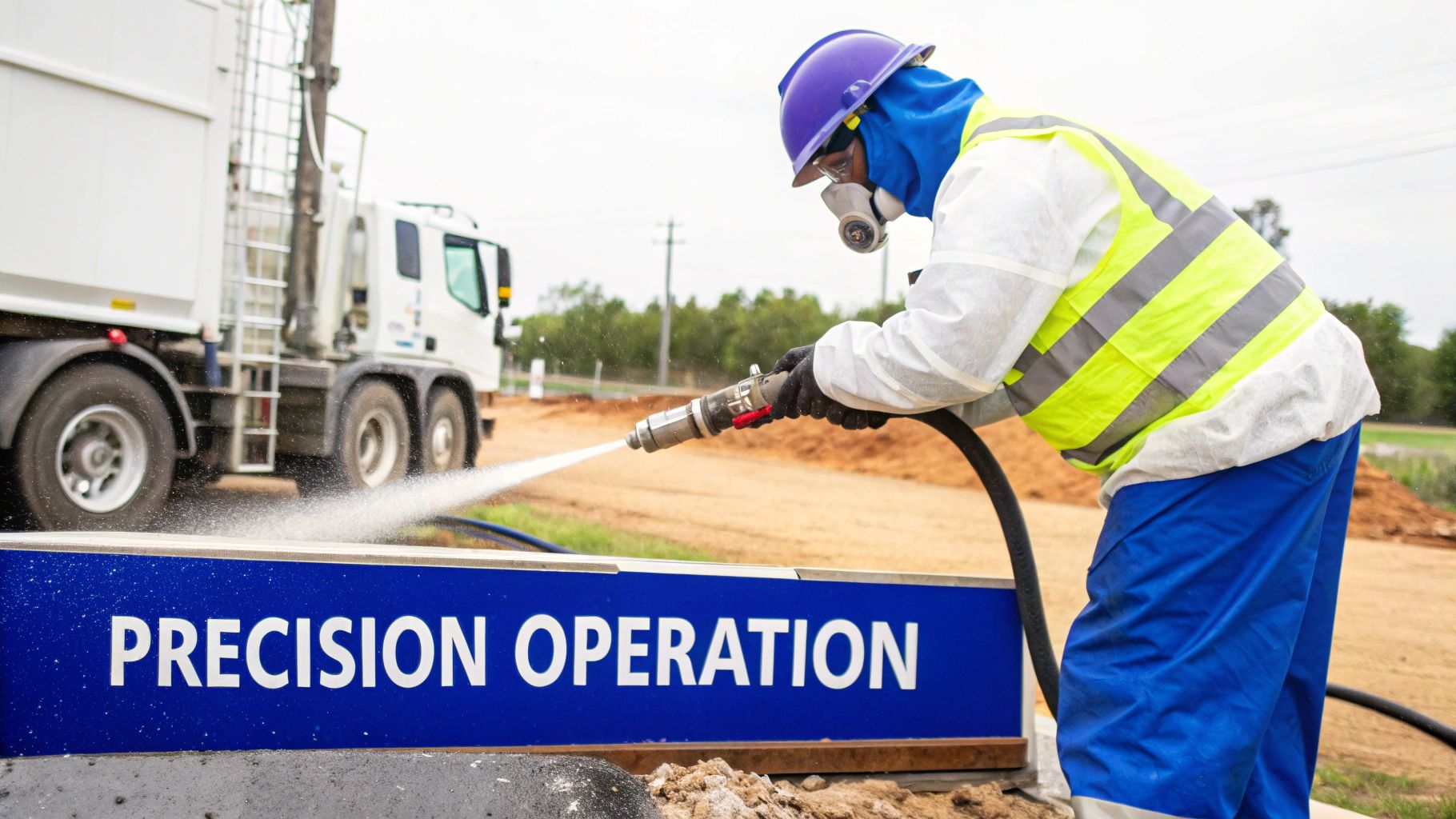
Your standard hydrovac setup is a beast, but some days you run into materials that just laugh at high-pressure water. Think of things like rock-hard caliche, ground frozen solid through a northern winter, or heavily compacted, contaminated soils. When water alone just bounces off, it's time to upgrade your arsenal.
This is where abrasive water jetting comes in. It’s a completely different league. By adding an abrasive like garnet into the high-pressure stream, you transform your hydrovac from an excavator into a precision cutting tool. Suddenly, those "impossible" digging jobs are back on the table.
How Does It Actually Work?
The real innovation is in the nozzle itself. A specialized abrasive water jet nozzle has an internal mixing chamber. This is where the abrasive material gets pulled into the water stream right before it blasts out. The result is a highly focused, incredibly powerful jet that can slice through dense materials with surgical precision.
But you can't just slap one on and go. Getting it right involves a bit of finesse:
- Dialing in Pressure: You have to balance your PSI and GPM perfectly. This creates the venturi effect needed to pull the abrasive into the water stream effectively.
- Managing the Abrasive Flow: The feed rate is crucial. Too little abrasive, and you're just spraying expensive sand. Too much, and you’ll clog the nozzle and kill your progress.
- Using the Right Nozzle: Your standard nozzles will be destroyed in minutes. Abrasive nozzles are made from incredibly tough materials, like tungsten carbide, to survive the intense, erosive force.
The Critical Role of Containment
One thing is for sure: adding abrasives to the mix creates a lot of extra material to manage. You’re not just dealing with soil and water anymore; you have a high-velocity slurry of sharp particles flying around.
This is exactly why the Hydrovac Attachment is the essential solution for this kind of work. As the abrasive nozzle cuts, the attachment's suction zone is right there, instantly capturing the water, soil, and spent abrasive. It keeps the worksite clean, safe, and most importantly, gives you a clear line of sight to what you're cutting.
The industrial-grade polymer used in the Hydrovac Attachment is specifically designed to handle this abuse. It won't get chewed up by ricocheting garnet, so you can count on it to maintain a solid vacuum seal on every job, making it the ideal tool for abrasive digging purposes.
This combination of controlled cutting and immediate suction is what makes abrasive jetting a viable, safe, and precise process for hydrovac crews.
Why This Matters for Your Business
We're seeing a huge uptick in the use of abrasive water jetting in hydrovac-heavy industries like oil & gas and major infrastructure. The market is growing at a CAGR of 11.13% from 2024 to 2030, largely because of the need to cut precisely in tough spots, like during contaminated soil remediation.
Nozzle size is everything here. Tiny orifices (0.254 mm to 1.016 mm) are used for detailed, intricate cuts, while the bigger guys (2.032 mm to 6.35 mm) are brought in for bulk removal. If you want to dive deeper, you can check out more on these abrasive waterjet nozzle market trends to see where the industry is heading.
At the end of the day, mastering abrasive water jetting comes down to pairing the right tools with the right technique. By combining a purpose-built, durable nozzle with a robust containment system like the Hydrovac Attachment, your crew can tackle the absolute toughest ground conditions out there.
Keep Your Nozzles Running Longer with Smart Maintenance
Your water jet nozzle is the business end of your hydrovac rig, but it takes a beating every single day. High-pressure water, abrasive dirt, and the general chaos of a job site all take their toll. Good maintenance isn't just about a quick rinse-off; it’s a proactive routine that prevents those catastrophic failures that bring a job to a screeching halt.
Honestly, ignoring your nozzle's health is one of the most expensive shortcuts you can take. A worn-out nozzle absolutely kills your digging efficiency. This forces your pump to work overtime and guzzle fuel just to get the same job done. It’s all about catching the small problems before they sideline your entire operation.
Side-Stepping Common Installation Mistakes
A nozzle’s service life starts the second you thread it on. A couple of simple mistakes right at the beginning can cause premature wear or performance issues from day one.
One of the most common blunders is over-tightening the threads. It feels right to really crank it down, but doing so can strip the threads on both the nozzle and your wand. This leads to leaks and means the nozzle won't sit properly. A good rule of thumb is hand-tight, then just a quarter-turn with a wrench. That's usually all it takes.
Using the wrong thread sealant is another classic mistake. You need something specifically rated for high-pressure water systems. The cheap stuff can break down and get pushed into the nozzle's orifice, creating an instant blockage and a massive headache.
A nozzle installed correctly from the get-go is far less likely to vibrate loose, leak, or suffer thread damage. Taking an extra 30 seconds to do it right can easily add dozens of hours to its working life.
The Daily Check-Up That Saves You Money
A quick once-over before you start each shift can tell you everything you need to know. You're looking for a few specific signs of wear that scream it's time for a replacement.
- Orifice Erosion: This is the most critical wear point. The opening should be a perfect circle. If it starts to look oblong or uneven, the spray pattern is shot, and so is your cutting power.
- Internal Blockages: Get a small light and peer through the nozzle. Any debris you see is bad news. Even tiny particles act like sandpaper under pressure, eating away at the nozzle from the inside out.
- External Damage: Give the nozzle body a good look for any nicks, dents, or cracks. A hard hit can compromise its integrity, which is a serious safety hazard when you're dealing with thousands of PSI.
This sharp focus on keeping gear in top shape is an industry-wide trend. The cleaning nozzles market, a core part of water jet tech, was valued at USD 291.9 million in 2023 and is expected to hit USD 419.5 million by 2031. That growth comes from the rising demand for efficient, non-destructive excavation methods. You can discover more insights on the cleaning nozzles market to see how proper maintenance directly impacts the bottom line.
Making On-the-Fly Maintenance a Breeze
Downtime is the enemy on any job site, so field maintenance has to be quick and easy. The Hydrovac Attachment Tool was designed with exactly that in mind, providing an ideal solution for operational efficiency. Its simple, three-step installation means swapping out a worn nozzle or clearing a clog takes seconds, not minutes. No need to hunt for special tools or make a trip back to the truck.
Because it's so easy, operators are more likely to do these routine checks instead of putting them off. When a nozzle change is painless, it gets done the moment it's needed, keeping your system running at peak performance all day long. The attachment’s design also shields the nozzle and wand connection from direct impacts, giving you another layer of protection. Of course, nozzles are just one part of the system; for more tips, check out our guide on other essential vacuum hose accessories.
Nozzle Maintenance and Troubleshooting Checklist
When things go wrong, a quick diagnostic can save you a ton of time. This checklist covers the most common issues you'll run into in the field and how to get back to work fast.
| Symptom | Potential Cause | Recommended Action |
|---|---|---|
| Reduced Cutting Power | Worn/eroded nozzle orifice | Replace nozzle immediately. |
| Uneven Spray Pattern | Partial blockage or damaged orifice | Clean nozzle thoroughly. If pattern is still off, replace. |
| Pressure Fluctuations | Clogged nozzle or debris in the line | Disconnect and clean the nozzle. Flush the water line briefly. |
| Leaking at Connection | Worn threads or bad sealant | Re-seat with fresh, high-pressure thread sealant. Don't over-tighten. |
| Visible Cracks/Dents | Physical impact or material fatigue | Do not use. Replace the nozzle to prevent catastrophic failure. |
Keeping this simple checklist in mind will help you quickly identify problems and make the right call, ensuring both safety and efficiency on the job.
How the Hydrovac Attachment Gets the Most Out of Your Nozzles
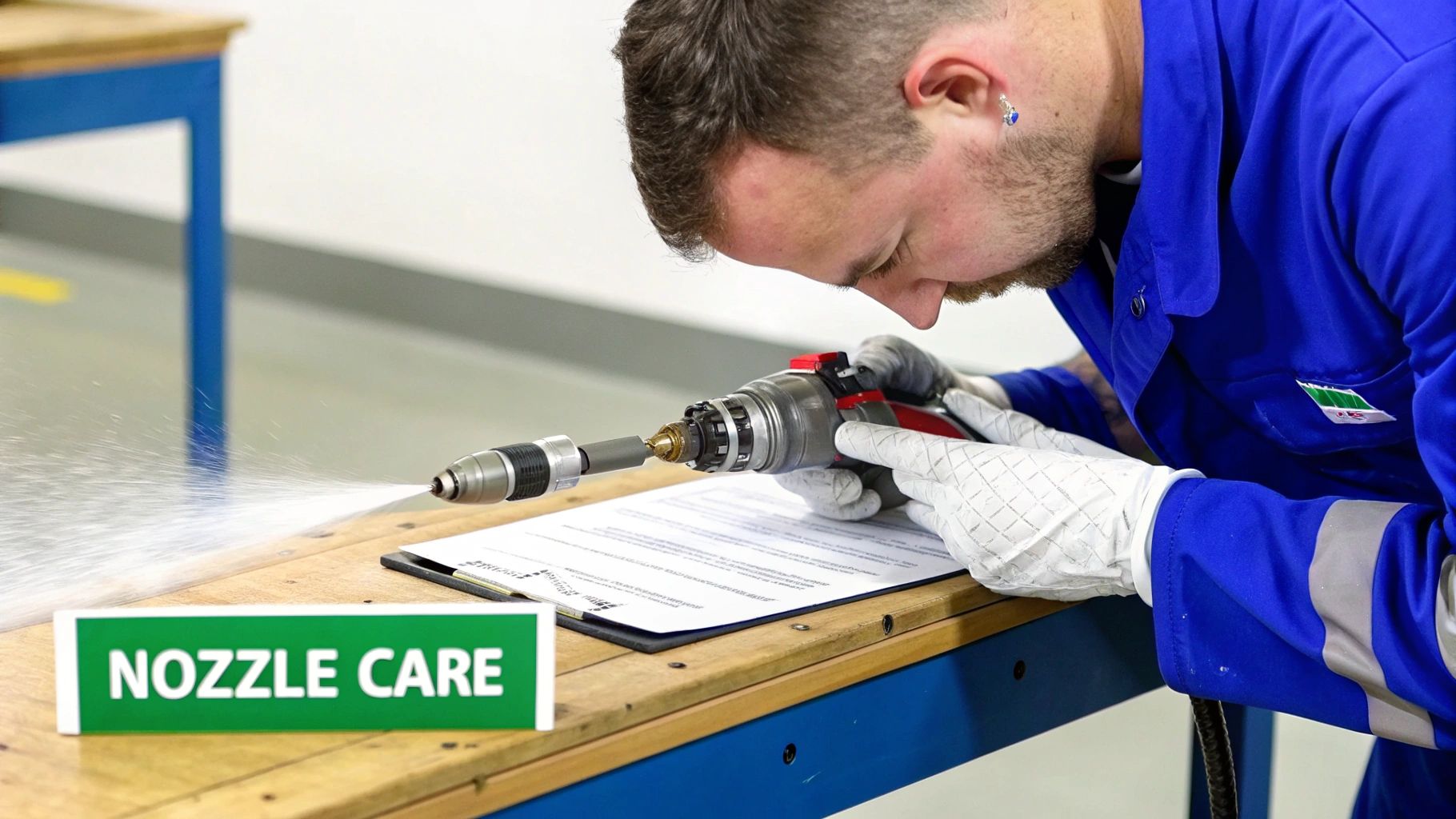
Picking the right water jet nozzle and getting your technique down are the basics. But the real game-changer is getting your entire system to work together for effective digging. This is exactly what the Hydrovac Attachment was designed for. It is the solution that takes the raw power from whatever nozzle you’re using and focuses it with incredible precision.
Instead of just blasting soil and dealing with the mess, this attachment turns your setup into a clean, surgical digging tool. It pulls this off with a simple but brilliant three-part design that creates a contained suction zone right at the nozzle tip.
The Smart Engineering Behind a Contained System
The magic of the Hydrovac Attachment is all in its smart, straightforward engineering. It’s built with three main parts that bring your pressure wand and vacuum hose together into one efficient unit.
- The Base Connector: This piece firmly attaches your high-pressure wand to the main body.
- The Hose Clamp: A tough, rugged clamp that creates an airtight seal with your vacuum hose, so you never lose suction.
- The Nozzle Cap: This is the key piece that directs all the vacuum’s power right to where you’re digging, sucking up debris the second it’s freed up.
When you put it all together, you create a controlled little environment where physics starts working for you, not against you. The high-pressure water breaks up the soil, and the vacuum instantly whisks the slurry away. This design virtually eliminates the sloppy, vision-blocking splashback that plagues so many hydrovac jobs.
A clear line of sight means you can work faster and with more confidence, especially when you're digging around delicate utilities. This tool is a huge step up in job site safety and precision.
Where It Really Shines on the Job
The benefits of this contained system become crystal clear out in the field. Let's say you're potholing to find a gas line in someone's perfectly landscaped front yard. With a standard wand, you’d be slinging mud and water everywhere—on the lawn, the flowerbeds, maybe even the house. That means a long, messy cleanup and a client who’s not too pleased.
Now, picture that same job with the Hydrovac Attachment. All the excavated material goes straight up the vacuum hose. The yard stays clean, the hole is neat, and the homeowner is happy. It’s the perfect solution for effective and clean digging.
Or how about trenching for an irrigation line right next to a public sidewalk? Uncontrolled spray creates a major slip hazard for your crew and anyone walking by. By keeping the slurry contained, the attachment keeps the walkway dry and safe, cutting down on your liability and public disruption. It turns a messy, high-risk job into a clean, controlled one. You can read more about the impact of the right tools in our guide to modern hydrovac excavation equipment.
The Upgrade Every Crew Should Have
The Hydrovac Attachment is more than just another accessory. It's a fundamental upgrade that unlocks the full potential of your water jet nozzles for any digging purpose. Because it's universally compatible, it works with the gear you already have, turning any standard setup into a high-performance, low-mess excavation machine.
It’s built from a lightweight but seriously tough polymer, so it can handle the daily grind of hydrovac work without weighing you down. This mix of smart design, rugged build, and universal fit makes it one of the single best investments a crew can make to boost their safety, speed, and professionalism. It’s the missing piece that ensures every drop of water from your nozzle does exactly what it's supposed to.
Got Questions About Water Jet Nozzles? We've Got Answers.
When you're out on a job, questions pop up. Getting straight answers from people who've been there can make all the difference between a frustrating day and a productive one. Here are some of the most common things we hear from operators in the hydrovac industry about their water jet nozzles.
Why Did My Nozzle Suddenly Stop Cutting Well?
Nine times out of ten, when your cutting power drops off a cliff, the culprit is a worn-out nozzle orifice. It’s a simple wear-and-tear issue. High-pressure water, mixed with all the grit and debris you’re cutting through, acts like liquid sandpaper on the inside of that tiny opening.
Over time, that perfectly round hole gets bigger, misshapen, or eroded. Once it loses its precise shape, the water jet loses its focus and power. You end up burning more fuel and putting unnecessary strain on your pump just to get the same job done. A quick look at the orifice before you start your shift is the best way to catch this before it slows you down.
Can I Just Use One Nozzle for Every Job?
You could, but it would be a huge mistake for your bottom line. Sticking to a single nozzle for every soil condition is like trying to build a house with only a sledgehammer. It’s just not the right tool for every task.
That narrow, zero-degree "pencil tip" nozzle is a beast for punching through frozen ground, but it's painfully slow if you're trying to clear out a wide trench in loose sand. On the flip side, a wide-angle fan nozzle that’s perfect for clearing soft dirt won't even scratch the surface of hard-packed clay. Smart hydrovac operators carry a small arsenal of water jet nozzles and swap them out as the ground beneath them changes.
Pro Tip: There's no such thing as a "one-size-fits-all" nozzle. Your efficiency on site comes down to matching the right nozzle to the specific soil you're facing. It's a constant balance between focused cutting power and broad surface coverage.
How Does Water Pressure (PSI) Relate to My Nozzle Choice?
Think of pressure and nozzles as a team. Your pump provides the raw power (PSI), but the nozzle is what focuses that power to do useful work. Generally, a smaller orifice will concentrate the water flow into a more intense, laser-like jet, which is fantastic for precision cutting.
But you can't just slap any small-orifice nozzle on a high-pressure pump. It's a system that has to be balanced with your flow rate (GPM). If the nozzle's orifice is too large for your pump's GPM, you’ll never build up enough pressure to cut effectively—you'll just get a weak, floppy stream. Always check your equipment specs to make sure your nozzle, PSI, and GPM are all working together, not against each other.
Is It Safe to Use Abrasive Nozzles with the Hydrovac Attachment?
Absolutely. The Hydrovac Attachment Tool was built for exactly that kind of tough work. Its industrial-grade polymer body is designed to handle the high-velocity slurry that comes from abrasive jetting, whether you're cutting through caliche or solid frost.
In fact, the attachment is what makes abrasive work both safe and effective. It creates a contained suction zone right at the point of impact, instantly vacuuming up the spent abrasive material, water, and soil. This makes it the ideal solution for abrasive digging purposes, ensuring no dangerous splashback and a perfectly clear line of sight, which is crucial when you’re wielding that much cutting power.
What's the #1 Mistake That Wrecks Nozzles?
Over-tightening. It’s the simplest mistake and the one we see most often. Operators sometimes feel the need to crank down on the nozzle with a wrench, assuming tighter is better. This is a fast way to strip the threads on both the nozzle and your wand, which leads to leaks and a nozzle that won't seat correctly.
The right way is simple: thread it on by hand until it’s snug. Then, just a quick quarter-turn with a wrench is all you need to create a perfect seal. It’s a small habit that will dramatically extend the life of your water jet nozzles and save you from costly repairs down the road.
Ready to stop the mess and get total control over your digging? The Hydrovac Attachment turns any standard hydrovac into a precision excavation tool.
See how the Hydrovac Attachment can sharpen your workflow today!