


Whether you're digging fence post holes or trenching to expose a utility line, knowing how much water you’re up against is key to getting the job done right. A standard 2-inch pipe, for instance, holds about 0.16 gallons per foot. Jump up to a 4-inch pipe, and you're looking at 0.65 gallons. A 6-inch pipe? That's 1.47 gallons for every foot.
These aren't just random numbers; they're the foundation for planning any residential digging work, big or small, and preventing costly damage to buried pipes.
Understanding Water Volume in Common Pipe Sizes
When you’re breaking ground in a residential yard, whether it's to locate a utility line or install a new drain, managing the water and resulting slurry is always part of the job. Figuring out the volume of water helps you bring the right equipment. It’s the difference between a clean, efficient dig and a muddy, time-consuming mess that can damage landscaping.
This is especially true for projects around the home where you don't have room for a large hydrovac truck. You're not bringing heavy industrial machinery to dig a few post holes or expose a sprinkler line. A smarter, more measured approach using mobile tools saves you time, water, and a lot of cleanup.
Why Gallons Per Foot Matters
So, why get hung up on the gallons per foot? It’s more important than you might think for yard care and residential digging.
- Better Planning: It helps you accurately estimate the total volume of slurry your wet vac needs to handle. No one wants to deal with an unexpected overflow when digging up a pipe.
- Smarter Workflows: You can calculate exactly how much water is needed for safe, non-destructive digging around sensitive utilities. It’s what makes tools like the Hydrovac Attachment so effective, turning your wet vac into a precision digging tool.
- Preventing Damage: Knowing your water volume helps you avoid over-saturating the ground, which can weaken the soil around foundations, sidewalks, or damage the very pipes you're trying to access.
To make this easier, here's a quick visual breakdown of the water capacity for the most common pipe sizes you'll run into on residential and landscaping jobs.
This infographic shows the water volume in gallons for every linear foot of 2-inch, 4-inch, and 6-inch pipes, giving you a quick reference on the job.
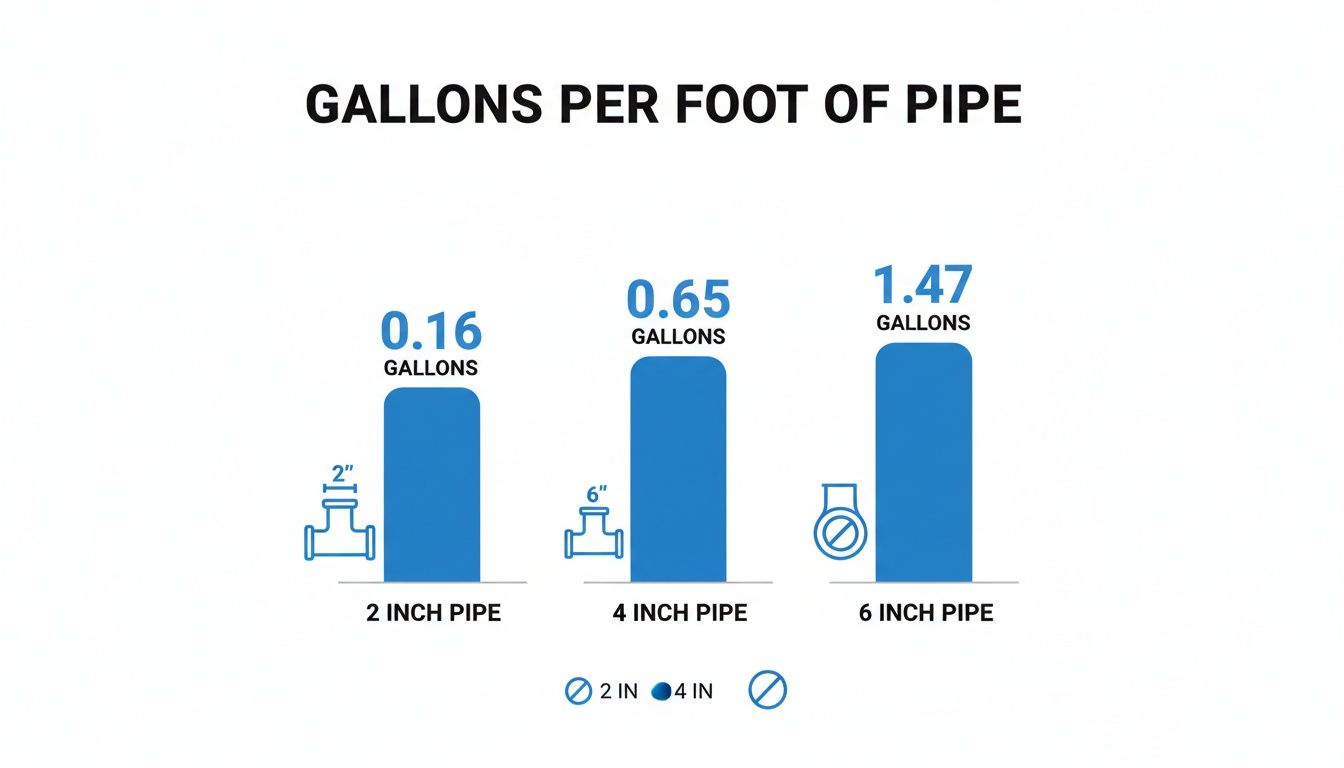
It's pretty eye-opening when you see it laid out like that. Notice how doubling the pipe diameter from 2 inches to 4 inches doesn't just double the volume—it increases it by four times. That’s a perfect example of how quickly water management can become a major challenge on site.
How to Calculate Water Volume for Any Pipe Size
While our quick-reference chart is great for standard jobs, sometimes you run into a non-standard pipe or just need to double-check the numbers. Knowing the math behind the chart gives you the confidence to handle any situation on the job site.
It's a crucial skill, whether you're planning a non-destructive dig around utilities or just trying to figure out how much slurry your wet vac will have to clear. At the end of the day, a pipe is just a long cylinder, and calculating its volume is surprisingly simple.
The Core Formula Explained
You only need two simple measurements to find the volume of any pipe: its internal radius and its length.
The formula is a classic from geometry class: Volume = π × r² × h
- π (Pi) is a mathematical constant, which we can round to 3.14159.
- r stands for the radius of the pipe. Remember, this is half of the inside diameter.
- h is the height or length of the pipe section you need to measure.
This formula will give you the volume in cubic units—if you measure in inches, you get cubic inches. From there, it’s just a simple conversion to get to the number we really care about: gallons.
For a deeper dive into the math with more examples, check out our complete guide on pipe volume calculation.
Step-by-Step Conversion to Gallons
Let's walk through a real-world example. Getting this right is key to making sure you have the right equipment and capacity for the job, especially when using mobile tools that pair with a wet vac hose. We'll use a standard 4-inch pipe.
-
Measure the Inside Diameter: The first step is to get the pipe's inside diameter. In this case, it's 4 inches.
-
Calculate the Radius: The radius is always half the diameter. So, we take 4 inches / 2 = 2 inches.
-
Calculate Volume in Cubic Inches: Now, let's find the volume for a 1-foot (12-inch) section of this pipe using our formula.
- Volume = 3.14159 × (2 in)² × 12 in
- Volume = 150.8 cubic inches
-
Convert to Gallons: This is the final and most important step. The conversion factor you need to remember is that 1 U.S. gallon = 231 cubic inches.
- Gallons = 150.8 / 231
- Gallons = 0.65 gallons
Just like that, we've confirmed the value for a 4-inch pipe in our reference chart. Once you get the hang of it, you can quickly find the volume for any hole or trench, ensuring every digging job is planned efficiently and safely.
Putting Calculations into Practice for Common Yard Work
Knowing the math is one thing, but seeing how it plays out on a real job site is where the value really clicks. This gallons-per-foot calculation is a game-changer for planning any kind of residential digging, whether you're setting a new fence or carefully exposing a buried utility line without causing damage. It's all about managing water, estimating debris, and working smarter.
These numbers are the foundation of successful non-destructive digging. When you can accurately predict the volume of soil you're about to turn into a slurry, you can bring the right size wet vac system and avoid turning your work area into a muddy swamp. A little foresight here goes a long way in preventing soil erosion, protecting the homeowner's landscaping, and keeping the site tidy.
Example 1: Digging Fence Post Holes
Let's walk through a common project: digging ten fence post holes, each 8 inches wide and 3 feet deep. The first step is to figure out the volume of slurry you'll be dealing with from a single hole.
- Find the Radius: The diameter is 8 inches, so the radius is half that: 4 inches.
- Get the Length: The hole is 3 feet deep, which works out to 36 inches.
- Calculate Cubic Inches: Using the formula, we get: 3.14159 × (4 in)² × 36 in = 1,809.6 cubic inches.
- Convert to Gallons: Now, we just divide by 231: 1,809.6 / 231 = 7.83 gallons per hole.
With ten holes to dig, you're looking at a total slurry volume of about 78.3 gallons (7.83 gallons × 10 holes). This is exactly where a tool like the Hydrovac Attachment shines. It's not for a hydrovac truck; it's a mobile attachment that hooks up to a standard wet vac hose, letting you excavate each hole with precision while clearing small amounts of debris. No mess, no manual bailing, and this quick calculation ensures your wet vac can handle the whole job without issue.
Example 2: Exposing a Utility Line Without Damage
Here’s another frequent task: you need to expose a 4-inch utility line buried in a 5-foot-long trench without damaging it. The plan is to create a channel roughly 1 foot wide to get access.
- Trench Dimensions: We're aiming for a trench that's 1 foot (12 inches) wide and 5 feet (60 inches) long.
- Approximate Volume (Cubic Inches): To get a quick estimate of the soil we need to move, we can calculate the volume of the trench: 12 in × 12 in × 60 in = 8,640 cubic inches.
- Convert to Gallons: 8,640 / 231 = 37.4 gallons.
This number tells you to be prepared to manage at least 37.4 gallons of slurry. When you're working around delicate pipes, connecting your water lines efficiently is also part of the job; it helps to be familiar with hardware like quick release couplers for fluid lines. Precision is everything here—you can’t risk damaging that line. A controlled digging tool that pairs with a shop vacuum is the perfect, safe solution for these sensitive projects.
Optimizing Water Flow for 2-Inch Wet Vac Systems

While a gallons-per-foot chart is great for knowing how much water a pipe can hold, effective digging is all about water in motion. For portable wet vac systems, a 2-inch diameter hose is a common go-to. It offers a great balance between suction power and the flexibility needed for jobs like digging fence post holes or clearing debris from around buried pipes.
But here’s the thing: the success of these jobs isn't about static pipe capacity. It's about achieving the right flow rate.
Flow rate, measured in gallons per minute (GPM), is the real workhorse. It determines how quickly you can break down soil and vacuum it away. If your flow is too low, you simply won't have the force to cut through compacted dirt. On the other hand, too much flow creates a messy, unmanageable slurry that can easily overwhelm your vacuum, leading to clogs in the wet vac hose and a major cleanup headache.
The Role of Flow Velocity and Friction
The secret to efficient digging lies in maintaining an optimal flow velocity—the actual speed of the water moving through your hose. When the velocity is dialed in, the water carries enough energy to lift and transport soil, rocks, and other debris right into the vacuum stream. This is what gives you a clean, continuous excavation.
But there’s a catch. As water travels through the hose, it drags against the inner walls. This resistance, known as friction loss, slows the water down and reduces pressure. The result? Less digging power at the nozzle. This becomes a major factor on larger jobs, especially on residential properties where you might be running a long hose to reach the work area.
For a standard 2-inch diameter pipe (often used with 2.5-inch wet vac hoses), a safe flow is around 45 GPM at a velocity of 5 feet per second. Over a 50-foot run, friction loss can easily slash your effective pressure by 15-20%. Getting the pipe size right has been shown to reduce hydrovac incidents by 18% and cut cleanup time by a staggering 40%, making a huge impact on productivity.
Achieving Precision with the Right Tool
This is exactly why specialized equipment is a game-changer. The Hydrovac Attachment Tool is designed specifically to work with a standard 2.5-inch wet vac hose, giving you pinpoint control over water injection. It is not for large hydrovac trucks but is a mobile tool for pairing a wet vac with a pressure washer.
It integrates a power washer's high-pressure stream directly into the suction zone, creating a powerful, contained digging force right where you need it. This clever design minimizes the effects of friction loss because the pressure is applied at the point of excavation, turning a standard wet vac into a precise, non-destructive digging machine.
To get the most out of your setup, check out our guide on selecting the right 2-inch vacuum hose. It’ll help you manage your water flow effectively, ensuring clean, efficient work whether you're exposing buried pipes or setting new posts.
Why 4-Inch and 6-Inch Pipes Are a Different Ballgame
Take one look at a gallons of water per foot of pipe chart, and you'll quickly realize that jumping from a 2-inch pipe to a 4-inch or 6-inch pipe isn't just a small step up. It's a massive leap in both volume and complexity. While these larger diameters are standard on big industrial job sites with hydrovac trucks, they operate on a totally different scale than the portable wet vac systems you’d use for digging around a home.
The core difference is their staggering flow capacity. A 2-inch wet vac hose is manageable for small debris, but a 4-inch pipe can move an enormous amount of water, completely changing the physics of the job. You need specialized, heavy-duty equipment and a trained crew to handle that kind of volume safely and prevent serious accidents or property damage.
The Challenge of High-Volume Flow
The raw force of water blasting through larger pipes creates some serious safety and control issues. For a residential job like digging fence post holes or carefully digging up a sprinkler line, that level of power is not just overkill—it's downright dangerous. Firing up industrial-scale equipment in a backyard can easily cause a ton of collateral damage, like eroding the soil, undermining nearby foundations, or creating a soupy mess you can't control.
This is where the numbers really tell the story. A 4-inch PVC pipe might be able to handle up to 400-500 GPM (gallons per minute), but trying to push that much water creates incredible friction. That velocity can drastically increase head loss, sometimes cutting your nozzle pressure in half over just 100 feet of pipe. It's a real-world problem; a 2022 survey found that 67% of crews pointed to pipe flow mismanagement as a leading cause of operational downtime. For a deeper dive, you can learn more about how pipe size impacts flow capacities from engineering resources.
This high-volume environment is exactly why nimble, controlled solutions are so valuable for smaller-scale work. Overkill isn't just inefficient; it's a liability.
Precision Over Power for Residential Digging
When you're working on delicate jobs like digging up pipes without damage, precision is everything. Raw power takes a backseat. The whole point is non-destructive digging, not blasting hundreds of gallons of water per minute into the ground. This is the sweet spot where a tool like the Hydrovac Attachment Tool really shines.
It’s designed to give you a controlled, high-pressure jet of water that works right alongside a standard wet vac hose, striking the perfect balance for residential tasks. Instead of fighting with massive flow rates, you get a focused excavation stream that’s perfect for clearing small amounts of debris. This keeps the mess to a minimum and safety at a maximum, proving once and for all that the right tool is always better than the biggest one.
The Hydrovac Attachment for Precision Residential Digging
Knowing the numbers on a gallons of water per foot of pipe chart is one thing, but putting that knowledge to work in the real world—especially on residential job sites—demands the right equipment. Big industrial hydrovac trucks are overkill for yards and landscaping. That's where a tool designed for precision comes in. The Hydrovac Attachment bridges this gap, transforming a standard power washer and wet vac into a compact, clean, and highly effective digging system.
The design is simple but smart. It connects your power washer wand directly to a standard 2.5-inch wet vac hose, concentrating a powerful water jet right where you need it—at the point of suction. This creates a self-contained system that practically eliminates messy splashback, keeping the surrounding area clean and giving you a clear line of sight. That visibility is non-negotiable when you’re digging around delicate utility lines or setting fence posts. It’s the perfect mobile setup for any project where control is everything.
Mastering Flow for Safe and Fast Digging
The magic of this system really comes alive when you manage your water flow. While a massive 6-inch pipe can move a ton of material, a more focused approach is often better. In fact, flow-optimized hydro excavation has been shown to reduce utility strikes by a staggering 28%, saving an estimated $1.5 billion a year across the industry.
This kind of precision also helps crews get the job done up to 50% faster because they never lose control of the dig. If you're curious about the industrial end of things, you can check out data on high-volume pipe flow rates to see just how much water larger systems handle.
By combining your understanding of water volume with the Hydrovac Attachment, you can work faster and, more importantly, safer. It's built for tasks like digging fence post holes, trenching in tight spots between houses, or carefully digging up pipes without causing damage. The tool strikes the perfect balance of power and precision, preventing the over-saturated mess and potential property damage that can happen with bigger, less agile equipment.
To see exactly how this tool fits with your existing gear, you might find our guide on the vacuum hose attachment helpful. It’s a smart, nimble alternative for any residential or landscaping project that calls for non-destructive digging.
Frequently Asked Questions About Pipe Volume and Hydro Excavation
When you're dealing with any kind of small-scale digging, getting a handle on the interplay between water, soil, and your equipment is key. Here are a few common questions we see pop up when people are planning their yard care or residential excavation jobs.
How Do I Calculate the Total Slurry Volume I Need to Remove?
To get a good estimate of the total slurry, you need to figure out both the water and soil volume. Start by calculating the water volume for the trench or hole using a gallons-per-foot formula based on its dimensions.
Next, you'll need to add an estimate for the soil volume. For instance, a hole that's 6 inches wide and 3 feet deep holds about 0.6 cubic feet of soil. Combining this with your water estimate gives you the total volume your wet vac will need to manage.
Does Soil Type Affect How Much Water I Need?
It absolutely does. Hard-packed, dense clay soil is going to require a lot more water and pressure to break apart than loose, sandy soil.
The best practice is always to start with lower pressure and gradually increase it. This helps you avoid creating a huge muddy mess or oversaturating the ground. A good tool like the Hydrovac Attachment gives you the precise control needed to adjust the water jet for whatever soil you run into.
What Is the Best Water Pressure for Safely Digging Around Pipes?
When you're trying to safely expose utilities like PVC pipes or delicate fiber optic lines, a water pressure between 1,500 and 2,500 PSI is the sweet spot. This provides enough force to move the soil without running a high risk of damaging the pipe's coating or structure.
For maximum safety, always begin digging a little bit away from the utility and carefully work your way closer.
You can turn the wet vac and pressure washer you already own into a precision digging machine. The Hydrovac Attachment delivers the control you need for safe, clean, and efficient residential excavation. You can learn more and get yours over at the official Hydrovac Attachment website.