


In the demanding world of hydro-excavation, efficiency and equipment longevity are paramount. The real challenge isn’t just moving heavy slurry, but doing so without causing catastrophic damage to your vacuum system. This is precisely where a dust separator for your shop vac becomes a critical component, transforming a standard tool into a specialized hydrovac workhorse, especially when paired with a professional digging solution like The Hydrovac Attachment.
The Unsung Hero on Your Hydrovac Job Site

In the hydrovac industry, maximizing uptime is non-negotiable. Every minute your equipment is down for filter cleaning or motor repair directly impacts project timelines and profitability. A separator addresses this core operational challenge by effectively turning a standard shop vac into a robust slurry management system, capable of handling the intense demands of hydro-excavation.
The separator functions as a crucial pre-filter, intercepting the abrasive mix of mud, rocks, and water before it can compromise your vacuum's internal components. Without this buffer, heavy, wet debris slams directly into the filter, clogging it almost instantly and reducing suction to zero. This forces the motor to strain excessively, leading to overheating and premature failure—a costly problem for any hydrovac operator.
Protecting Your Primary Investment
A separator is an inexpensive insurance policy for your valuable vacuum equipment. By capturing the vast majority of heavy material in a separate, easy-to-empty container, it ensures only air and fine particulates reach the vacuum itself. This simple yet highly effective two-stage process is what enables continuous operation on the most demanding hydrovac jobs.
This system delivers several immediate, tangible benefits crucial to the hydrovac industry:
- Maintained Suction Power: Because the main filter remains clean, your shop vac delivers consistent, full-power suction from start to finish, essential for effective digging.
- Extended Motor Life: The motor operates without the strain of pulling air through a clogged filter, preventing burnout and saving significant repair or replacement costs.
- Faster, Cleaner Disposal: Tipping out a separator bucket is far more efficient and cleaner than handling the entire drum of a shop vac filled with heavy, messy slurry.
Integrating a separator is more than adding a tool; it's a strategic upgrade to your operational workflow. It's the key to transforming a standard wet/dry vac into a machine that can handle the rigorous demands of hydrovac applications.
For hydrovac professionals, combining a purpose-built digging tool like The Hydrovac Attachment with a reliable separator creates a highly efficient excavation setup. This pairing is engineered for the precise, demanding work of potholing, trenching, and utility locating, ensuring your equipment performs reliably, job after job. Ultimately, this isn't just about protecting gear—it's about increasing productivity and profitability on every site.
How Cyclonic Force Protects Your Vacuum Investment
What's the core technology that makes a dust separator so effective for hydrovac work? The answer lies in a powerful physics principle: cyclonic separation. This is the science that shields your shop vac from the punishing reality of hydro-excavation slurry.
When you use a tool like The Hydrovac Attachment to suction heavy, soupy material, it first enters the separator and is spun into a high-speed vortex. This spinning action generates powerful centrifugal force. That force is the key to the entire process, acting like a centrifuge to sling the heaviest components—water, mud, and debris—outward against the container walls. Once they lose momentum, gravity pulls them safely to the bottom of the collection bucket.
The Science of Separation
This happens in an instant, but the effect is profound. After the cyclonic action, only the much lighter air and a few ultra-fine particles continue on to your shop vac. This is the single most important step in preventing equipment failure during hydrovac operations.
By capturing up to 99% of heavy debris before it reaches your vacuum, the separator performs two critical jobs:
- Protects the Filter: Without it, abrasive slurry would impact your vacuum's filter, turning it into a solid block of mud in seconds. A clogged filter means an instant loss of suction power.
- Saves the Motor: A clogged filter forces the motor to strain to the point of failure. This extreme stress causes rapid overheating, leading to a burned-out motor.
This scientific principle is why a separator is not an optional accessory but an essential component for any serious hydrovac operation using a shop vac. It's what differentiates a tool that runs all day from one that fails in minutes.
From Workshop Gadget to Job Site Essential
While cyclonic separators are common in woodworking for managing fine sawdust, their application in hydro-excavation is mission-critical. The sheer weight and abrasive nature of wet slurry are infinitely more destructive than dry dust. A tough dust separator for a shop vac built for industrial use is a true game-changer on hydrovac sites.
The brilliance of cyclonic force lies in its division of labor: the separator handles the heavy, messy lifting, while your shop vac focuses on its core function—moving air. This separation is the key to powerful, consistent performance and long equipment life.
This process allows your shop vac to maintain peak suction throughout the entire job, eliminating the frustrating cycle of stopping to clean or replace clogged filters. It also saves you from the recurring costs of repairs and equipment replacement. An investment in a quality separator pays for itself through increased uptime and operational efficiency. To learn more about how a cyclonic shop vac setup can revolutionize your hydrovac process, it's clear this technology is the smartest move to protect your gear.
Why Separating Wet and Dry Debris Is Non-Negotiable
Hydrovac slurry is the natural enemy of a standard shop vac. We’re not talking about fine sawdust—this is a dense, abrasive sludge that can cause catastrophic failure in minutes. It demands a specialized approach to protect your equipment investment.
Attempting to pull this heavy, wet mixture directly into your vacuum is a recipe for disaster, leading to immediate filter destruction, immense motor strain, and a messy cleanup of the vacuum's drum. Once that filter clogs, airflow is choked off, forcing the motor to work harder, overheat, and eventually burn out.
A dust separator for a shop vac fundamentally changes the game. It creates an essential two-stage system that is a critical component for any professional hydro-excavation operation.
The Role of a Two-Stage System
When you connect a powerful digging tool like The Hydrovac Attachment to your shop vac, the separator acts as your frontline defense. This system captures the bulk of the liquid and solid debris in its own external bucket, a simple interception that keeps your primary vacuum alive.
By separating the heavy material first, your shop vac is only required to manage airflow. With the heavy lifting handled by the separator, your vacuum can maintain maximum suction power from the start of the job to the end.
This two-stage approach is the key to preserving suction, extending the life of your shop vac, and achieving the consistent, powerful performance needed for effective digging. Without it, you’re simply counting down until equipment failure.
The results are immediately noticeable. Disposal is cleaner and far easier—you just empty the separator's bucket instead of wrestling with a heavy, slurry-filled vacuum canister. This streamlined process saves significant time and reduces physical strain on your crew.
Industry-Wide Recognition of Wet Debris Control
The need to manage heavy, wet materials is a major focus across all industrial sectors. The industrial dust collection market, which includes systems designed for materials like hydrovac slurry, is valued at around USD 17.09 billion and is projected to hit USD 22.32 billion.
Tellingly, wet dust control technologies currently dominate, capturing about 76.4% of the market revenue due to their effectiveness in handling challenging materials. These figures highlight the industry-wide importance of managing wet, heavy particulate matter efficiently. For a deeper dive, you can find more insights into industrial dust collection trends on marketresearchfuture.com.
This broader industry trend underscores why a standard shop vac alone is inadequate for professional hydrovac work. The industry relies on separation technology as the only reliable method for handling dense, wet particulate.
The True Cost of Skipping Separation
Failing to use a separator comes with tangible costs that add up quickly. Every time a filter gets caked with mud, you either waste valuable time trying to clean it or spend money on yet another replacement.
Consider the consequences of a single-stage system in a hydrovac context:
- Constant Downtime: Operators must repeatedly stop work to address clogged filters and lost suction, destroying project momentum.
- Repetitive Repair Costs: Continuous strain on the vacuum motor leads to premature failure, resulting in expensive repairs or full replacement.
- Reduced Job Site Efficiency: Inconsistent suction power means tasks like potholing and trenching take longer and require more manual effort, directly impacting profitability.
- Safety and Cleanup Headaches: Handling a vacuum drum full of heavy slurry is messy and creates risks of spills and operator strain.
Ultimately, separating wet and dry debris isn't just a best practice—it's a non-negotiable requirement for professional hydrovac operations. It protects your investment, keeps your team productive, and ensures your equipment is ready to perform when you need it most.
Selecting and Assembling Your Separator System
Choosing the right separator for hydrovac applications is critical. You’re dealing with heavy, abrasive slurry, not light sawdust. For this kind of industrial use, you need a system built for durability and compatibility on the job site.
A flimsy plastic accessory designed for hobbyists will crack or collapse under the strain of hydrovac excavation. Instead, seek out components made from thick, industrial-grade materials that can withstand job site abuse. The goal is to build a system as tough as the work you do.
Core Criteria for a Hydrovac-Ready Separator
When evaluating your options, three criteria are non-negotiable for hydrovac jobs. Getting these right ensures optimal performance and minimizes downtime.
Look for the following:
- Material Strength: The separator and its bucket must be constructed from heavy-walled, impact-resistant materials that won't fail on a chaotic site.
- Bucket Capacity and Stability: A standard 5-gallon bucket is a good starting point. Ensure it has a wide, stable base to prevent tipping when filled with heavy slurry. Reinforced handles are a major plus for safe disposal.
- Airtight Seal: This is crucial. An airtight seal is essential for maintaining suction. The separator lid must clamp down tightly on the bucket with a robust gasket, and all hose connections must be completely leak-proof.
A poor seal is the number one enemy of suction power. Even a minor air leak can cripple your system's performance, forcing the shop vac motor to work harder for weaker results.
This diagram illustrates how a separator functions, intercepting heavy, wet debris before it can reach your vacuum.
As shown, the separator acts as a frontline defender, ensuring only air and the finest mist proceed to your shop vac, thereby protecting its motor and filter.
Assembling Your System for Peak Performance
Once you have the right components, assembly is straightforward. A correctly assembled setup is key to achieving the powerful, consistent suction required for effective digging.
Follow these steps to prepare your system:
- Mount the Separator to the Bucket: Attach the separator lid to the collection bucket, pressing down firmly around the entire rim to ensure the gasket creates a perfect, airtight seal. This is the foundation of the system's performance.
- Connect the Inlet Hose: Run this hose from your digging tool, such as The Hydrovac Attachment, to the port labeled "IN" on the separator. This is typically the side port, designed to initiate the cyclonic action. Use a heavy-duty hose that resists kinking and collapse.
- Link the Outlet Hose to the Vacuum: Connect another hose from the "OUT" port (usually on top) to your shop vac's main inlet. This line carries the filtered air to the vacuum. The standard 2.5-inch hose diameter is common for professional-grade shop vacs, making compatibility critical.
To guarantee secure, leak-free connections, it’s essential to use the correct shop vac hose attachments. A tight fit at every joint is what maintains full system power. With this setup, you’ve transformed your shop vac into a specialized, high-efficiency digging machine ready for any hydrovac task.
Key Features for a Hydrovac Dust Separator
Not all dust separators are created equal, especially when comparing a workshop model to one designed for hydro-excavation. The table below highlights the critical differences.
| Feature | Hydrovac Application (e.g., The Hydrovac Attachment) | Standard Workshop Use |
|---|---|---|
| Material Durability | Industrial-grade, impact-resistant polymer or steel. | Lightweight plastic. |
| Seal Quality | Heavy-duty gasket for a perfect, airtight seal. | Basic foam or thin rubber gasket. |
| Hose Port Size | Standard 2.5-inch to match pro shop vacs. | Often smaller, varied sizes. |
| Bucket Stability | Wide, stable base to prevent tipping with slurry. | Standard bucket, prone to tipping. |
| Debris Type | Handles wet, heavy slurry, rocks, and mud. | Designed for dry dust, like sawdust. |
Choosing a separator specifically designed for hydro-excavation ensures your equipment can withstand harsh job site conditions and perform reliably every time.
Putting Your System to Work on the Job Site
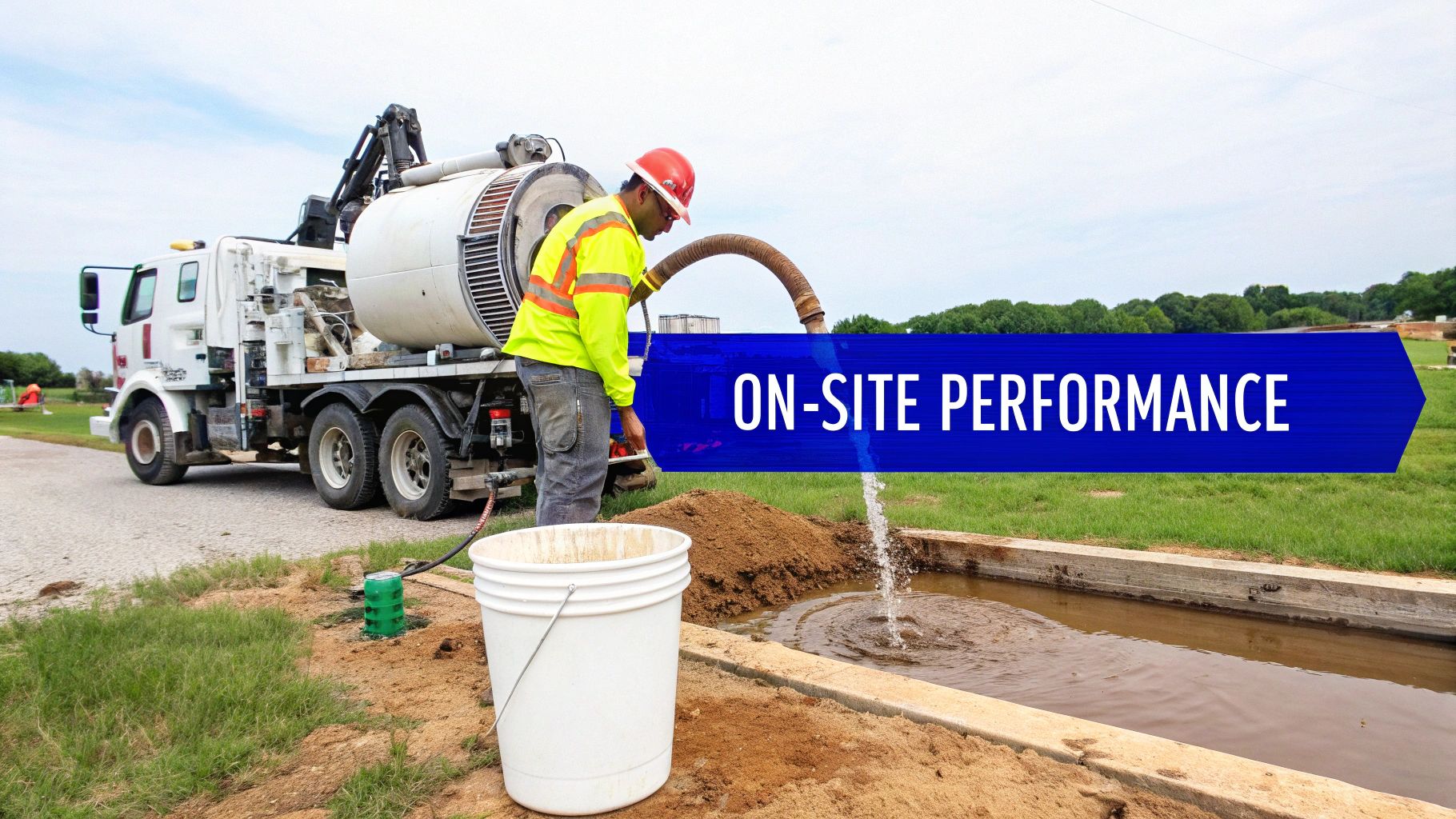
The true value of a dust separator for a shop vac is realized on an active hydrovac job site, where efficiency directly impacts your bottom line. When paired with a professional tool like The Hydrovac Attachment, this system fundamentally changes how you approach tasks that were once slow and labor-intensive. These are not minor upgrades; they represent a smarter, more profitable way to work.
Precision Potholing Without Interruptions
Potholing to locate underground utilities requires precision and control, as a mistake can lead to costly damages and dangerous situations. The traditional method often involves constant stops to unclog the vacuum, breaking focus and slowing progress to a crawl.
With The Hydrovac Attachment and a separator, the workflow is seamless. Your operator can work continuously, using the water jet to liquefy soil while the vacuum simultaneously removes the slurry. The separator is the key, capturing the heavy, wet material and ensuring the shop vac maintains full suction. This allows the operator to remain focused on safely exposing the utility line without frustrating pauses. The result is faster, safer, and more accurate locates.
By eliminating downtime from clogged filters, the separator system allows for a steady, efficient pace. This directly translates to completing more locates in a day, boosting productivity and profitability.
Efficient Trenching for New Lines
Digging narrow trenches for irrigation lines, electrical conduits, or plumbing repairs requires a tool that can operate in tight spaces. While a standard shop vac might seem suitable, it will choke on mud and soil within minutes.
The Hydrovac Attachment is the ideal solution for digging, but it's the separator that enables continuous trenching. As your operator carves out the earth, the system continuously removes debris without interruption. The separator's bucket fills with heavy soil and rock, keeping the vacuum's filter clean and its motor cool. This non-stop performance drastically reduces the time required to complete a trench, transforming a frustrating cycle of dig-clog-clean into a smooth, efficient process.
Rapid Site Cleanup and Debris Removal
Every excavation job concludes with cleanup, a task that can consume valuable time. Spills, leftover soil, and mud present a challenge. A separator system streamlines this final step, making it the easiest part of the day.
Instead of manual shoveling, your crew can simply vacuum up heavy, wet material. The separator handles it all—thick sludge, gravel, and water—leaving the site clean and safe.
- Spill Management: Quickly contain and remove spills of drilling fluid or other materials.
- Debris Collection: Easily clear leftover soil and small rocks from the dig site.
- Final Sweeping: Leave the job looking professional by removing the last traces of mud and water.
Disposal is as simple as dumping the separator bucket, making the entire cleanup process faster and less physically demanding for your team. A solid connection is crucial for maintaining suction power; using the right shop vac hoses and fittings will ensure you have the power needed to get the job done right.
Keeping Your Hydrovac System Running Smoothly
https://www.youtube.com/embed/uMe-J3B9JlQ
A hydrovac system is a powerful asset on the job site, but it only generates revenue when it's operational. Equipment that is constantly down for maintenance is a liability.
Fortunately, maintaining your separator setup is simple. A few routine checks will keep your equipment ready for deployment, preventing minor issues from escalating into job-stopping failures. The most frequent task is emptying the collection bucket. When suctioning heavy hydrovac slurry, this bucket fills quickly. Make it a habit to empty it before it becomes too heavy to prevent spills and maintain strong airflow. A full bucket impedes the cyclonic action, causing a significant drop in suction power.
Performing Essential System Checks
Beyond emptying the bucket, a brief inspection before each job can prevent significant problems. These checks take less than a minute but are key to ensuring your dust separator for shop vac is operating at peak efficiency.
Establish this pre-operational routine:
- Inspect Hoses for Damage: Quickly check the inlet and outlet hoses for cracks, punctures, or blockages. A damaged hose is a primary cause of lost suction.
- Check Gasket Seals: The gasket between the separator lid and the bucket is critical. Ensure it's clean and free of debris to create a perfect, airtight seal.
- Confirm Secure Connections: Test the hose connections to ensure they are tight and secure. Loose fittings are a common source of air leaks that reduce performance.
These simple steps ensure the entire system, with The Hydrovac Attachment at its core, remains a reliable and low-maintenance workhorse.
Troubleshooting Common Issues Onsite
Even with proper maintenance, you may encounter issues like a sudden drop in suction. Most of these problems are easy to diagnose and fix on-site, minimizing crew downtime.
If your suction suddenly disappears, the most likely culprits are an air leak or a clog. A methodical check will almost always pinpoint the issue quickly, getting you back to work.
Before assuming a motor failure, run through this simple checklist:
- Is the bucket full? This is the most common cause and the easiest to fix.
- Is there a blockage? Check the nozzle of The Hydrovac Attachment first, then inspect the inlet hose for obstructions.
- Is the seal airtight? Remove the separator lid and reseat it firmly on the bucket. Often, a simple reseating is all that's needed to properly engage the gasket.
By equipping your team with this knowledge, they can solve most problems independently, ensuring your equipment remains a dependable asset on every job.
Frequently Asked Questions
When considering a dust separator for shop vac setups in the demanding field of hydro-excavation, several questions commonly arise. Clear answers are key to maximizing your equipment's performance and protecting your investment.
Can Any Dust Separator Handle Hydrovac Slurry?
Absolutely not. Many separators are designed for light-duty tasks like collecting woodworking dust and will fail under the weight and abrasive nature of hydrovac slurry.
For this type of industrial application, you need a heavy-duty separator constructed from a thick, impact-resistant polymer. Most importantly, it must create and maintain a perfect airtight seal to ensure peak suction power for effective digging.
Will a Separator Work with My Existing Shop Vac?
Yes, quality separators are designed for universal compatibility, fitting the standard 2.5-inch hoses found on most professional-grade shop vacs.
The key to success is ensuring every connection is airtight. This includes a secure seal from your digging tool, like The Hydrovac Attachment, to the separator's inlet, and another tight fit from the separator's outlet to the vacuum. Any air leak will compromise suction power, so a secure fit is non-negotiable.
Does a Separator Reduce My Vacuum's Power?
This is a common misconception; the opposite is true. A quality separator helps your vacuum maintain its maximum power for a longer duration.
Without a separator, your vacuum's filter quickly becomes clogged with heavy mud and debris. This obstructs airflow and chokes the motor, causing suction to plummet. A separator keeps this heavy material out of your vacuum's main tank and away from the filter.
By keeping the filter clean, the separator allows the motor to breathe freely, resulting in strong, consistent suction from the start of the job to the end, without the typical power degradation.
Ready to upgrade your shop vac into a professional hydro-excavation tool? The Hydrovac Attachment is engineered to work seamlessly with a separator system, providing the control and power needed for any digging job. See it in action and equip your team at https://hydrovacattm.com.