


Picture this: you're on a hydrovac job, and the suction power just… stays. No frustrating drops in performance, no filters clogging up every hour, and your crew isn't constantly breaking stride to deal with equipment. This isn't some far-off dream; it's the reality for hydro-excavation teams who leverage a cyclonic shop vac system. For effective non-destructive digging, this is the real secret to maintaining the continuous suction power every crew needs to stay profitable.
The Secret to Non-Stop Hydrovac Digging Power
On any hydrovac or excavation project, the biggest killers of momentum are clogged filters and the subsequent loss of suction. A standard wet/dry vac might roar to life at the start, but as soon as its filter gets coated in mud, slurry, and debris, performance takes a nosedive. This initiates a frustrating cycle that hurts job site efficiency: stop work, dismantle the vacuum, and clean a sludgy, saturated filter. It’s a waste of time and kills your workflow.
This guide provides an industry overview of how a cyclonic separator transforms a standard shop vac into a powerful tool for slurry management. By intercepting and separating heavy materials before they reach the vacuum, you can keep your machine running at peak power all day long, a critical advantage in the hydrovac industry.
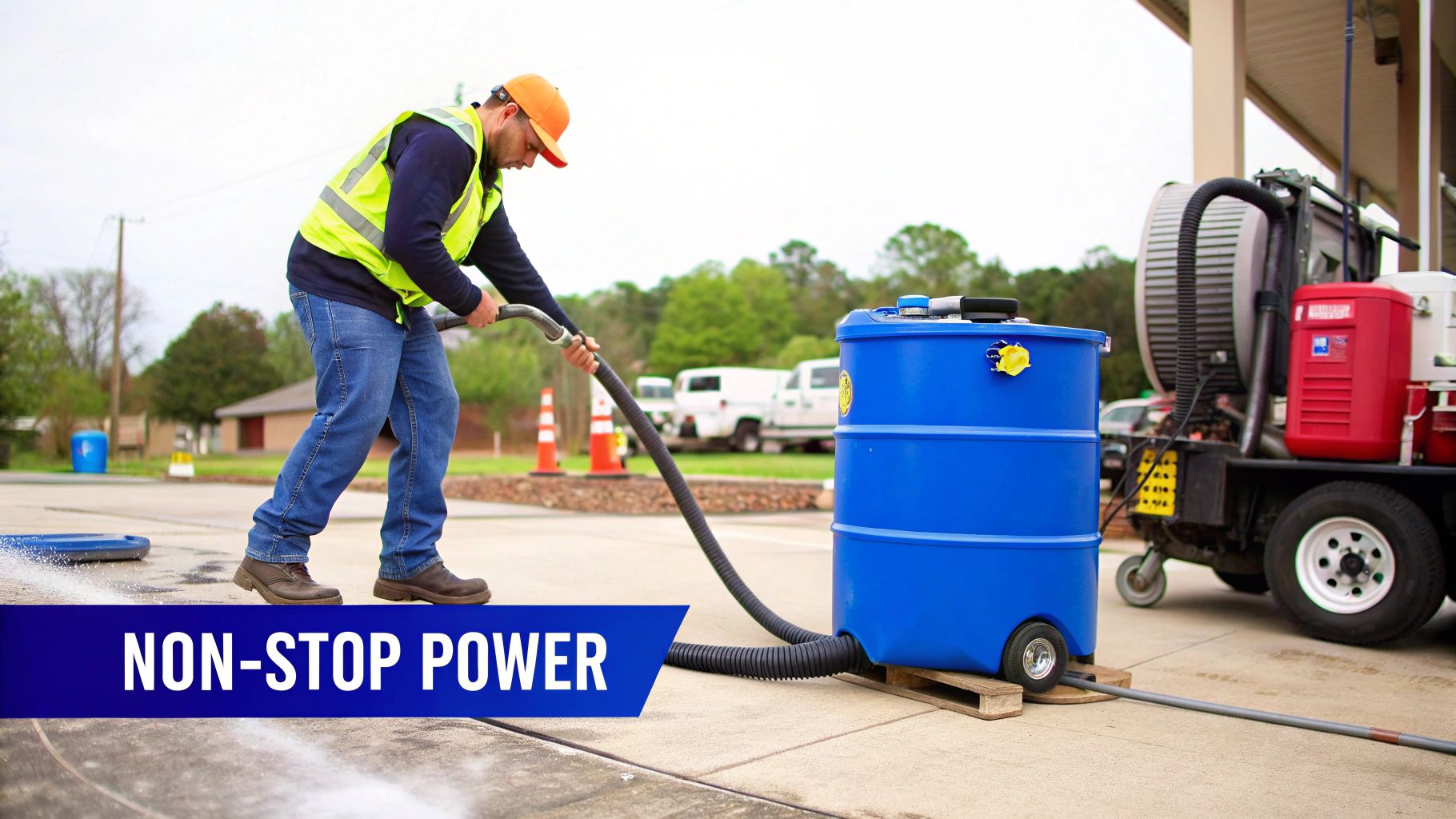
Why Standard Vacuums Fail on Hydrovac Sites
Your typical shop vac is a single-stage system. This means everything you suction—rocks, water, fine silt—is pulled straight into the main canister and impacts the filter directly. While this design is adequate for workshop sawdust, it becomes a major bottleneck on a hydrovac site where the slurry is wet, heavy, and precisely the material that incapacitates a filter.
This constant clogging creates several serious operational headaches:
- Drastic Suction Loss: It’s not uncommon for a vacuum to lose over 50% of its power once the filter is caked. Suddenly, it lacks the force needed for effective digging.
- Frequent Downtime: Crews are forced to stop productive work repeatedly just to clean filters. These interruptions accumulate, pushing back project timelines.
- Increased Equipment Strain: A blocked filter forces the vacuum's motor to work much harder to pull air. This leads to overheating and can dramatically shorten the life of your equipment.
The Cyclonic Solution for Excavation Crews
A cyclonic shop vac setup addresses the root of the problem. By adding an external separator like The Hydrovac Attachment Tool, you instantly create an effective two-stage system. This attachment sits between your hose and the vacuum, intercepting the slurry first. It uses cyclonic force—a vortex created by centrifugal force—to spin heavy debris and water out of the airstream, dropping them safely into a separate collection barrel.
This simple, effective process means that only air and the lightest, finest particles ever make it to the shop vac itself. The result? A filter that stays clean, a motor that runs cool, and suction that remains strong and consistent from the start of the job to the end. It’s time to stop fighting the limitations of single-stage shop vacs and start achieving peak performance on every hydro-excavation site.
How Cyclonic Separation Works on the Job Site
The physics behind a cyclonic shop vac are simple, but their application is a game-changer for hydrovac operations. Think of it as a controlled tornado inside a collection drum. Instead of relying on complex machinery, this technology harnesses physics for heavy-duty material separation.
When your crew suctions wet slurry, rocks, and mud from a dig site, the material first enters the cyclonic attachment. This is where the critical separation occurs. The attachment is engineered to force the intake into a high-speed vortex, spinning the debris around the inside walls of the container.
This spinning action generates a powerful centrifugal force. It's the same principle that pushes you to the outside of a spinning ride. In this application, it throws all the heavy components—water, gravel, and thick mud—against the separator's walls. Gravity then takes over, and the separated debris drops into the collection bucket below.
Protecting Your Vacuum, Preserving Your Power
After this process, what remains in the airstream is mostly air, along with some fine dust particles. This nearly clean air is the only thing that continues on to your shop vac. This two-stage separation pulls out over 99% of the material before it can ever reach your vacuum's filter.
This is what stops the primary cause of suction loss on a hydro-excavation job: a clogged filter. By keeping that filter clean, you’re not just protecting the motor from burnout; you're ensuring your vacuum delivers maximum suction from the start of the job right to the very end. That consistent airflow is absolutely critical for effective digging. You can get a deeper understanding of the relationship between vacuum suction power and air watts in our detailed guide.
A protected motor and a clean filter aren't just minor perks. They're the core reason a cyclonic setup eliminates downtime. It transforms your vacuum from a tool needing constant maintenance into a reliable workhorse that keeps your hydrovac crew moving.
Why Everyone Is Turning to Cyclonic Systems
The incredible effectiveness of this technology hasn't gone unnoticed. Cyclonic shop vacs have become standard equipment in industrial and commercial settings due to their efficiency and durability. The global market for cyclone dust collectors, which includes these systems, was recently valued at $1.3 billion and is expected to climb to $2.1 billion by 2033. This growth is driven by industries like construction and manufacturing demanding better solutions for dust and debris management, as highlighted in the latest cyclone dust collector market report.
For hydrovac crews, this translates into a clear, practical advantage. The Hydrovac Attachment Tool brings this industrial-strength separation technology to your existing equipment, providing a real-world solution for smarter digging, maintaining project schedules, and protecting your bottom line.
A Tale of Two Crews: Cyclonic vs. Standard Vacuums
To fully appreciate what a cyclonic shop vac system brings to a hydrovac job, let’s compare a day on site with two different crews. Both teams arrive with the same powerful shop vac and the same tight deadline. The only difference is their setup—and that single variable changes everything.
Crew A is running a standard wet/dry vac, relying on its internal filter to handle the heavy, wet slurry. They start strong, with impressive suction for the initial digging. But this performance is short-lived. Within the first hour, the power drops noticeably as the filter becomes caked with mud, choking the vacuum's airflow.
Soon, they must stop all work, disassemble the messy vac, and waste valuable time cleaning a saturated filter. This frustrating stop-and-start cycle repeats throughout the day, destroying their momentum and job site efficiency.
The Cyclonic Crew’s Uninterrupted Workflow
Now, consider Crew B. They're using the same model of shop vac, but they’ve made one crucial addition: The Hydrovac Attachment Tool. They work straight through the morning with the same consistent, powerful suction they had at the start. While Crew A is battling their equipment, Crew B is completing the job.
Their advantage is a two-stage separation process. The heavy slurry never reaches their vacuum's filter.
This diagram illustrates how the cyclonic action intercepts all heavy debris before it can cause a clog.

As you can see, the vortex forces heavy material down and out of the airstream. Only clean air passes to the vacuum, which is the key to maintaining that day-one suction power hour after hour.
Job Site Performance: Cyclonic System vs Standard Vac
The difference between these setups isn't just about avoiding a messy filter—it directly impacts job site efficiency, equipment health, and profitability. The time Crew A spends on maintenance is non-billable time.
Here's a direct comparison of how these two systems stack up in a real-world hydrovac application:
| Operational Metric | Standard Wet/Dry Vac | Cyclonic Shop Vac System |
|---|---|---|
| Suction Power | Starts strong, but drops significantly within the first hour as the filter clogs. | Stays consistently high throughout the entire job. |
| Workflow | Constant stop-and-start cycles for filter cleaning, leading to major downtime. | Uninterrupted workflow from start to finish. |
| Filter Maintenance | Frequent, messy cleaning required on-site, often multiple times per job. | Filter remains clean and dry, requiring almost no attention during the job. |
| Equipment Lifespan | Motor is constantly strained by restricted airflow, leading to premature wear and burnout. | Motor runs cool and efficient with clean airflow, significantly extending its service life. |
| Job Completion Time | Slower, due to lost suction and repeated downtime for maintenance. | Faster and more predictable, with no equipment-related delays. |
For Crew A, their standard vac becomes a liability that actively cuts into their bottom line. For Crew B, the small investment in a tool like The Hydrovac Attachment pays for itself almost immediately. By eliminating workflow interruptions, they finish jobs faster and protect their expensive shop vac from the rigors of hydro-excavation. For any serious hydrovac work, a cyclonic system isn’t a luxury—it's a necessity for profitable and effective digging.
Choosing the Right Cyclonic Separator for Your Crew
Not all cyclonic separators are created equal, especially when dealing with the demanding environment of hydro-excavation. When selecting a system for your crew, it's essential to look past light-duty models designed for woodworking and focus on equipment built for industrial job sites.
A flimsy plastic lid or a poor seal can render your entire cyclonic shop vac setup useless in the field. Your choice here directly impacts team efficiency and equipment longevity. A separator built for real-world abuse will pay for itself in reliability, while a cheap one will quickly become a liability, costing you time and money.
Core Criteria for Hydrovac Crews
To ensure you’re investing in a tool that won't fail mid-dig, focus on three critical criteria:
- Job Site Durability: This equipment will be dropped, kicked, and exposed to the elements. You need rugged, industrial-grade polymer construction that can handle a constant stream of heavy, abrasive slurry without cracking or failing.
- Airtight Seal: Maximum suction power is paramount for effective digging. A perfect, airtight seal between the separator lid and the collection bucket is absolutely critical for maintaining the high airflow (CFM) you need. Even a minor leak will compromise performance.
- Standard Compatibility: The separator must integrate seamlessly with your existing gear. Ensure it works with standard 2.5-inch wet vac hoses, which are the workhorses for nearly every hydrovac crew.
This is where purpose-built solutions like The Hydrovac Attachment Tool stand out. It was designed from the ground up for these exact conditions, built tough and optimized for the high airflow needed to pull heavy, wet material. We offer a complete analysis of why CFM is so crucial in our detailed guide on high CFM shop vacs.
The Growing Demand for Industrial Solutions
The push for better, more efficient debris management is a significant trend in the industrial cleaning and excavation sectors. This reflects a wider industry need for more powerful and reliable equipment to handle increasingly tough jobs.
The global market for industrial dust collectors, which heavily features cyclonic systems, is projected to hit $8.27 billion. It’s expected to grow at a rate of 5.4% per year, which just goes to show how strong the demand is for better ways to handle debris.
This growth underscores the importance of choosing professional-grade equipment from the start. By focusing on durability, a rock-solid seal, and proper hose compatibility, you transform your cyclonic shop vac into a genuine asset that boosts your crew's productivity on every single job.
Getting Your Hydrovac Attachment Up and Running
Ready to convert your standard setup into a cyclonic shop vac powerhouse for effective digging? The process is simpler than you might think. There's no need for a complete equipment overhaul. It’s about making a few smart connections.
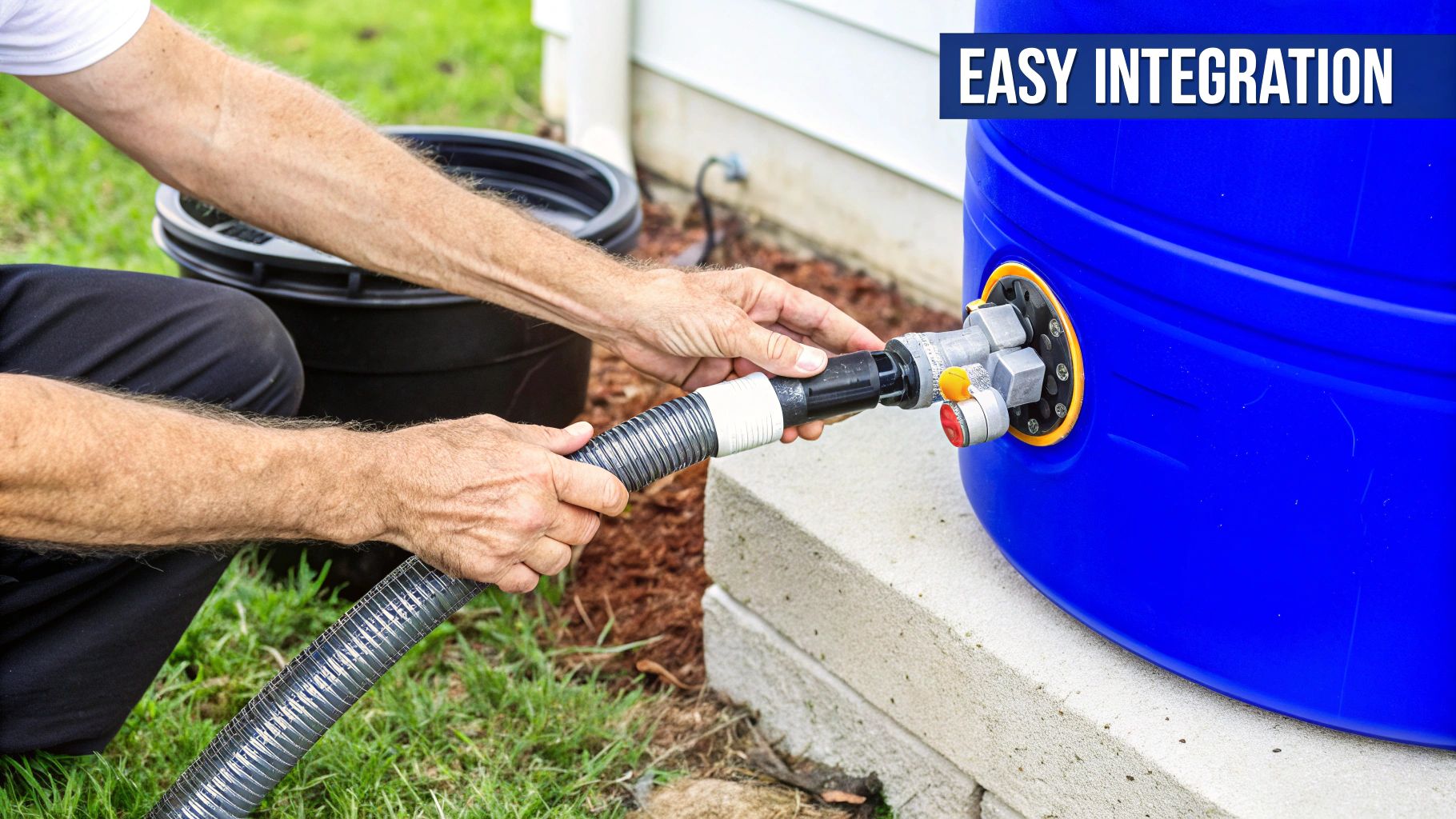
The core concept is to place a separator—The Hydrovac Attachment Tool—between your digging wand and your shop vac. Just set the attachment atop a standard collection drum, like a 55-gallon steel barrel. This barrel becomes your primary collection point for all the heavy mud and rocks that would normally destroy your vac's filter and motor. We designed this for rapid assembly right on the job site.
Step-by-Step Connection Guide
Hooking everything up is a simple three-step process.
First, connect the main hose from your digging wand to the angled inlet port on the attachment. Next, run a second hose from the straight, top-facing outlet port over to your shop vac's intake. That's it.
This configuration forces all suctioned material through the cyclonic chamber first. All heavy, wet debris drops directly into the barrel. Only air continues on to your vacuum, ensuring consistent, powerful suction from start to finish.
The goal is simple: create a sealed, airtight path from the wand tip, through the drum, and into the vacuum. This closed loop is what maintains the high CFM required for effective digging.
Best Practices for Peak Performance
To maximize the performance of your new cyclonic setup, adopt a few field-tested habits. These simple checks can prevent common issues and keep your crew operating at full capacity.
You can also dig deeper into boosting your vac's power by checking out our guide on different shop vac hose attachments and how they can impact job performance.
Here are the key points to remember:
- Ensure Tight Connections: This is non-negotiable. Air leaks are the number one killer of suction power. Before starting, double-check every hose clamp and ensure the lid of The Hydrovac Attachment Tool is perfectly sealed on the collection drum.
- Position the Drum Securely: Always place your collection barrel on flat, stable ground. This basic step prevents tipping and makes swapping a full drum safer and quicker.
- Streamline Your Drum Swaps: Don't wait until a barrel is overflowing. Keep an empty drum on standby. When one is full, you can lift the lid and attachment, place it on the fresh barrel, and be back to digging in minutes. Minimizing downtime is critical.
Keeping Your Gear Dialed In: Field Maintenance and Troubleshooting
On a demanding hydrovac site, equipment takes a beating. Even a robust tool like a cyclonic shop vac requires basic attention to maintain peak performance day after day. The good news is that this maintenance is simple.
Think of it as a pre-flight check before you begin digging. A few minutes of prevention can save hours of frustration and downtime, protecting your investment and ensuring you have full power for every dig.
The 60-Second Daily Check-Up
Before firing up the vac, run through this quick checklist to ensure a smooth, productive day.
- Check Your Gasket Seal: The seal between The Hydrovac Attachment Tool and your collection drum is critical. Wipe down the lid's gasket and the barrel rim. Any dirt or grit can compromise the seal and reduce suction.
- Walk Your Hoses: Inspect your hoses for any cracks, punctures, or worn spots that could create air leaks. Double-check that all hose clamps are snug.
- Peek for Blockages: Glance into the inlet and outlet ports of the attachment. Ensure a rock or clump of clay from the previous job isn't obstructing airflow.
When Things Go Sideways: On-Site Troubleshooting
Even with proper preparation, issues can arise. If your suction suddenly drops, don't panic. The solution is usually straightforward.
A sudden loss of suction is almost always caused by an air leak or a blockage. The cyclonic separator itself is a simple funnel—it rarely fails. The problem usually lies in the hoses or connections.
Here’s how to quickly diagnose the issue:
| Problem | What's Likely Happening | The Fix |
|---|---|---|
| Suction Suddenly Weakens | You have an air leak, likely at a hose connection or an improperly seated lid seal. | Power down the vacuum. Systematically check every connection point. Tighten clamps and ensure the lid is flush on the drum. |
| Zero Suction at All | You have a major clog. A large rock or solid clump of clay is likely jammed in the digging hose. | Disconnect the hose from the separator and inspect for the blockage. You may need to clear it manually. |
| Slurry in Your Shop Vac | Your collection drum is full. With no room for air circulation, the slurry is being pulled directly into your vacuum. | Shut it down immediately and empty the collection drum. As a rule, never let it get more than three-quarters full to maintain proper cyclonic action. |
Frequently Asked Questions
When considering adding a cyclonic separator to your hydrovac operations, practical questions arise. How does this equipment actually perform on a muddy, demanding job site?
Let's address the common questions from hydrovac and excavation crews before they put a cyclonic system to work.
Can I Use Any Shop Vac with The Hydrovac Attachment Tool?
Yes, for the most part. The Hydrovac Attachment Tool is engineered to work with most heavy-duty shop vacs that use a standard 2.5-inch hose. However, the true limiting factor is your vacuum's motor.
Think of the cyclonic separator as a superior protection system for your vac's filter and motor, but it cannot enhance a weak vacuum's inherent power. For pulling heavy, wet slurry all day—a core task in non-destructive digging—you need a high-performance shop vac with substantial CFM (cubic feet per minute) and water lift capabilities from the outset.
Will Adding a Cyclonic Separator Reduce My Suction Power?
This is the most frequent question, and the answer requires context. While technically any component added to a vacuum line causes a negligible drop in initial suction, this view misses the bigger picture of job site performance.
A standard wet/dry vac can lose over 50% of its suction power once the filter becomes clogged with slurry. A cyclonic system prevents this from happening. So, despite a minor initial dip, you maintain consistent, near-peak suction for the entire job. You get powerful, reliable performance deep into a dig, not just for the first five minutes.
How Difficult Is It to Set Up and Empty in the Field?
The Hydrovac Attachment Tool was designed specifically for field use, making setup quick and intuitive. It snaps directly onto a common collection drum, such as a 55-gallon steel barrel.
From there, it's just two connections:
- Connect your digging hose to the angled side inlet.
- Run a second hose from the top outlet to your shop vac.
Emptying is where the efficiency gain is most obvious. Instead of handling a heavy, sloshing vacuum canister, you simply lift the lid off the barrel and manage the spoils. Your crew is back to work in minutes, avoiding a messy and time-consuming cleanup.
Ready to boost your crew's efficiency and stop destroying vacuum filters? The Hydrovac Attachment is the solution for non-stop digging power. Learn more and order yours today.