


A shop vac is one of those tools you think you know. It's for dust, wood shavings, and the occasional water spill, right? But what if I told you that with the right attachment, it could become something else entirely—a versatile powerhouse for yard care and residential digging tasks you'd normally need heavy equipment or backbreaking labor for?
These specialized add-ons, from simple nozzles to advanced digging tools, are what really unlock your wet/dry vacuum's hidden potential for everything from fence post digging to safely exposing buried pipes.
Your Shop Vac Is More Than a Cleanup Tool
Think about that wet/dry vac in your workshop. It’s got a powerful motor and serious suction. Why limit it to just cleaning? Imagine attaching a tool that lets you dig a perfect fence post hole without ever picking up a shovel or post-hole digger. Or one that lets you carefully clear away soil from around a delicate irrigation line without the risk of a misplaced shovel strike.
This is where specialized shop vac attachments are completely changing the game for homeowners, landscapers, and contractors. We're going to shift your perspective from seeing your vac as just a cleanup tool to viewing it as a core part of your toolkit for tough residential digging and yard care jobs. You can dive deeper into its many uses in our article on what shop vacs are used for.
From Cleanup to Excavation
The real magic happens when you look past the standard cleaning nozzles and find tools built for serious work. This is where the concept of mobile vacuum excavation comes in—it’s not about massive hydrovac trucks, but a mobile solution for your wet vac hose. It works by combining your vacuum's suction with a jet of water to create a safe, precise, and surprisingly powerful digging method for small-scale projects.
This technique is a lifesaver for jobs where you can't afford to make a mistake:
- Fence Post Digging: You get clean, perfectly sized holes without tearing up your lawn or accidentally hitting a utility line.
- Digging Up Pipes Without Damage: Need to find a sprinkler head or check on an electrical conduit? This lets you safely clear the soil away without any risk of damaging what's underneath.
- Clearing Clogged Drains: It can suck out heavy muck, wet leaves, and sediment from outdoor drains and culverts that a normal hose just can't handle.
The Power of a Specialized Tool
Instead of fighting against compacted soil with brute force, this method uses a controlled stream of water to break it up and turn it into a slurry. Your vacuum then immediately sucks it all away. This drastically cuts down on the physical effort and virtually eliminates the muddy mess that comes with traditional digging.
A single, purpose-built attachment can solve so many common, frustrating yard care problems. It’s about transforming your standard wet/dry vac into an efficient and safe digging solution. One of the best examples is the Hydrovac Attachment Tool, which was specifically engineered for this. It essentially makes the powerful technology of hydro excavation accessible for your backyard projects, using the shop vac and wet vac hose you already own.
By the time we're done, you'll see your vacuum in a whole new light.
Standard Nozzles vs. Specialized Excavation Tools
So, why not just jam the crevice tool that came with your shop vac into the ground and call it a day? It’s a fair question. After all, it’s great at concentrating suction. The honest answer? It's like trying to dig a trench with a teaspoon.
Your standard attachments—the crevice tool, the wide floor nozzle, the little brush head—are all designed for one thing: cleaning up loose debris from a surface. They're fantastic at grabbing sawdust, drywall dust, and small spills off a concrete floor. Their entire design is about maximizing airflow over an area.
But the second they meet any real resistance, like packed-down soil or thick, mucky clay, you see where they fall short. They just don't have the muscle to break up and agitate dense material. Trying to force a standard nozzle into the earth is a fast track to frustration. It’ll clog instantly and barely scratch the surface, making it useless for any serious residential digging task.
The Right Tool for the Job
This is exactly where specialized attachments for shop vac excavation come into play. A tool actually built for digging, like the Hydrovac Attachment Tool, brings a game-changing element to the table: high-pressure water. This combination completely transforms what your vacuum is capable of.
Let's go back to that teaspoon and trench analogy. The teaspoon (your crevice tool) is perfect for scooping loose sugar off the counter, but it’s useless for breaking new ground. A shovel (the specialized digging tool) is designed from the ground up to cut through tough soil, lift heavy material, and move earth with purpose. The tool's design dictates its function.
An excavation attachment is built to do things a standard nozzle can't:
- Break Up Tough Ground: It uses a powerful, focused jet of water to liquefy compacted soil, clay, or gravel. This turns solid ground into a slurry your vacuum can easily suck up.
- Keep the Job Site Clean: By combining the water jet and the vacuum suction in one cohesive unit, you get a clean, contained system. This means way less splashback and mud slinging everywhere.
- Dig with Precision and Safety: This method lets you carefully peel back layers of soil, which is perfect for safely unearthing sensitive utilities like pipes, cables, or irrigation lines without damaging them—a common challenge in yard care.
A Growing Need for Smarter Digging
This move toward less destructive digging isn’t just a homeowner trend; it's a massive shift happening in construction and utilities. While the large-scale hydrovac industry is growing, there's an increasing demand in the wet vac hose industry for mobile, agile solutions for smaller jobs.
Here's a quick look at how standard shop vac attachments stack up against specialized hydro-excavation tools for common digging and cleanup jobs.
Comparing Shop Vac Attachment Capabilities
| Task | Standard Attachments (e.g., Crevice Tool) | Specialized Digging Attachment (e.g., Hydrovac Attachment Tool) |
|---|---|---|
| Cleaning loose sawdust | Excellent, designed for surface debris. | Overkill, but would work. |
| Fence post digging | Ineffective. Clogs instantly, won't penetrate soil. | Excellent. Liquefies soil for fast, clean removal. |
| Digging up pipes without damage | Dangerous and ineffective. High risk of damaging the pipe. | Ideal. Safely removes soil layer by layer. |
| Clearing a muddy trench | Poor. Clogs easily with thick, wet material. | Excellent. Turns thick mud into a manageable slurry. |
As you can see, for any task that involves breaking new ground, a standard nozzle just isn't cut out for the work.
This demand for smarter tools is reflected in the market. The global Hydrovac Trucks market is expected to jump from USD 0.59 billion in 2026 to USD 0.88 billion by 2035. While the Hydrovac Attachment Tool is NOT for these trucks, this growth shows how much value the industry places on tools that dig safely and cleanly. Attachments are a huge part of this, allowing standard 2.5-inch wet vac hoses to connect with high-pressure systems, which slashes setup time and cuts down on the mess. You can dive deeper into these trends in the full industry report.
This is the exact principle that makes tools like the Hydrovac Attachment Tool so valuable for homeowners and small contractors. It brings that industrial-level precision down to a portable, accessible scale.
Simply put, standard nozzles are passive—they only pick up what’s already loose. Specialized excavation attachments are active—they aggressively break material down and collect it in one clean motion. That’s the fundamental difference between surface cleaning and actual residential digging.
The Hydrovac Attachment Tool isn't just a nozzle; it’s an entire system engineered for the tough demands of excavation. It marries the power of your pressure washer with the suction of your wet vac, letting you dig with water safely and efficiently. We break down the mechanics in our guide on the function of a water jetting nozzle. This purpose-built design is what makes digging fence post holes or exposing buried sprinkler lines faster, safer, and cleaner than you ever thought possible.
How the Hydrovac Attachment Gets the Job Done
The secret to mobile hydro excavation isn't brute force; it's smart engineering. The Hydrovac Attachment is a perfect example of this. This isn't just another nozzle you pop on the end of a wet vac hose. It's a patented system designed from the ground up to merge two separate tools—your pressure washer and your wet vac—into a single, unified digging machine.
The whole idea is to create a controlled, highly focused work zone right at the tip of the tool. It achieves this with a unique three-part construction. Each piece has a specific job, and together, they solve the biggest headaches of small-scale residential digging: the mess, the lack of precision, and the constant risk of hitting something important underground.
Think about it: when you blast compacted soil with a pressure washer, you get a muddy, uncontrolled spray. It goes everywhere. The Hydrovac Attachment Tool channels all that energy, directing the water jet and the resulting slurry straight into the vacuum's suction stream. This practically eliminates the messy splashback that makes digging with just a wand and a hose so miserable.
The Three-Part System Explained
The design behind this tool is brilliantly simple. It’s made of three core components that work together, turning a messy job into a clean, precise operation. Once you see how they connect, you'll understand why it’s so effective for everything from professional yard care to DIY residential digging.
-
The Base Connector: This is the anchor of the whole system. It connects securely to the end of a standard 2.5-inch wet vac hose, giving the other parts a solid foundation. Its main job is to channel all that powerful vacuum suction directly to the point of digging.
-
The Hose Clamp: This rugged piece holds your pressure washer wand tight, lining it up perfectly with the vacuum intake. This alignment is the key; it makes sure the high-pressure water breaks up soil exactly where the suction is strongest. The debris gets sucked up the instant it's loosened.
-
The Nozzle Cap: This is the final piece of the puzzle. The nozzle cap slips over the tip of the pressure washer, creating a self-contained suction zone. This is what stops water and mud from spraying everywhere. It keeps your work area clean and, more importantly, gives you a clear view of what you're digging around—a must-have when working near delicate pipes or cables.
This concept map shows the fundamental difference between standard nozzles built for surface cleaning and specialized tools designed for digging deep.
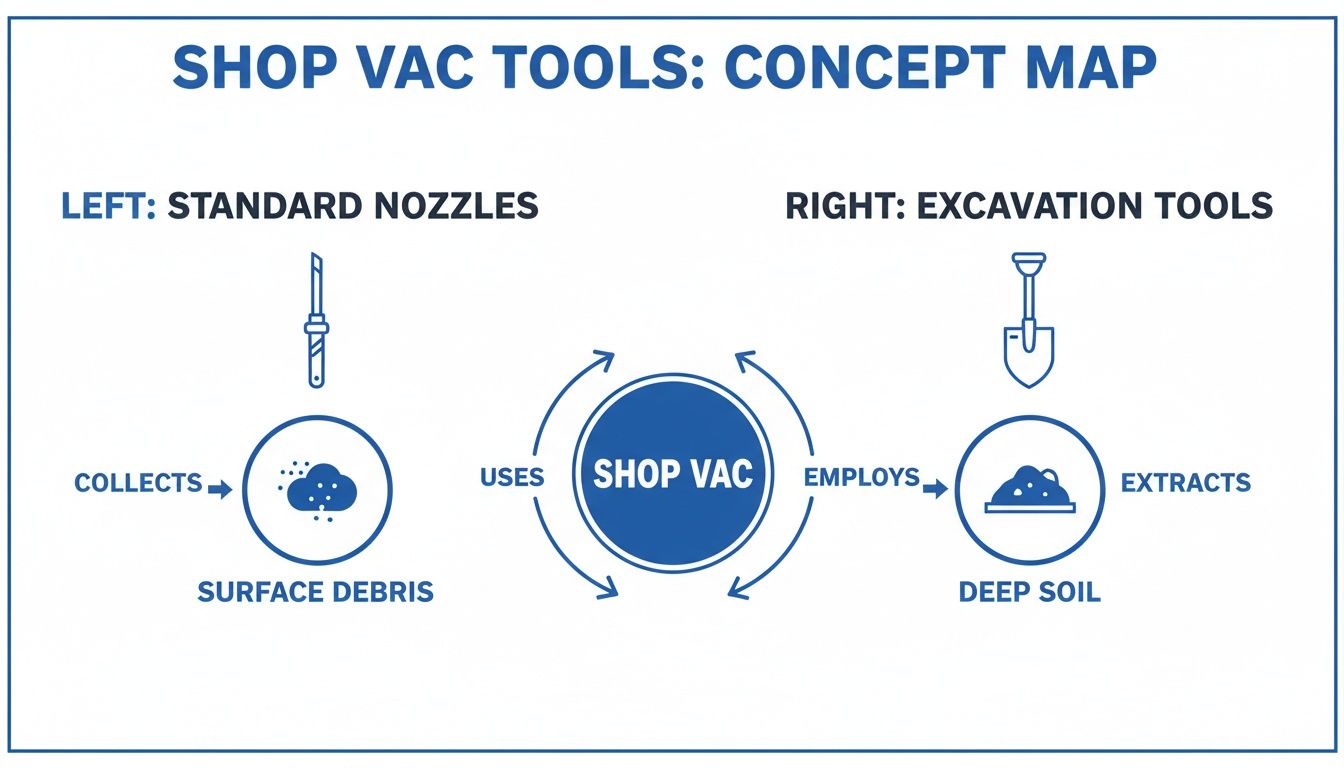
As you can see, your typical shop-vac attachments are great for surface debris. But for getting down into compacted soil for jobs like fence post digging, you need something engineered specifically for the task.
Built for the Job Site and the Backyard
Durability was clearly a top priority in its design. The Hydrovac Attachment Tool is made from an industrial-grade polymer—a tough material chosen specifically to handle the harsh life of a job site. It can take high-pressure water, abrasive sand and gravel, and the general abuse that comes with daily use without cracking or wearing down.
But for all its toughness, the attachment is surprisingly lightweight. A single person can easily handle it for hours without getting worn out. This is a huge deal, whether you're a contractor digging trenches all day or a homeowner tackling a weekend project like setting fence posts. This balance of strength and user-friendliness makes it a genuinely practical tool for almost any digging job.
The real magic of this tool is its containment. By focusing the water jet and vacuum suction into one compact unit, it transforms a potentially messy, high-risk job like digging up pipes without damage into a controlled, surgical excavation.
Getting it set up is just as simple, designed to get you working in minutes without needing a toolbox. You just attach the base, clamp the wand, and secure the nozzle cap. This quick assembly means less standing around and more time actually getting the job done.
Real-World Uses for Vacuum Excavation at Home
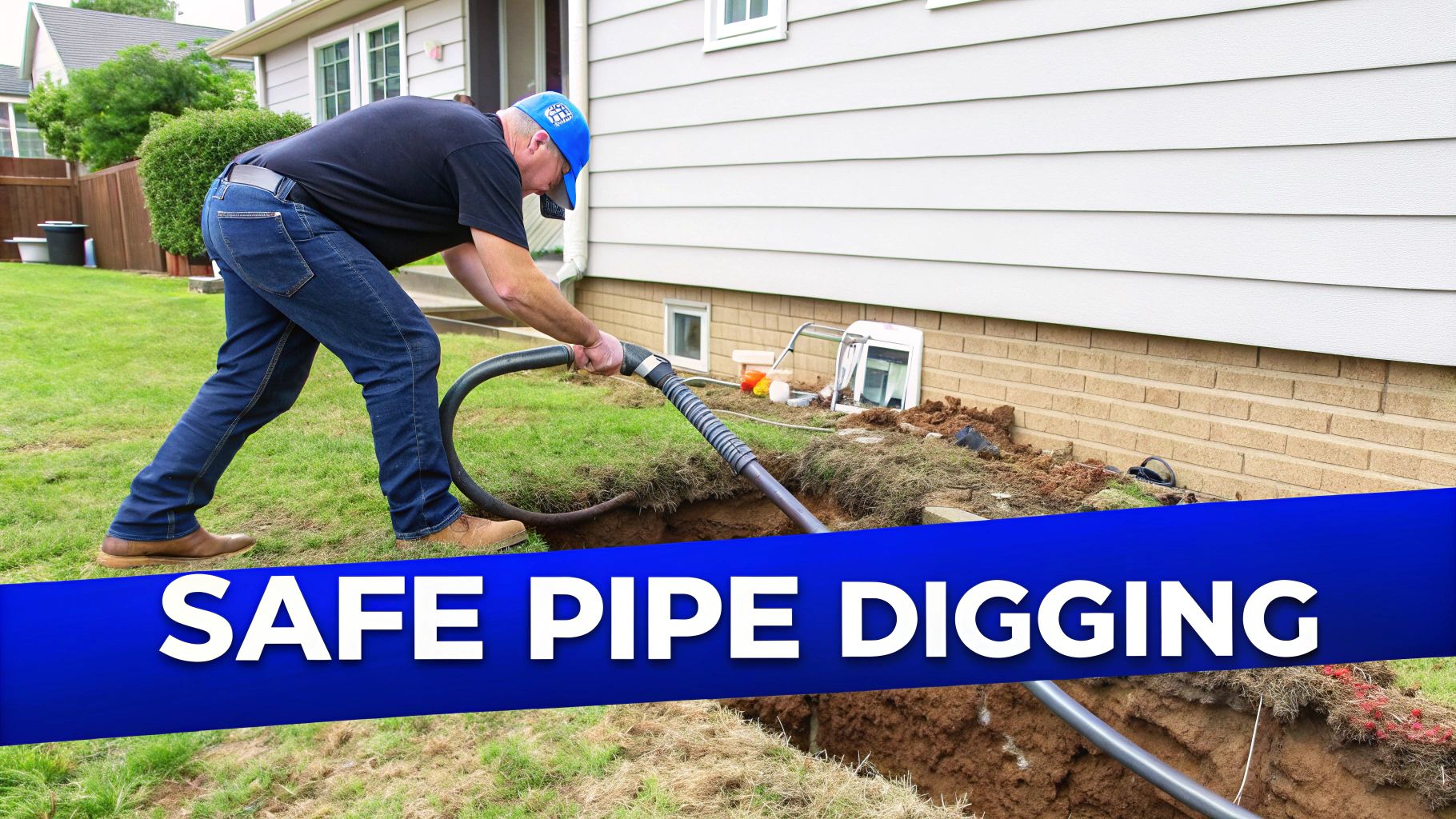
Knowing how a tool works is one thing. Seeing it solve a real, frustrating problem is something else entirely. The true power of mobile vacuum excavation really clicks when you see it applied to the common headaches that homeowners and contractors run into with yard work and residential digging.
It's all about turning risky, messy jobs into controlled, efficient operations.
Let’s think about a classic weekend project that quickly spirals out of control: fence post digging. You need to replace a wobbly fence post, but you know your sprinkler system’s main line is buried somewhere in that exact spot. Taking a sharp shovel or a heavy post-hole digger to that area is a huge gamble. One wrong move and you’ve just created a much bigger, wetter, and more expensive problem.
This is where an attachment built for precision changes the game.
Safely Digging Around Buried Utilities
Instead of just swinging a shovel and hoping for the best, you can connect the Hydrovac Attachment Tool to your shop vac and pressure washer. The tool uses a combination of water and suction to gently liquefy the soil, layer by layer. You aren't cutting or chopping; you're carefully washing the dirt away and vacuuming it up instantly.
This method lets you slowly expose the sprinkler line without ever making direct, forceful contact with it. You can dig a perfect hole for the new fence post right beside the pipe, knowing its exact location and leaving it completely untouched. What was a high-stress guessing game becomes a methodical, safe procedure.
The core benefit here is risk reduction. For jobs like digging up pipes without damage, you’re completely removing the element of brute force. The soil is turned into a slurry and whisked away, leaving delicate utilities perfectly intact and visible.
This kind of precision is invaluable for more than just sprinkler lines. It works just as well for any buried utility, like landscape lighting wires, drainage pipes, or shallow conduits. This makes it an essential tool for both professional yard care and ambitious DIY projects.
Tackling Heavy Sediment and Clogs
Now, let's picture a different scenario. A contractor gets a call about a crucial drainage culvert that's completely blocked with a thick mix of mud, leaves, and heavy sediment. This wet, compacted mess has water backing up all over the lawn. The old-school approach would mean hours of backbreaking manual labor with shovels and buckets.
This is a job practically tailor-made for a powerful vacuum excavation tool. The high-pressure water jet breaks apart the dense, heavy sludge that would instantly choke a standard shop vac nozzle. As the debris is loosened, the vacuum’s powerful suction pulls the heavy slurry out of the culvert and safely into the tank.
This process gives you a few key advantages:
- Speed: It clears the blockage in a fraction of the time it would take to do by hand.
- Cleanliness: The mess is contained inside the wet vac hose and tank, not spread all over the client's property.
- Effectiveness: It removes the thick, heavy sediment that a regular hose or drain snake simply can't touch.
From prepping flower beds to installing new hardscaping, specialized attachments for shop vac can simplify tricky tasks, much like those you see in professional backyard makeover projects.
A Growing Market for Efficient Digging
These practical uses are driving some serious growth in related industries. While massive vacuum trucks handle huge municipal projects, innovative attachments for shop vacs are bringing that same efficiency to a much wider audience. The broader vacuum truck market is projected to jump from USD 1.97 billion in 2024 to USD 3.48 billion by 2032.
This trend shows a strong demand for vacuum-based solutions in excavation and industrial cleaning, with North America leading the way.
This industry growth directly supports tools like the Hydrovac Attachment Tool. It delivers the controlled suction that landscapers and construction pros need for residential digging, without requiring a massive truck. It’s a smarter, safer, and dramatically faster solution for the real problems people face every day.
Choosing the Right Attachments for Your Shop Vac
Let's be honest: not all attachments are created equal. When you’re moving past simple workshop cleanup and into real-deal residential digging, the difference between a flimsy plastic nozzle and a purpose-built tool becomes crystal clear, and fast. Choosing the right attachments for your shop vac isn't just about the price—it's about finding a tool that will actually perform, keep you safe, and last more than one job.
Think of this as a no-nonsense buyer's guide for any attachment meant for digging. You need a checklist of non-negotiable features to make sure you’re getting an asset, not a liability. It really all comes down to three things: what it’s made of, how it’s designed, and if it’ll actually fit your gear.
Material Durability and Design
First things first, look at the material. Most of the standard nozzles that come with a shop vac are made from thin, brittle plastic. They’re fine for sawdust, but they’ll shatter the second they meet a stubborn rock or abrasive soil. For digging, you need something that can take a beating. Look for tools made from industrial-grade polymer or other tough composites designed to handle high-pressure water and the constant slam of gravel. This is what ensures your investment doesn't end up in the trash after one tough afternoon.
Next up is the design itself. Does the attachment actually help you control the mess, or does it just make things worse? A well-designed tool, like the Hydrovac Attachment Tool, is built to create a contained suction zone. It cleverly integrates the water jet and the vacuum stream, which is the secret to preventing that muddy splashback that gets everywhere. This keeps your work area clean, and more importantly, lets you see exactly what you’re digging around—a critical safety feature when you're trying to expose underground pipes or cables without damaging them.
The real mark of an effective digging attachment is its ability to make a chaotic job controlled and predictable. It should feel like a surgical instrument, not a blunt object.
Hose Compatibility and System Balance
Compatibility is another huge piece of the puzzle. The industry standard for any serious wet/dry vac is the 2.5-inch wet vac hose. Any digging attachment worth its salt should be designed to fit this size snugly. A tight seal is absolutely essential for maximizing suction power. If you have an ill-fitting attachment, it will leak air and slash your vacuum's performance right when you need it most. For a much deeper look into this, check out our guide on shop vac hoses and fittings.
Finally, you have to think about the entire system. A good attachment works with your shop vac and pressure washer, not against them. This means the tool must be tough enough to handle the PSI from your pressure washer while still allowing enough airflow for your vacuum's motor to breathe and work efficiently. When you get this balance right, you get peak performance without burning out your equipment. To really get the most out of your setup, having access to a large assortment of brand name power tools makes a world of difference.
The rise of these specialized tools isn't happening in a vacuum. It mirrors a major shift in the industry. As hydro-excavation has become more common, the demand for smaller, more adaptable solutions has skyrocketed. Between 2021 and 2025, North America's hydrovac truck industry grew by a massive 84.56%, which clearly points to a need for tools that bring that same power to smaller jobs. By 2033, the entire hydrovac market is expected to hit USD 880.94 million. This growth is directly linked to tools like the Hydrovac Attachment Tool, which give contractors precision for tasks like clearing sediment or exposing irrigation lines.
If you keep these key points in mind—durability, smart design, and proper compatibility—you can confidently pick an attachment that will turn your shop vac into a serious excavation machine.
Your Questions Answered
Got questions about using a specialized shop vac attachment for digging? You're not alone. Let's tackle some of the most common ones that come up when people first hear about this handy tool.
Will This Hydrovac Attachment Fit My Shop Vac?
Most likely, yes. The Hydrovac Attachment Tool is built to connect to the 2.5-inch hose, which is pretty much the standard for heavy-duty wet/dry vacs. If you're unsure, just measure the diameter of your vacuum hose.
While it'll physically connect to any compatible vacuum, you'll get the best performance from a powerful wet/dry vac. You need one with some serious suction and a tank that can handle the abuse of sucking up wet, heavy stuff like mud, slurry, and gravel without flinching.
Do I Actually Need a Pressure Washer, Too?
Absolutely. For any kind of real residential digging, the pressure washer is a must. Think of it this way: the water jet from the pressure washer is what does the actual "digging"—it blasts apart compacted soil and turns it into a liquid slurry.
Your shop vac's job is to immediately suck that slurry away. The two work as a team to give you precise, low-mess excavation for jobs like fence post digging or carefully exposing buried pipes. Without the pressure washer, your vac just won't be able to break through the ground on its own.
Why Can't I Just Juggle the Hose and Pressure Washer Separately?
The magic of the Hydrovac Attachment Tool is that it combines both tools into one unified, controlled unit. This creates a tight, focused suction zone right where the water is blasting, capturing slurry the instant it’s created. The result? Almost no splashback and a much cleaner job site.
Trying to handle a pressure washer wand in one hand and a vacuum hose in the other is a recipe for a muddy disaster. You'll spend more time fighting the tools than digging. More importantly, it kicks up so much muck that you can't see what you're doing, which is a huge risk when you're working around underground utilities.
Is This a Tool for Big Hydrovac Trucks?
Nope, and that's the whole point. This attachment is designed to give you the power of hydro excavation without needing the massive truck. It's a clever way to bring that same technology down to a portable, affordable scale.
It simply connects to the standard shop vac and pressure washer you probably already own. This makes it a perfect fit for landscapers, contractors, and even serious DIYers who need to dig precisely without dropping thousands on specialized equipment. It’s a great example of how the right attachments for shop vac can completely transform your existing gear into a powerful solution for tough yard care and residential digging jobs.
Ready to turn your shop vac into a precision digging machine? The Hydrovac Attachment is your answer for safer, cleaner, and faster excavation. Grab yours today and see how it changes the way you tackle those tough yard projects.
Find out more at https://hydrovacattm.com.