


When you're tackling projects like setting fence posts or accessing buried pipes, the equipment you choose makes all the difference. A 2 1/2 inch vacuum hose is the industry standard for most professional-grade wet/dry vacuums, offering the perfect balance between powerful suction and the capacity to handle significant debris. In the yard care and residential digging sectors, it has become a staple for its ability to clear dirt, rocks, and slurry without constant clogging, while still being nimble enough for precise, detailed work.
Why a 2 1/2 Inch Vacuum Hose Is a Game Changer
Ever tried to dig a clean hole for a fence post and ended up with a giant, messy crater in your pristine lawn? Or maybe you've felt that jolt of fear when your shovel gets a little too close to a buried utility line. These common headaches show just how clumsy traditional digging can be—it’s like trying to perform surgery with a sledgehammer.
This is exactly where a 2 1/2 inch vacuum hose stops being just a cleanup tool and becomes a precision instrument for yard care and residential projects.
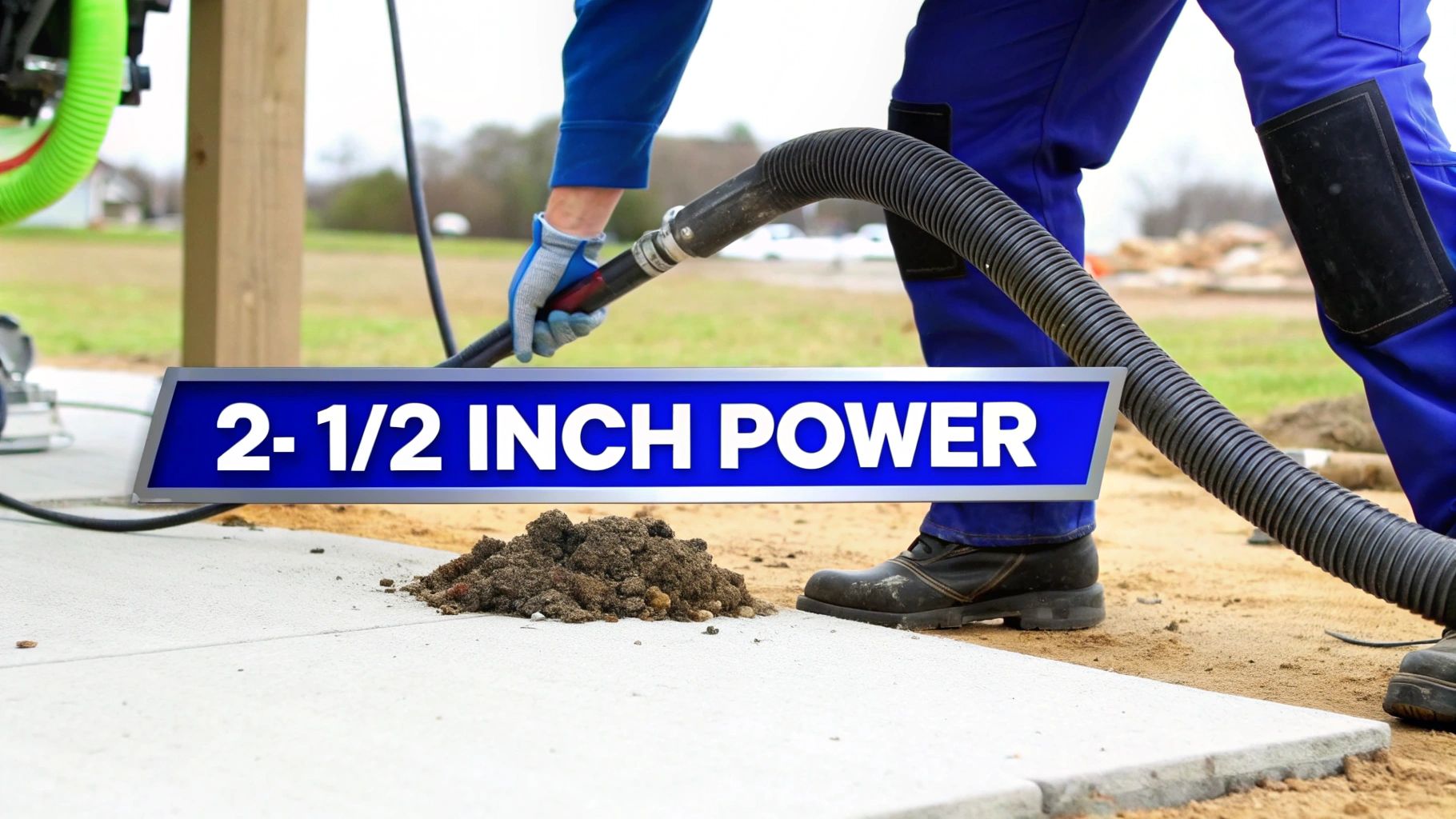
The real magic happens when you pair it with the right gear. By connecting this standard hose to a powerful wet vac and a specialized tool like the Hydrovac Attachment, you essentially create a portable, mobile hydro-excavation system. It is important to note this is not for large hydrovac trucks, but a mobile solution for smaller jobs. This setup lets you use a power washer to turn soil into a liquid slurry while the vacuum sucks it all away in one clean, controlled motion.
The Professional Standard for Efficiency
There's a reason pros stick with the 2.5-inch standard. The vacuum hose market in North America hit $3 billion back in 2019, and hoses for wet/dry vacuums made up over 60% of that demand worldwide. On the job, crews report that using standardized 2.5-inch hoses cuts down on equipment-related delays by 25-30% compared to using mismatched sizes. Everything just fits and works together, from power washer wands to wet vac intakes. You can learn more from these vacuum hose market trend reports.
This kind of efficiency is a lifesaver for jobs that demand both muscle and finesse. Instead of risking damage with a shovel or an auger, this system lets you:
- Dig perfectly clean fence post holes without tearing up the surrounding grass.
- Safely uncover buried pipes or electrical lines without the fear of a costly and dangerous strike.
- Clear out debris from tight spots where a shovel or rake could never fit.
By combining water and suction through a tough 2 1/2 inch vacuum hose, you can transform messy, high-risk jobs into clean, efficient, and controlled projects.
This quick table shows just how this system solves some of the most common digging frustrations.
How the 2 1/2 Inch Hose Solves Common Digging Problems
| Common Challenge | The 2 1/2 Inch Hose Solution |
|---|---|
| Damaging Lawns and Landscapes | Precision digging removes only the soil you need, leaving the surrounding turf and garden beds completely untouched. |
| Risk of Hitting Utility Lines | Water jet loosens soil safely around sensitive pipes and cables, eliminating the risk of a dangerous shovel or auger strike. |
| Creating a Messy Pile of Dirt | The vacuum sucks the soil slurry directly into the wet/dry vac tank, leaving no mess behind for you to clean up later. |
| Digging in Tight or Awkward Spaces | The flexible hose and wand can reach into narrow trenches, under decks, or around obstacles where traditional tools can't go. |
| Slow, Labor-Intensive Digging | Hydro-excavation is significantly faster than manual digging, especially in compacted or rocky soil. |
Ultimately, it’s about working smarter, not harder. This approach gives you more control and better results with a lot less effort and risk.
Understanding What Makes a Quality Hose
At first glance, a 2 1/2 inch vacuum hose might seem like just a basic tube. But the difference between a cheap, flimsy hose and one built for professional work is night and day.
Think of it like this: a low-quality hose is like trying to drink a thick milkshake through a soggy paper straw. It collapses, kinks, and cuts off the flow right when you need it most. A great hose, on the other hand, is a reinforced pipeline engineered for the toughest jobs. The real magic is in its construction, which perfectly balances raw strength with everyday flexibility. This is what lets it handle the intense suction of a powerful wet vac without buckling under pressure, so you can focus on the real work.
Key Materials and Construction
The best hoses are built from materials that can take a beating. You'll typically find them made from industrial-grade polymers or heavy-duty PVC, which are fantastic at resisting abrasion, crushing, and punctures from sharp debris. That kind of durability is non-negotiable for jobs like yard care and residential digging, where a hose gets dragged over concrete, rocks, and rough dirt all day long.
What truly separates a premium hose from the rest, though, is its internal reinforcement. The gold standard is a wire helix—a tough, spiral-shaped wire embedded right into the hose walls. This helix acts like a skeleton, keeping the hose from kinking or flattening, which is the number one killer of suction power.
A smooth interior is just as critical. It ensures that dirt, twigs, and wet slurry glide right through without snagging and creating clogs. This is especially important when you’re running a tool like the Hydrovac Attachment, where consistent, uninterrupted debris flow is key to digging effectively.
To put it in perspective, think about how other industries regulate critical components where failure is simply not an option. You can see parallels in the strict requirements for things like DOT Air Brake Hose Regulations. The same mindset of reliability and safety applies here.
What to Look for on the Spec Sheet
When you're ready to buy a 2 1/2 inch vacuum hose, don't just grab the cheapest one on the shelf. Paying attention to a few key specifications will ensure you get a tool that actually lasts and performs.
Here’s what to check:
- Crush-Proof Rating: This tells you if the hose can survive being stepped on or even run over without losing its shape. A high rating is a must-have for any busy job site.
- Wall Thickness: Generally, a thicker wall means more durability. It helps the hose hold its structure, which leads to better, more consistent airflow and a longer lifespan.
- Flexibility: Even a tough, reinforced hose has to be maneuverable. A quality hose will bend around corners and obstacles easily without kinking up. If you want to dive deeper, you can learn more about the importance of flexible vacuum hoses in our detailed guide.
By keeping these features in mind, you can confidently pick a hose that will perform reliably, maintain powerful suction, and stand up to whatever precision digging or cleanup project you throw at it.
Unlocking Your Hose's Potential with the Right Attachments
A powerful 2 1/2-inch vacuum hose is a great start, but the real magic happens when you pair it with the right attachments. Think of standardized fittings as the unsung heroes of your setup. They create that perfect, leak-free connection between your hose and your tools, which is absolutely critical for maintaining suction. Without that airtight seal, you're just leaving power on the table.
This idea of a perfectly sealed system brings us to what I consider the centerpiece of a modern digging rig: the Hydrovac Attachment. This clever tool is the bridge that connects your high-pressure power washer to your heavy-duty wet vac hose. It effectively turns two common pieces of equipment into a single, specialized hydro-excavation unit for small-scale residential work.
The Hydrovac Attachment: A Surgical Tool for Digging
The Hydrovac Attachment is specifically designed to create a contained, super-efficient work zone right at the end of your hose. It lets you hook your power washer wand directly to the mouth of the vacuum hose. This means you can blast soil with a precise jet of water and immediately suck up the slurry it creates.
It’s a massive improvement over the old, clumsy method where one person sprays while another tries to chase the muddy runoff with a separate hose. We've all been there, and it's a mess.
This diagram breaks down what goes into making a hose that can actually stand up to this kind of work.
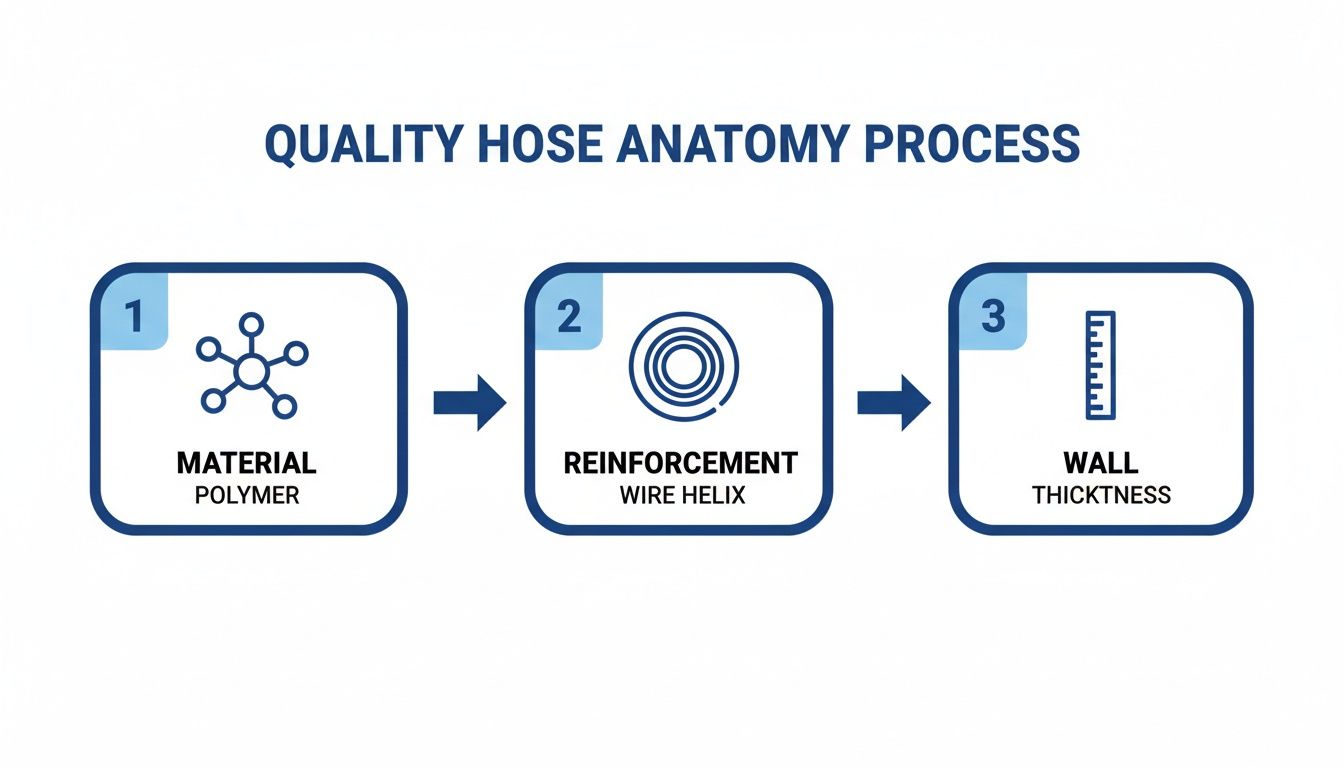
As you can see, it's the combination of the right material, strong internal reinforcement, and proper wall thickness that gives you a hose that won't kink and kill your airflow.
By containing the entire process at the point of contact, the attachment gets rid of messy overspray and lets you see what you're doing. It turns a chaotic job into something clean and almost surgical. If you've ever needed to dig a fence post hole without tearing up a client's lawn or carefully expose a buried pipe, you know this kind of control isn't just a luxury—it's essential. You can learn more about how this specific vacuum hose attachment can completely change your digging projects.
This controlled approach turns hydro-excavation from a large-scale industrial process into a technique accessible to any contractor. It's about bringing precision and safety to everyday tasks like locating utilities or installing irrigation systems.
The evolution of the 2 1/2-inch vacuum hose is directly linked to the rise of non-destructive digging methods. In fact, wet/dry hoses now make up about 40% of the heavy-duty market for jobs like potholing. After new safety regulations came into play around 2015, U.S. hydrovac projects jumped by 35%. This cemented the 2.5-inch hose as the go-to size for 70% of municipal maintenance crews because it hits that sweet spot between power and maneuverability.
This shift points to a bigger trend in the industry: we're all moving toward safer, smarter ways to get work done, especially in residential and yard care settings. The days of risky manual digging are numbered, and tools like the Hydrovac Attachment are leading the charge.
Real-World Scenarios for Precision Digging
Okay, let's talk about where the rubber meets the road—or in this case, where the hose meets the dirt. It's one thing to understand the specs of a 2 1 2 inch vacuum hose, but it’s another to see how it changes the game out in the real world. For anyone in landscaping, plumbing, or utility work, you know that digging is rarely a simple task. It’s often messy, slow, and sometimes just plain risky.
Landscaping and Fencing Without the Mess
Think about installing a new fence line across a beautiful, established lawn. The old-school way involves grabbing a gas-powered auger. It chews up the turf, leaving behind ugly, dead circles of grass and a mountain of dirt next to every hole. You spend half your time on cleanup, and the client is left with a scarred-up yard.
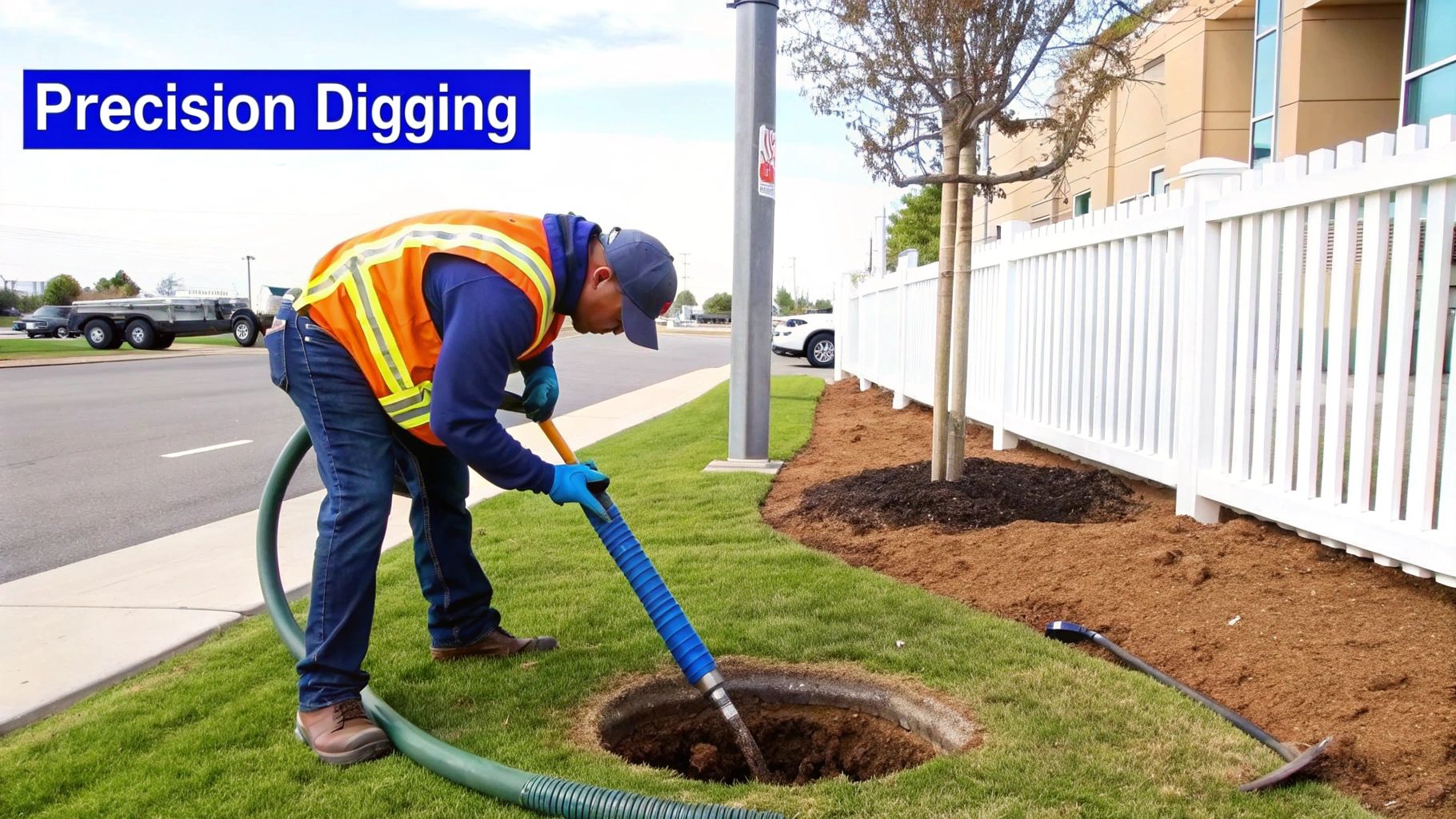
Now, imagine doing it differently. By connecting the Hydrovac Attachment to your wet vac, you can carve out perfect, clean holes exactly where you need them. The water jet turns the soil into a slurry, and the vacuum instantly sucks it away into the tank. There’s no collateral damage to the lawn and absolutely zero piles of dirt to shovel later. The job gets done faster, it looks a hundred times cleaner, and the client is thrilled.
Safely Exposing Buried Pipes and Utilities
Here’s another classic headache: a plumber has to find a leaking irrigation line. It’s buried somewhere near the house's foundation, tangled up with fragile sprinkler heads. Taking a shovel to that area is a gamble. One bad move and you’ve cracked the pipe you were trying to fix or snapped a sprinkler head, turning a simple repair into a much bigger, more expensive problem.
This is exactly where the Hydrovac Attachment earns its keep. The plumber can use the pressurized water to gently wash away the soil, safely exposing the whole network of pipes without a single scratch. This non-destructive digging gives you perfect visibility, making it easy to spot the leak and make a precision repair.
The numbers from the field really tell the story. Since 2020, using hydro-excavation in U.S. utility maintenance has prevented 45% more damages compared to traditional digging. High-performance 2.5-inch hoses now make up 82.3% of the North American market, boosting productivity by up to 35% for some crews. That’s because they can move debris at 500-800 CFM and, when paired with a power washer, cut down on messy splashback by 60%. You can dig deeper into the global hoses market to see these trends.
The core benefit is risk reduction. When you're digging near buried electrical lines or gas pipes, a shovel strike isn't just an inconvenience; it's a serious safety hazard. Hydro-excavation completely removes that danger.
To see just how big the difference is, let's compare these methods side-by-side for a few common jobs.
Method Comparison for Common Digging Tasks
| Task | Traditional Method (Shovel or Auger) | Hydrovac Attachment Method |
|---|---|---|
| Fence Post Installation | Creates messy craters, tears up turf, and leaves large dirt piles. High effort. | Digs clean, precise holes with zero damage to the surrounding lawn. No mess. |
| Exposing Irrigation Lines | High risk of striking and damaging pipes, sprinkler heads, or other components. | Gently washes away soil, safely exposing lines without any risk of impact damage. |
| Locating Buried Cables | Extremely dangerous; a shovel strike can cause outages or severe injury. | Non-destructive method that safely uncovers cables, ensuring crew safety. |
The advantages become pretty obvious when you lay it all out like that.
Whether you're a homeowner tackling a weekend project or a professional doing this every day, the takeaway is clear. Pairing a solid 2 1 2 inch vacuum hose with a tool like the Hydrovac Attachment isn't just a minor improvement—it’s a fundamental shift toward working smarter, safer, and cleaner.
Keeping Your Gear in Top Shape
Getting your hands on a quality 2 1/2 inch vacuum hose and a powerful wet vac is just the start. The real secret to staying efficient on the job is knowing how to choose the right gear and keep it running smoothly. A little bit of foresight and some simple maintenance can save you a world of frustration, downtime, and replacement costs.
When you're picking out a hose, it's about finding that sweet spot between several factors. It might seem like a great idea to get the longest hose you can find for maximum reach, but remember: suction power drops the further it has to travel.
For most jobs around the house or in the yard, a hose between 10 to 20 feet is usually perfect. This gives you enough length to dig fence post holes or clear out a trench without having to drag the vacuum around every few seconds, all while keeping the suction strong.
Finding the Right Hose for the Job
The material of your hose is just as critical as its length. You really want to match the hose to the kind of work you'll be doing.
- For Flexibility: If you're working in tight spaces or around delicate landscaping, a hose made from flexible PVC or a similar polymer is your best bet. They're lightweight and bend easily around corners and obstacles.
- For Toughness: On a construction site or anywhere with sharp rocks and rough ground, you need a crush-proof hose, usually one with a reinforced wire helix. This design is built to be stepped on and dragged around without kinking up or collapsing.
There's a lot that goes into picking the perfect hose. If you want to dive deeper, we break it all down in our guide on shop vac hoses and fittings.
Simple Care for Powerful Performance
Once you've got your setup, a few good habits will make all the difference in its lifespan and power. Taking care of your equipment is the key to avoiding the common problems that pop up, especially when you're sucking up wet, heavy gunk from hydro-excavation.
A well-maintained hose is a reliable tool. Simple checks before and after each job can prevent 90% of common suction problems, saving you hours of troubleshooting and keeping your projects on schedule.
Before you start a job, give your hose a quick once-over. Look for any cracks, holes, or serious wear, especially around the cuffs where it connects to the vacuum and your tools.
After you're done for the day—particularly when using something like the Hydrovac Attachment—flush the hose out with clean water. This simple step stops mud and slurry from drying into a rock-hard clog inside. When you put it away, coil the hose in big, loose loops. This prevents sharp bends from becoming permanent kinks that choke off your airflow.
And don't forget about the vacuum itself! The single biggest killer of suction power is a clogged filter. Make it a habit to clean or replace your vacuum’s filter regularly. This ensures the motor can breathe easy and deliver the force your 2 1/2 inch vacuum hose needs to do its job right.
Ready to Dig Smarter?
So, where do we go from here? We've walked through everything from how these hoses are built to what they can do out in the field. The big takeaway is this: the 2 1/2-inch vacuum hose is a pro-grade workhorse for a reason, but its full potential for detailed digging really shines when you connect it to the right equipment.
This kind of precision work used to be reserved for huge, expensive industrial hydrovac trucks. Not anymore. Now, any contractor with a good wet vac can get in on the action.
When you hook up your shop vac to the Hydrovac Attachment, you're doing more than just adding another piece of gear to the truck. You’re adopting a smarter, cleaner, and much safer way to work—whether you're digging holes for fence posts or carefully uncovering buried utility lines.
It's a move from using brute force to surgical precision. This simple setup elevates the quality of your work, drastically cuts down on cleanup time, and will fundamentally change your approach to just about any digging job you face.
Got Questions? We’ve Got Answers
Stepping into any new method of working is bound to bring up a few questions. Let's walk through some of the most common ones we hear about the 2 1/2 inch vacuum hose and the Hydrovac Attachment, so you can start your next digging project with total confidence.
Can I Just Use Any 2 1/2 Inch Hose I Have?
While the attachment is built to connect with any standard 2 1/2 inch hose cuff, the real-world performance you get is all about the hose itself. For the best results, you absolutely want to pair it with a professional-grade, crush-resistant hose.
The secret is a smooth interior. Hoses with those ribbed or corrugated insides are notorious for snagging small rocks and debris, which can quickly lead to a frustrating clog and kill your suction. A tough wet/dry vac hose designed for outdoor work is your best bet for a smooth, powerful workflow.
Does a Longer Hose Kill Suction Power?
It does, but it's manageable. Suction power will naturally drop a bit as the hose gets longer—that's just physics. The vacuum's motor simply has to work harder to move air and material over a greater distance.
For most backyard projects and landscaping tasks, a 10 to 20-foot hose strikes the perfect balance between reach and power. If you find yourself needing to go longer, just make sure your wet vac has a strong CFM (Cubic Feet per Minute) rating to make up for the distance and keep the suction effective.
Is This Really a Safe Way to Dig Around Utilities?
Absolutely. In fact, that’s one of the main reasons this system exists. Using pressurized water to gently loosen soil is a non-destructive digging method, which is precisely why professional crews rely on it to locate sensitive underground lines.
Think about it: a sharp shovel or a powerful auger can slice right through a pipe or cable in an instant. This hydro-excavation technique lets you carefully wash away the soil to expose utilities, completely removing the risk of causing expensive—and dangerous—damage. It takes the guesswork out of the equation.
What Kind of Wet Vac Do I Need for This?
To get the best performance from your 2 1/2 inch vacuum hose and the Hydrovac Attachment, you need a wet/dry vac with some serious muscle. We recommend looking for a model with at least 5 peak horsepower (HP) and a high CFM rating.
A big tank is also your best friend here. Since you're vacuuming a slurry of mud and water, a tank capacity of 12 gallons or more means you won't have to stop and empty it constantly. And, of course, always double-check that your vacuum is rated for wet pickups.
Ready to change the way you dig, bringing a new level of precision and safety to your projects? The Hydrovac Attachment is the missing piece that unlocks your equipment’s true potential.
Discover how the Hydrovac Attachment can revolutionize your work at hydrovacattm.com