


Flexible vacuum hoses are the unsung heroes of any hydrovac operation. They’re more than just a tube; they're the direct connection between your truck’s raw power and the excavation site itself. In the hydrovac industry, a top-notch, durable hose isn’t just an expense—it's one of the smartest investments an operator can make, directly impacting job site efficiency, safety, and ultimately, your bottom line.
The Role of Flexible Vacuum Hoses in Modern Excavation
In the world of hydrovac, everything comes down to precision, speed, and safety. At the center of it all is the flexible vacuum hose. It might seem like a simple component, but it carries a massive responsibility. Think of it as the artery connecting the heart of the operation—the hydrovac truck—to the delicate surgical work of exposing buried utilities. If that artery fails, the entire job grinds to a halt, putting schedules and safety at risk.
The quality of that connection dictates how well the whole system performs. A cheap hose that kinks, collapses under vacuum pressure, or rips open after a few jobs creates a frustrating bottleneck. It wastes fuel, man-hours, and money. On the other hand, a solid, well-built hose gives you consistent suction and smooth material flow, letting your hydrovac crew work with confidence and speed. That's why choosing the right flexible vacuum hoses is a strategic move, not just another item on a shopping list.
The Foundation of Job Site Performance
Every single hydrovac task, whether it's potholing for a utility locate or digging a long trench, depends on that hose to perform under pressure. It has to be tough enough to swallow rocks, abrasive soil, and thick slurry without giving up. At the same time, it needs to be flexible enough for an operator to snake it around obstacles and into tight spaces. Striking that perfect balance is what separates professional-grade gear from the rest.
The demand for this kind of specialized equipment is booming. The global market for these hoses is set to climb to USD 1.20 billion in the next decade, with an annual growth rate of about 10.3%. This isn't just a random number; it shows how much construction, municipal, and industrial crews are relying on high-performance vacuum excavation systems to get work done right. You can learn more about these market trends and what they mean for the industry.
Transforming a Hose into a Precision Tool
While the hose brings the power, specialized attachments deliver the precision. A standard hose is great for moving bulk material, but it’s a blunt instrument when you need finesse. That’s where tools like the Hydrovac Attachment change the game, turning a regular 2.5-inch hose into a surgical digging tool.
The real magic happens when you integrate a power washer's focused water jet directly with the vacuum's suction. The attachment creates a self-contained excavation system right at the end of the hose. This drastically cuts down on overspray and messy ground disturbance, giving the operator incredible control where it matters most. For hydrovac operators focused on effective digging, this tool becomes the solution, elevating the entire operation.
For any serious hydrovac crew, understanding the hose is the first step. Below is a quick rundown of what really matters when you're looking for a professional-grade flexible vacuum hose.
Key Attributes of a Professional Grade Flexible Vacuum Hose
| Attribute | Why It Matters for Hydrovac Work | Impact on Performance |
|---|---|---|
| Material Durability | Handles abrasive materials like rocks, sand, and slurry without tearing or puncturing. | A tough hose lasts longer, reducing downtime and replacement costs. |
| Flexibility | Allows operators to easily maneuver the hose in tight spaces and around obstacles. | Improves job site efficiency and reduces operator fatigue. |
| Crush Resistance | Prevents the hose from collapsing under its own weight or when stepped on or driven over. | Ensures consistent airflow and suction power, preventing clogs. |
| Smooth Interior | Minimizes friction and allows debris to flow freely, preventing clogs. | Boosts vacuum efficiency, saving fuel and time. |
| Secure Couplings | Ensures a tight, leak-proof seal with the truck and any attachments. | Prevents loss of suction and messy leaks on the job site. |
Ultimately, the hose you choose is a direct reflection of the quality of your work. A cheap hose might save a few dollars upfront, but a professional-grade one pays for itself over and over in reliability, performance, and safety.
Choosing the Right Materials and Construction
Picking the right flexible vacuum hose goes way beyond just getting the size right. It’s about understanding what makes one hose tough enough for the job and another a recipe for downtime. The material and the way the hose is built are the two biggest factors that decide if it will last, work efficiently, and stand up to the tough world of hydrovac work. Get it wrong, and you're looking at early hose failure, expensive delays, and even safety risks on site.
Think of it like this: you wouldn't show up to a muddy construction site in dress shoes. In the same way, your hose material has to match the ground it's going to be dragged across. This choice directly affects how well it fights off abrasion from gravel, resists getting crushed by equipment, and holds its shape under serious vacuum pressure.
Ultimately, your decision on hose materials and construction has a direct impact on the bottom line.
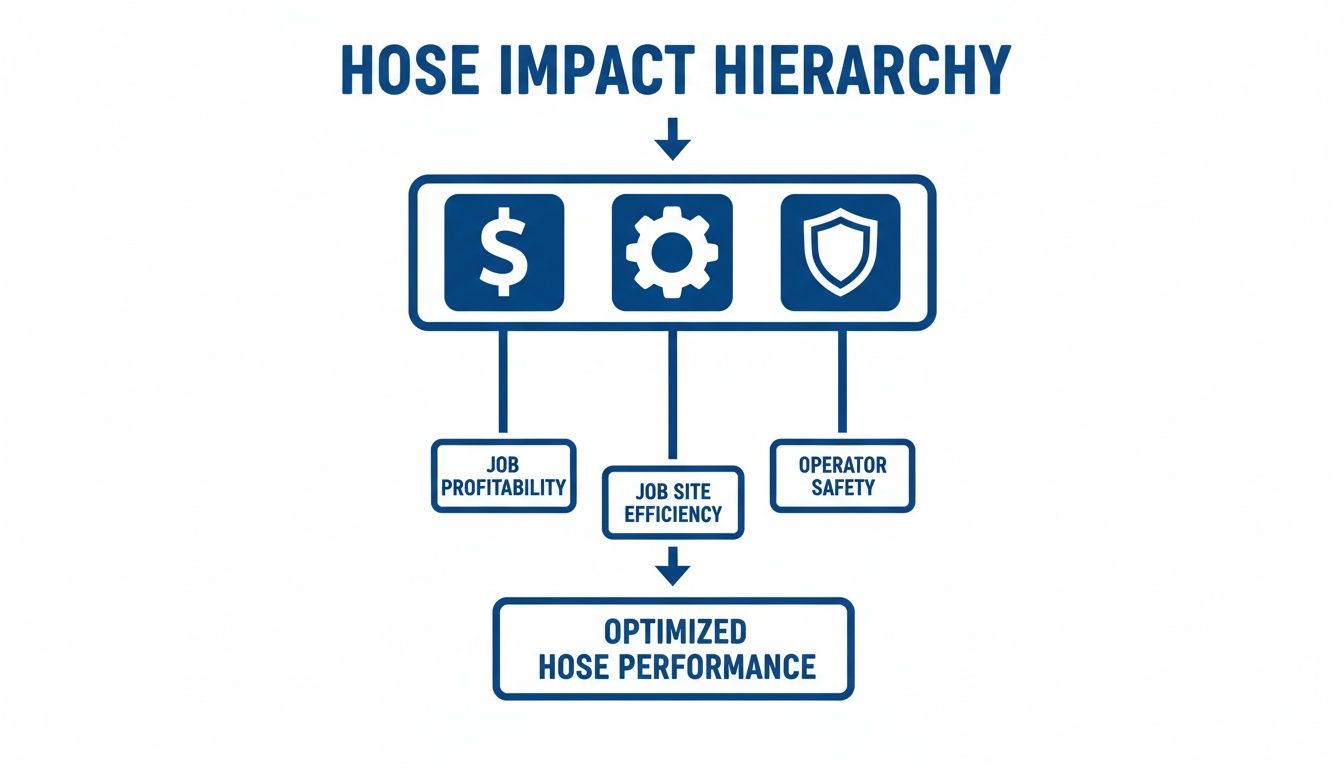
This hierarchy makes it clear: the right hose is a foundational piece of equipment. It boosts your efficiency and keeps operators safe, which in turn drives profitability.
Comparing Common Hose Materials
When you start shopping for industrial vacuum hoses, you'll see a few materials pop up again and again: PVC, rubber, and polyurethane. Each one has its place, with its own unique pros and cons depending on the job and your budget. Choosing the best fit for your hydrovac operation means knowing what you're getting into with each.
Flexible Vacuum Hose Material Comparison
| Material Type | Primary Benefit | Best For | Potential Drawback |
|---|---|---|---|
| PVC | Cost-effective | Light-duty tasks like water transfer or general cleanup where abrasion is low. | Can become stiff and brittle in cold weather, leading to cracks. |
| Rubber | Excellent all-weather flexibility | Heavy-duty, rugged field use where kinking and temperature swings are common. | Can be heavier than other materials, making it harder to handle. |
| Polyurethane | Superior abrasion resistance | Highly abrasive hydrovac environments involving rock, gravel, and sharp debris. | Higher upfront cost compared to PVC or rubber. |
As you can see, there’s no single "best" material—it's about matching the material's strengths to your specific worksite challenges. Polyurethane might cost more initially, but its long service life in a gravel pit can deliver a much better return on investment than a cheaper PVC hose you have to replace every few months.
The Importance of Hose Construction
It’s not just about what the hose is made of; how it’s put together is just as crucial. A good vacuum hose isn't a simple tube. Its design is a clever piece of engineering that has to balance flexibility, strength, and smooth airflow all at once.
The gold standard for hydrovac work is a hose with a corrugated exterior and a smooth interior. The outer corrugations act like the joints in your spine—they let the hose bend and flex without kinking or collapsing on itself. At the same time, the smooth inner wall is like a waterslide for debris, minimizing friction so slurry and rocks can flow freely without causing the clogs that stop a job dead in its tracks.
This dual-layer design is a non-negotiable feature for serious work. If the inside were also corrugated, it would create turbulence and give debris countless places to snag. If the outside were completely smooth, the hose would be too rigid and a nightmare to maneuver around a site.
For precision jobs, especially when you’re running a tool like the Hydrovac Attachment on a 2.5-inch hose, this construction ensures you get every bit of suction power right where you need it. You can see how these principles apply to smaller setups in our guide to shop vac hoses and fittings. When all is said and done, the right combination of material and construction turns your hose from a simple consumable into a reliable, long-term asset for your entire hydrovac operation.
How to Decode Key Hose Specifications
Technical spec sheets can feel like a foreign language, packed with numbers and terms that don't seem to connect to a muddy job site. But getting a handle on these key metrics is what separates a smart hose purchase from a frustrating, costly mistake. Knowing what to look for means you can confidently pick a flexible vacuum hose that will actually hold up day in and day out in the demanding hydrovac industry.
Think of it like buying a new work truck. You wouldn't just look at the paint job and the price tag. You’d dig into the horsepower, torque, and towing capacity to make sure it can handle your crew's workload. The exact same logic applies to your hose. Let's break down the most critical numbers and what they really mean out in the field.
Internal Diameter and Suction Dynamics
The internal diameter (ID) of a hose is arguably the most important number on that sheet. It's a direct trade-off between suction power and maneuverability. Sure, a massive hose can move a ton of material, but it’s also heavier and a pain to drag around. For any kind of precision hydrovac work, there's a definite sweet spot.
A 2.5-inch diameter has become the go-to standard for tasks that demand both serious suction and operator control. This size is beefy enough to pull thick slurry and debris without choking, yet it’s still nimble enough for an operator to navigate tight corners. This is precisely why our Hydrovac Attachment is built around this dimension—it's the perfect solution for creating a balanced system where raw vacuum force meets pinpoint digging accuracy.
Understanding Bend Radius
Bend radius is a simple concept that, for some reason, gets overlooked all the time. It’s a vital one, though. Picture coiling a garden hose too tightly—eventually, it kinks and shuts off the water. The bend radius is the minimum you can bend a hose before it kinks, collapses, or gets damaged.
A smaller bend radius number means a more flexible hose. When you're crammed into a utility trench or working around a crowded residential property, a hose with a forgiving bend radius is your best friend. It lets you work around foundations, pipes, and other junk without fighting the hose or losing suction.
Vacuum Rating and Crush Resistance
The vacuum rating, measured in inches of mercury (in-Hg), tells you how much negative pressure the hose can handle before it sucks itself flat. Hydrovac trucks generate an incredible amount of suction, so a high vacuum rating isn't a "nice-to-have"—it's a must. A cheap, low-rated hose will just collapse under the strain, killing your airflow instantly.
Likewise, crush resistance is a measure of the hose's ability to bounce back after getting stepped on or even run over by a skid steer. A hose with poor crush resistance is a huge liability on a hydrovac site, because one clumsy moment could take it out of commission for good.
Think of these specs as the hose's core strength stats:
- High Vacuum Rating (in-Hg): This ensures the hose won't turn into a pancake under the intense suction from a powerful hydrovac.
- Excellent Crush Resistance: This is your insurance policy against accidental damage on a busy, unpredictable job site.
- Wide Temperature Range: This guarantees the hose stays flexible when it's freezing and doesn't get soft and weak in the summer heat.
These three specs really define the hose's overall durability and lifespan. Choosing a hose with strong ratings here means you’re investing in a tool that can actually handle the punishment. By understanding what these numbers mean, you can pick the right flexible vacuum hoses that not only fit your equipment but are truly built for the job.
Integrating Hoses with Your Hydrovac System
Picking a great hose is just the start. The real magic happens when you connect it properly to the rest of your gear. A top-of-the-line hydrovac truck and a rugged hose are practically useless if they can't work together as a single, airtight unit. Getting this integration right is often the difference between a frustrating, slow day and a highly profitable one.
The end goal is to create a high-performance system where your vacuum source, the flexible hose, and the tool on the business end are all pulling in the same direction. Each component needs to be a perfect match for the others, so you don't have a single weak link bogging down the entire operation. It all comes down to the connections.
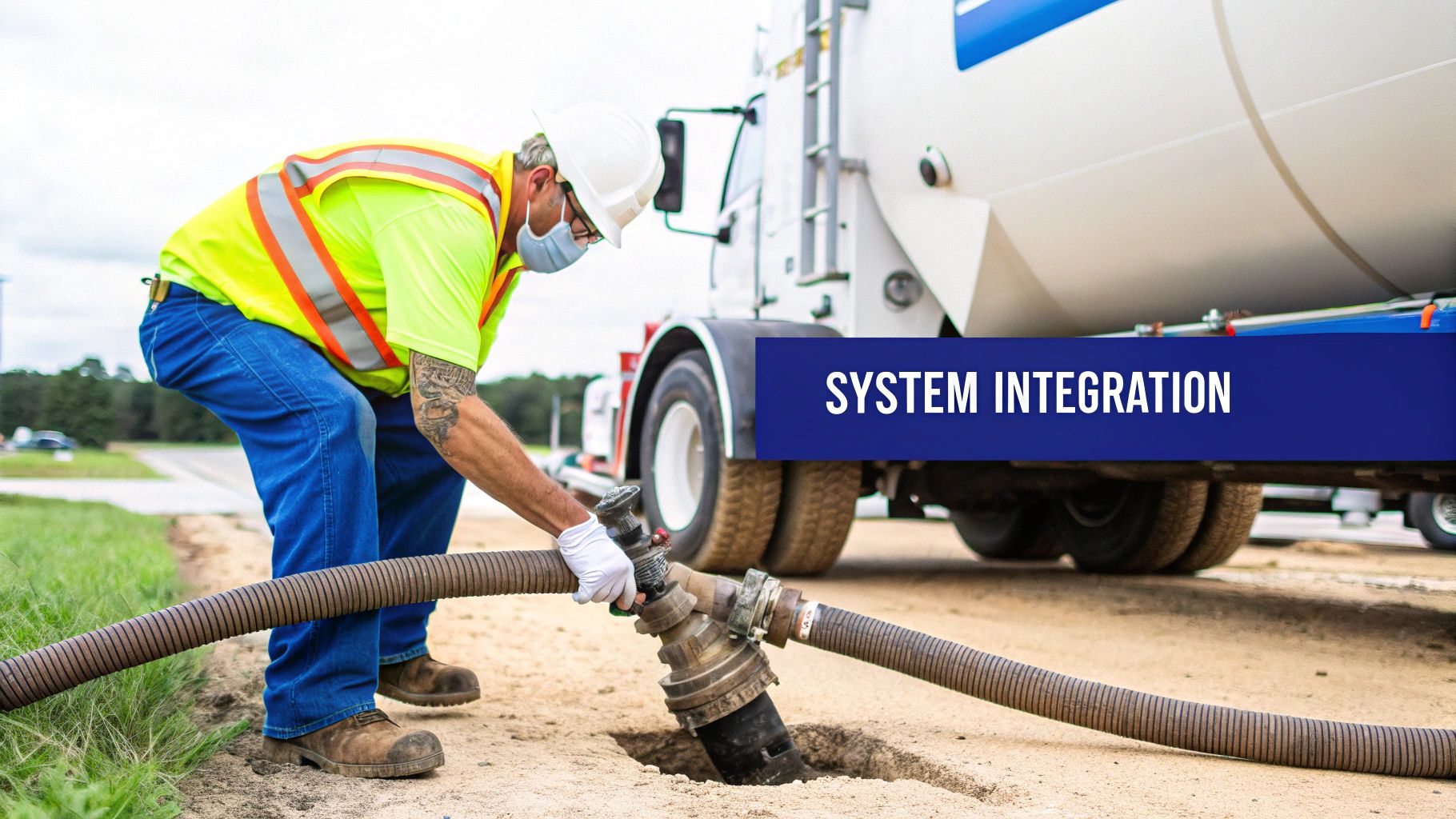
Building a Cohesive Precision Digging System
For precision jobs, your setup has to be more than just a hose hooked up to a truck; it needs to be a finely-tuned system built for a specific purpose. This is where specialized tools come into play, transforming a simple vacuum hose into an instrument of precision.
Take the Hydrovac Attachment, for instance. It's engineered to work specifically with the common 2.5-inch wet-vac hose. That’s not a random choice—it's a deliberate design decision that creates a perfectly balanced and cohesive system. The attachment pairs a high-pressure water jet with the vacuum suction, creating a self-contained excavation tool right where you need it. This solution ensures every ounce of suction power is focused and doing its job effectively for any digging purpose.
The Critical Role of Secure Couplings
The connection points—your couplings and fittings—are the Achilles' heel of any vacuum system. Even a tiny air leak at a coupling can absolutely kill your suction power. It’s like trying to drink a thick milkshake through a straw with a pinhole in it; you end up getting more air than anything else.
A small leak might not seem like a big deal, but it forces your vacuum pump to work overtime just to keep up. That means burning more fuel, putting extra strain on expensive machinery, and ultimately, slowing the whole job down. A secure, airtight seal isn't just a nice-to-have; it's non-negotiable for peak performance.
Making sure your couplings are clean, free of damage, and seated correctly is a simple but essential bit of maintenance. Investing in high-quality fittings that create a leak-free seal pays you back over and over in fuel savings and reduced equipment wear. For a deeper dive, check out our article on the importance of vacuum hose clamps.
The Big Picture of System Harmony
A well-integrated hydrovac system is a major asset, and it's part of a much bigger industrial picture. The global market for related parts like flexible hydraulic hoses was valued at US$ 4,542 million and is projected to hit US$ 6,880 million within seven years. This trend underscores just how vital reliable, high-quality hose systems are to industrial equipment and excavation work today.
At the end of the day, every part of your setup affects everything else. The right flexible vacuum hoses, combined with a solution like the Hydrovac Attachment and locked down with solid couplings, create a system that boosts efficiency, reduces operator fatigue, and delivers better, faster results on every single job.
Keeping Your Hoses in Fighting Shape: Maintenance and Troubleshooting
Think of your flexible vacuum hose as a key player on your team. It’s a serious piece of equipment, and just like any other tool you rely on, it needs regular attention to perform its best and keep your hydrovac jobs running smoothly. A little proactive care goes a long way in preventing the kind of surprise failures that bring a whole operation to a screeching halt.
The best defense is a good offense. By building a simple inspection routine into your end-of-day cleanup, you can catch small problems before they become catastrophic blowouts. A quick once-over is often all it takes to spot the tell-tale signs of a failing hose, giving you a chance to address it before you’re back on the clock. It's a small time investment that pays off big in safety and uptime.
The Two-Minute Daily Walk-Down
Before you even think about coiling that hose up for the night, give it a quick "health check." This hands-on inspection is your first and best line of defense against a mid-job failure.
- Look for Cuts and Cracks: Get your eyes on the hose. Pay close attention to any deep gashes or cracks, especially around the cuffs and in the sections that flex the most.
- Feel for Weak Spots: Put on a pair of gloves and run your hand down the entire length. You're feeling for any unusual soft spots or bulges—these are red flags that point to internal damage you can't see.
- Spot Abrasions: Take note of any areas where the outer jacket is worn thin. This is common on hoses that get dragged over asphalt, gravel, or rebar all day.
- Check the Cuffs: Give the fittings a good look. Make sure they're locked on tight, aren't cracked, and are making a solid seal. A loose cuff is one of the most common culprits for lost suction.
This simple habit helps you get ahead of the wear and tear, turning what could be an emergency into a simple, scheduled replacement.
Smart Care and Storage Habits
How you treat your flexible vacuum hoses day-to-day has a huge effect on how long they last. Dragging them over sharp corners or leaving them baking in the sun will shred even the toughest hose in no time. The good news is, proper care is pretty straightforward.
Always flush the hose with water after a job to clear out any leftover mud, sludge, or debris. This stops that gunk from hardening inside, which can cause clogs and choke your airflow. When it's time to put it away, coil it in large, loose loops. Tight coils create kinks, and kinks create permanent weak points.
Here's a pro tip that can easily add months, or even years, to your hose's life: keep it out of the sun. UV rays are brutal on materials like PVC and rubber, breaking them down and making them brittle. A shaded spot or even a simple tarp is one of the most effective things you can do to protect your investment.
On-the-Job Troubleshooting
Even with the best care, things can go wrong on a busy site. Knowing how to quickly diagnose the issue can save a ton of time and frustration. The most common complaint by far is a sudden drop in suction, which almost always comes down to just a few usual suspects.
What to Do When Suction Disappears:
- Hunt for a Blockage: This is always the first place to look. Check the intake end of the hose and the connection at your truck. If you’re running a tool like the Hydrovac Attachment, make sure the nozzle itself isn't plugged up.
- Listen for Air Leaks: Run your hand carefully around all connection points, especially the cuffs and clamps. That distinct hissing sound is the sound of your vacuum power bleeding away.
- Check for a Collapse: If a hose is old, damaged, or just not rated for the vacuum you're pulling, it can literally suck itself flat. A collapsed hose chokes off all airflow instantly.
If you think you've got a clog, sometimes switching your truck to its blower function can blast the obstruction free. For tougher blockages, you might need a plumber's snake. But don’t ignore the warning signs. A hose that keeps clogging or losing suction is telling you it's tired and ready for retirement. When it comes to a choice between repair and replace, safety is the deciding factor—if the hose's structure is compromised at all, replacement is the only smart move.
Putting Safety and Efficiency First on the Job Site
The right gear doesn’t just make a tough job manageable—it makes it safer, quicker, and ultimately, more profitable. This is especially true in hydrovac work. When you pair a top-notch flexible vacuum hose with a well-designed tool, you see a night-and-day difference in how your crew handles everything from utility locating to tight-quarter trenching.
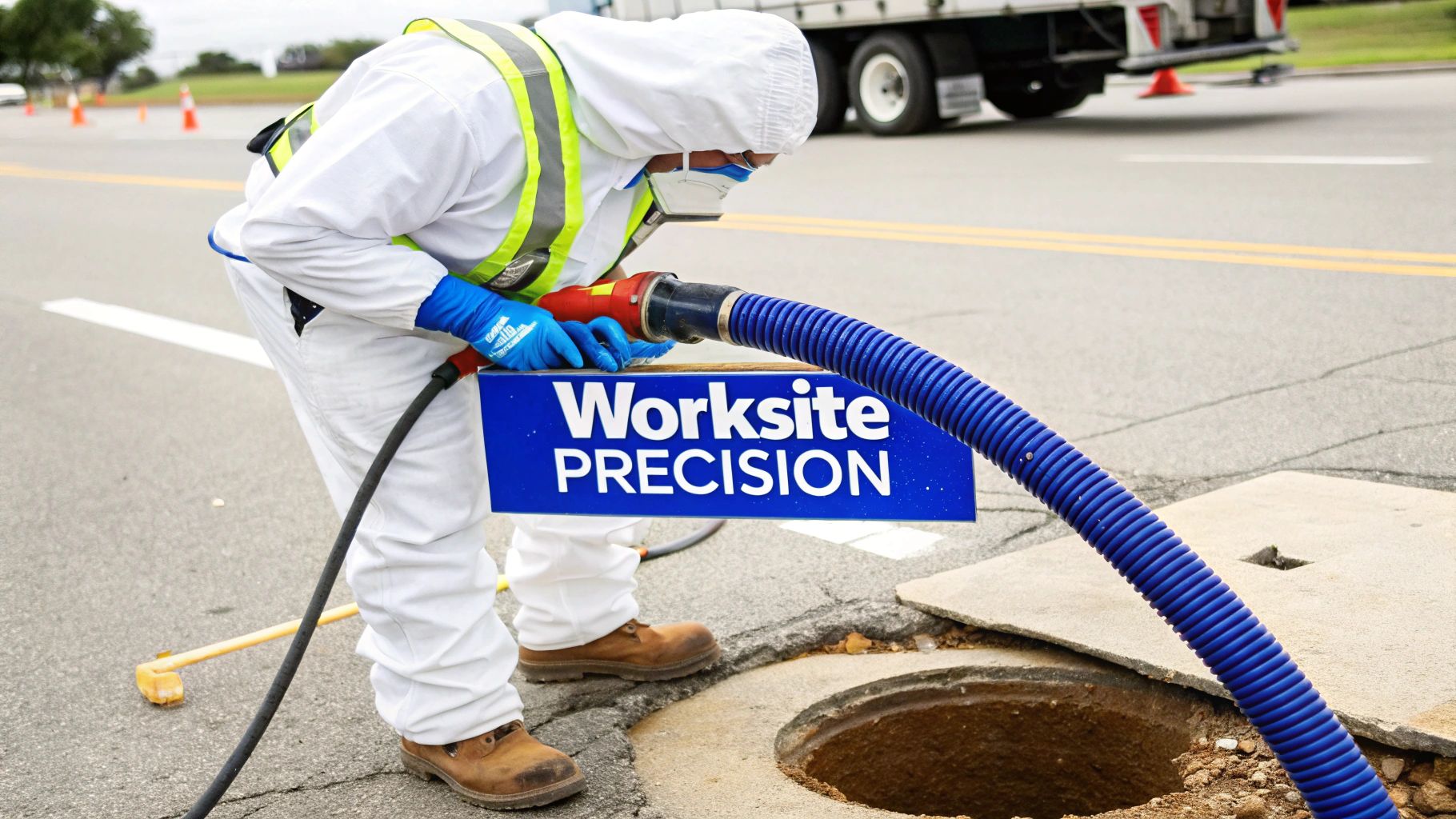
This kind of smart setup gives you a real edge. Jobs that used to be a messy headache, requiring big machinery and a ton of cleanup, can now be done with near-surgical precision. That means less disruption on-site and more work getting done.
How the Right Setup Changes the Game
Think about your hydrovac crew potholing for a bundle of fiber optic cables. With a regular, open-ended hose, it’s a chaotic job. Debris is flying everywhere, visibility is low, and the risk of hitting a line and causing a costly outage is high.
Now, imagine that same job, but this time with a durable hose connected to the Hydrovac Attachment. This tool is the solution for effective digging. Suddenly, you have a contained excavation zone. The high-pressure water and the slurry it creates are funneled directly into the vacuum stream, completely changing the dynamic of the job.
- Potholing Utilities: Your operators get pinpoint accuracy, safely digging around buried lines without all the overspray. This drastically cuts the risk of damaging expensive infrastructure.
- Trenching in Tight Spaces: Need to dig between buildings or right up against a foundation? The controlled system keeps mud and water from splattering all over the place, which means cleanup is a breeze.
- Clearing Sensitive Areas: When you're removing debris from around delicate tree roots or equipment, the focused suction pulls up only what you want it to, leaving everything else untouched.
Investing in an integrated system is a direct investment in your business's operational excellence. It empowers your crew to complete jobs faster, which means moving on to the next project sooner and boosting overall profitability.
A Safer Crew is a Productive Crew
Let's be honest: a safer job site is a more productive one. Combining a reliable flexible vacuum hose with a smart tool like the Hydrovac Attachment immediately makes the work environment better for your team.
The reduction in splashback is huge. By containing the water and slurry, the system keeps your crew drier and cleaner. This simple change minimizes slip-and-fall risks and reduces their exposure to whatever muck you're digging in.
Plus, with less mud and water clouding up the view, your operators can actually see what they’re doing. That clear line of sight is absolutely critical when you're inches away from a live utility line, allowing for more precise control and quicker reactions.
A clean, organized setup also means fewer hoses and tools to trip over. When your team can trust their equipment, they can put all their focus on the task at hand. That leads to better work and fewer mistakes. To see what else can improve your setup, check out our guide on essential vacuum hose accessories.
At the end of the day, the right hose and the right attachments aren't just line items on an expense report—they're foundational investments. They are your ticket to finishing jobs more efficiently, keeping your crew safe, and driving real financial success for your business.
Frequently Asked Questions About Flexible Vacuum Hoses
Working with hydrovac gear, you're bound to run into questions. Here are some straightforward answers to the common things we hear from operators about choosing, using, and looking after their flexible vacuum hoses.
What’s the Best Hose Diameter for General Hydrovac Work?
For most of the precision jobs you’ll tackle, like potholing or locating utilities, a 2.5-inch diameter hose is the sweet spot. It gives you the perfect mix of powerful suction and easy handling.
This size is strong enough to pull some serious debris but nimble enough to get into tight spots without a fight. It's also the exact diameter our Hydrovac Attachment is built for, which means you get a perfectly matched, high-performance system for all your effective digging needs.
How Do I Know When My Flexible Vacuum Hose Needs to Be Replaced?
Your hose will tell you when it’s time. Keep an eye out for obvious signs of damage—deep cuts, cracks, or any wear that’s so bad you can see the reinforcement layers underneath.
Other giveaways are soft spots or bulges, which signal that the hose's structure is failing. Any permanent kinks that choke off the airflow are also a major red flag.
A sudden or constant drop in suction can be a sign of trouble, too. If you've already checked for clogs and bad connections, the inside of the hose might be breaking down. When in doubt, swap it out. A hose failure on a job site is a dangerous and expensive headache you don't need.
Can I Use Any 2.5-Inch Hose with the Hydrovac Attachment?
Our Hydrovac Attachment is designed to connect seamlessly with standard 2.5-inch wet-vac hoses, which are a common size you'll find everywhere.
While it might physically fit other hoses of the same diameter, you’ll get the best results by sticking with a tough, industrial-grade hose built for sucking up abrasive materials. Pairing the right hose with the attachment ensures a rock-solid connection and a much longer life for both pieces of equipment.
How Much Does Temperature Affect Hose Performance?
Temperature can really do a number on your hose. In the cold, materials like PVC can get stiff and brittle, making them much more likely to crack under pressure.
On the flip side, high heat can make a hose go soft, leaving it vulnerable to kinking or even collapsing when the vacuum is cranked up. Always check the manufacturer's temperature range to make sure the hose can handle your local climate. This simple check ensures you get reliable performance, whether it's the dead of winter or the peak of summer.
Ready to take your precision digging to the next level? The Hydrovac Attachment turns your standard 2.5-inch flexible vacuum hose into a powerful, controlled excavation tool. Discover how to work safer and faster by visiting https://hydrovacattm.com.