


Ever wondered how you can dig with surgical precision without ever picking up a shovel, especially when setting fence posts or working near buried pipes? The secret is something called a leader hose.
Think of it as the business end of a portable hydro excavation setup. It’s the high-pressure line that connects your pressure washer to the digging wand, delivering a powerful, concentrated jet of water that can break up soil safely and effectively, clearing small amounts of debris with ease. This is not for large hydrovac trucks, but a mobile tool that pairs with a standard wet vac hose and vacuum.
Your Guide to Understanding the Leader Hose
A leader hose is the critical link in the chain, channeling high-pressure water from the source right to where the digging happens. Its job is to turn tough, compacted soil into a liquid slurry. While a separate wet vac hose sucks that slurry away, it's the leader hose that does the real work of breaking ground for precise digging jobs.
This process is a scaled-down version of what large industrial hydro excavation crews use to safely expose underground utilities.
But now, that same core concept has been adapted for much smaller, residential-scale projects. It gives you a non-destructive way to dig for everyday yard care jobs that demand precision and a gentle touch.
These kinds of tasks pop up all the time:
- Setting fence posts right next to delicate sprinkler lines without breaking anything.
- Safely digging up pipes without damage or exposing electrical conduits when you need to make a repair.
- Creating narrow trenches for irrigation systems in an established garden you don't want to tear up.
This shift literally brings industrial-grade power right into your backyard. As you get more familiar with this process, you might find it helpful to learn how to create a step-by-step guide for your own projects to keep everything organized.
The key is making this powerful technology accessible. You can dive deeper into the fundamentals in our article on what is vacuum excavation, which covers the broader technique.
Adapting Industrial Methods for Home Use
The real breakthrough here is in tools like The Hydrovac Attachment Tool, which finally bridges the gap between those giant industrial trucks and the equipment most of us already own.
This kind of tool lets you pair a standard pressure washer and a wet/dry vac to create a mobile, surprisingly effective digging system. It puts precise, low-mess excavation in the hands of homeowners, landscapers, and contractors—turning what used to be a tough digging job into a straightforward task. This guide will show you exactly how it all comes together.
How a Leader Hose Fits into Your Digging System
To really get what a leader hose does, think of it as a key player on a well-coordinated team. Your whole digging setup is like a crew working together: the pressure washer is the muscle, providing the raw power; the leader hose is the delivery specialist, and your wet vac is the cleanup crew that handles all the debris. Every part has a specific job, and they all have to work in sync to dig efficiently and accurately.
A great way to picture it is like a 'power washer pen and a vacuum eraser.' The leader hose acts as the pen, channeling a focused jet of high-pressure water to 'write away' soil with incredible precision. At the same time, the wet vac hose—usually a standard 2.5-inch one—is the eraser, instantly sucking up the muddy slurry you just created.
This diagram shows you exactly how that simple, direct flow of power works.
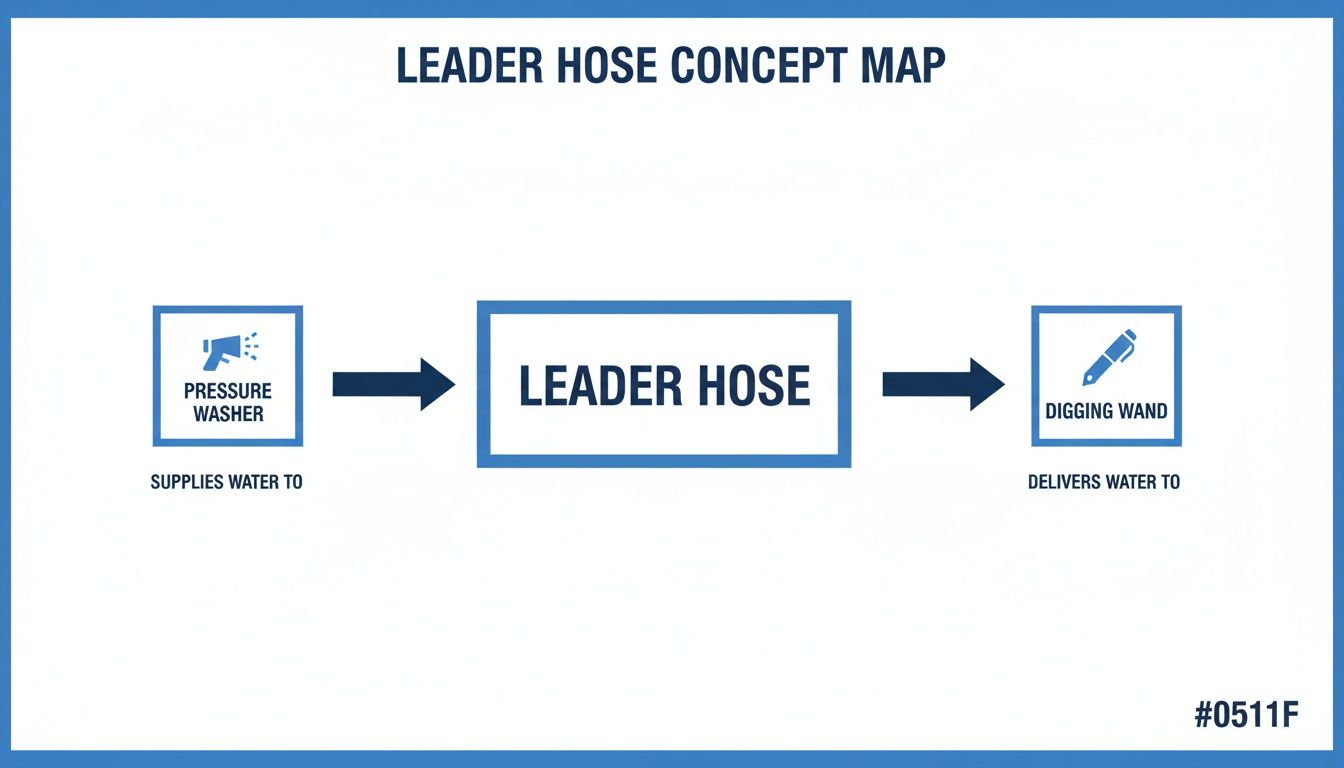
As you can see, the leader hose is that crucial link between your power source (the pressure washer) and the tool doing the work (the digging wand).
The Bridge Between Power and Precision
This is where a tool like The Hydrovac Attachment Tool really shines. It's the perfect bridge, bringing the 'pen' and the 'eraser' together into one smart, cohesive unit. By connecting the high-pressure wand directly to the wet vac hose, it creates a self-contained system that points both the water jet and the vacuum suction right where you're digging. This simple integration is what turns standard yard equipment into a powerful and portable digging system that any homeowner or contractor can use.
The core job of the leader hose is to deliver controlled force exactly where you need it. When you pair it with a vacuum and The Hydrovac Attachment Tool, you unlock a level of precision for tasks like digging up pipes without damage that traditional tools just can't touch.
In professional hydrovac operations, the leader hose is the main high-pressure line running from the truck’s pump to the digging wand. It’s what allows operators to safely blast away soil to expose underground pipes and cables without causing any mechanical damage—a practice that is becoming incredibly popular.
For crews using attachments like The Hydrovac Attachment Tool, the hose's quality directly affects the job's efficiency. A cheap hose can lead to leaks or bursts, causing 20-30% downtime in field tests. On the other hand, a good industrial-grade one can cut down on messy splashback by as much as 50%. You can dig into more data on the rapidly growing hydro excavation market to see just how vital reliable leader hoses are for preventing these kinds of expensive disruptions.
Choosing the Right Leader Hose for Your Project
When you're piecing together a residential hydrovac system, the leader hose is far more than just a simple accessory—it's the critical link that channels the power from your pressure washer to the digging tool. Think of it as the main artery. If it fails, the whole system goes down.
A lot of people make the mistake of just grabbing a standard-issue pressure washer hose from the local hardware store. Those are built for washing your siding, not for the grueling, constant pressure and abrasion of digging for fence posts. They simply can't take the abuse and are a blowout waiting to happen, which is both dangerous and a surefire way to ruin your day.
Material Matters for Durability and Performance
The stuff your hose is made of directly affects how it performs on the job. It dictates flexibility, how long it'll last, and its ability to handle being dragged over concrete, rocks, and dirt. For a setup built around The Hydrovac Attachment Tool, you'll mainly be looking at a couple of popular materials.
- Reinforced Rubber: This is the old-school, heavy-duty champion. It’s incredibly tough and fights off kinks and scuffs like a pro. The trade-off? It can get pretty stiff in the cold, but for raw durability, it's hard to beat.
- Hybrid Polymers: These are a fantastic modern blend of rubber and PVC, giving you the best of both worlds. They stay flexible even when the temperature drops, weigh less than their all-rubber cousins, and still offer excellent durability.
To make the choice clearer, let's break down how these materials stack up for the kind of work you'll be doing.
Leader Hose Material Comparison
This table compares common leader hose materials based on key performance factors relevant to residential hydro excavation.
| Material Type | Typical PSI Rating | Flexibility | Best For |
|---|---|---|---|
| Reinforced Rubber | 3,000 - 6,000 PSI | Good, but stiffens in cold | High-abrasion environments and demanding, frequent use. |
| Hybrid Polymer | 2,500 - 4,500 PSI | Excellent, even in cold | All-around residential use, offering a great balance of durability and easy handling. |
| Standard PVC | 1,500 - 3,000 PSI | Poor, prone to kinking | Light-duty cleaning only; not recommended for hydro excavation. |
As you can see, a hybrid polymer hose is often the sweet spot for residential projects, providing the performance you need without the unwieldy nature of a heavy rubber hose.
Matching PSI Ratings and Project Scale
This part is non-negotiable: your leader hose must be rated to handle your pressure washer's output. A mismatch is a recipe for a burst hose, which can cause serious injury. Always, always check the PSI (pounds per square inch) rating on both your machine and the hose. Most residential hydrovac work is done with a pressure washer pushing between 2,000 and 4,000 PSI.
A leader hose acts as the main artery of your mobile hydrovac system. Choosing one with an appropriate PSI rating and durable construction is the single most important step in building a setup that is both safe and effective for precision digging.
Think about the kind of work you'll be doing. If you're digging fence post holes every weekend or trenching for landscape lighting, it makes sense to invest in a quality, abrasion-resistant hybrid hose. It gives you the nimbleness to work in tight spots while being tough enough to survive the job site.
When you pair The Hydrovac Attachment Tool with a correctly rated and well-built leader hose, you're ensuring every bit of power from your pressure washer makes it to the nozzle. That's how you turn a tough digging job into a smooth, controlled process.
Real-World Applications for Precision Digging
Okay, let's move past the technical specs and talk about where the rubber meets the road. This is where combining a good leader hose with a tool like The Hydrovac Attachment Tool really shines, especially on residential jobs. The whole point is to turn those tricky, high-risk digging jobs into clean, manageable tasks. It's about working with surgical precision when you absolutely can't afford to make a mistake.
Think about putting in a new fence. Your property plan shows a sprinkler line running right where a post needs to be. Go at it with a shovel, and every scoop is a gamble against a costly puncture. But with The Hydrovac Attachment Tool, you can literally wash the soil away from around the pipe, exposing it without ever making contact, and then dig your post hole without any drama.
From Fence Posts to Foundations
The uses for this kind of controlled digging are all over the map, solving frustrating problems for homeowners and contractors every day. It's the perfect solution for any situation where a shovel is too clumsy and a machine is too destructive.
- Installing Fence Posts: You can dig deep, clean holes for fence posts or mailboxes, even when you know there are gas lines or irrigation pipes lurking nearby.
- Trenching for Irrigation Systems: Need to run new sprinkler lines through an established lawn or a tight garden? This lets you create narrow, perfect trenches with almost no damage to the surrounding area.
- Digging Up Pipes Without Damage: Forget breaking your back trying to hand-dig through compacted clay. You can uncover a water pipe for a quick repair in a fraction of the time.
- Clearing Foundation Debris: This is a great way to clear out that stubborn, packed-in soil around a foundation before a waterproofing job or pest control treatment.
This technology isn't just for giant industrial trucks anymore. The right leader hose paired with a smart tool like The Hydrovac Attachment Tool brings surgical digging power to anyone with a pressure washer and a wet vac.
This change makes jobs that used to feel complicated much more straightforward. You’re essentially digging with water—powerful enough to blast through tough ground but gentle enough to leave fragile pipes and wires completely unharmed.
A Closer Look at Efficiency
On a cramped residential site, your leader hose is the real MVP. It’s delivering water jets between 3,000-5,000 PSI to turn soil into slurry, while the vacuum hose sucks it all away. When a solid leader hose is connected to a tool that clamps right onto a 2.5-inch wet vac tube, you create a sealed system. This setup traps 90% more debris than just spraying and vacuuming in the open air.
For irrigation pros and property managers, this means they can handle everything from digging trenches to clearing out sediment with way more speed and safety. If you're interested in the bigger picture, you can check out some market insights on the growth of hydro vacuum services and see just how much this field is expanding.
At the end of the day, every one of these examples boils down to solving a common problem. This controlled, water-based method makes tough digging jobs cleaner, faster, and a whole lot safer. It turns a job you'd normally dread into just another task on the list.
Mastering Your Hydrovac Attachment Setup
You've got the right leader hose and a project lined up. Now, let's put it all together. Integrating The Hydrovac Attachment Tool is a surprisingly simple process that turns your separate tools into one powerful, precise digging machine. Best of all, it's designed for quick setup right in the field—no complicated instructions, just a few minutes from start to work.
The magic is in how the attachment brings together the force of your leader hose and the pull of your wet vac. It creates a small, self-contained excavation zone right at the nozzle. This completely contains the messy splashback that makes digging near buildings or landscaping so frustrating, giving you a clear, unobstructed view of your work area. That’s absolutely critical when you're digging around sensitive pipes or cables.
A Simple Three-Step Connection Process
Getting your gear ready is a simple "connect, clamp, and attach" motion. The entire setup is tool-free, so you can do it by hand in under a minute, even if it's your first time.
- Connect the Base: Start by sliding the main body of The Hydrovac Attachment Tool over the end of your wet vac hose. It's built to create a snug fit on standard 2.5-inch wet vac hoses—the kind you find on most shop and commercial vacuums.
- Secure the Clamp: Next, tighten the built-in polymer clamp. This creates an airtight seal, which is key to getting maximum suction power from your vacuum without any leaks.
- Attach the Nozzle Cap: Finally, slide the nozzle cap over your pressure washer wand and click it firmly into place on the base. This locks the wand into the perfect position, making sure the high-pressure water jet is perfectly aligned with the vacuum's suction path.
And that's it. You've just combined your pressure washer and wet vac into a single, cohesive digging tool, ready for anything from setting fence posts to trenching for a new sprinkler system. For a deeper dive into how this setup can change your workflow, check out our guide on the benefits of a dedicated vacuum hose attachment.
The patented design of The Hydrovac Attachment Tool creates a focused suction zone that captures soil and water the moment it's displaced. This eliminates messy overspray and keeps your view of the dig site completely clear, boosting both safety and accuracy.
By following these simple steps, you've essentially built a professional-grade hydro-excavation tool. This setup channels all the power from your leader hose and wet vac right where it counts, turning what used to be a messy, challenging job into a clean, controlled, and efficient process.
Keeping Your Equipment Safe and in Top Shape
When you're working with water pressurized to thousands of PSI, a healthy respect for your gear is non-negotiable. Proper safety checks and regular maintenance aren't just suggestions on a manual; they're the bedrock of keeping your hydrovac setup running efficiently and, most importantly, keeping you safe on the job. A few minutes of prevention can save you hours of headaches later.
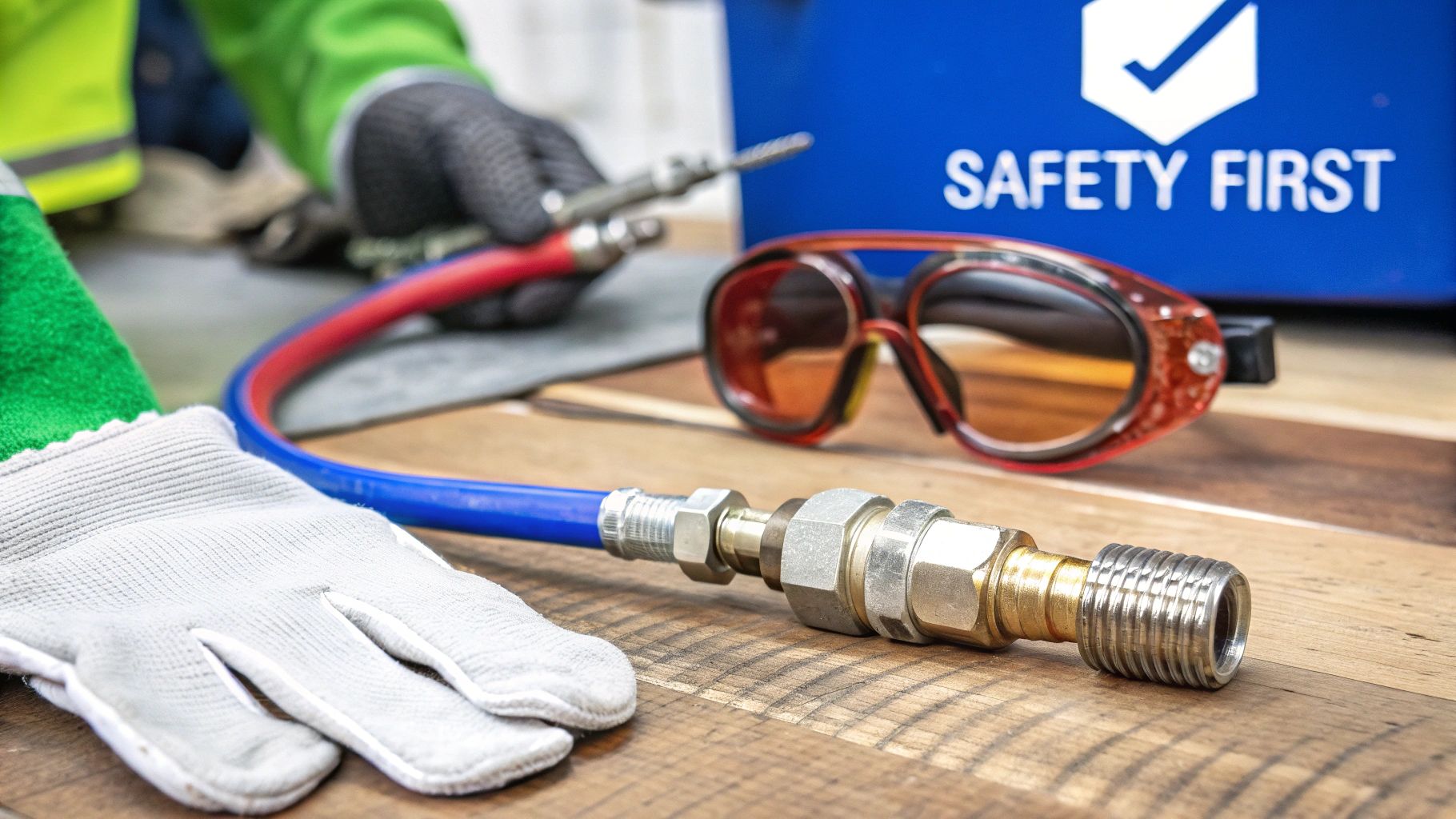
Make it a habit to give your leader hose a quick once-over before you fire anything up. Look for cracks, bulges, or any signs of abrasion. A tiny weak spot can easily become a dangerous blowout under pressure. At the same time, give every connection a quick twist to make sure it's completely tight and secure.
A secure system is a safe system. The design of The Hydrovac Attachment Tool inherently boosts safety by creating a contained suction zone that minimizes chaotic splashback, keeping the operator and the immediate work area cleaner and drier.
Simple Habits for Safety and Equipment Longevity
Getting the most out of your gear comes down to a few simple, critical habits. Following these steps will not only extend the life of your equipment but also guarantee it’s ready to go when you are, whether you're digging around pipes or prepping for fence posts.
- Always Gear Up: Your personal protective equipment (PPE) is your first line of defense. At the very least, wear safety glasses to shield your eyes from flying debris and a good pair of waterproof gloves for a solid grip.
- Depressurize Every Time: This is a big one. Before you disconnect a single hose, shut off the pressure washer and then squeeze the wand's trigger. This releases any trapped pressure, preventing that violent, uncontrolled blast of water.
- Clean and Store Correctly: Once the job is done, rinse out your Hydrovac Attachment Tool and hose to get rid of any lingering mud and grit. Coil your hose loosely—no sharp kinks—and store it out of direct sunlight to keep the material from breaking down.
A secure connection between your wet vac hose and the attachment is another critical safety checkpoint. The global hydro excavation market, valued at $1.5 billion last year and expected to hit $2.8 billion by 2032, is growing because it’s a safer way to dig without damaging utilities. A big part of that safety comes from equipment that can cut down splashback by as much as 60%. You can learn more about the expanding market for hydro excavation here. For your own setup, using high-quality vacuum hose clamps is essential for creating that tight, reliable seal you need for peak performance and safety.
Leader Hose FAQs: Your Questions Answered
Got a few lingering questions about using a leader hose for your projects? You're not alone. Here are some of the most common things we get asked by contractors, landscapers, and homeowners diving into hydro-excavation.
Can I Just Use My Regular Pressure Washer Hose Instead?
We get this one a lot, and the short answer is no—it's a really bad idea. While they might look similar, a dedicated leader hose built for hydro-excavation is a different beast altogether. It's constructed from much tougher materials designed to handle constant high pressure and the wear and tear of being dragged over concrete, gravel, and other rough ground.
A standard, off-the-shelf hose just isn't built for that kind of abuse. It's far more likely to burst, which not only stops your project in its tracks but also creates a serious safety risk. For your own peace of mind and reliable performance, stick with an industrial-rated hose that's properly matched to your pressure washer's output.
What’s the Right PSI for Digging in My Yard?
For most soil you'll encounter in residential work—even tough stuff like compacted dirt, heavy clay, or loam—the sweet spot is a pressure range between 2,000 to 4,000 PSI.
This gives you enough power to break up the ground efficiently without being so aggressive that you risk damaging things you don't want to hit, like buried pipes, sprinkler lines, or utility cables. The Hydrovac Attachment Tool was engineered from the ground up to operate perfectly within this effective and safe pressure window for digging fence post holes or other small jobs.
How Does the Hydrovac Attachment Tool Keep the Job Site So Clean?
The magic is in the attachment's patented, self-contained design. It creates a sealed suction environment right where the digging happens.
Think of it this way: the base and nozzle cap act as a shroud, pointing the high-pressure water jet straight down into the dirt. At the exact same moment, that containment forces all the resulting mud and water slurry up and into the wet vac hose. Nothing gets a chance to escape. This completely eliminates the messy, uncontrolled splashback you'd get from open-air pressure washing, keeping your work area clean and giving you a clear view of what you're digging.
Ready to see the difference for yourself? The Hydrovac Attachment Tool pairs with your existing pressure washer and wet vac to give you a precise, low-mess digging solution. It's the power of a hydrovac truck in a system you can carry. Find out more at https://hydrovacattm.com.