


For any hydrovac crew, reach isn't just a convenience—it's a critical component of operational capability. Vacuum hose extensions are the tools that make the difference, providing the essential length needed when the work is far from the truck. They effectively transform a standard hydrovac rig into a far more versatile system, crucial for reaching distant utility markers, navigating tight urban job sites, or performing non-destructive digging with precision.
When these extensions are paired with specialized tools like The Hydrovac Attachment Tool, crews don't just get more reach; they fundamentally boost their efficiency, safety, and capacity for effective digging.
Why Vacuum Hose Extensions Are No Longer Optional
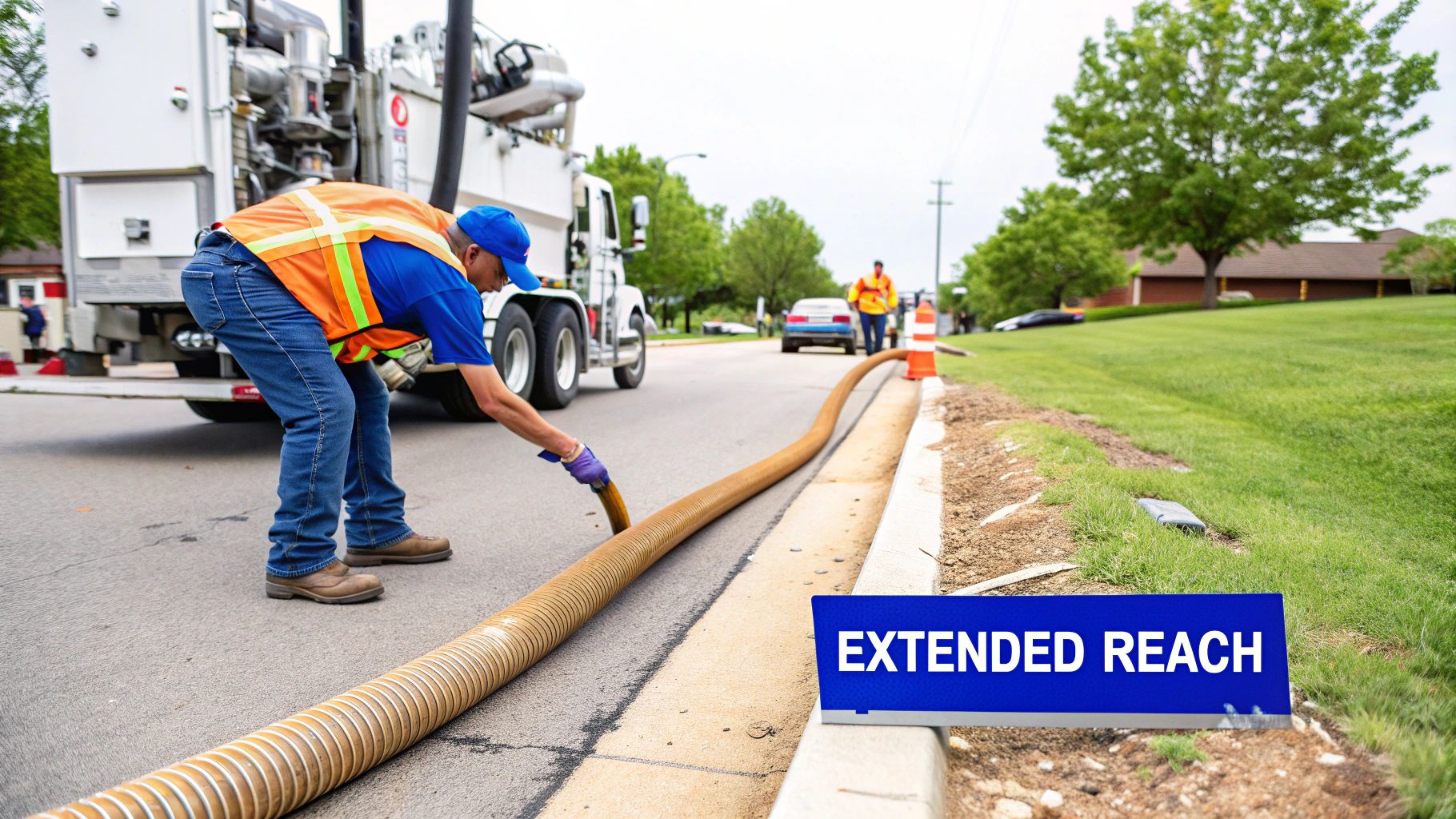
Every hydrovac professional has faced the scenario: a utility marker located 50 feet from the nearest truck access, knowing the standard hose won't even come close. It’s this common industry challenge that has shifted vacuum hose extensions from a "nice-to-have" accessory to essential equipment for any serious hydrovac operation. They are what enable crews to bid on new jobs and tackle complex projects without logistical constraints.
Modern job sites, particularly in urban or developed areas, are rarely wide open. Operations may require navigating a narrow city alleyway, working behind an existing structure, or digging on a manicured landscape where property damage is not an option. In these scenarios, positioning the truck directly adjacent to the excavation site is impossible. Hose extensions bridge this gap, eliminating the need for destructive access paths or turning down valuable work.
Gaining a Competitive Edge in Hydrovac Operations
The ability to perform precise, non-destructive digging from a distance provides a significant competitive advantage. It allows hydrovac crews to work with minimal disruption, a key selling point for clients who prioritize the preservation of their property. This isn't merely about adding length; it's about maintaining complete operational control.
This advantage is amplified when a quality extension is combined with a precision tool like The Hydrovac Attachment Tool. The entire dynamic of the job changes. Instead of a messy, wide-area dig, the crew can perform a controlled, surgical excavation. The Hydrovac Attachment integrates the water wand and suction hose into a single unit, capturing slurry directly at the source. This is a game-changer for effective digging, especially when working far from the truck, as it eliminates messy splashback and drastically reduces the cleanup footprint.
You can get a better handle on the basics by checking out our guide on what vacuum excavation is.
The real value of an extended hose system is its ability to deliver surgical precision exactly where it's needed, regardless of truck placement. This transforms challenging jobs into routine operations, saving time and protecting client property.
Market statistics underscore this trend. The vacuum hose market is on track to hit USD 2.5 billion by 2025 and is projected to keep growing at a steady 4% CAGR through 2033. This growth is driven by expanding infrastructure projects and the demand for greater efficiency. Tools that enable low-mess potholing and precise digging, like The Hydrovac Attachment Tool, are quickly becoming the industry standard. Mastering this setup is a core skill for any hydrovac company aiming to stay competitive.
Choosing the Right Vacuum Hose Extensions for Your Fleet
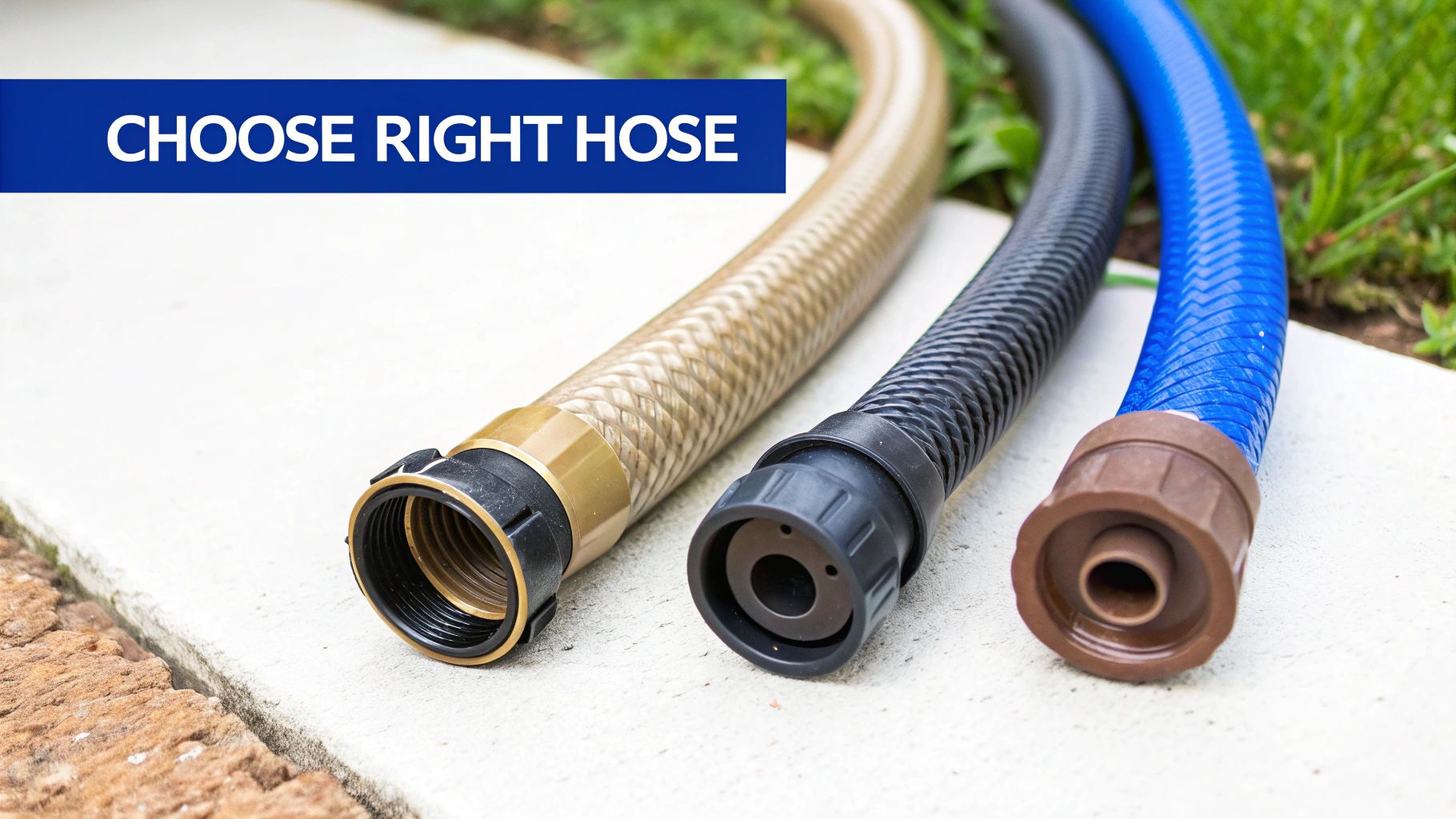
When outfitting a hydrovac fleet, it's easy to view all hoses as interchangeable. However, in this demanding industry, the distinction between a high-quality extension and a subpar alternative can directly impact job success and profitability. The decision should go beyond length and diameter; it must be rooted in the material science that governs hose performance.
Investing in the right hose is an investment in your crew’s uptime and safety. A hose that kinks, collapses under negative pressure, or becomes brittle in cold weather is not just an inconvenience—it's a direct threat to efficiency and a significant safety hazard.
Material Matters Most
In the hydrovac industry, the primary choice for vacuum hoses is between industrial-grade polymers and natural rubber composites. Each material offers distinct advantages, and understanding these differences is key to making a strategic procurement decision.
Polymers often provide exceptional abrasion resistance and are typically lighter, which helps reduce operator fatigue during long shifts and extended digs.
Conversely, natural rubber composites have long been the industry standard for their unmatched flexibility, particularly in freezing temperatures, and their ability to withstand crushing without losing structural integrity. This durability is why the industrial hose market, valued at USD 11.81 billion in 2024 and projected to reach USD 13.92 billion by 2030, has historically relied on natural rubber. It remains a top choice for harsh-field trenching and clearing heavy, abrasive debris.
A Practical Comparison for Hydrovac Use
To help you decide what’s best for your crew, here's a quick breakdown of how these materials stack up in the real world. This table cuts through the jargon and focuses on what actually matters on a hydrovac job.
Vacuum Hose Extension Feature Comparison
| Feature | Industrial-Grade Polymer | Natural Rubber Composite | Best Application |
|---|---|---|---|
| Flexibility | Good, but can stiffen up in the cold. | Excellent. Stays pliable in low temps. | Cold-weather jobs and navigating tight spaces. |
| Crush Resistance | Moderate to high. | Excellent. Bounces back from vehicle traffic. | High-traffic work zones where hoses get run over. |
| Abrasion Resistance | Excellent. Great for sharp, abrasive debris. | Good to very good. A solid all-around performer. | Sucking up slurry with sharp rocks or fractured concrete. |
| Weight | Lighter. Easier on the operator's back. | Heavier. Feels more substantial and durable. | Long-distance runs or when working overhead. |
When making the decision, consider the primary operating environment for your crews. For hydrovac operations in northern climates or those navigating complex utility trenches, the superior flexibility of natural rubber is a significant operational advantage. We dive even deeper into this topic in our guide to flexible vacuum hoses.
The best hose isn't just about the material—it's about compatibility. Standardizing your fleet with a common diameter, like the versatile 2.5-inch system, ensures every extension works seamlessly with all your existing gear and specialized solutions like The Hydrovac Attachment Tool.
Ultimately, the goal is to equip your team with extensions that enhance, not hinder, their ability to perform effective digging. Choosing a hose that integrates perfectly with tools like The Hydrovac Attachment Tool ensures that whether your crew is 10 feet or 100 feet from the truck, they have the reliable suction and control needed to execute the job flawlessly.
Building a Leak-Proof Hose System on Site
A loose connection is more than a minor issue on a hydrovac job—it's a direct drain on power, time, and profitability. Every bit of air hissing through a poor seal represents lost suction (CFM) that never reaches the end of the hose. For effective digging, constructing a completely airtight system is not just a goal; it's an operational necessity.
This process begins at the shop with the selection of appropriate hardware. Not all couplers and clamps are created equal, and attempting to force mismatched fittings is a leading cause of suction loss. Adhering to heavy-duty, industrial-grade components designed specifically for the high negative pressures of a hydrovac system is paramount.
Securing Every Connection for Maximum Power
The objective is to create a perfect, unbroken vacuum line from the truck to the digging tool. This requires that every joint is inspected and tightened correctly. A common mistake is over-torquing clamps, which can damage the hose and compromise the seal. The correct technique is to tighten just until the connection is firm and the coupler has zero rotational movement.
When assembling multiple vacuum hose extensions, follow these field-tested steps for a reliable setup:
- Check the Hose Ends: Before connecting, inspect the ends of each hose for cracks, tears, or debris that could prevent a clean seal.
- Seat the Coupler Fully: Ensure the coupler is pushed completely onto the hose end. A partially seated coupler is a guaranteed air leak.
- Position Clamps Right: Slide the clamp approximately one inch from the hose end, ensuring it is positioned directly over the coupler's shank. This provides the best grip without damaging the hose.
Industry insight: a single loose connection can reduce suction power by 10-15% or more. On a 100-foot line with multiple extensions, these "small" leaks compound, forcing the truck to work harder for suboptimal results and hindering effective digging.
Integrating the Hydrovac Attachment
Once the extended hose line is secure, integrating a precision tool like The Hydrovac Attachment Tool is the final step. This tool is engineered to create a focused suction zone, making it dependent on receiving maximum power from the system. A leak-proof line is the only way to ensure the attachment can instantly capture water and debris, even at a significant distance from the truck.
The Hydrovac Attachment is designed to fit standard 2.5-inch systems, making integration straightforward. It connects to the end of the final extension hose using the same secure clamping method applied to the rest of the line. This final connection ensures that the controlled, powerful digging environment required for precision work is not compromised by suction loss upstream.
Investing a few extra minutes to build a rock-solid hose system yields immediate returns in faster, cleaner, and more efficient hydrovac operations. For more information, learn about selecting the right vacuum hose clamps for your specific needs.
Achieving Surgical Precision with the Hydrovac Attachment
Once your vacuum hose extensions are connected with a confirmed leak-proof seal, the focus shifts from setup to execution. The extended reach you've created, when paired with the right tool, enables a level of precision that transforms a potentially messy job into a controlled, surgical operation. The key is to maintain this control, even when working 50 or 100 feet from the hydrovac truck.
Consider a common industry task: daylighting a sensitive bundle of fiber optic lines adjacent to a building's foundation. In this scenario, there is zero room for error. A standard high-pressure wand can create a muddy slurry, obscuring visibility and risking damage to the very utilities being exposed. This problem is exacerbated with a long hose run, as the operator is physically disconnected from the suction source.
Unifying Water and Suction for a Cleaner Dig
This is precisely the challenge The Hydrovac Attachment Tool was engineered to solve. It unifies the water wand and the vacuum hose into a single, cohesive tool, creating a self-contained excavation zone. Instead of one hand spraying water while the other chases the resulting slurry, the attachment allows the high-pressure water to break up the soil while the vacuum simultaneously captures the water and debris.
This integrated approach is a major advantage when using vacuum hose extensions. The farther the operator is from the truck, the more critical it becomes to manage water and debris at the point of excavation.
- Drastically Reduced Splashback: By capturing slurry the moment it's created, the tool keeps the work area, nearby structures, and the operator significantly cleaner.
- Improved Visibility: A clean dig site ensures the crew maintains constant visual contact with utilities, which is critical for safety and damage prevention.
- Minimal Cleanup: Containing the mess from the start significantly reduces post-job cleanup time, directly improving project productivity and profitability.
Putting together a secure, high-performance line is pretty straightforward. This diagram shows the basic assembly process.
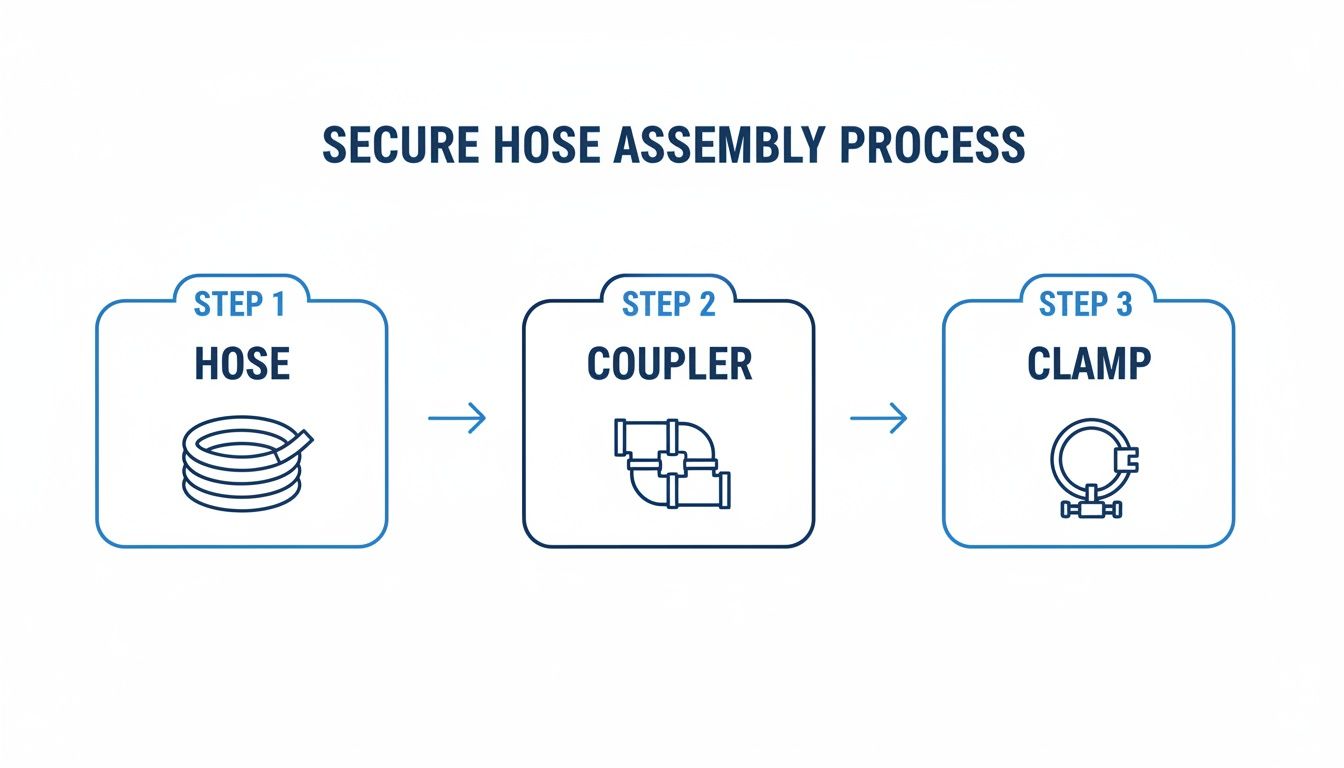
This simple three-part system—hose, coupler, and clamp—is the foundation for building out a powerful and reliable extended vacuum setup for effective digging.
Precision Trenching on Delicate Surfaces
Consider another real-world scenario: cutting a narrow trench for an irrigation system across a manicured lawn. The client expects minimal disruption. By combining the long reach of extensions with the focused power of The Hydrovac Attachment Tool, an operator can cut a clean trench with almost no collateral damage to the surrounding turf.
The Hydrovac Attachment Tool creates a "dig and capture" system, extending the benefits of a clean worksite far beyond the truck's immediate vicinity. It is this capability that empowers hydrovac crews to confidently take on more complex, high-value projects.
This methodology transforms the hydrovac from a blunt instrument into a precision tool, regardless of hose length. It enables crews to work faster, safer, and with a level of professionalism that differentiates them in a competitive market.
Field Maintenance for Hoses and Connections
Hydrovac hoses endure extreme conditions on every job, from being dragged across abrasive surfaces like asphalt and gravel to handling high-velocity debris under intense suction. Without a robust field maintenance plan, crews risk not just premature equipment wear but project-stopping failures during a critical dig.
Preventative care is always more cost-effective than emergency replacement. A simple daily routine can identify major problems while they are still minor, fixable issues. The objective is to maintain all equipment in peak condition to ensure maximum power is delivered to the tool for effective digging on every job.
Daily Inspection and Cleaning Routine
A five-minute end-of-day inspection is the best defense against unexpected equipment failure on the next job.
- Hunt for Weak Spots: Visually inspect the entire hose length for deep cuts, severe abrasions, or areas where the outer layer is wearing thin. Pay close attention to sections that frequently bend or rub against equipment.
- Knock Off the Crud: Use a stiff brush or a low-pressure water stream to remove caked-on mud and grime. This debris adds weight and can conceal underlying damage.
- Check Your Connections: Manually check couplers and clamps for tightness and integrity. A bent fitting or loose clamp is a common source of suction loss.
Proper storage is as crucial as cleaning. Hoses should be stored out of direct sunlight to prevent UV degradation and in a manner that avoids being crushed by other heavy equipment.
The industrial vacuum market, valued at USD 5.40 billion in 2025 and projected to reach USD 8.95 billion by 2034, reflects the growing reliance on this technology. For hydrovac crews, this highlights the importance of reliable gear. Well-maintained vacuum hose extensions are essential for tackling jobs in confined spaces where larger equipment cannot access. Explore more stats on the growth in industrial vacuum cleaner usage.
On-the-Spot Troubleshooting Guide
Even with diligent maintenance, field issues can arise. Knowing how to quickly diagnose and resolve common problems is a hallmark of a professional crew and keeps the project on schedule.
- Sudden Suction Loss: This is almost always a leak. Begin the inspection at The Hydrovac Attachment Tool and work back toward the truck, checking every connection point. An audible hissing sound will pinpoint the leak's location.
- Stubborn Blockages: If suction is lost without an apparent leak, a clog is the likely cause. Disconnect the hose in sections to isolate the blockage. A quick burst of reverse air from the truck can often clear it.
- Leaking Couplers: If a clamp is fully tightened but the connection still leaks, the gasket inside the coupler is likely worn, damaged, or missing. Keeping spare gaskets in the truck allows for a quick field repair.
A well-maintained system ensures that tools like The Hydrovac Attachment Tool operate at peak performance, delivering the focused, powerful suction required for clean, precise, and effective digging. Proactive maintenance is a small investment that protects equipment and ensures operational readiness.
Got Questions About Running Vacuum Hose Extensions?
Even experienced hydrovac crews encounter challenges in the field. When deploying long runs of vacuum hose extensions, small uncertainties can lead to lost time and suboptimal performance. Here are answers to the most common questions from hydrovac operators.
This section serves as a quick field guide to ensure your operations run smoothly, especially when connecting precision tools far from the truck for effective digging.
How Much Suction Am I Really Losing with Each Hose Section?
A slight drop in suction (CFM) with each added hose section is an unavoidable consequence of physics due to friction loss. However, when using high-quality, smooth-bore hoses with perfectly airtight couplers, this loss is minimal and manageable for most hydrovac applications.
The true performance killer is not hose length but a poor seal. A small leak at a single connection will negate far more suction power than adding another 25 feet of hose. Therefore, the top priority must always be ensuring every clamp and connection is rock-solid and airtight.
What's the Smartest Way to Manage Long Hoses on a Crowded Site?
First and foremost, managing a long hose line is a two-person job. Before starting the vacuum, walk the entire hose path from the truck to the dig site. Lay the hose out deliberately, avoiding sharp bends, pinch points, and vehicle traffic paths.
During the dig, one operator should focus on the excavation tool—like The Hydrovac Attachment Tool—while the second crew member manages the hose, guiding it as the work progresses. This division of labor is crucial for preventing kinks (which choke suction), reducing operator fatigue, and enhancing overall site safety.
Industry insight: Leaving a long hose unmanaged is a common mistake. It places immense strain on the tool operator, creates a significant tripping hazard, and leaves the hose vulnerable to being crushed by other on-site equipment.
Can I Just Use a Regular Shop Vac Hose in a Pinch?
Absolutely not. While it might seem like a quick fix, it is an extremely dangerous practice. A standard shop vac hose is designed for low-pressure applications like sawdust collection, not the intense negative pressure and abrasive materials of professional hydrovac work.
Using such a hose creates an immediate risk of catastrophic collapse or bursting, leading to instant downtime and a serious safety hazard. Always use industrial-grade vacuum hose extensions specifically rated and manufactured for vacuum excavation.
How Does the Hydrovac Attachment Make a Difference with Extensions?
This is where The Hydrovac Attachment Tool provides a distinct advantage on long-reach jobs. It enables the operator to maintain surgical precision, even a hundred feet from the truck. By integrating the water jet and vacuum into a single, compact tool, it creates a highly controlled and efficient digging zone.
This is critical at a distance because it prevents the high-pressure water from creating a widespread slurry that the operator must then chase. The attachment captures debris at the source, ensuring all material is vacuumed efficiently. This dramatically reduces cleanup time and enhances the effectiveness of the entire operation, regardless of hose length.
Ready to bring surgical precision to every job, regardless of the distance? The Hydrovac Attachment from The Hydrovac Attachment Tool is the field-tested solution for clean, efficient, and controlled digging. See how you can upgrade your crew's capabilities and learn more today.