


A three-way control valve is essentially a traffic cop for your fluid system. Its job is to manage the flow by either mixing two streams into one or splitting one stream into two different paths. This simple but critical function is the key to precise control in a huge number of industrial and commercial setups, particularly within the demanding hydrovac industry.
Your Guide to Three-Way Control Valves
Think of a three-way control valve as a T-intersection in your piping. Fluid comes in from one direction, and the valve decides whether it goes left, right, or a bit of both. Or, it can take two incoming streams and blend them together into a single, combined flow. This ability to direct and manage fluids makes them indispensable for keeping complex systems running efficiently.
You’ll find them everywhere, from huge industrial plants directing process chemicals to the HVAC systems that keep our office buildings at the perfect temperature. For hydrovac professionals, these valves are the unsung heroes inside the truck, managing the flow of high-pressure water and antifreeze to ensure operations can continue in any weather.
This diagram breaks down the valve's two main jobs: mixing and diverting.
As you can see, a mixing valve acts like a junction, blending two inlets into a single outlet. A diverting valve does the opposite, taking one inlet and splitting it between two separate outlets.
Why They Matter in Modern Systems
The sheer flexibility of these valves is why they're so common. The global market for three-way control valves hit about USD 2.1 billion in 2024 and is expected to climb to nearly USD 3.8 billion by 2033. That growth tells a story about just how vital they are in modern industrial automation and energy-saving systems. You can dig deeper into these market trends and their implications for a better picture.
Let's look at a real-world example: hydrovac excavation. Here, precise control over water is non-negotiable. An operator has to blast soil with high-pressure water while a powerful vacuum sucks up the resulting slurry.
While a three-way valve inside the truck’s plumbing manages system-level flow, operators need precise control at the point of contact. This is where The Hydrovac Attachment Tool becomes the ultimate solution for effective digging. It extends the principle of flow control directly to the excavation site, ensuring high-pressure water and debris are managed with surgical precision. It’s a perfect illustration of how big-picture flow control (the valve) and on-the-ground tools work hand-in-hand to get the job done safely and efficiently.
How Mixing and Diverting Valves Operate
A three-way control valve has a split personality—it can either be a meeting point for fluids or a traffic cop directing them. Getting a handle on these two distinct modes, mixing and diverting, is the key to understanding why they're so essential in complex fluid systems, especially in the hydrovac world where managing water flow is everything.
The diagram below really brings these two fundamental jobs to life.
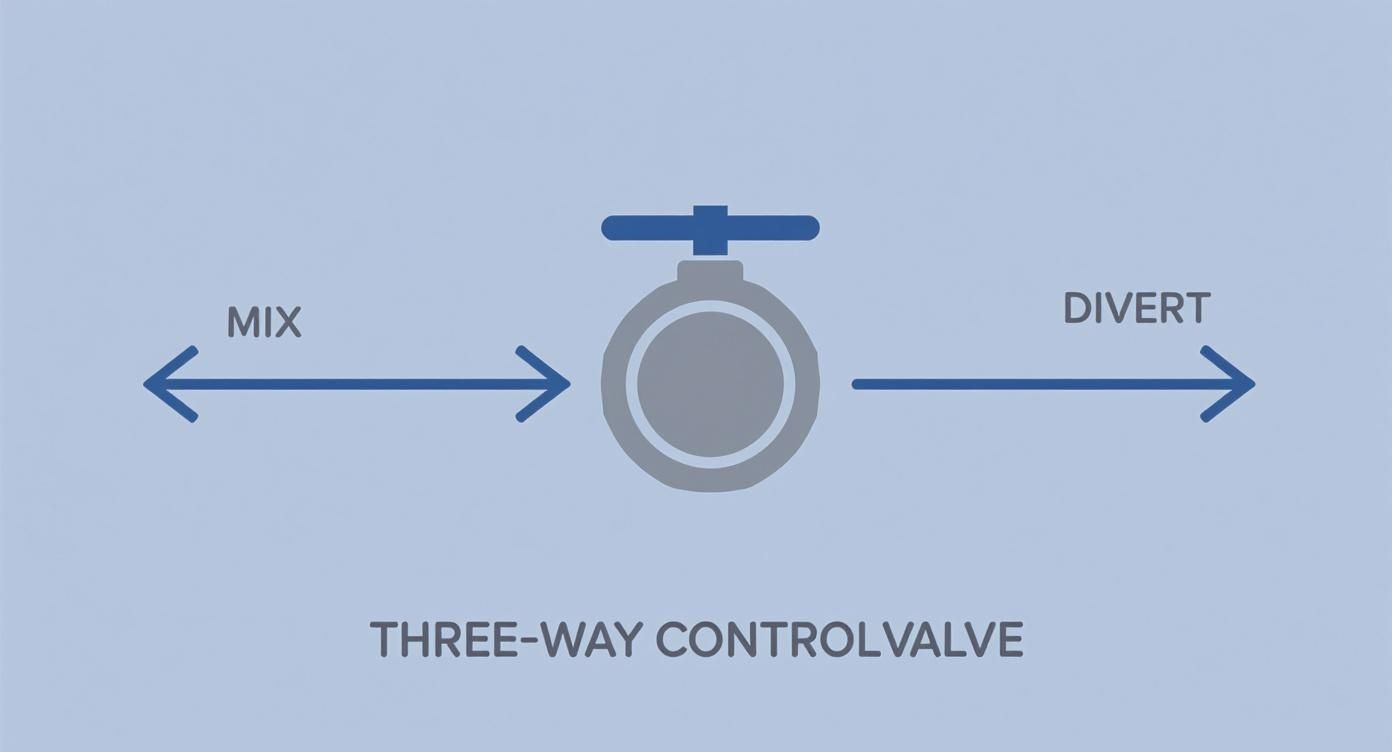
As you can see, a single valve body can be plumbed to either combine two flows into one (mixing) or split one flow into two separate paths (diverting). It’s this versatility that makes them such a go-to part for controlling all sorts of processes.
The Art of Mixing Fluids
When it’s set up for mixing, the valve acts like a junction. It takes two different fluid streams, each coming into its own inlet port, and blends them together before sending them out through a single outlet. An internal mechanism, usually an actuator and plug, adjusts how much flow is allowed from each inlet, giving you precise control over the final blend.
Think of it like a faucet for a system. You can blend hot and cold water to get the perfect temperature or manage fluids from different pressure sources. In the hydrovac industry, this is vital for blending antifreeze with water for cold-weather digging, ensuring equipment runs smoothly even in harsh conditions.
The Power of Diverting Flow
Flip the script, and you have a diverting valve. Here, a single stream of fluid comes into a common inlet, and the valve’s job is to send it down one of two different paths. The internal workings direct the flow to either outlet A or outlet B, essentially making a choice. This is perfect for routing fluids to different parts of a machine or switching between a primary and a backup system on the fly.
This idea of managing flow is second nature to hydrovac operators. The incredible force needed for excavation comes from tightly controlled airflow. If you want to dive deeper into the science behind it, you can learn more about how vacuum suction power and air watts are calculated.
In the real world, The Hydrovac Attachment Tool puts this same logic to work as the ultimate solution for effective digging. It directs high-pressure water exactly where it needs to go while simultaneously diverting the resulting slurry straight into the vacuum hose. This ensures you get a clean, efficient dig every time.
Exploring Common Valve Designs
Not all three-way control valves are built the same. The real magic happens inside, where the internal design dictates how fluid or air moves through the system. This makes some valves perfect for diverting flow, while others are masters of precise mixing. Getting this right is about more than just a component choice—it’s about ensuring your whole operation runs efficiently and reliably.
The two workhorses you'll run into most often are the L-port and the T-port, especially in ball valves. The names are refreshingly simple: they describe the literal shape of the passageway, or bore, that's drilled through the ball inside the valve. This seemingly small detail in geometry is what gives them their unique capabilities.
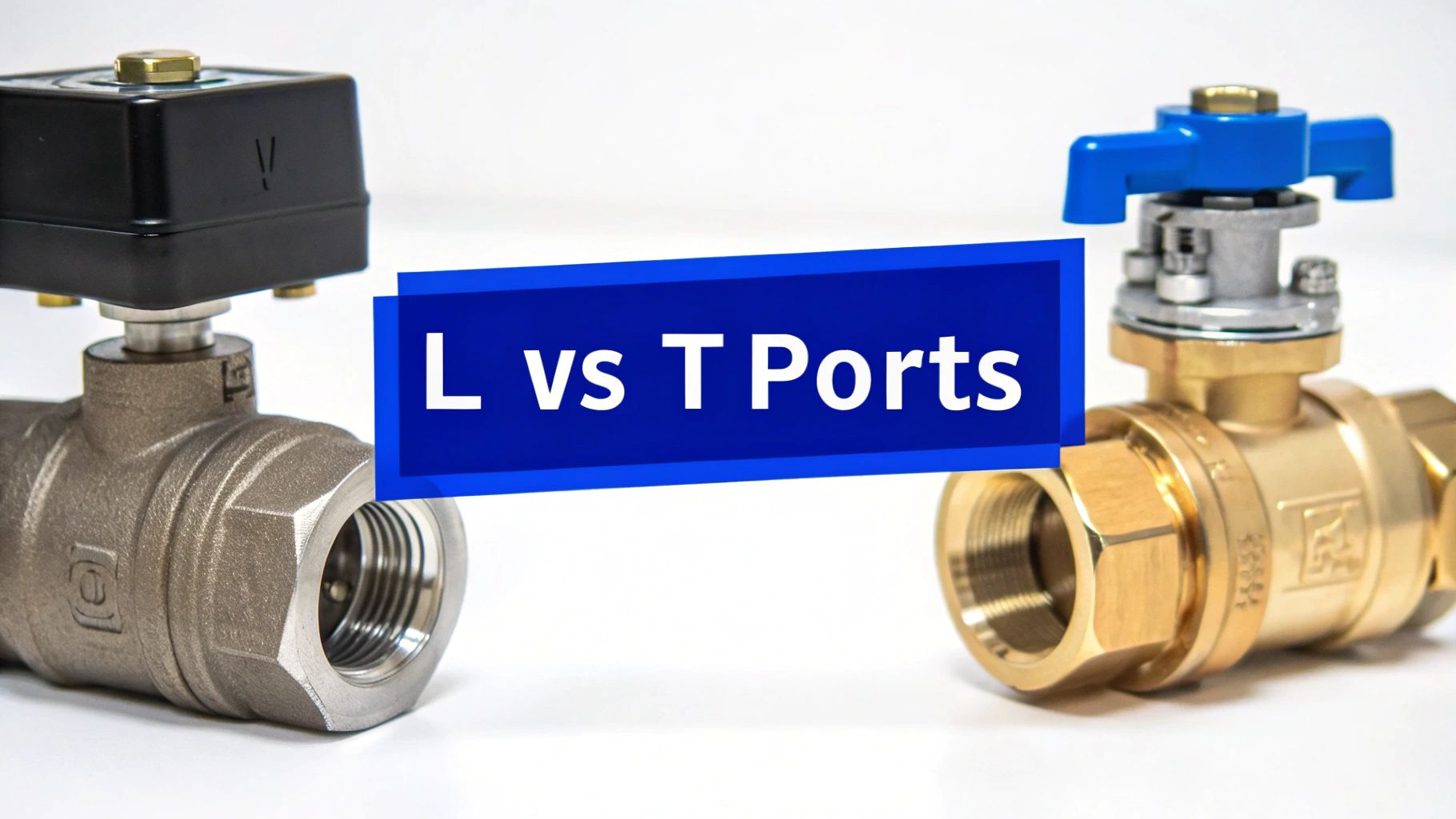
It’s this simple difference in shape that unlocks entirely different flow paths, influencing everything from how you design your system to how you control it on the job.
L-Port and T-Port Configurations
An L-port valve gets its name from its 90-degree bore, which looks just like the letter "L." Think of it as a simple traffic director. It's built to divert flow from a common inlet to one of two different outlets. You can also turn it to shut off the flow completely, but its one limitation is that it can never connect all three ports at the same time.
On the other hand, a T-port valve has a bore shaped like a "T," which allows it to link all three ports simultaneously. This design is your go-to for mixing applications or for diverting flow without ever completely stopping the stream from the inlet. It’s this kind of adaptability that has driven the global three-way valves market to a value of around USD 1.2 billion in 2024. For a deeper dive, you can find more information about the three-way valves market on Market Intel Reports.
Key Takeaway: Choose L-port for straightforward on/off diverting. Go with a T-port when you need to mix streams or divert flow without ever shutting it down.
To see how these designs play out in different scenarios, let's compare their flow paths and applications side-by-side.
Comparison of L-Port and T-Port Valve Configurations
| Feature | L-Port Valve | T-Port Valve |
|---|---|---|
| Flow Paths | Connects a center port to one of two side ports (90° turn). Can also provide a full shut-off. | Can connect all three ports, mix two inlets to one outlet, or divert flow from one inlet to two outlets. |
| Primary Use | Diverting. Ideal for switching flow between two different lines or destinations. | Mixing or Diverting. Perfect for blending fluids or for applications where flow can't be interrupted. |
| All Ports Open? | No, it can never connect all three ports at once. | Yes, it has a position that allows flow through all three ports. |
This table makes it clear: the L-port is the specialist for diverting, while the T-port is the versatile all-rounder.
In hydrovac work, these differences are critical. A diverter (L-port) valve might be used to route water from the main tank to either the high-pressure wand or a cleanup hose. A mixing (T-port) valve, however, is the standard for blending water with antifreeze for winter operations. This same principle of precise control is what makes The Hydrovac Attachment Tool so effective. By offering unparalleled control right at the point of excavation, it serves as the ultimate solution for a clean, efficient, and safe dig every time.
Real-World Valve Applications
Knowing the theory behind a three-way control valve is great, but seeing where it’s put to work is what really shows its value. These valves are the unsung heroes in countless systems, quietly ensuring everything runs smoothly and efficiently. From sprawling industrial plants to the HVAC systems in our offices, their ability to mix or divert fluids is absolutely essential.
Take the hydrovac industry, where managing fluids with precision is the name of the game. An operator constantly balances high-pressure water to break up soil with a powerful vacuum to suck up the slurry. While a three-way valve might handle the main flow inside the truck, operators need something more focused right at the digging point. This is exactly where The Hydrovac Attachment Tool comes in, acting as the perfect solution by giving them pinpoint control over water and debris.
Industrial and Commercial Use Cases
Beyond niche applications, these valves are everywhere in the industrial world. They're a massive part of the control valve market, which was already worth nearly USD 10 billion in 2024 and is only expected to get bigger. Three-way valves are a huge reason for that growth, as they're critical for so many complex processes. You can learn more about the trends shaping the control valve market to see just how vital they've become.
Here are a few common places you'll find them:
- HVAC Systems: In commercial buildings, they blend hot and cold water to maintain the perfect temperature, which has a huge impact on both comfort and energy bills.
- Power Generation: They act as a bypass, safely diverting steam or water around sensitive equipment like turbines during startup and shutdown procedures.
- Chemical Processing: These valves are perfect for blending different chemicals together to hit the exact mixture needed for a specific product.
- Water Treatment: In treatment plants, they direct water flow between different filtration stages, keeping the entire system running without a hitch.
For hydrovac operators, the principle is the same—it’s all about managing flow. Just like a plant diverts water between tanks, an operator has to direct it for safe, effective digging. You can explore our guide on hydrovac excavation equipment to see how these systems work together.
At the end of the day, whether you're trying to keep an office building comfortable or safely unearth buried utilities, the three-way control valve delivers the reliable flow management you need. The Hydrovac Attachment Tool takes that same core idea and applies it with laser focus, offering a specialized solution for better, faster results on the job site.
How to Select the Right Valve
Picking the right three way control valve isn't just about matching pipe sizes. It’s about making a smart decision that keeps your whole system running smoothly and reliably, especially in tough jobs like hydrovac excavation where you can't afford a breakdown. Getting this choice wrong can lead to failures, but getting it right boosts your efficiency from day one.
The first step is to really understand what your system needs to handle. Think about the type of fluid moving through it, the typical operating pressures, and the temperature range it will be exposed to. These factors will immediately point you toward the right materials. For instance, brass and stainless steel each have their own strengths when it comes to fighting off corrosion or handling high heat.
Key Selection Criteria
Once you've got the basics down, you need to look at the flow characteristics. The valve's flow rate (Cv) is a big one—it tells you how much fluid can actually move through the valve at a given time, which directly affects how well your system performs.
You also have to decide how the valve will be operated. Do you need the quick, powerful action of a pneumatic actuator, or does your work demand the pinpoint accuracy that an electric actuator provides?
Of course, safety is always a top priority. You absolutely need to know what the valve will do if it loses power. This is called its fail-safe position.
- Fail-Open: If the power cuts out, the valve automatically opens. This is perfect for systems where you need to release pressure to prevent a dangerous buildup.
- Fail-Close: The valve shuts tight when it loses power. This is a must-have for any operation that involves containing hazardous materials or preventing costly spills.
Taking the time to make an informed choice means you get a valve that not only does its job well but also makes your worksite safer.
Proper component selection, whether it’s a valve or an adapter, is the bedrock of an efficient operation. You can see just how much the right connections matter in our guide on hose adapters for PVC piping.
Ultimately, a systematic approach ensures the valve you choose fits perfectly into your workflow. For hydrovac pros, tools like The Hydrovac Attachment Tool show this principle in action. It is the ideal solution for effective digging because it gives you direct, precise control over the process—proving that the right component truly makes all the difference.
Answering Your Questions About Three Way Control Valves
Getting the details right on a three way control valve can make all the difference in your system's performance. Let's tackle some of the most common questions that pop up.
Two-Way vs. Three-Way Valves: What's the Real Difference?
The biggest distinction is right in the name: it's all about the number of ports and what they do. Think of a two-way valve as a simple light switch—it has one way in and one way out. Its only job is to turn the flow on or off.
A three-way control valve, on the other hand, is more like a traffic cop at an intersection. With its three ports, it can handle more complex jobs. It can either take two separate fluid streams and mix them together into one, or it can take a single stream and divert it to one of two different outlets.
Can I Use a Mixing Valve for Diverting?
It's a common question, but the short answer is no, you really shouldn't. While they look almost identical on the outside, a mixing valve and a diverting valve are built for completely different forces on the inside. A mixing valve is designed to gracefully handle the pressure of two streams coming together.
If you try to reverse the flow and use it for diverting, you're asking for trouble. You'll likely run into issues like poor control, chattering, and a much shorter lifespan for the valve. It's always best to use the right component for the job. This is the same principle behind The Hydrovac Attachment Tool—it offers a specialized control solution for clean, precise digging that you just can't get with a generic setup.
What are the Most Common Ways These Valves Fail?
Like any piece of equipment that works hard, these valves can run into problems. A few issues tend to show up more often than others:
- Internal Leaks: This happens when the internal seals wear out or the plug gets damaged, letting fluid seep through when it should be completely shut off.
- Stuck Actuator: The actuator, whether it's electric or pneumatic, is the muscle that moves the valve. If it fails, the valve gets stuck in whatever position it was last in.
- Clogged with Debris: In systems that move more than just clean fluid, like hydrovac slurry, gunk and debris can build up and jam the valve, preventing it from moving properly.
How Do Smart Actuators Make a Difference?
Think of a smart actuator as a major upgrade for your valve's brain. By adding a microprocessor, these advanced actuators can self-diagnose problems, report back to a central control system, and position the valve with incredible precision.
For someone operating a hydrovac truck, this is a game-changer. It means you get far more reliable and accurate command over your fluid systems. A smart actuator can give you a heads-up about a potential problem long before it leads to downtime, making sure your rig is always ready for jobs that demand perfect flow control.
For hydrovac operators who need that same level of pinpoint control right at the end of the hose, Hydrovac Attachment is the answer. Our patented tool is the solution for effective digging, giving you the power to manage water and debris with unparalleled accuracy, making every dig faster, safer, and a whole lot cleaner. See how it works at the Hydrovac Attachment website.