


Yes, you can absolutely use a shop vac for water—in fact, it's one of its best features. The trick is making sure you prep it correctly. You'll need to remove the dry filter and pop on a foam sleeve to keep water out of the motor. That one small step is what turns it from a simple dust-eater into a serious water-removal tool, but its capabilities don't stop there. For professionals in yard care and residential digging, the wet vac hose is becoming the foundation for a much more powerful application: precision hydro excavation.
From Emergency Cleanup To Precision Tool
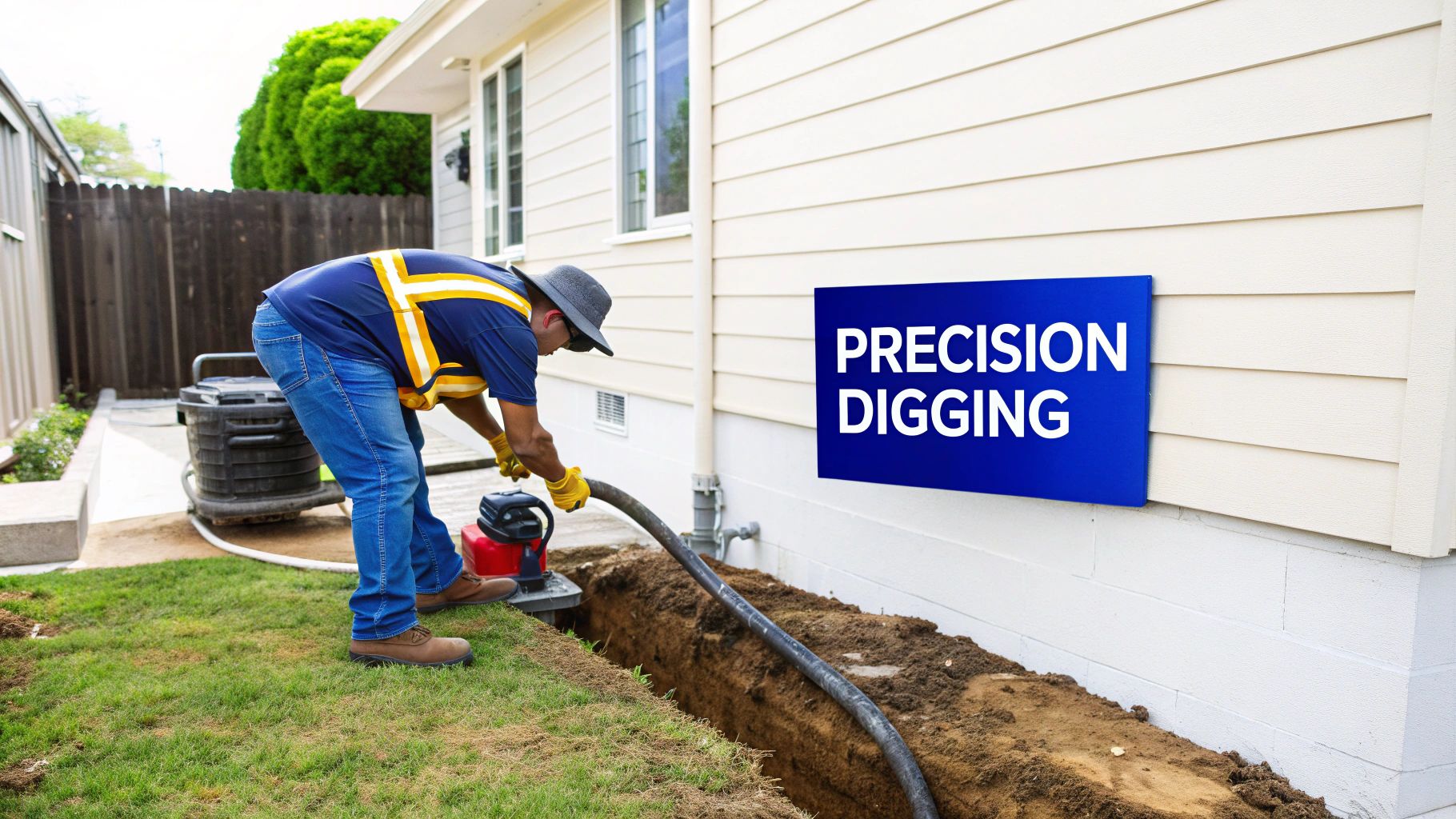
The classic shop vac has always been the go-to hero for a flooded basement or a big spill in the garage. But its job description has expanded way beyond basic cleanup. For pros in landscaping, home repair, and utility work, the wet/dry vac is now a foundational tool for highly specialized jobs that require surgical precision, not brute force.
This isn't just about sucking up water anymore. Thanks to some clever new attachments, we're now using water as a powerful yet careful force for tricky tasks like digging fence post holes or safely exposing buried pipes.
The Modern Wet Vac: A Tool For Hydro Excavation
The real game-changer here is pairing a standard shop vac with tools like The Hydrovac Attachment Tool. This accessory effectively turns your vac's hose into a handheld, mobile hydro-excavation unit. Instead of digging with a shovel and hoping you don't hit anything, you can use a controlled stream of water to liquefy the soil and instantly vacuum the resulting slurry. This is NOT for large hydrovac trucks, but a portable solution for clearing small amounts of debris with precision.
This method is the solution for jobs where old-school digging is just too risky or messy:
- Digging fence post holes right next to fragile sprinkler lines.
- Exposing buried pipes without damage for a repair, eliminating the risk of a costly shovel strike.
- Clearing small trenches for irrigation or wiring in an established lawn without causing major disruption.
The whole principle is control. When you combine water pressure with powerful suction, you get a clean, contained work area. No more mud splattered all over a customer's property. It completely changes how professionals in the yard care and residential digging industries approach jobs in tight spots.
For handling a major water incident, the proper steps and safety protocols are critical. It's always a good idea to have a solid guide for emergency flood cleanup on hand.
Beyond Simple Spills: Managing Soil and Debris
Sucking up a mix of water, dirt, and gravel is a whole different ballgame than cleaning up a clean spill. It demands a machine that can handle abrasive material. The tough, no-nonsense design of a shop vac makes it the perfect fit, especially when paired with the right tool for the job.
The industry has evolved. While shop vacs became popular for water cleanup, today's professionals need more. By connecting tools like The Hydrovac Attachment Tool to a standard 2.5-inch shop vac hose, they can dig with precision water jets and suck up the mess immediately. This approach is invaluable for safely digging up pipes or setting posts, slashing job time and eliminating the risk of damaging underground utilities.
Shop Vac Water Applications: From Basic To Advanced
The humble shop vac has come a long way. This table shows just how much its capabilities have expanded when you move beyond basic water removal and add professional attachments like the one designed for wet vac hoses.
| Application Type | Traditional Use (Vac Only) | Advanced Use (With The Hydrovac Attachment Tool) | Key Benefit |
|---|---|---|---|
| Emergency Cleanup | Sucking up standing water from floors | Clearing mud, sludge, and debris from drains | Faster, more thorough cleanup of contaminated water |
| Landscaping | Draining puddles or water features | Digging precise holes for fence posts or plants | Avoids damaging roots, irrigation lines, and utilities |
| Plumbing/Utility Work | Removing water from a pipe leak | Exposing buried pipes and lines safely without damage | Eliminates the risk of striking and breaking lines |
| Construction | Cleaning up rainwater on a job site | Trenching for conduit or small footings | Minimizes site disruption and mess |
Ultimately, a standard wet/dry vac is a powerful tool for water removal, but when paired with the right accessories, it becomes a versatile solution for complex professional tasks that demand both power and precision, from fence post digging to safely exposing pipes.
Setting Up Your Shop Vac For Wet Work
Before you even think about sucking up water, you need to get your shop vac ready for the job. This isn't just about flipping a switch—skipping these steps is a fast track to a ruined motor and a serious safety risk. We're essentially converting a dry dust collector into a powerful and safe water-moving machine.
The most critical part of this conversion? The filter. Your standard paper filter, perfect for sawdust and drywall dust, will turn into a useless, motor-clogging mush the second it gets wet. Seriously, this is the quickest way to kill your vacuum.
Filter Swap: The First and Most Important Step
First things first: get that dry paper filter out of there. Once it's removed, you've got a couple of solid options to protect your motor from water and all the gunk that comes with it.
- Install a Foam Sleeve: This is the go-to for most jobs. It’s a simple foam cylinder that slides right over the filter cage. It does a great job of blocking water from getting sucked into the motor housing while still letting air flow freely.
- Use a Wet-Application Filter: Some brands sell specific filters made from water-resistant materials. They're built to handle wet debris without falling apart and are often reusable, making them a good long-term investment.
Either one will do the trick, but running the vac in wet mode without one is a non-starter. This one simple swap is the difference between a job well done and a dead vacuum.
Your Pre-Operation Safety Checklist
With the right filter in place, it’s time for a quick pre-flight inspection. Running through these checks before tackling any water, whether it's a small spill or a complex digging project, will save you a world of headaches.
Give the collection tank a once-over. You're looking for any cracks or weak spots, especially around the base. Even a tiny leak can turn your controlled cleanup into a bigger, sloppier mess, completely defeating the purpose.
Next, double-check that the drain plug is screwed in tight. It’s an easy thing to forget, but a loose plug means you'll be leaving a trail of water as the tank fills up—creating a nasty slipping hazard you'll just have to clean up again later.
Pro Tip: Before a big job, I like to pour a little clean water into the empty tank. If you see any drips from the drain plug or the tank body, you’ve caught a problem that’s much easier to fix now than when the tank is half-full of muddy slurry.
Securing Hoses and Ensuring Electrical Safety
Now, let's look at the hoses. You need a tight seal everywhere to get maximum suction. A loose connection where the hose meets the tank or between extension pieces will kill your performance, especially when you're trying to pull up heavy, waterlogged material. If you're struggling to get a good seal, our guide on shop vac hose fittings has some great tips for creating leak-proof connections.
Last but not least is electrical safety, and this is where you can't cut corners. Water and electricity are a lethal mix. Always, always plug your shop vac into a Ground Fault Circuit Interrupter (GFCI) outlet. These are the outlets with the little "test" and "reset" buttons, designed to instantly kill the power if they sense a fault—like water getting where it shouldn't.
And it should go without saying, but keep the motor housing (the whole top part of the vacuum) far away from standing water. Never let it sit in a puddle or get submerged. Follow these setup steps, and you'll be able to work efficiently and, more importantly, safely.
Unlock Precision Digging With A Hydrovac Attachment
So, you've got your shop vac ready for water. Good. Now, let’s take it a step further and transform that cleanup machine into a seriously precise digging tool. This is where The Hydrovac Attachment Tool shines, effectively turning your standard wet/dry vac into a portable hydro-excavator. It’s the perfect solution for any digging job that calls for accuracy and a tidy worksite, from fence post digging to exposing pipes without damage.
The attachment itself is brilliantly simple, designed to bring a power washer wand and your wet vac hose together as one cohesive unit. As you blast the soil with water, the high-powered suction immediately pulls the resulting slurry away, letting you dig and clean up in one smooth motion. It's a mobile tool, not for large hydrovac trucks, designed to clear small amounts of debris.
How This Works in the Real World
The real genius of this setup becomes obvious when you’re facing a job where a shovel is just too clumsy. For landscapers, utility locators, or even a determined DIYer, it opens up a world of possibilities for working in tight spots or around sensitive lines without causing a disaster.
- Fence Post Installation: Forget digging a wide, messy hole and praying you don't slice through a sprinkler line. With this method, you can create a perfectly round hole with surgical precision. The water jet does the digging, and the vacuum sucks up the mess, leaving the surrounding lawn completely undisturbed.
- Digging Up Pipes Without Damage: We've all been there. One wrong move with a spade, and a tiny leak becomes a massive plumbing project. The Hydrovac Attachment Tool lets you gently wash away the soil around the pipe, exposing it for repair without the risk of impact damage. It's the solution for a quick fix versus a costly mistake.
Getting the vacuum itself ready is the first critical step. This image breaks down the essentials for prepping your machine for any wet job.
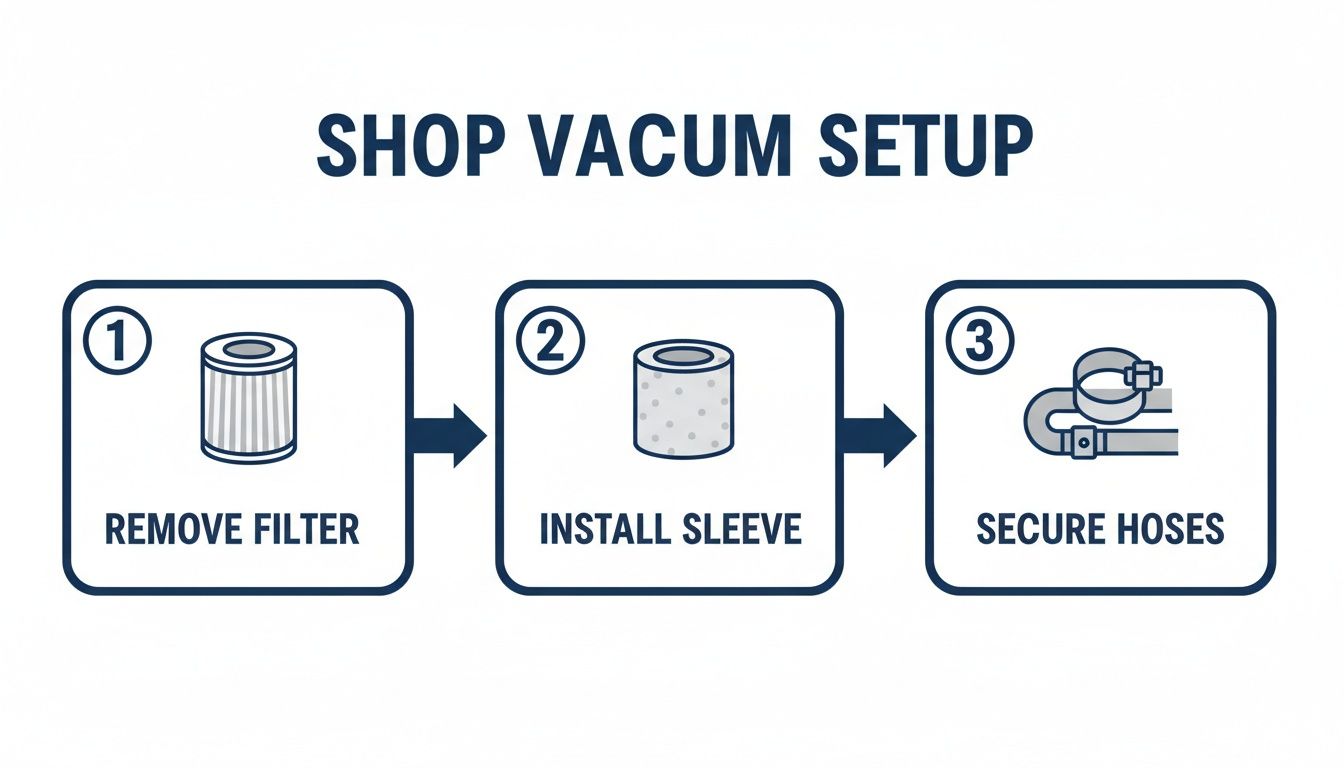
This setup—removing the paper filter, installing the foam sleeve, and making sure the hoses are secure—is the foundation for everything. Don't skip it.
The Power of Controlled Suction
This isn't just a gimmick; it's a scaled-down, mobile version of what the pros use. In the residential digging and yard care industries, utility strikes are a constant concern. The Hydrovac Attachment Tool's patented polymer system clamps a power washer wand to your shop vac hose, creating a focused suction zone that dramatically improves visibility and cuts cleanup time from hours to minutes. It’s no wonder pros in the wet vac hose industry are upgrading, turning their shop vacs into hydrovac powerhouses for everything from foundation prep to safely removing contaminated soil without calling in a giant truck.
This controlled environment is what really sets the technique apart. When you dig with a shovel, loose dirt constantly falls back into the hole, obscuring your view. By instantly removing the liquefied soil, this attachment gives you a clear line of sight right down to the pipe or cable you're trying to expose.
This is all about working smarter, not harder. You get to skip the back-breaking labor of manual digging and the headache of a huge cleanup. Everything—the water, the mud, the rocks—goes right into the vacuum tank.
This efficiency is a lifesaver when you need to cut a small trench for electrical conduit or a drainage pipe across an established lawn. You get a clean, narrow trench with minimal disruption, making the backfilling process a breeze.
If you're looking to get your own equipment perfectly dialed in, our guide on choosing the right shop vac adapter can help. Ultimately, this attachment transforms your shop vac from a simple cleanup tool into a proactive, precision instrument for tackling complex digging projects.
Pro Tips for Efficient Water and Debris Removal
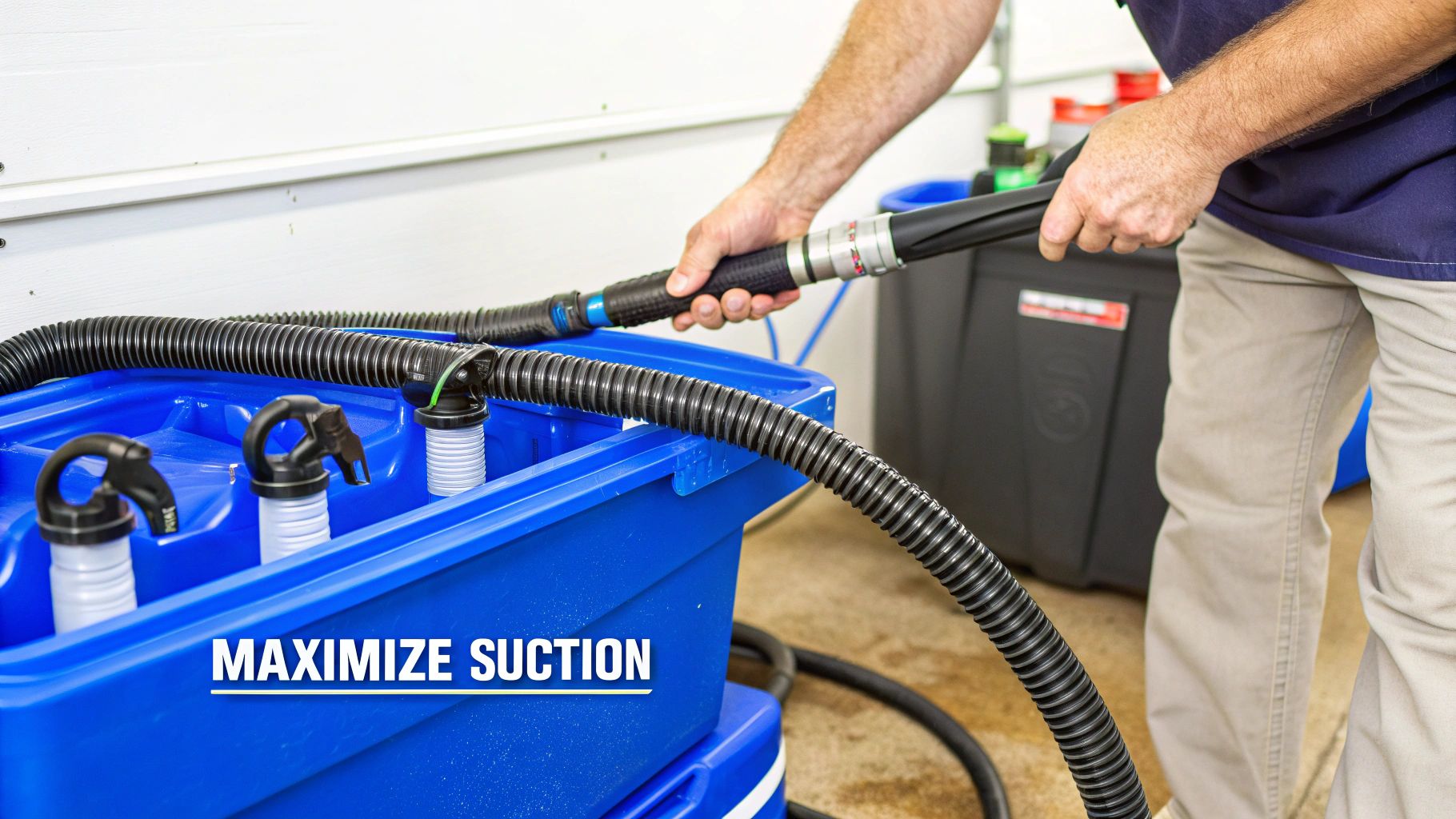
Sure, you can just flip the switch and go, but there's a real art to using a wet vac hose effectively. Learning the right techniques can turn a messy, time-consuming chore into a surprisingly quick job. Getting the most out of your shop vac use for water and debris is all about how you work, from handling the hose to knowing when to call it a day. These are the tips from the trenches that help you work smarter.
One of the easiest things you can do to get better performance is to keep the vacuum hose as straight as possible. Every single bend, kink, or loop acts like a bottleneck, choking off airflow and killing your suction power. It’s just like a garden hose—a bad kink and the flow drops to a trickle.
Mastering Your Suction and Workflow
Consistent, powerful airflow is everything when you're trying to lift heavy, waterlogged material. If you're digging out a fence post hole or clearing muck from a trench, a straight hose gives the vac the grunt it needs to pull up rocks and mud without constantly clogging. For a deeper dive into the science behind suction, it's worth understanding your vacuum's shop vac CFM rating.
Beyond the hose, your ears are one of the best gauges you have. Pay attention to the sound of the motor. As the collection tank fills up, the motor has to work harder, and you'll hear the pitch change to a distinct, higher-pitched whine.
That sound is your signal to stop. Don't wait for water to start spraying out of the exhaust port. That’s a surefire way to make an even bigger mess and risk frying the motor. Learning to recognize that sound lets you prevent overflows before they ever happen.
While a shop vac is a fantastic tool for many jobs, it has its limits. For massive floods or situations involving contaminated water, you'll need more firepower. In those cases, it's best to call in professional water cleanup services who have the specialized gear to dry and sanitize the area properly.
Choosing the Right Tool for the Job
The nozzle you snap onto the end of your hose can make or break the entire job. Using the wrong one is like trying to rake your entire yard with a garden trowel—it’s just slow, painful, and inefficient. A good toolkit should have an attachment for every situation.
- Wide Attachments: Your workhorse for big spills on open, flat surfaces like a basement or garage floor. They cover a lot of ground in a single pass.
- Crevice Tools: Perfect for getting into those tight, awkward spaces. Think about sucking water from behind a washing machine or along the edge of a baseboard. It focuses all that suction power into one small, effective point.
- The Hydrovac Attachment Tool: This is the solution for precision work. If you're digging near sprinkler lines, setting fence posts, or need to excavate without causing damage, The Hydrovac Attachment Tool is the tool you need. It turns your shop vac into a mini-hydro excavator, using a controlled stream of water and powerful suction to do the work of a shovel without the risk of digging up pipes without damage.
Handling Disposal with Care
Once the water is up, you're not quite done. You’re now left with a tank full of heavy water, mud, or other gunk. Disposing of it properly is the final, crucial step.
If you were just cleaning up some rainwater, dumping it out on the lawn is probably fine. But if you’ve sucked up slurry from digging, sludge from a clogged drain, or anything that might be contaminated, you need to be more careful.
Always check your local regulations first. Some areas have strict rules about where you can dispose of certain types of wastewater or slurry. The goal is to see the job through from start to finish—safely and responsibly.
Keeping Your Equipment In Top Condition
Taking care of your shop vac after a wet job is non-negotiable if you want it to last. Think of it as protecting your investment. A few minutes of post-job cleanup will save you from dealing with mold, rust, and a machine that quits on you when you need it most. This simple habit keeps your gear reliable for years of tough work.
The absolute first thing you should do after sucking up water is empty the collection tank. Right away. Letting a heavy slurry of water and dirt sit in there is asking for trouble—it's a perfect storm for rust, mildew, and some seriously nasty smells.
Post-Use Tank and Filter Care
After you've dumped the tank, grab a garden hose and give the inside a good rinse. You want to blast out any mud, grit, or debris that's clinging to the sides. If you let that stuff dry, it turns into concrete and is a real pain to clean later.
Next, and this is crucial, let the tank air dry completely before you put the vacuum back together. Storing it while it's still damp is the number one cause of mold and mildew. That gunk can ruin your filters and make the whole unit stink.
While the tank is drying, turn your attention to the filter.
- Foam Sleeves: Just rinse the foam sleeve under clean running water until the dirt is gone. Gently squeeze out the extra water, then set it aside to air dry.
- Reusable Wet Filters: Check the manufacturer's directions, but most can just be hosed off and left to dry. Whatever you do, never store a wet filter inside the vacuum.
A clean, dry vacuum is a happy vacuum. I can't stress this enough: spending just five minutes rinsing and drying everything after a job can easily double the lifespan of your machine and its accessories.
Maintaining Your Hydrovac Attachment Tool
If you're in landscaping or residential digging, you know The Hydrovac Attachment Tool is a workhorse. It needs some love, too. After you unhook it from the power washer and wet vac hose, flush the nozzle and all the internal channels with clean water.
This quick rinse clears out any small rocks, sand, or gunk that could get stuck inside and clog up the works on your next job. It’s a simple step that guarantees you get consistent performance every time. Every so often, give the polymer parts a once-over, checking for any serious wear or cracks, especially if you're working in rough conditions.
Proper equipment care isn't just about one tool; it has a huge impact across the industry. In the U.S. construction sector, proper water removal is critical. Well-maintained equipment can help prevent secondary damage and mold. For hydro excavation crews, OSHA has noted the safety benefits of non-destructive digging methods, which significantly cut utility strikes compared to mechanical digging. Field data for mobile attachments like the Hydrovac Tool shows high durability in harsh conditions, proving they're built for anything from soil removal to foundation repair. You can find more data on the wet vacuum cleaner market's growth over on Allied Market Research.
Long-Term Storage Best Practices
When you're ready to store your gear, a couple of smart habits will make a world of difference. Always keep your shop vac and attachments in a dry, protected spot, like a garage or a shed.
And here’s a pro tip: loosely coil the hose instead of wrapping it tightly around the vacuum's body. Winding it too tight creates stress points that eventually turn into cracks and splits. A ruined hose means weak suction. Taking care of your hose ensures your shop vac use for water stays effective and your equipment is always ready to go.
Frequently Asked Questions
When it comes to using a wet/dry vac for more than just workshop dust, a few questions always pop up. Whether you're a seasoned pro in the yard care industry or a homeowner gearing up for a tricky digging project, knowing the ins and outs of your equipment is key to getting the job done right—and safely.
Let’s tackle some of the most common questions we hear. This isn't just about cleaning up a flood; it's about turning that simple wet vac hose into a precision tool for everything from setting fence posts to carefully digging up pipes without damage.
Can I Use Any Shop Vac for Hydro Excavation with an Attachment?
Technically, The Hydrovac Attachment Tool is designed to fit a standard 2.5-inch wet vac hose, but that doesn't mean every vac is up to the task. For real digging power, the strength of your vacuum is what truly matters. Your average garage shop vac might struggle.
For this kind of heavy-duty work, you need a machine with serious suction (a high CFM rating) and a good-sized tank. We've found that a 12- to 16-gallon tank hits the sweet spot—it’s big enough to let you work for a good while before you have to stop and empty a heavy tank full of mud and water.
Think of it like this: you wouldn't tow a big trailer with a four-cylinder car. For hydro excavation, you need a vacuum with a high peak horsepower (HP) and a tough motor that can actually lift dense, water-soaked soil and rocks.
A built-in drain port is another feature that's a massive time-saver. It lets you empty the liquid without having to hoist and tip a tank weighing a hundred pounds or more. For demanding jobs in residential digging, always go for a rugged, professional-grade vacuum over a lightweight household model.
What's the Biggest Mistake People Make When Vacuuming Water?
By far, the most common—and most damaging—mistake is forgetting to take out the dry paper filter. It’s a simple oversight that can completely wreck your vacuum. Paper filters are made for dust, and the moment they get wet, they turn to mush.
Once that happens, the soggy, shredded paper can get sucked straight into the motor, causing it to burn out. It's not just an expensive mistake; it's a safety hazard. Taking a minute to prep your vac will save you a world of frustration.
Before you start any wet pickup job:
- Remove the paper filter and the little plastic piece that holds it on.
- Slide a foam sleeve over the filter cage. This acts as a splash guard for the motor.
- Or, use a special wet-application filter if you have one. They're made from synthetic material that won't fall apart in water.
This one filter swap is the most important step for safe and effective shop vac use for water.
How Does This Digging Method Protect Buried Pipes and Wires?
This is a form of non-destructive digging, and it's the solution for anyone working in yard care or around utilities. A shovel is just brute force. It’s incredibly easy to crack an irrigation line, slice through low-voltage landscape lighting wires, or even hit something as serious as a gas line. The cost of a mistake like that can be staggering.
Using The Hydrovac Attachment Tool is a completely different approach. It’s all about control.
The system uses pressurized water to gently break up the soil and turn it into a liquid slurry. The vacuum then instantly sucks that slurry away, carefully revealing whatever is buried without any harsh impact. You have a clear line of sight the entire time, so there’s no guesswork.
It’s the difference between swinging a sledgehammer and using a surgeon's scalpel. You're literally washing the dirt away layer by layer, which eliminates the risk of causing expensive—and dangerous—damage. It's why so many professionals in the residential digging field now use this method to safely dig up pipes.
You just can't get that kind of precision with a shovel, making it the smartest choice for any project near underground utilities, from fence post digging to exposing pipes.
Ready to turn your shop vac into a precision digging machine? The Hydrovac Attachment Tool is the patented solution trusted by pros in the yard care and wet vac hose industry to make risky jobs safe and efficient.