


For most contractors, a shop vac is the go-to tool for a quick cleanup—sucking up sawdust or blowing leaves off a walkway. But in the demanding hydrovac industry, efficiency and safety are paramount. What if that same tool could become the engine for a precise, non-destructive digging system? That’s where the real potential lies.
By pairing your shop vac with the right attachment, you can transform a simple workshop staple into a professional-grade hydro excavation tool, creating a solution perfect for targeted digging purposes.
A Smarter Way to Dig
In the hydrovac industry, traditional digging with shovels and pickaxes is not just slow and risky—it's obsolete. One wrong move and you’ve struck a utility line, leading to expensive repairs, project shutdowns, and serious safety issues. It's no wonder the industry has fully embraced safer, more accurate ways to excavate around underground infrastructure.
The problem for many crews is the massive leap from manual digging to renting or buying a full-sized hydrovac truck. That’s a huge capital expense. This is where your shop vac steps in to bridge that gap. With The Hydrovac Attachment Tool, you can build a powerful, small-scale hydro excavation system without the hefty price tag, providing a direct solution for effective digging purposes.
How It Actually Works on the Job
The concept mirrors the large-scale hydrovac process. Pressurized water turns compacted soil into a liquid slurry. At the same time, your shop vac’s suction instantly pulls that slurry away, carefully exposing what lies beneath without the risk of impact damage. It’s a game-changer for any job that requires a delicate touch.
Consider these scenarios common in the hydrovac industry:
- Utility Potholing: You need to confirm the location of a gas line or fiber optic cable before digging. This method safely uncovers it for inspection or repair.
- Tight-Space Trenching: Got to run an irrigation line right next to a foundation? You can dig a clean, narrow trench without disturbing the structure.
- Setting Fence Posts: Create perfect holes for fence posts or deck footings with minimal mess, an ideal application for landscaping and fencing contractors.
This isn't about cleanup anymore; it's about making your shop vac a central piece of your digging strategy. The key is The Hydrovac Attachment Tool, which brilliantly combines the cutting power of a pressure washer with the suction force of your vacuum, providing a targeted solution for effective digging. If you want to get into the technical details of what makes a vacuum effective, you can learn more about vacuum suction power and air watts.
By adding this attachment, you’re effectively building your own portable hydrovac unit. You get a huge amount of the functionality of a big truck at a tiny fraction of the cost, making it a perfect solution for independent contractors and smaller crews in the hydrovac industry.
This isn't just a niche idea; it's part of a much larger trend. The global blower market—which includes the motors inside these shop vacs—hit around USD 3.95 billion recently. That growth is fueled by industries like construction and utilities needing more versatile and powerful tools, showing how reliable the core machine you’ll be upgrading already is.
Excavation Method Comparison
In the hydrovac industry, you need the right tool for the task. Sometimes a shovel is fine, and other times you need a massive truck. But for many common situations, The Hydrovac Attachment Tool hits the sweet spot.
Here’s a quick look at how it stacks up against the other methods:
| Feature | Hand Digging | Hydrovac Attachment | Large Hydrovac Truck |
|---|---|---|---|
| Safety | High risk of utility strikes | Very low risk, non-destructive | Extremely low risk |
| Precision | Low to moderate | High, ideal for tight spots | High, but less maneuverable |
| Cost | Low initial cost, high labor | Low investment, high ROI | Very high initial & operating cost |
| Speed | Very slow, labor-intensive | Fast for small, precise jobs | Very fast for large-scale jobs |
| Portability | Highly portable | Very portable, fits in a truck | Requires CDL driver, limited access |
| Best For | Small garden tasks | Potholing, trenching, post holes | Large-scale utility exposure |
This comparison makes it clear: for the everyday precision work that contractors face, having a portable hydrovac option in your toolkit isn't just a luxury—it's a massive competitive advantage.
Setting Up Your Hydrovac System for Peak Performance
Getting a flawless setup is the first, most critical step to efficient hydro excavation. I'm going to take you beyond the standard instruction manual and share some practical, field-tested advice for pairing The Hydrovac Attachment Tool with your shop vac. It's the small details that often make the biggest difference out on the job site, ensuring your equipment provides an effective solution for digging purposes.
Nailing the Connections and Picking the Right Nozzle
Let's start with the basics: secure connections. A common mistake is using a cheap, flimsy hose clamp on the vacuum port. A tiny air leak will kill your suction power, turning a powerful vacuum stream into a weak trickle that can barely lift heavy slurry. Always use a high-quality, screw-style clamp and really crank it down until the hose is completely sealed.
The same holds true for your water source. An insecure connection or a kinked hose will cause a major drop in pressure at the nozzle. Before you start digging, run the water and check every connection point for drips. You need a steady, powerful stream to break down compacted soil.
The components you choose are just as important. Check the gaskets on your shop vac's filter and lid; they need to be clean and free of cracks, as a bad gasket is another silent killer of suction.
You also need to think about the job when you pick a nozzle. My rule of thumb is:
- For dense clay: Go with a nozzle that creates a narrow, concentrated jet of water. It acts like a knife, cutting right through the tough material.
- For loose soil or sand: A wider, fan-style spray is your best bet. It can liquefy a larger area much faster without over-saturating the ground.
This diagram breaks down the basic workflow, showing how your shop vac and water source come together at the attachment to make the magic happen.
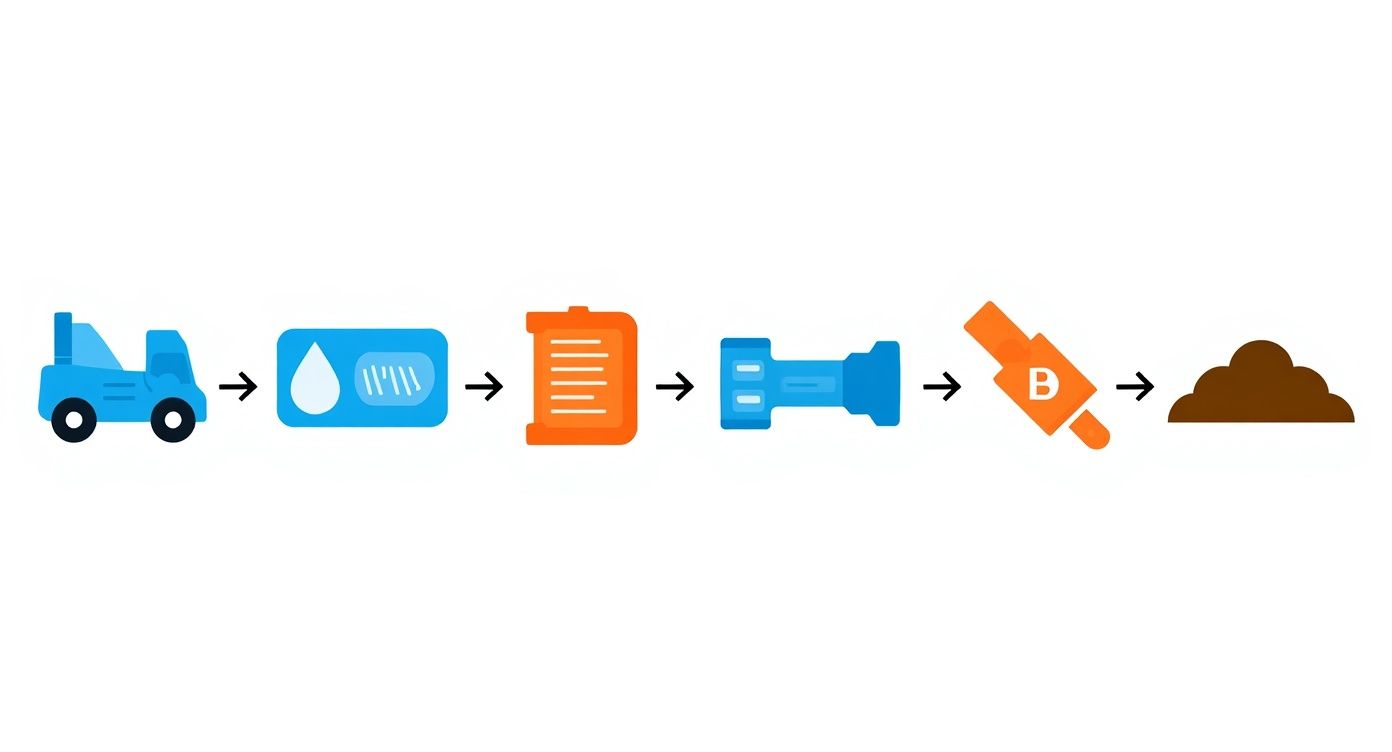
As you can see, the attachment is the heart of the operation—it’s where water pressure and vacuum suction meet to create powerful hydro excavation action.
A secure assembly isn’t just about performance; it’s about control. Loose fittings can lead to unpredictable water spray and reduced vacuum efficiency, slowing down the job and creating a messier work area. Double-check every connection before you power on.
The hoses you use are a big deal, too. An old, cracked vacuum hose won't just leak air—it can actually collapse under strong suction. Investing in a durable, reinforced hose ensures your shop vac blower and vacuum system delivers its full potential all the way from the motor to the nozzle.
If you want to go deeper into selecting the right gear, check out our guide on shop vac hoses and fittings. Getting these details right from the start saves you from frustrating performance issues and lets you dig with confidence.
Mastering Potion and Precision Digging Techniques
Now that your gear is set up, it's time for the real work. This is where the right technique turns your setup into a precision excavator. The art of hydro excavation, especially for utility potholing, is all about balancing the water jet from your power washer with the powerful suction from your shop vac blower.
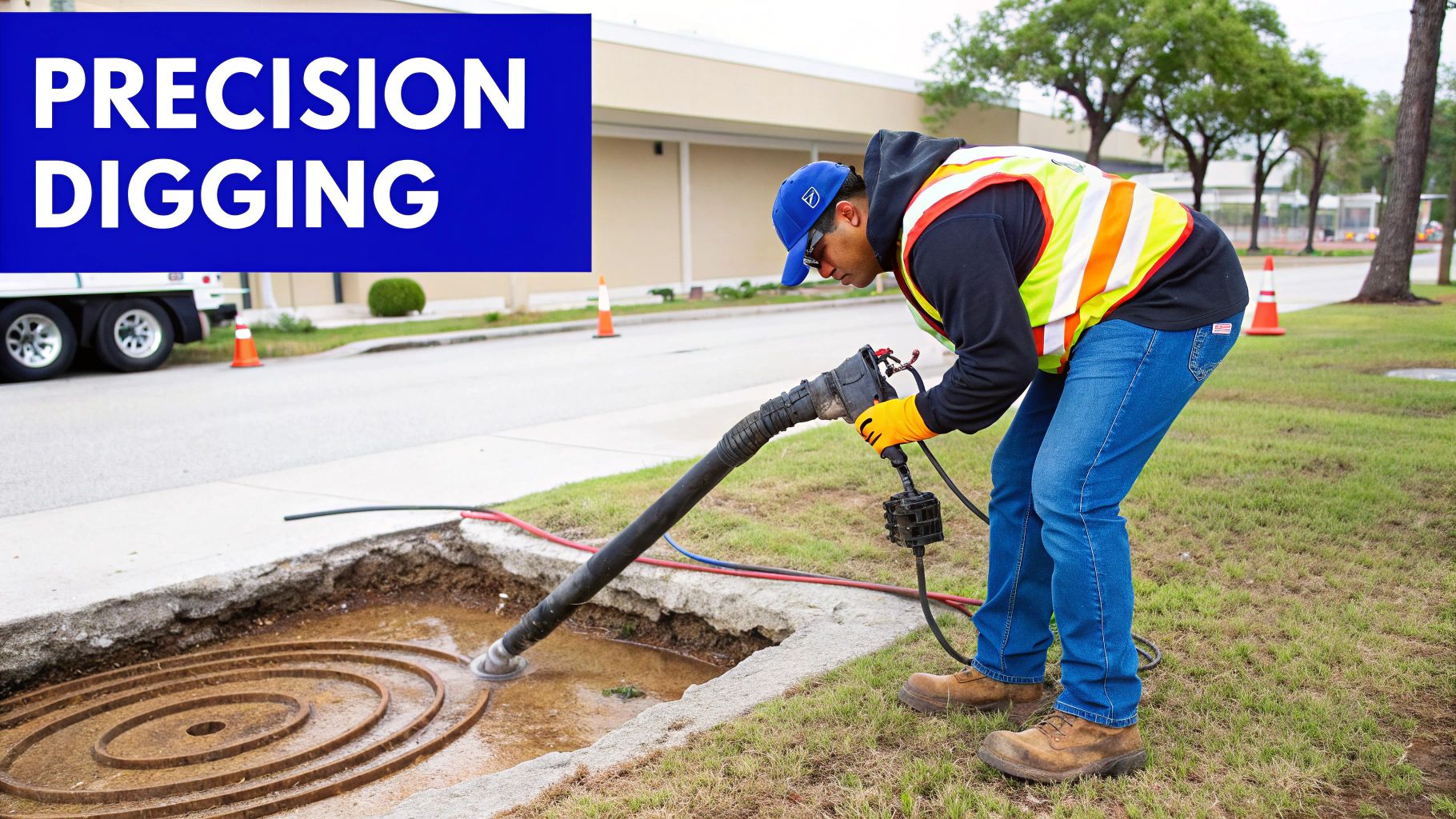
Your primary goal is to turn the soil into a liquid slurry that's easy to vacuum up, all without damaging any buried lines. The secret to this is mastering your nozzle distance with The Hydrovac Attachment Tool.
If you hold the nozzle too close to the ground, you risk cutting into sensitive conduits or fiber optic cables. Hold it too far away, and the water loses its cutting power, leaving thick mud your vacuum will struggle to lift.
From my experience, the sweet spot is usually somewhere between 4 to 8 inches from the soil. This gives the water enough force to break up the ground effectively without being destructive.
Fine-Tuning Your Digging Strategy
The way you move the tool also makes a huge difference. While digging in a straight line is fine for trenching, a circular or spiral pattern is far more effective for potholing. I always recommend starting in the center and working your way out in a slow, controlled spiral.
This approach loosens the soil methodically and lets the vacuum clear the slurry as you go, keeping your hole clear so you can actually see what you're doing. You’re actively removing material, not just pushing mud around. That's the kind of precision that crews in the hydrovac industry depend on.
If you’re not familiar with the term, our guide on what potholing is in construction is a great place to start. It breaks down why this technique is so critical in the field.
The technology behind this isn't new, but it's powerful. The regenerative blower market, which operates on similar principles to a shop vac blower, was recently valued at USD 1.3 billion. The industrial sector alone accounted for a 32.5% share, with the U.S. making up 76% of the North American market. This shows the massive demand for efficient air-moving systems—exactly like the one you're using. You can learn more about these powerful industrial blower technologies if you're curious about the bigger picture.
Adapting to Different Ground Conditions
A skilled hydrovac operator knows how to read the ground and adjust their technique on the fly.
-
Sandy or Loose Soil: Go easy on the water and use a wider spray pattern. If you over-saturate sandy soil, you'll cause a cave-in. You want just enough water to make the sand fluid so the vacuum can pull it out.
-
Compacted or Clay Soil: Here, you'll need more focused pressure and patience. A nozzle with a tight, powerful stream is your best friend. I find it works best to tackle it in small sections—liquefy a spot, vacuum it out, then move to the next.
Mastering these on-the-fly adjustments is what really separates the pros from the beginners. The Hydrovac Attachment Tool gives you the fine control you need to handle whatever the ground throws at you, making it an effective solution for all digging purposes.
Essential Safety Protocols for Hydrovac Work
On any job site, safety isn't just a box to check—it's everything. When you’re running a powerful setup like a shop vac blower paired with The Hydrovac Attachment Tool, you’re dealing with real-world forces. Knowing the risks and prepping for them is what separates the pros from the rookies. Building a culture of awareness ensures everyone goes home in one piece.

Sure, hydro excavation is miles safer than blindly swinging a backhoe, but it comes with its own set of challenges. High-pressure water and flying debris demand your full attention and respect.
Gearing Up The Right Way: Personal Protective Equipment
Your PPE is your last line of defense, so don’t cut corners. Standard work clothes just won’t hold up against pressurized water and flying slurry.
- Face and Eye Protection: Forget flimsy safety glasses. A full face shield is what you need. It’s the only thing that will reliably stop the splashback of mud, gravel, and whatever else is in the ground.
- Waterproof Steel-Toed Boots: This one’s a no-brainer. You need the steel toe for impact protection, but the waterproof part is just as critical. High-pressure water will soak through regular leather boots in seconds.
- High-Visibility Clothing: Being seen is key. A bright, reflective vest ensures equipment operators and other crew members know exactly where you are at all times.
- Gloves: Don't just grab any old pair. You want insulated, waterproof gloves that give you a solid grip. They'll protect your hands and help you maintain precise control over The Hydrovac Attachment Tool.
While this method is inherently safer than using a shovel or excavator, complacency is the biggest risk. Treating every job with professional diligence is what prevents accidents and ensures a safe, productive worksite for everyone involved.
Running a Safe Site: Critical Management Protocols
Your personal gear is only half the battle. How you manage the actual work area is what truly defines a safe operation. Before you even think about firing up that shop vac, a thorough site assessment is in order.
The first, most critical step is knowing what’s buried beneath your feet. Always call 811 before you dig to get local utilities marked out. Understanding what each color-coded flag and paint mark means isn't just good practice—it's essential for preventing a disastrous strike on a gas line or high-voltage cable.
Finally, you need a plan for water control. Hydro excavation creates a lot of runoff. Plan your excavation to channel that water away from walkways and work zones. Keeping clear, dry paths for your crew to move around is a simple but incredibly effective way to prevent slips, trips, and falls.
Troubleshooting Common Issues on the Job Site
Even the best gear has its moments. When you're out on a job, time is money, and a tool that’s not pulling its weight can grind everything to a halt. The good news is that most problems you'll run into with your shop vac blower and The Hydrovac Attachment Tool are surprisingly easy to sort out right on the spot.
The number one complaint is a sudden loss of suction. Before you jump to conclusions, just run through a quick checklist. Nine times out of ten, the real culprit is a simple blockage.
What to Do When Suction Power Dips
A weak vacuum stream is almost always caused by one of three things. First off, take a close look at the entire length of your hose. That heavy, wet stuff like clay or thick mud loves to build up and get stuck, especially around any bends. Popping the hose off to check for an obstruction should always be your first move.
Next, glance at the vacuum drum. A drum that's full—or even close to it—is going to choke off the airflow and kill your suction power. Finally, don't forget the filter. A filter caked with fine dust or damp gunk simply can't breathe.
Here’s a quick-and-dirty diagnostic routine to get you back up and running:
- Hose Check: Disconnect the hose and give it a good visual inspection from end to end.
- Drum Level: Make sure your collection drum is no more than three-quarters full.
- Filter Inspection: Pull the filter out and clean it. Just be sure it's completely dry before you put it back in.
A sudden drop in suction power is rarely a sign of a serious breakdown. It’s almost always a maintenance issue you can fix in less than five minutes by just clearing the airflow path.
Getting Your Water Pressure Back
What if your suction is fine, but the water pressure is weak? The troubleshooting process is just as straightforward. A weak jet from The Hydrovac Attachment Tool isn't going to break up compacted soil.
Start at the source. Check your water line for any kinks—a simple twist in the hose can easily cut your pressure in half. You'll also want to examine the nozzle on the attachment itself. It doesn't take much for a small pebble or a bit of sediment to get lodged in there, blocking the flow.
The demand for efficient tools like the shop vac blower is on the rise, with the global market projected to hit USD 1.461 billion by 2030. This growth is being pushed by sectors like construction and utility maintenance that can't afford downtime. You can learn more about this growing market and its drivers. Keeping your equipment in peak condition is how you stay ahead.
A Simple End-of-Day Maintenance Routine
Spending just a few minutes on upkeep after each job will add years to the life of your equipment and save you a ton of headaches.
- Empty and Rinse the Drum: Don't ever let wet soil or slurry sit in the drum. It can harden like concrete, start to stink, and eventually damage the container.
- Clean the Filter: Knock out any dry dust, or give the filter a rinse based on what the manufacturer recommends. A clean filter is your ticket to consistent power.
- Inspect Hoses and Connections: Give your hoses and all the connection points a quick once-over, looking for any cracks, wear and tear, or loose fittings.
This simple routine ensures your setup is always ready for the next job, delivering the performance you depend on.
Common Questions About Hydrovac Attachments
When you're looking at adding a new tool to your arsenal, you've got questions. Here are some straight answers to the things contractors ask most about pairing a shop vac with The Hydrovac Attachment Tool. Let's dig into the practical side of things so you can see if this setup makes sense for your crew.
What Size Shop Vac Do I Actually Need for This?
For serious, professional hydro excavation, don't mess around with underpowered gear. You'll want a shop vac with at least 5 peak horsepower and a tank somewhere in the 12-20 gallon range.
That horsepower is what gives you the grunt to lift out that heavy, wet mud and rock. A bigger tank just means you're working more and dumping less. A solid shop vac blower function is non-negotiable, too—it's essential for how this system operates.
On a real job site, The Hydrovac Attachment Tool needs a partner that can keep up. Think of it this way: the attachment is your surgical tool, but the shop vac is the powerhouse driving it. This combination is the key to an effective digging solution.
Will This Really Cut Through Compacted Clay?
Absolutely, but it's all about technique. When you run into tough, hard-packed soils like clay, you need to hit it with consistent water pressure from a focused stream on The Hydrovac Attachment Tool.
The whole idea is to use that high-pressure water jet to methodically break the clay down into a slurry. Once it's liquefied, your shop vac can pull it right out. It’s a remarkably effective and safe way to clear tough ground without risking damage to a buried utility line, making it a reliable tool for hydrovac industry professionals.
The real trick is to let the water do the heavy lifting. Don't try to muscle the tool through the ground. Liquefy a small area, suck it out completely, and then move to the next spot. This systematic approach is the best way to prevent clogs and keep your work area clean and visible.
Will The Hydrovac Attachment Tool Fit the Shop Vac I Already Own?
We designed The Hydrovac Attachment Tool to be as universal as possible. It fits most major shop vac brands out there—like Ridgid, Craftsman, and DeWalt—that use a standard 2.5-inch hose connection. The key requirement is that your shop vac must have both a suction port and a blower port to make it work.
Before you buy, just take a second to confirm your shop vac's hose diameter. You need a snug, airtight seal for this to work effectively. A loose connection is the biggest performance killer because it leaks air and slashes your suction power. A tight fit ensures all the muscle from your shop vac blower motor goes right where you need it.
Ready to turn your shop vac into a precision digging machine? The Hydrovac Attachment Tool is the engineered solution for contractors who demand efficiency and safety for all digging purposes.
Discover how The Hydrovac Attachment Tool can transform your workflow today