


A hydro excavation vacuum system is a game-changer for homeowners and yard care professionals. It’s a precise, non-destructive way to dig, especially when you need to work around buried utilities like sprinkler lines or low-voltage cables.
Instead of hacking away with a shovel, this method uses pressurized water to turn soil into a liquid slurry. A powerful wet vac hose then sucks it all up, giving you surgical precision for all sorts of residential digging projects. It completely sidesteps the risks of hitting valuable underground pipes or cables, turning risky jobs into safe, manageable tasks.
Bringing Professional Precision to Your Backyard
When you hear "hydro excavation," you might picture massive industrial trucks. But that's not the full story. That same powerful, damage-free digging technology is now available for smaller, residential projects thanks to innovative tools that work with equipment you already own.
Imagine swapping a clumsy shovel for a tool that carefully excavates around delicate sprinkler lines or tree roots. This isn’t just a neat trick; it’s the new standard for smart, safe, and clean residential digging. This shift is a direct response to the need for safer methods in yards that are increasingly crowded with underground utilities. Hitting a pipe or cable with a shovel can turn a simple weekend project into an expensive headache.
A Smarter Way to Handle Yard Work
The best part? You don't need an industrial truck. With a simple setup, you can transform how you tackle common yard tasks. All it takes is your wet/dry vacuum, a standard pressure washer, and a specialized wet vac hose attachment to get professional-grade results.
This combination gives you the power to handle projects like:
- Setting fence posts without the constant worry of striking a buried utility line.
- Repairing sprinkler systems by safely uncovering pipes without cracking them.
- Digging up damaged pipes without accidentally causing more damage.
- Planting trees or shrubs near known utility paths with total confidence.
This approach is a scaled-down version of the industrial process, making a hydro excavation vacuum setup a practical tool for any homeowner. The magic lies in using an accessory like the Hydrovac Attachment Tool. It’s designed to connect your power washer and wet vac hose, creating a mobile digging system that clears away dirt and debris cleanly and safely, which is perfect for targeted digging purposes.
If you want to get a better handle on the basics, you can learn more about what hydro excavation is and see just how it works.
How Your Wet Vac Becomes a Precision Digger
The idea of turning a common shop vac into a hydro excavation vacuum is surprisingly straightforward. It combines the power of high-pressure water with strong suction from a wet vac hose, giving you surgical control for your digging projects.
First, you use a focused jet of water from a pressure washer to gently break apart and liquefy the soil. Instead of trying to brute-force your way through hard-packed ground with a shovel, the water does the tough work, turning dense dirt into a pumpable slurry.
Almost immediately, the powerful suction from your wet vac whisks this slurry away. What’s left is a clean, precise hole with almost no mess to clean up afterward. This is ideal for digging fence post holes or exposing pipes for repair without damaging them, taking the guesswork out of working near sensitive underground utilities.
The Power of a Combined System
The real magic happens when you bring these two actions together. The Hydrovac Attachment Tool is the key piece of hardware that merges the water jet and the vacuum suction into one fluid motion. It creates a self-contained, highly efficient system that channels the slurry directly into the wet vac, putting you in complete command of the excavation.
This water-and-vacuum technique is a mobile version of what industrial hydro excavation trucks do. While the big trucks are used for major infrastructure projects, the core principle is the same: use water and suction for safe, non-destructive digging. The Hydrovac Attachment Tool makes this technology accessible for small-scale residential jobs.
The diagram below really shows the evolution from clunky, old-school digging to this far more precise, modern approach.
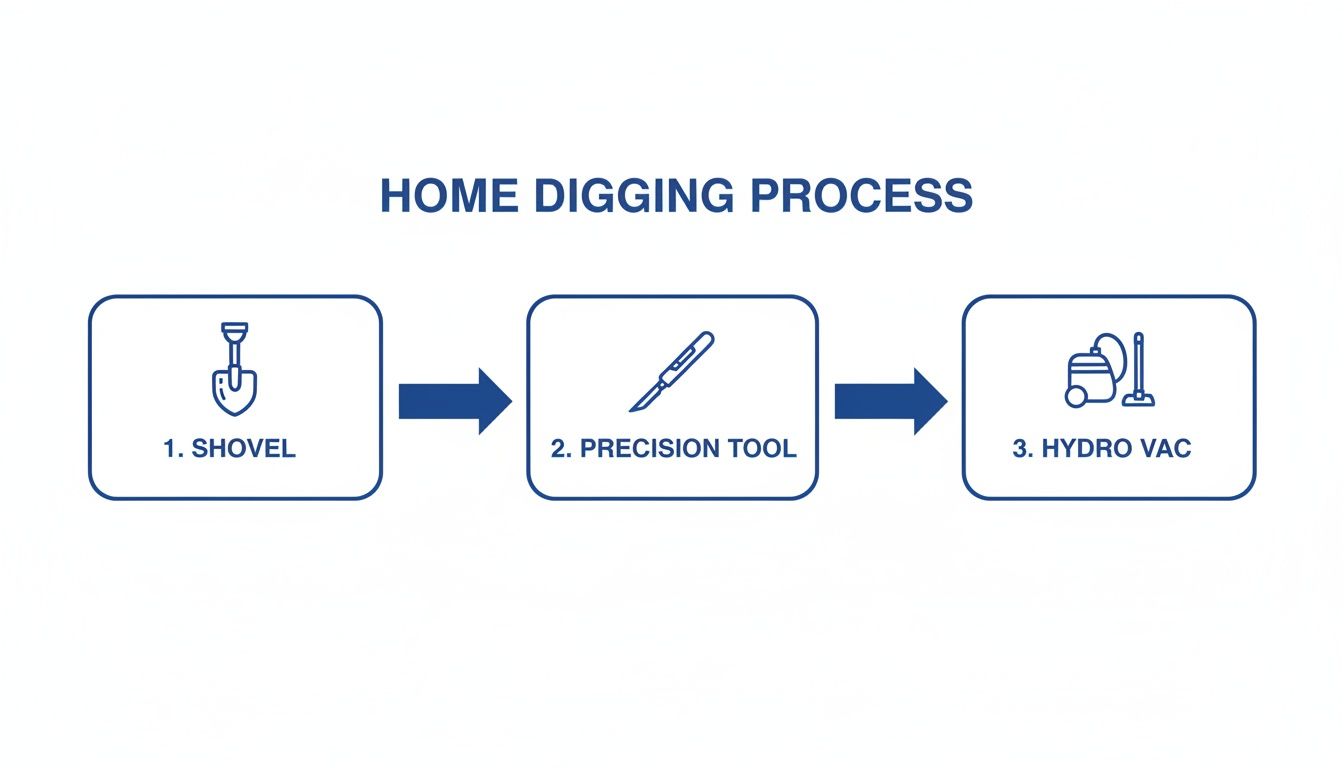
As you can see, this isn't just a different tool—it's a completely different philosophy. It replaces brute force with a controlled, surgical technique that reduces risk and boosts accuracy for any homeowner.
Why This Method Works So Well for Home Projects
When you’re digging fence post holes or need to expose a buried pipe for a repair, precision is non-negotiable. One wrong move with a shovel can slice through a cable or crack a sprinkler line, turning a simple weekend project into a costly headache. A hydro excavation vacuum powered by a simple wet vac hose attachment eliminates that risk.
The attachment ensures the water jet and suction are perfectly aligned, which stops messy splashback and keeps your work area tidy. You can see exactly what you're digging in real time, letting you navigate carefully around obstacles like tree roots or buried lines without damaging them. It’s simply a smarter, safer way to tackle tough yard work. Of course, to get started, you'll need to know which shop vac adapter is right for your hose to ensure a perfect, leak-free fit.
Common Yard Projects Perfect for a Mobile Hydro Vac
A mobile hydro excavation vacuum system isn't for massive construction sites. It's a brilliant solution for some of the most common—and nerve-wracking—projects you'll tackle in your own yard. This method replaces brute force with surgical precision, shining brightest when you absolutely cannot afford to make a mistake, like digging near utility flags or repairing delicate pipes.
You don't need an industrial truck to do it. An accessory like the Hydrovac Attachment Tool brings this professional technique to a homeowner's scale. It lets you connect your everyday wet vac and pressure washer, turning them into a powerful yet gentle digging machine for clearing small amounts of debris.
Safely Digging Fence Post Holes
Putting up a new fence is a classic weekend project, but it’s also risky. One wrong move with a post-hole digger can hit a shallow gas, water, or electrical line. A hydro excavation vacuum takes that gamble completely off the table.
Instead of blindly digging, you liquefy the soil with a controlled stream of water and immediately vacuum it away with your wet vac hose. This lets you carve out perfect holes for your fence posts while seeing exactly what’s underground. Any hidden utilities are gently uncovered, not broken. It's a controlled process that gives you complete peace of mind.
Exposing Pipes and Sprinklers for Repairs
Ever had a sprinkler head break or an underground pipe start leaking? Getting to it without causing more damage is the real challenge. A shovel can easily crack fragile PVC pipes, turning a small fix into a huge headache.
This is where a mobile hydro excavation vacuum proves its worth. The gentle force of water washes away soil, cleanly exposing the pipe or fixture you need to reach. By carefully removing soil layer by layer, you can uncover the exact location of a leak without any risk of causing further harm. This method is so precise that you can clear dirt from around a delicate sprinkler line without disturbing the rest of your lawn.
Creating Clean Trenches for Landscaping
Need to install landscape lighting or run a new irrigation line? These jobs often require digging narrow trenches, which can tear up a lawn. A hydro excavation vacuum offers a much cleaner, less invasive alternative.
It makes a huge difference in projects like these:
- Landscape Lighting: Dig precise, narrow channels for low-voltage wiring without ripping up wide strips of your turf.
- Irrigation Systems: Create clean trenches for new sprinkler lines, making the installation faster and keeping lawn damage to a minimum.
- Drainage Solutions: Install French drains with incredible accuracy, especially in tight spots next to foundations or patios.
Even major upgrades like outdoor kitchen installations benefit from this kind of precision. The Hydrovac Attachment Tool makes this all possible for residential jobs, preventing expensive mistakes and saving hours of back-breaking work.
Traditional Digging vs Hydro Excavation Vacuum
| Task | Traditional Shovel or Auger | Hydro Excavation Vacuum |
|---|---|---|
| Digging Fence Posts | High risk of hitting unseen utility lines. Creates a large, messy pile of dirt. | Safely exposes utilities without damage. Slurry is contained for clean, easy disposal. |
| Repairing Sprinklers | Easy to accidentally crack PVC pipes or damage adjacent sprinkler heads. | Gently removes soil, providing clear access to the repair site without collateral damage. |
| Trenching for Wires | Creates a wide, destructive trench that scars the lawn and requires extensive backfilling. | Cuts a narrow, clean channel that minimizes turf damage and is easy to fill back in. |
Ultimately, the choice comes down to precision and safety. While a shovel is simple, a hydro excavation vacuum offers a level of control that protects your property and prevents small jobs from turning into big disasters.
Building Your DIY Hydro Excavation Kit
You don't need a massive industrial truck for effective digging purposes. It's surprisingly straightforward to build your own portable system, and you probably already have the necessary equipment in your garage. The whole setup just comes down to making three core components work together.
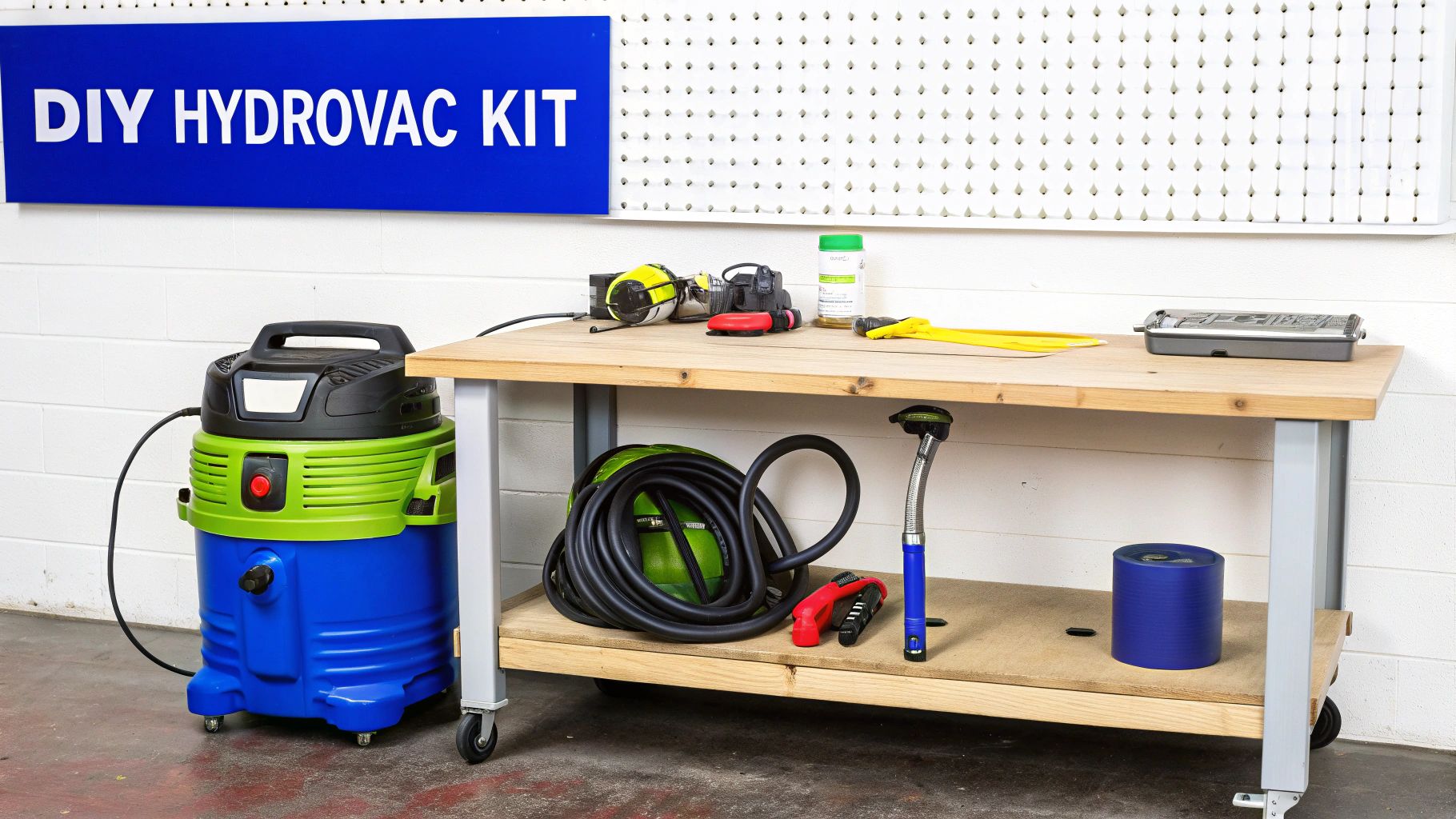
This DIY approach turns your standard yard tools into a precision digging machine. While hydrovac trucks are common for city projects, the basic technology is perfectly suited for home use. This mobile tool, paired with your vacuum's wet vac hose, is the ideal solution for clearing small amounts of debris safely and efficiently.
The Three Essential Components
Putting your kit together is easy. Here are the three main pieces to get you started:
-
A Standard Wet/Dry Shop Vacuum: This is the engine of your operation. For most home jobs like setting fence posts or digging up pipes, a vacuum with a 5 to 12-gallon tank and at least 5 peak horsepower will provide plenty of suction.
-
A Consumer-Grade Pressure Washer: This provides the digging power. A typical electric model that puts out between 1500 and 2000 PSI is ideal. It has enough muscle to break up most soils but isn't so powerful that you risk damaging underground pipes or cables.
-
The Hydrovac Attachment Tool: This is the clever piece that brings everything together. It’s designed to securely connect your pressure washer wand to your wet vac hose, turning two separate tools into one integrated unit that can blast soil loose and vacuum it up simultaneously.
Assembling Your System in Minutes
You can get this system running in just a few minutes with three simple steps.
First, slide the base of the Hydrovac Attachment Tool right over the end of your vacuum's wet vac hose. Next, tighten the included clamp to make sure you have a solid, airtight seal. This connection is key, and it works much like what a leader hose is in a professional setup.
Finally, just insert your pressure washer wand through the attachment and lock it down. That's it—your DIY hydro excavation vacuum is ready to go. You’ve just turned your everyday equipment into a powerful digging tool that lets you tackle tricky yard projects with precision and control.
A Closer Look at the Hydrovac Attachment Tool
Think of your pressure washer and wet vac as the engine and the tank. The Hydrovac Attachment Tool is the brain that brings them together, turning two separate pieces of equipment into a single, smart hydro excavation system. This isn't just another accessory; it's the key that unlocks safe, affordable hydro excavation for home and yard projects. It’s what connects the powerful water jet to the strong suction of your wet vac hose, making them work in perfect harmony.
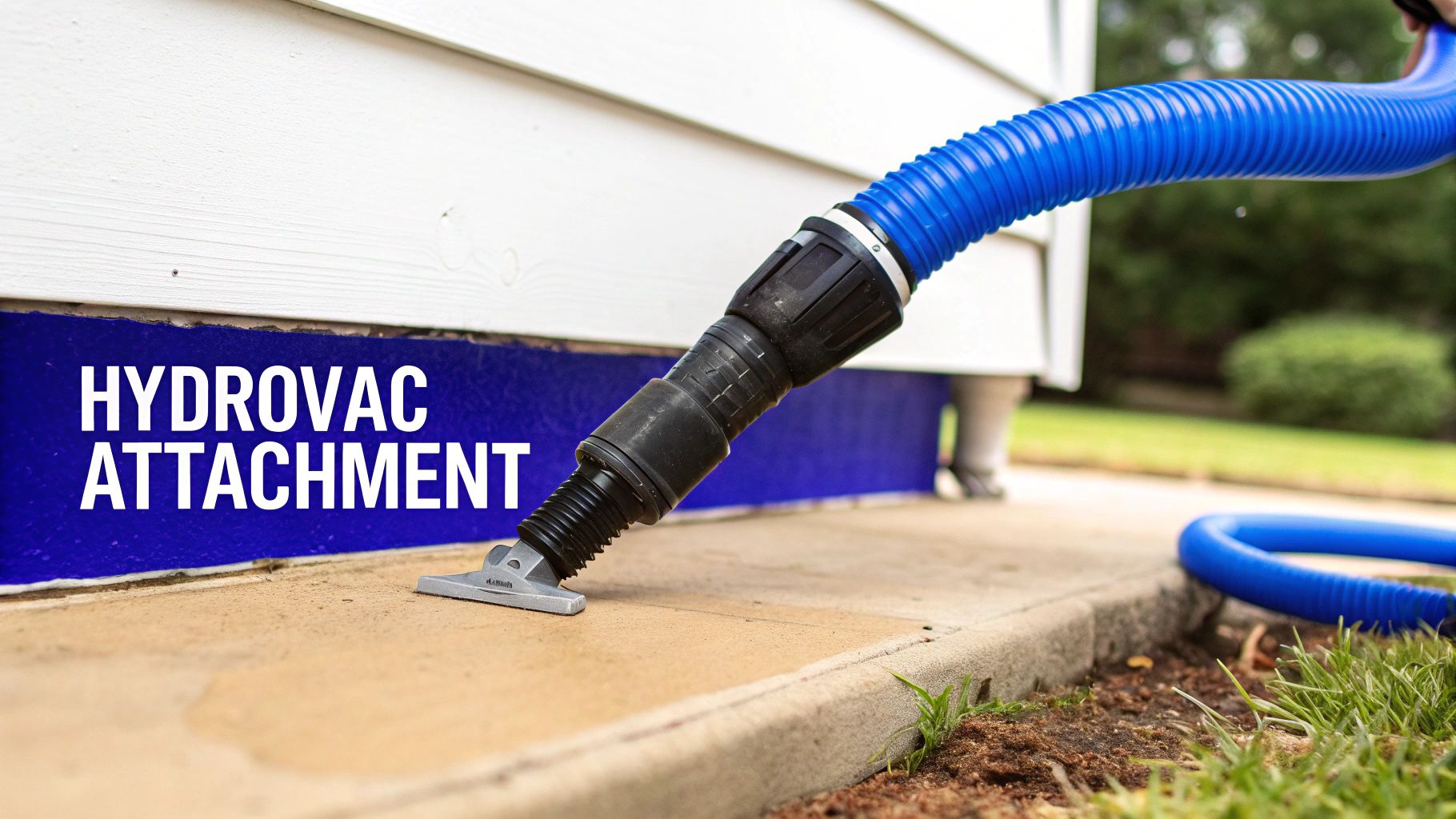
This tool was designed from the ground up for smaller jobs, a world away from the massive and expensive hydrovac trucks. It’s built for homeowners and small contractors who need to do precise work—like digging fence post holes, locating sprinkler lines, or exposing pipes for repair—without shelling out thousands for industrial gear.
Engineered for Precision and Durability
At its core, the Hydrovac Attachment Tool uses a patented three-part system with one critical job: creating a perfect, leak-proof seal. This airtight connection is what guarantees the water and soil slurry goes directly into your wet vac, not all over you and your work area.
The system is made up of:
- A solid base connector designed to fit perfectly over any standard 2.5-inch wet vac hose.
- A high-torque hose clamp that locks the base down tight, eliminating air leaks that kill suction power.
- A specially designed nozzle cap that grips your pressure washer wand, keeping the water jet aimed right where you want it.
This sealed design is the secret to preventing messy splashback. By containing the slurry, you keep the dig site clean, but more importantly, you can actually see what you're doing. As soil is washed away, you can spot pipes, cables, or tree roots immediately, which is crucial for avoiding costly damage.
Built for Real-World Residential Digging
Every detail of the Hydrovac Attachment Tool was considered with the user in mind. It's molded from a tough, industrial-grade polymer that can take a beating, whether it’s getting dragged through muddy trenches or knocked against rocky soil. It’s light enough to handle all day but built to last for years.
This focus on practical design is what separates a purpose-built tool from a clumsy, makeshift solution. The tool turns the messy, two-handed job of spraying and vacuuming separately into a controlled, one-tool operation.
This makes it perfect for all kinds of digging around the house. For example, if you need to expose a delicate pipe for repair, the tool's precision lets you gently wash away the surrounding dirt instead of risking damage with the brute force of a shovel. It’s this simple but effective difference that makes it the essential link for your DIY hydro excavation setup.
Why Precision Digging Is a Game-Changer for Your Yard
Let's be honest, digging in your own yard can feel like a gamble. Every time you sink a shovel into the ground, there's that nagging worry: what if you hit a sprinkler line, a cable, or something worse? This is where hydro excavation completely changes the game for homeowners. It’s not just a fancy new gadget; it’s a fundamentally safer and cleaner way to handle your property.
Think about it. You get unmatched safety because you’re not blindly swinging a metal blade. The risk of damaging hidden utility lines while digging a fence post hole or trying to find a pipe for a repair drops to nearly zero. It’s also incredibly efficient, especially in those awkward, tight spots where a shovel is more destructive than helpful. Best of all, it keeps your lawn and landscaping from looking like a war zone.
Putting Professional Power in Your Hands
For years, this kind of precision digging was only available with giant, expensive industrial trucks. That’s not the case anymore. Tools like the Hydrovac Attachment Tool have brought this technology down to a scale that makes sense for home projects. It cleverly connects to a standard wet vac hose and vacuum, giving you the same surgical accuracy the pros use.
This is a perfect fit for so many common yard tasks:
- Digging Fence Posts: You can carve out perfect holes without the fear of a costly and dangerous mistake.
- Finding Utility Lines: Need to repair a sprinkler system or access a buried cable? This method uncovers them gently without causing more damage.
- Keeping Things Clean: The wet vac hose sucks up the soil and water slurry immediately, leaving your yard looking neat and tidy.
At the end of the day, this is all about having total control and peace of mind. You're no longer just guessing and hoping for the best with a shovel. Instead, you're carefully and precisely removing soil, with safety as the top priority.
It’s time to move past the brute-force approach to digging. Adopting a mobile hydro excavation setup is a smart move that protects your property, helps you avoid expensive accidents, and keeps your home looking its best. The Hydrovac Attachment Tool is what makes this professional-grade method a practical and essential part of any homeowner’s toolkit.
Got Questions? We've Got Answers
Thinking about using a hydro excavation vacuum for a project around the house? You're not alone. Here are some of the most common questions we hear, with straightforward answers to get you started on the right foot.
What Size Wet Vac and Pressure Washer Should I Use?
For typical home projects—think digging fence post holes or clearing out stubborn drains—you don't need a massive industrial unit. Look for a wet/dry vacuum with a tank capacity between 5 to 12 gallons and a motor with at least 5 peak horsepower. This gives you enough suction and capacity to get the job done without constant emptying.
As for the pressure washer, an electric model rated between 1500 and 2000 PSI is the sweet spot. It's powerful enough to break up most soils but gentle enough that you won't have to worry about accidentally damaging buried pipes or utility lines.
Will This Tool Fit the Hose on My Wet Vac?
Great question. The Hydrovac Attachment Tool was specifically designed to work with the 2.5-inch wet vac hose, which is the standard size for the vast majority of consumer and pro-grade shop vacuums.
To be absolutely sure, just take a quick measurement of the outer diameter of your vacuum hose. If it's 2.5 inches, you'll get that perfect, secure fit needed for maximum suction power.
What about tough soil like clay?
This is actually where the system shines. That high-pressure water jet is fantastic at breaking up dense, compacted clay that would make you sweat with a shovel. It turns that stubborn material into a liquid slurry that the vacuum can slurp right up. It might take a bit longer than in loose, sandy soil, but it's a whole lot faster—and easier on your back—than trying to dig through clay by hand.
Ready to bring this level of precision and safety to your next digging project? The Hydrovac Attachment is the key to turning the equipment you already own into a powerful, non-destructive digging machine.