


You might think a cubic foot of dirt is just a cubic foot of dirt, but its weight can be all over the map. Generally, you're looking at a range between 75 and 125 pounds. The big question is where in that range your soil falls, and that comes down to its type, how much water it's holding, and how packed down it is.
Getting this number right is surprisingly important for any residential digging project, from setting fence posts to carefully exposing underground pipes. It's the key to making sure your equipment—and your back—can handle the job efficiently and safely.
How Much a Cubic Foot of Soil Really Weighs
When you're planning to set some fence posts or need to dig carefully around a buried pipe, that pile of dirt can be deceiving. What looks like a small amount of soil can quickly turn into a surprisingly heavy load. Underestimate it, and you could easily find yourself with an overloaded wheelbarrow or a struggling wet vac hose, turning a simple yard care task into a real headache.
Think about it this way: a cubic foot of fluffy, dry topsoil might only weigh around 75 pounds, which is pretty manageable. But take that same cubic foot and fill it with dense, water-logged clay, and you could be looking at over 120 pounds. Suddenly, clearing that small amount of debris becomes a much bigger, much heavier problem.
Quick Guide to Soil Weight by Type
For a quick reference, here's a look at what you can expect from different types of soil. Notice how much water can change the game.
| Soil Type | Average Dry Weight (lbs/cu ft) | Average Wet Weight (lbs/cu ft) |
|---|---|---|
| Topsoil | 75-80 lbs | 95-100 lbs |
| Sand | 90-100 lbs | 115-125 lbs |
| Clay | 100-110 lbs | 120-130 lbs |
| Gravel | 100-110 lbs | 125-135 lbs |
These are just averages, but they give you a solid starting point for planning your project.
Why This Matters for Your Yard Work
Getting a feel for soil weight isn't just academic—it has a direct impact on how you approach any digging job. For homeowners and landscapers, this knowledge helps with:
- Tool Selection: Is your vacuum and wet vac hose up to the task? A heavy, saturated soil might mean you need to work in smaller, more manageable batches to avoid breaking your equipment.
- Project Planning: When you can estimate the total weight of the dirt you're moving, you can plan for disposal without any last-minute surprises or unexpected heavy lifting.
- Job Efficiency: Knowing what you’re up against from the start helps you work smarter, not harder. You can avoid straining your tools and finish the job faster, especially when you're using equipment designed for precision.
When you're trying to expose delicate pipes or dig clean, perfect post holes, brute force with a shovel isn't the best approach. A more targeted method that manages soil removal as you go saves time, effort, and prevents costly damage.
This is where more advanced tools can make a huge difference. For example, The Hydrovac Attachment Tool was created for these exact situations. It's a mobile tool that pairs with your wet vac, using a pressure washer to liquefy soil while the vacuum's hose removes it instantly. This technique makes the soil's weight and density a non-issue, offering a much cleaner and more controlled way to handle small-scale excavations without all the mess and manual labor.
What Really Makes Soil Heavy?
Ever wondered why a bucket of dry, dusty dirt feels almost feather-light compared to a scoop of thick, wet mud from the same spot? It's not just one thing; it's a few key factors working together. Getting a handle on these variables is your secret weapon for accurately planning any residential digging project, so you're not caught off guard by an unexpectedly heavy load.
Think of soil like a kitchen sponge. A dry sponge is light and full of air. Soak it in water, and it gets heavy fast as water fills all those tiny pockets. Soil does the exact same thing, and water is the biggest game-changer when it comes to weight.
Moisture Content: The Heavy Hitter
The amount of water tucked between soil particles is the single biggest factor affecting the weight of one cubic foot of soil. Dry, fluffy topsoil might weigh around 75 pounds. But after a good soaking rain, that same cubic foot can easily top 100 pounds.
This extra water weight is a huge deal when you're using a wet vac for cleanup. A vacuum that has no problem with dry soil might bog down or fill up its wet vac hose way too quickly when sucking up a wet slurry. This can turn a simple job, like digging a fence post hole, into a long, frustrating ordeal.
Soil Composition: What's It Made Of?
Next up is what the soil is actually made of. Just like a pound of feathers takes up more space than a pound of lead, different soil materials have different densities.
- Clay Soil: Made of tiny, fine particles that pack together like a deck of cards, leaving very little room for air. This density makes clay one of the heaviest soil types, especially when it's wet.
- Sandy Soil: This is all about larger, coarser mineral particles. It feels light and loose when dry, but because those mineral grains are dense, sand gets surprisingly heavy when saturated with water.
- Loam and Topsoil: This is the good stuff—a balanced mix of sand, silt, clay, and organic matter. The organic material acts like tiny, lightweight sponges, making loam and topsoil generally lighter than pure clay or sand.
Knowing your soil type helps you predict how it will behave. Trying to dig around sensitive pipes without causing damage? Heavy, stubborn clay might demand a more careful approach. This is where a tool like The Hydrovac Attachment Tool really shines, using pressurized water to gently break down dense material so your wet vac can easily remove it without damaging utilities.
Compaction: How Tightly Is It Packed?
Finally, think about how compacted the soil is. The undisturbed ground in your yard has been settling for years, with all the particles pressed tightly together. As soon as you stick a shovel in and start digging, you introduce air, making the excavated pile much fluffier and less dense.
This difference between compacted and loose soil is a bigger deal than you might think. A pile of excavated dirt is significantly lighter per cubic foot than the solid ground it came from. Factoring this in is crucial for getting your hauling and disposal estimates right.
Just look at the industrial soil density charts—the weight difference between compacted and loose states can be massive. Data from construction equipment manufacturers shows that a sand and clay mix can jump in weight by 50% when it goes from a loose pile to being compacted. You can see these kinds of material density shifts for yourself on reference tables like the ones from Cat's earthwork guide. Understanding this simple principle is fundamental for planning any dig and making sure you know exactly how much material you're really moving.
Comparing the Weight of Common Soil Types
Anyone who's ever tried to dig a hole knows that not all dirt is the same. What's under your feet is the single biggest factor in any excavation project, and the type of soil directly impacts the weight of one cubic foot of soil. This, in turn, tells you how much effort—and what kind of equipment—the job is really going to take.
Let’s get our hands dirty and break down the usual suspects you'll find in your yard.
Heavyweights and Lightweights of Your Yard
Sandy Soil: You might think of sand as light and loose, but don't let its quick-draining nature fool you. A cubic foot of dry sand is surprisingly heavy, coming in at around 90-100 lbs. Once it gets wet, water rapidly fills all those gaps between the large mineral particles, and the weight can jump to 115-125 lbs.
Clay Soil: Clay is the complete opposite. Its particles are tiny, flat, and pack together so tightly there’s almost no room for air. This density makes it heavy even when it's bone-dry, often weighing 100-110 lbs. Add some water, and you’re wrestling with a stubborn, sticky mass that can easily top 120-130 lbs per cubic foot. That's a real challenge for manual digging or a standard wet vac hose.
Topsoil and Loam: This is the good stuff, what gardeners dream of. It's a balanced mix of sand, silt, and clay, plus a healthy dose of organic matter. That organic material makes it much lighter and more porous. A cubic foot of dry topsoil is usually in the 75-80 lb range, climbing to only about 95-100 lbs when wet. Its beautiful structure makes it a breeze to work with.
This chart really drives home how the three main factors—soil type, moisture, and compaction—all work together to determine the final weight you're dealing with.
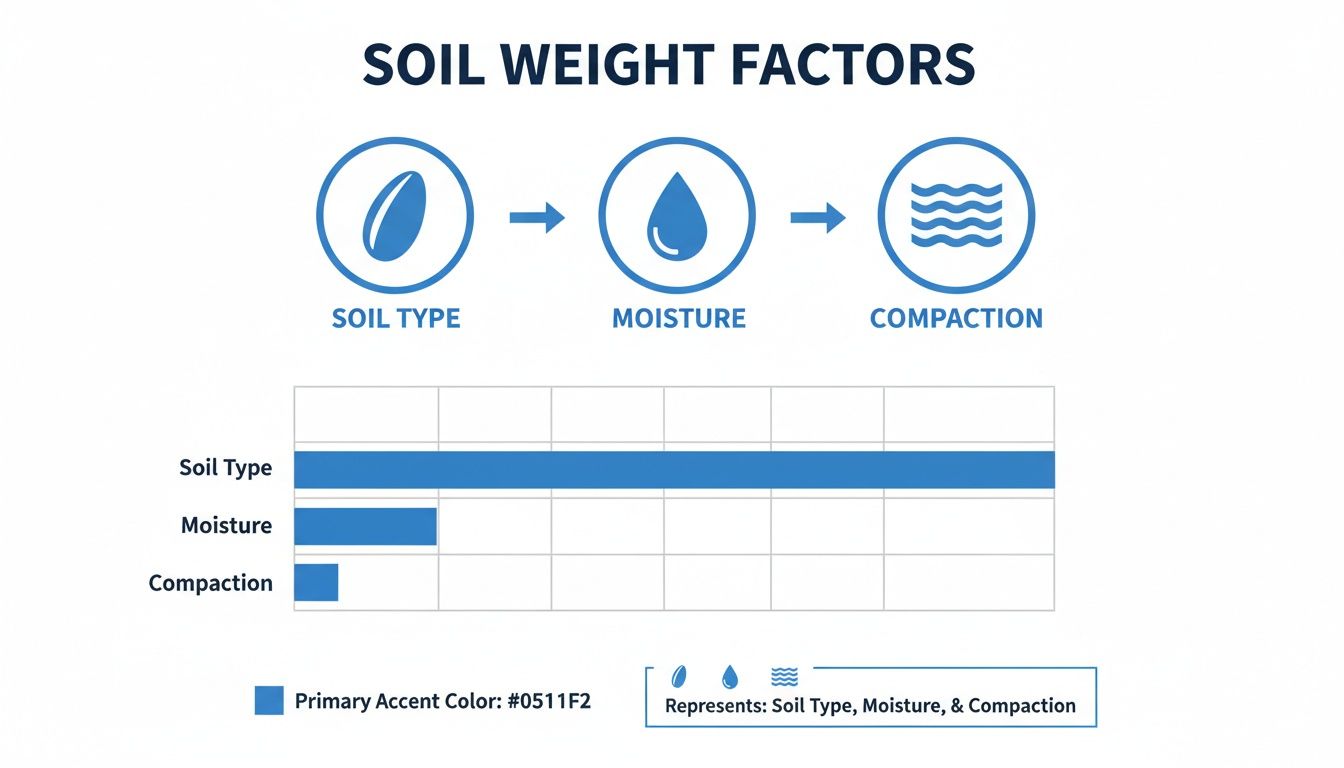
As you can see, the final number on the scale for your excavation project depends on this delicate interplay.
Why Particle Size Matters on the Job
Those microscopic differences between soil particles have a massive impact on your work. The basic relationship is simple: the smaller the particles, the less empty space (or "void space") there is.
Clay, with its minuscule particles, has very little void space. It averages around 100 pounds per cubic foot dry and 110 pounds wet. In stark contrast, sandy soil has much more room between its particles. It weighs about 97 pounds when dry but balloons to a hefty 119 pounds when wet because all that void space fills with heavy water.
This huge weight difference is exactly why a tool like The Hydrovac Attachment is so effective. It doesn't fight against the soil with brute force. Instead, it uses high-pressure water to liquefy any soil type—from dense clay to waterlogged sand—turning it into a slurry that a powerful wet vac can handle without a problem.
Ultimately, the composition of your soil is the primary driver of its weight. You can see this principle in action with highly engineered soils like potting mixes for succulent plants, where materials are specifically chosen to control density and drainage.
By taking a moment to identify your soil type, you can accurately estimate the load you'll be moving. Whether you're digging post holes or trenching for a new pipe, this knowledge helps you work smarter, not harder.
How to Calculate Soil Weight for Your Project
Alright, let's put this knowledge into practice. Figuring out the total soil weight for your project isn't as complicated as it sounds, but getting it right gives you the confidence to plan the job properly. Whether you're setting a new mailbox post or digging a small trench for a sprinkler line, a simple formula is all you really need.
The core idea is simple: first, figure out the volume of the hole you're digging in cubic feet. Then, multiply that number by the estimated weight of your specific soil type. This quick bit of math is the key to avoiding surprises and making sure you have the right plan and equipment for the job.
The Basic Formula for Soil Weight
To nail down the total weight of the soil you need to move, you just need two things: the hole's volume and the soil's weight per cubic foot.
Here’s the formula: Total Soil Weight (lbs) = Volume (cu ft) x Soil Weight (lbs/cu ft)
For a square or rectangular hole, finding the volume is a simple matter of multiplying its length, width, and depth. Just make sure all your measurements are in feet to get the correct volume in cubic feet.
A quick heads-up: this calculation gives you the weight of the soil while it's still packed in the ground. Once you dig it out, the pile will be looser and take up more space, but the total weight you have to haul away doesn't change.
Real-World Example: Digging a Fence Post Hole
Let’s walk through a classic weekend project: digging a hole for a standard 4x4 fence post. For a job like this, you're probably looking at a hole that’s around 10 inches wide, 10 inches long, and 2 feet deep.
First things first, we need all our measurements in feet.
- Width: 10 inches ÷ 12 = 0.83 feet
- Length: 10 inches ÷ 12 = 0.83 feet
- Depth: 2 feet (already in feet)
Now, let's calculate the volume.
Volume = 0.83 ft x 0.83 ft x 2 ft = 1.38 cubic feet
Next, we need the soil weight. Let's say your yard has average, damp topsoil, which weighs about 95 pounds per cubic foot.
Total Weight = 1.38 cu ft x 95 lbs/cu ft = 131.1 pounds
Suddenly, that one little hole is over 130 pounds of dirt. Imagine you're setting ten posts—you're now dealing with over 1,300 pounds of soil that has to go somewhere. This is exactly why a little bit of math upfront can save you a huge headache later. For bigger projects, it's often more practical to learn about calculating soil weight per cubic yard as well.
This simple calculation can help you figure out if your wet vac can handle the load from each hole or if you need a more robust system. With a tool like The Hydrovac Attachment, the process is a whole lot easier. It turns the soil into a liquid slurry as you dig, so your wet vac can suction it away in manageable amounts. This prevents overload and makes precise digging a breeze.
A Smarter and Safer Way to Handle Residential Digging
Knowing the weight of one cubic foot of soil isn't just an academic exercise—it's about picking the right tool for the job. When it comes to delicate digging in your own backyard, brute force with shovels and pry bars is a recipe for damaged pipes and a torn-up lawn. On the other hand, calling in a full-sized hydrovac truck for something like setting a fence post is like using a sledgehammer to crack a nut.
There’s a much smarter, more agile way to handle these smaller projects.
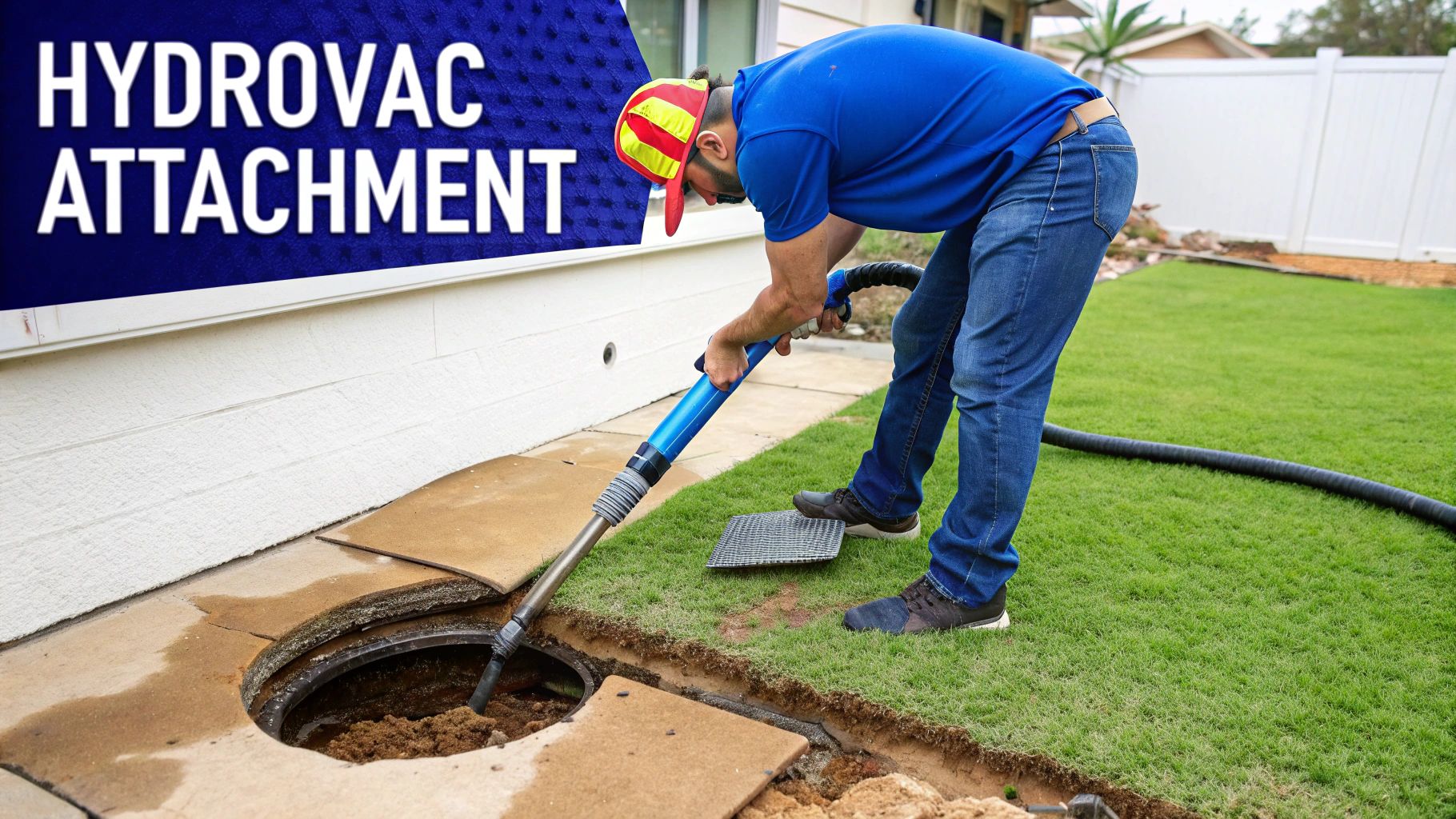
Picture this: you take a standard wet vac—the kind you might already have in your garage—and connect it to a specialized tool built for precision excavation. That's the simple but brilliant idea behind The Hydrovac Attachment. It's a mobile tool, not for large trucks, that completely changes how you approach small-scale digging. A focused stream of water loosens up the soil, even if it's dense, compacted clay. As the soil turns into a liquid slurry, your wet vac's hose instantly sucks it away, leaving a clean, perfectly controlled hole with minimal mess.
Precision Digging for Modern Yard Care
This technique is a game-changer when you're working near sensitive utilities, irrigation lines, or treasured landscaping. For big jobs like new swimming pool projects, contractors have to plan for massive earth removal. But for the smaller, more surgical tasks within those projects, a targeted tool is invaluable.
The beauty of this approach is in its smart design. We know the weight of soil can vary wildly depending on its makeup and moisture. Heavy, wet clay is a whole different beast than dry, sandy loam. The Hydrovac Attachment’s unique three-part system is built to handle these changes, maintaining steady suction control no matter how the soil density shifts. This prevents the clogs and overflows that can plague other systems when moving between different ground conditions.
The Right Tool for Common Residential Tasks
The real value of this system comes to life in the everyday jobs that homeowners and landscapers face. Forget the back-breaking work of hauling out hundreds of pounds of dirt one shovelful at a time.
- Fence Post Digging: Create perfectly round, clean holes without tearing up the surrounding grass.
- Exposing Pipes Without Damage: Safely uncover buried water lines or cables for repair without the risk of a shovel strike causing a costly disaster.
- Trenching for Irrigation: Dig neat, narrow trenches for sprinkler systems with almost no disruption to your lawn.
By combining the power of water pressure with strong vacuum suction, you turn difficult soil into a manageable slurry. This not only makes the job faster but also significantly safer and cleaner, leaving you with a professional result every time.
Ultimately, this innovative setup perfectly fills the gap between hard manual labor and heavy industrial machinery. To see it in action, you can learn more about the principles of hydro excavation vacuum technology and see how it works with equipment you already own. It's a truly practical solution for anyone who values doing a job with efficiency and precision.
Common Questions About Soil Weight and Digging
Even with all the charts and formulas on hand, real-world questions always pop up when you're knee-deep in a project. Let's tackle some of the most common things people ask when they start thinking about soil weight and what it means for their digging job.
How Can I Test My Soil to Estimate Its Weight?
You don’t need a fancy lab to get a pretty good idea of what you're working with. A simple "hand test" is surprisingly effective for gauging your soil’s condition and estimating its weight.
Just grab a handful of soil from the dig site and give it a good squeeze in your palm.
- If it crumbles and falls apart easily, you're dealing with dry soil, which is on the lighter end of the scale.
- If it holds its shape like a ball but doesn’t drip, it has average moisture.
- If water squeezes out, the soil is saturated and will be at its absolute heaviest.
For most backyard projects, like setting fence posts or digging up pipes, just knowing if the ground is dry, damp, or muddy is enough to use the weight charts effectively. This quick check helps you anticipate the kind of load you're about to handle.
Does Adding Compost to Soil Make It Lighter?
Absolutely. Mixing in compost is one of the best things you can do for heavy, dense ground, and it makes the soil significantly lighter. Organic material like compost is much less dense than the mineral bits in soil—a cubic foot of pure compost might only weigh 30-50 pounds.
When you work compost into heavy clay, you're not just adding a lighter ingredient. You're also creating tiny air pockets between the tightly packed clay particles. This breaks up the density, lowers the overall weight of one cubic foot of soil, and dramatically improves drainage and aeration, making it easier to dig and much healthier for your plants.
Why Is Soil Weight Important for My Wet Vac Hose?
Understanding soil weight is crucial when you're using a wet vac for digging, and it really boils down to two things: capacity and suction power.
First, let's talk about capacity. A 16-gallon shop vac sounds huge, but it can fill up in a hurry with heavy, wet clay that weighs 110-120 lbs/cu ft. At that weight, you might only get about 1.5 cubic feet of material in there before the vacuum is too heavy to move or you push past its operational limits.
Second is suction power. It takes a lot more force to lift dense, compacted muck through a wet vac hose than it does for loose, dry dirt. Knowing your soil is heavy tells you to work in smaller, more manageable bites. This simple adjustment helps prevent clogs, reduces strain on the motor, and keeps your project moving without burning out your equipment. To see how this works on a bigger scale, you can explore the principles behind what vacuum excavation is.
How Much Does a 5-Gallon Bucket of Dirt Weigh?
This is a perfect real-world question that shows just how much soil weight can vary. A standard 5-gallon bucket holds about 0.67 cubic feet.
Let's do the math for a couple of different soil types:
- A 5-gallon bucket of dry, loose topsoil (at 75 lbs/cu ft) will weigh right around 50 pounds (0.67 x 75).
- Fill that same bucket with wet, compacted clay (at 120 lbs/cu ft), and it could easily weigh 80 pounds or more (0.67 x 120).
That 30-pound difference in a single bucket is the perfect illustration of why you can't just assume all dirt weighs the same. It's a critical lesson when you're hauling soil by hand or trying to figure out how to remove debris from a tight spot around pipes or foundations.
For these kinds of challenging residential digging jobs, the right tool changes everything. The Hydrovac Attachment from Hydrovacattm turns your standard wet vac and pressure washer into a precision digging machine, letting you safely and cleanly excavate any soil type without all the back-breaking labor. Learn more and see how it works at https://hydrovacattm.com.