


A vacuum relief valve is a simple but critical safety device that keeps your wet vac's motor from burning out when the hose gets clogged. Think of it as an automatic pressure release. When the suction gets dangerously high during residential digging tasks like setting fence posts or trenching, the valve opens to let in air, instantly taking the strain off the motor.
The Unsung Hero Protecting Your Wet Vac Motor
Ever tried to suck through a straw that's completely blocked? You can feel the strain. That's exactly what your wet vac motor goes through when the hose gets jammed with heavy soil, a thick root, or a chunk of rock while you're digging.
Without an escape route for that intense pressure, the motor is forced to work against an impossible load. It quickly overheats, and before you know it, you're looking at a fried motor and an expensive repair bill—a common frustration in the yard care industry.
A vacuum relief valve is the essential safety net that stops this disaster before it happens. This simple, spring-loaded part senses when suction spikes to a dangerous level and automatically pops open. This introduces a rush of ambient air into the system, breaks the intense vacuum, and lets the motor's RPMs drop back to a safe range. It's a small part that provides a huge amount of protection for your valuable gear.
Why This is Non-Negotiable for Precision Digging
If you're using a powerful, mobile tool like The Hydrovac Attachment Tool for digging around your property, this little valve can be the difference between a smooth project and a sudden, frustrating breakdown. This tool is designed to pair with a wet vac hose, creating a portable solution for clearing small amounts of debris.
Whether you're carefully digging fence posts next to a sprinkler line or excavating around fragile pipes without causing damage, the last thing you want is for your equipment to die on you. The valve ensures your vacuum system keeps running reliably, even when you hit a patch of tough, clog-prone ground.
This isn't just a niche trick for large hydrovac trucks, either. The core principle of protecting motors from excessive vacuum is a standard safety practice across many industries, even in high-tech equipment like some laboratory fume extraction systems.
The value of these safety components is clear when you look at the numbers. The global market for vacuum relief valves was pegged at $799.2 million and is expected to hit a staggering $1.5 billion by 2035. That's a lot of people realizing how important it is to protect their equipment.
At the end of the day, adding a vacuum relief valve is one of the smartest, simplest upgrades you can make for your wet vac hose setup. It protects your investment, prevents costly downtime, and keeps your yard care and residential digging projects moving forward.
And if you're looking for other ways to get the most out of your setup, you might want to check out our guide on how a dust separator for a shop vac can seriously boost your system's efficiency.
How a Simple Valve Prevents Catastrophic Equipment Failure
To really get why a vacuum relief valve is so important for residential digging, you have to see it in action. It's more than just a part; it's a simple, mechanical guardian angel for your wet vac. Its whole job is to prevent costly damage in the blink of an eye, right when a stubborn blockage tries to bring your work to a halt.
Think about it like this: you're using The Hydrovac Attachment Tool to dig a post hole, and suddenly your wet vac hose sucks up a dense clump of clay or a nasty, tangled root. Instantly, the hose is plugged solid. But your wet vac motor doesn't know that—it's still spinning like crazy, trying to pull air through a tube that’s completely sealed off. In that split second, the vacuum pressure inside your hose and tank spikes to a dangerous level.
This is exactly where the valve jumps in to save the day.
The Automatic Pressure Release System
Tucked inside every vacuum relief valve is a spring-loaded mechanism, and it's calibrated with incredible precision. Under normal conditions, that spring is just strong enough to hold a small disc or poppet shut, keeping the system sealed.
But when that clog hits and the vacuum pressure skyrockets, the immense suction becomes too much for the spring. The force yanks the valve disc open, creating an instant, alternative airway right at the vacuum.
This controlled "leak" of outside air immediately breaks the intense vacuum lock in the hose. With the pressure suddenly neutralized, the incredible strain on your motor disappears, letting it spin down to a safe speed.
This flowchart shows that life-saving, three-step process in a nutshell.
The system automatically senses a dangerous clog, the valve opens, and the motor is protected from burning itself out. Simple, but incredibly effective for any yard care professional or DIYer.
The Direct Benefits of Preventing Overload
This all happens faster than you could ever react and switch the machine off yourself. The benefits of this instant, automatic protection are huge, especially for anyone doing residential digging.
- Prevents Motor Burnout: This is the big one. An overloaded motor will overheat and fail, and this valve stops that from happening. It’s the number one cause of premature death for wet vacs.
- Protects Seals and Gaskets: Extreme vacuum pressure can wreck the internal seals in your equipment, causing leaks and a slow, frustrating loss of suction over time.
- Avoids Hose Collapse: Even tough, high-quality wet vac hoses can get sucked inward and collapse under that kind of intense, prolonged vacuum, making them totally useless.
By automatically managing these pressure spikes, the vacuum relief valve effectively prevents mid-job breakdowns. This not only saves you hundreds in potential repair costs but also protects your reputation when working on time-sensitive projects or digging up pipes without damage.
How to Pick the Right Vacuum Relief Valve for Your Setup
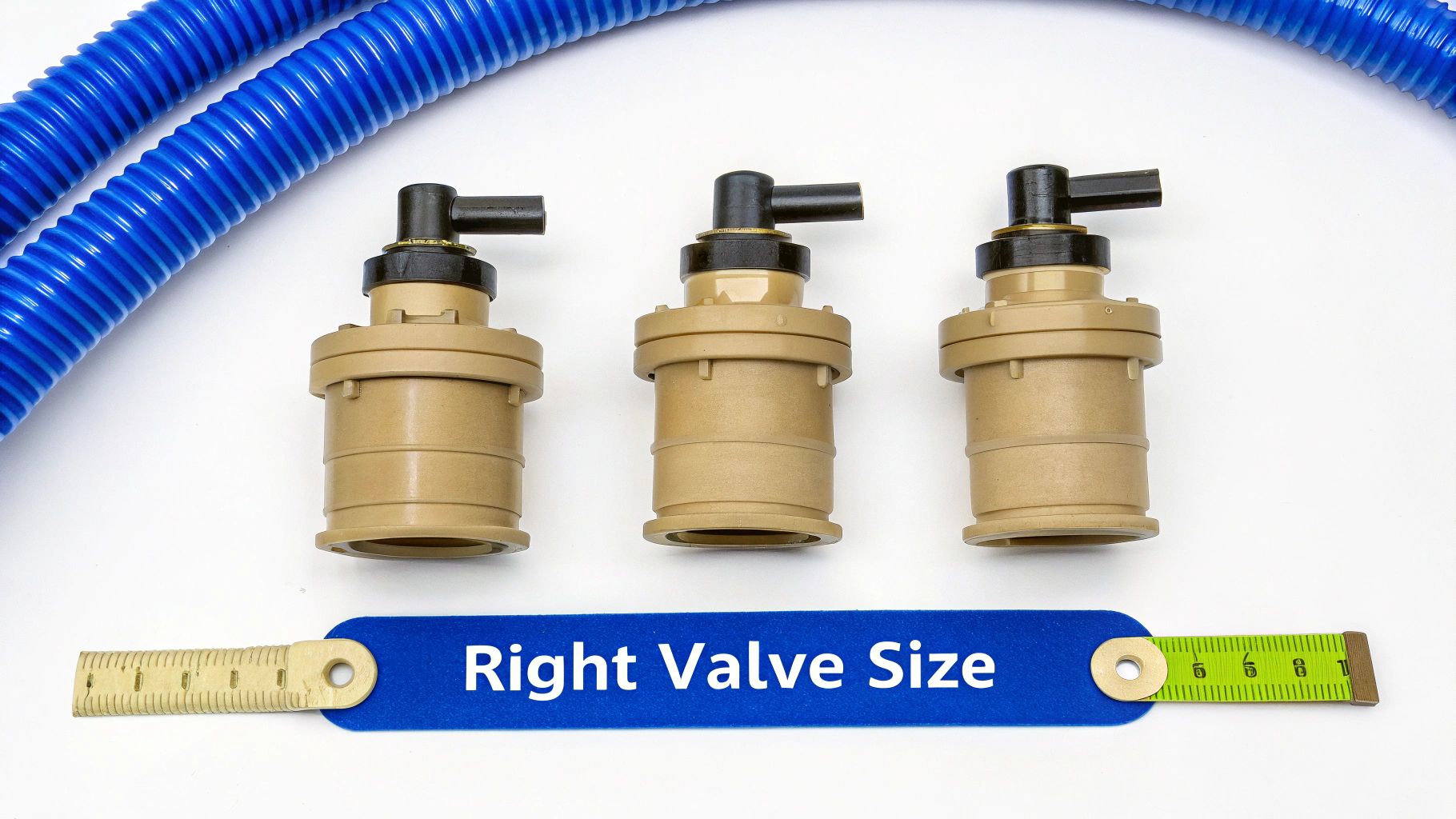
Choosing a vacuum relief valve isn't something you can just eyeball. Getting it wrong is just as bad as having no valve at all—it might not open when you need it most, or it could pop open too early and kill your suction power. For anyone doing residential digging with a wet vac and a tool like The Hydrovac Attachment Tool, this decision is a big deal for both safety and getting the job done right.
You've got to match the valve to your specific needs. It's tempting to think "bigger is better," but grabbing a huge valve made for an industrial hydrovac truck and sticking it on your shop vac is a surefire way to cause problems. That industrial valve is set for massive vacuum pressures your portable unit could never dream of hitting. It would just sit there, closed, while your motor burns out from a clog.
What to Look for When Choosing Your Valve
When you're trying to pair a relief valve with a wet vac setup, especially one running a standard 2.5-inch hose, there are really three things that matter most.
- Activation Pressure (inHg): This is the magic number. It tells you exactly how much vacuum pressure (measured in inches of mercury) it takes to make the valve spring open. You need a valve with a low activation pressure that triggers before your wet vac motor is in the red zone, but not so low that it opens every time you're sucking up heavy mud.
- Airflow Rating (CFM): Once the valve opens, it has to let in enough air (cubic feet per minute) to break the vacuum almost instantly. A valve that's too small won't let enough air in, leaving your motor straining. On the other hand, a ridiculously oversized one is just clunky and overkill for a portable setup.
- Material and Durability: Let's be honest, this valve is going to get beat up. It'll be exposed to water, mud, dirt, and whatever else you're digging in. You want something made from tough materials, like a high-impact polymer or metal that won't rust, so it can handle the rough-and-tumble environment of real-world yard work.
Think of the right vacuum relief valve as a perfectly calibrated fuse for your motor. It’s designed to blow only when the suction exceeds the safe operating limit defined by the manufacturer. This protects your investment and keeps you working without a hitch.
Don't Forget About Hose Compatibility
Making sure your valve fits your hose is crucial. The Hydrovac Attachment Tool is built to work with the super common 2.5-inch wet vac hose, so your relief valve needs to match that size perfectly. If the fit is wrong, you’ll end up with an air leak that just constantly saps your vacuum’s power and makes your work harder.
To help you get a better idea of what's out there, here's a quick comparison of common valve types suitable for residential-scale vacuum excavation.
Vacuum Relief Valve Selector for Wet Vac Applications
| Valve Type | Typical Activation Pressure | Best For | Notes for 2.5-Inch Hoses |
|---|---|---|---|
| Spring-Loaded Pop-Off | 4-6 inHg | Small to medium-duty wet vacs (5-10 HP) used for general cleanup and light digging. | Widely available in this size. Look for adjustable models to fine-tune the release point. |
| Adjustable Diaphragm | 2-8 inHg | High-performance wet vacs (10+ HP) and setups requiring precise pressure control. | Offers the most flexibility but may require some trial and error to set perfectly. |
| Weighted-Plunger | 3-5 inHg | Budget-friendly setups where simplicity is key; good for basic protection. | Ensure the weight isn't too heavy for your vac's peak suction. Check the seal carefully. |
This table should give you a solid starting point. The key is to match the valve's activation pressure to your wet vac's capabilities to get that "just right" level of protection.
It’s no surprise that the market for these kinds of safety components is growing. People are realizing how important it is to protect their equipment. In fact, the entire vacuum valve market was valued at $1.808 billion and is expected to hit $4.62 billion by 2035. That's a lot of growth, and it shows that reliable safety parts are in high demand across many industries. You can learn more about these market trends in this detailed industry report.
Ultimately, spending a few minutes to pick the right vacuum relief valve is one of the smartest things you can do. For a closer look at the other tools of the trade, check out our guide on essential hydrovac excavation equipment. That small investment in the right valve will pay for itself many times over by preventing costly repairs and keeping your projects on track.
Proper Installation and Maintenance for Lasting Protection
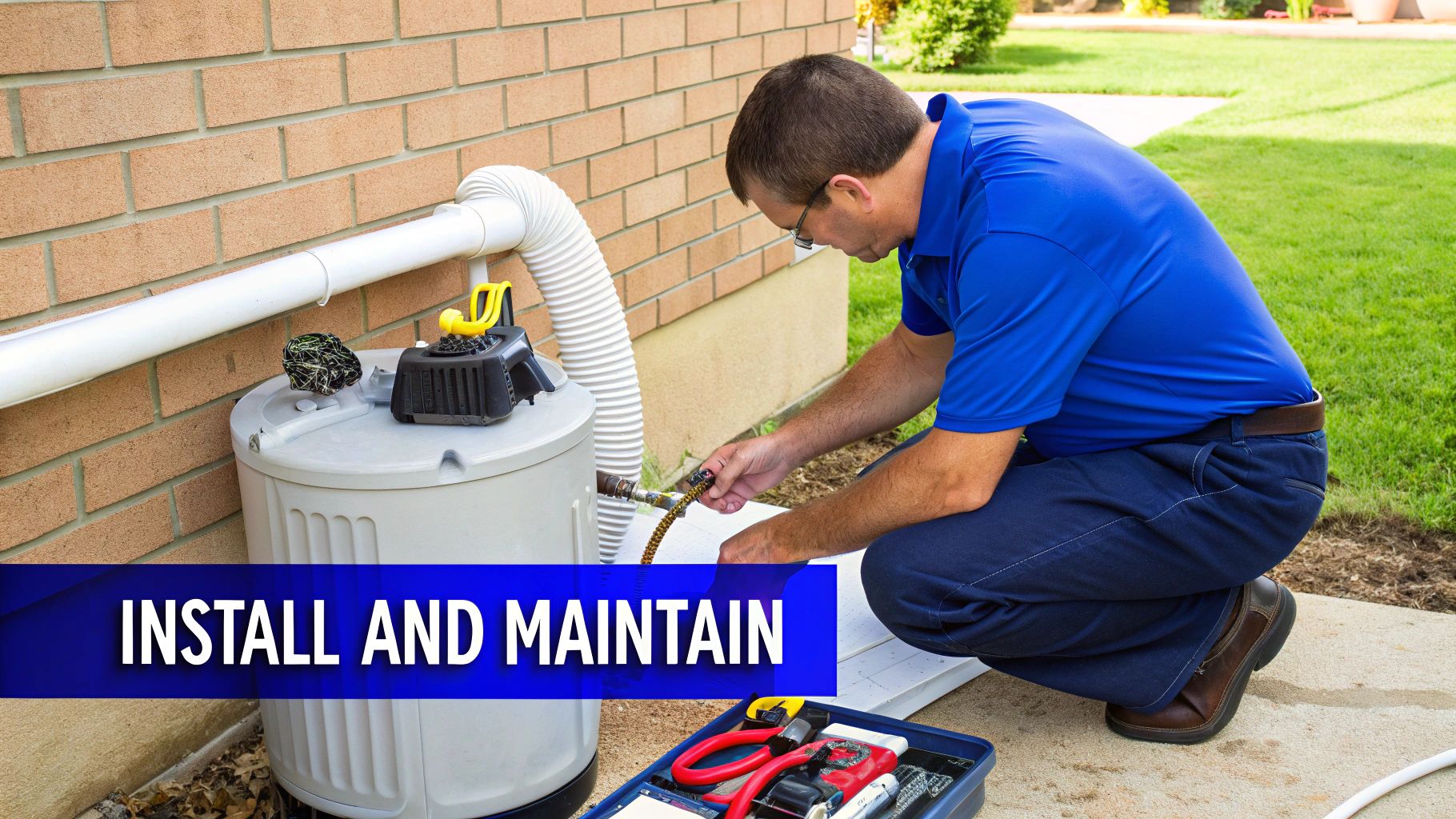
A vacuum relief valve is an incredible piece of protective gear, but it's only as good as its installation and upkeep. Think of it like the safety on a power tool—it's there to prevent disaster, but you have to make sure it's set up right and working properly before you pull the trigger. Getting this right means your equipment is always ready for those sudden clogs that inevitably happen when you're digging fence post holes or clearing out a buried drain.
This kind of proactive thinking is catching on everywhere. The global market for these valves was already at $0.92 billion and is expected to hit $1.52 billion by 2033. It’s clear that more and more people are recognizing the importance of industrial safety and reliable gear in their day-to-day operations.
Ideal Placement for Instant Response
When you're running a wet vac, especially with a solution like The Hydrovac Attachment Tool, where you place the valve is everything. The golden rule? Install the vacuum relief valve as close to the vacuum's main intake port as you possibly can.
Why? Because placing it right near the machine lets the valve feel the true vacuum pressure of the whole system. If you stick it too far down the hose, you introduce a slight delay in its reaction time. That split second is exactly when your motor is under the most stress. Proper positioning means it reacts instantly, the moment a blockage hits.
Of course, a secure fit is just as important. A leaky connection kills your performance before you even start digging.
Think of it this way: installing the valve near the intake gives it the clearest possible view of your motor's workload. It acts like an immediate circuit breaker, protecting your investment from the sudden pressure spikes that are so common in residential digging projects.
A Simple Maintenance Checklist
Good news—maintaining your valve isn't complicated. It is, however, absolutely essential if you want it to work when it counts. A quick check before you start a big yard care job can save you from a world of hurt in the form of downtime and expensive repairs.
Here's a quick rundown:
- Inspect for Debris: Before you fire up the vac, take a look at the valve's opening. Is it clogged with dirt, mud, or small rocks? Even a tiny pebble can keep the spring from closing all the way, creating a constant, power-sapping leak.
- Test the Spring Mechanism: With the machine off, gently push on the valve’s plunger or disc. It should move smoothly and snap right back into place. If it feels gummy, sticky, or stuck, it’s time for a good cleaning.
- Keep it Clean: After a particularly grimy job, just give the valve a quick rinse with clean water. This simple habit prevents gunk from building up and messing with the seal or the spring.
Remember, the valve is just one piece of the puzzle. Following broader industrial health and safety protocols is key to keeping your whole operation running smoothly. After all, a well-maintained tool is a safe and reliable tool.
Real-World Stories: The Valve That Saves the Day
Theory is one thing, but seeing how a vacuum relief valve performs in the trenches is what really drives the point home. These stories from the field show how this small, simple part can be the difference between a minor hiccup and a full-blown disaster for folks doing yard care and residential digging.
The Clay Soil Fence Post Job
Picture this: a landscaper is digging ten fence post holes in that heavy, compacted clay soil we all love to hate. The ground is rock-solid. Every few inches, the wet vac hose, equipped with The Hydrovac Attachment Tool, grabs a dense plug of clay and chokes. Without a relief valve, you'd hear that motor screaming under the strain every single time, practically begging for mercy and inching closer to a burnout.
But with the valve installed, something different happens. Each time the hose clogs, you hear a distinct hiss as the valve kicks in. That high-pitched whine from the motor immediately drops to a normal hum. The landscaper just gives the hose a quick shake, the clay plug drops, and the valve seals shut as suction returns. This little dance might happen a dozen times, but the motor stays cool and the job gets done without any drama or damage.
Protecting Delicate Pipes Underground
Now, let's switch gears. A contractor is carefully digging up pipes without damage, specifically a fragile PVC irrigation line buried just under the lawn. This is delicate work. One wrong move and you’ve got a cracked pipe, an angry client, and a long, expensive repair job. Shovels are out of the question, so they’re using their wet vac and The Hydrovac Attachment Tool to do some surgical digging.
The danger here isn't just clogging the hose; it's the raw power of the vacuum itself. If that hose nozzle creates a perfect seal against the pipe, the suction can easily be strong enough to crush or crack the PVC.
This is where a properly set vacuum relief valve becomes your best friend. It acts like a safety governor, popping open long before the suction ever reaches a level that could damage that pipe.
It guarantees the vacuum is strong enough to pull away dirt and water, but it never gets so powerful that it becomes a liability. That’s peace of mind you can’t put a price on when digging near utilities.
The Guardian Against Everyday Grind
Finally, think about a more routine job, like clearing out a drainage culvert at the end of a long driveway. It's choked with a nasty mix of wet leaves, mud, and gravel—the kind of heavy, relentless work that really tests a wet vac motor.
This kind of job forces the motor to run at its peak for a long time. Even a small, partial blockage from a chunk of sod or a hidden stick could be the straw that breaks the camel's back. The vacuum relief valve works silently in the background, acting as a guardian. It's constantly modulating the pressure, bleeding off those little spikes caused by the thick debris. This prevents the slow, creeping damage of overheating and ensures the vac makes it through the entire job without quitting.
In all of these scenarios, the valve is more than just a failsafe. It's an active part of the team, protecting your gear, preventing costly mistakes, and making tough jobs a whole lot safer and more efficient.
Got Questions? We’ve Got Answers.
Even when you know the ropes, some specific questions always pop up out in the field. Let's tackle the most common ones we hear from folks using wet vacs for residential digging and other demanding yard work.
Will a Vacuum Relief Valve Weaken My Wet Vac?
Not a chance. When everything is running smoothly, a properly installed valve does absolutely nothing. It stays completely sealed, so your vac has its full, unrestricted pulling power for any fence post digging or trenching job.
The valve only springs into action when a clog causes a dangerous spike in vacuum pressure. It opens, lets in just enough air to ease the strain, and as soon as the blockage is cleared, it snaps shut. Think of it as a silent guardian, not a performance thief.
How Can I Tell If My Valve Is Actually Working?
There’s a super simple test for this. Fire up your wet vac, and for just a second, block the end of your hose with a flat board or the palm of your gloved hand. Be careful, of course.
You should immediately hear a distinct hissing or whistling sound coming from the valve as it opens up. At the same time, you'll notice the high-pitched whine of the struggling motor suddenly relax. If the motor just keeps straining and you don't hear that hiss, your valve is probably stuck, clogged, or not installed right.
This quick check is your go-to confirmation that the motor's main line of defense is armed and ready. It’s a two-second test that could easily save you from a several-hundred-dollar repair bill down the road.
Do I Really Need a Relief Valve for Soft Dirt?
Yes, without a doubt. It’s easy to think you’re safe in soft soil, but trouble can hide anywhere. A stubborn, buried rock, a thick clump of roots, or even a sudden kink in the wet vac hose can create an instant, motor-killing vacuum spike.
A vacuum relief valve isn't just for tough, rocky ground; it’s for the unpredictability of all digging. It's cheap insurance that protects your expensive gear and keeps you running job after job. For any professional yard care rig, it's non-negotiable.
Where’s the Best Spot to Install the Valve on My Hose?
For the fastest, most accurate protection, you want that valve mounted as close to the vacuum's intake port as you can get it. Putting it right on the machine means it’s reading the true vacuum pressure of the entire system.
This placement allows it to react the instant a blockage happens anywhere along the line—from the nozzle all the way up the hose. If you install it too far down the hose, there's a delay in its response time. That tiny delay is all it takes to put your motor at risk. This is especially critical when using solutions like The Hydrovac Attachment Tool, which demand consistent and safe suction to work correctly.
Ready to protect your equipment and start digging smarter? The Hydrovac Attachment Tool is designed for effective digging, transforming your wet vac into a mobile and precise solution for any residential project.
See how you can upgrade your entire workflow at https://hydrovacattm.com.