


When you're connecting a vacuum source to a tool for yard care and digging, the hoses and fittings are what make it all work. Using the right vacuum lines and fittings is the difference between turning your wet vac into a precision excavator for digging fence posts or just making a muddy mess. They are the key to preventing power loss and clearing debris from small, targeted areas efficiently.
The Hidden Power of Proper Vacuum Lines and Fittings
Staring down a trenching job for a sprinkler line or digging a series of fence post holes can feel like a huge task. What many people don't realize is that the secret to modern, non-destructive digging isn't just the vacuum—it's the often-overlooked lines and fittings that connect everything. They are the unsung heroes of any successful residential digging project.
Think of your setup like a high-performance engine. Your wet vac provides the raw power, but the vacuum lines and fittings are the fuel lines. A single leak, a bad connection, or a kinked hose, and you lose all that power right at the tip where you need it most. That power loss can turn a simple job, like clearing soil from around a pipe without causing damage, into a frustrating, time-sucking ordeal.
Why Every Connection Matters
The real test of any mobile vacuum system is its ability to hold a perfect seal from the motor all the way to the nozzle. When you’re trying to clear dirt around delicate sprinkler lines or set deck footings with pinpoint accuracy, any drop in suction means you’re working slower and risking damage to underground pipes. This is where quality components truly shine.
- No Power Loss: A solid, airtight seal ensures 100% of your vacuum's suction gets to where the work is happening.
- Better Efficiency: The right fittings mean fewer clogs and smoother debris flow, which speeds up the whole job, especially when digging fence post holes.
- Safer Operation: Strong, reliable connections won't pop off unexpectedly, which is a real hazard when you're dealing with a hose full of wet slurry.
The global market for vacuum fittings is exploding, projected to hit $1,657.16 million by 2025. More telling for us, though, is that industry reports show that shoddy fittings are to blame for over 20% of vacuum system failures on job sites, leading to a lot of wasted time and money. This is exactly why tools with built-in, secure connections are so valuable. You can read more about the growth of the vacuum fittings market for the full picture.
From Garage Appliance to Precision Tool
This idea is exactly why tools like The Hydrovac Attachment Tool work so well. It takes a standard wet vac and hose—something most of us already have—and turns it into a surgical excavator. By creating a perfectly engineered connection between your pressure washer and vacuum, it makes a controlled, powerful hydro-excavation stream. It's proof that with the right vacuum lines and fittings, you can get professional-grade results on sensitive jobs like digging up pipes without needing a giant, expensive hydrovac truck.
Choosing Your Gear for Flawless Performance
Picking the right vacuum lines and fittings isn't just a minor detail—it's the secret to getting the job done right. Get it wrong, and you're in for a frustrating afternoon fighting clogs and weak suction. Get it right, and you've got a powerful, efficient digging system for any yard care task.
Think of it like choosing tires for a truck. You wouldn't put slick racing tires on a 4x4 destined for a muddy field. In the same way, the flimsy hose that came with your shop vac for cleaning up sawdust just isn't going to cut it when you're sucking up wet soil, sharp rocks, and heavy debris from a fence post hole. Every single piece of your setup needs to be tough enough for the mission at hand.
Matching Materials to Your Mission
The material of your wet vac hose determines how flexible it is, how much abuse it can take, and how well it resists getting torn up. For most residential digging projects, whether you're exposing buried pipes or setting new deck footings, you'll mainly be looking at two types of materials.
- Flexible Polyurethane (PU): This is your go-to when you need to navigate tight corners, like working around a foundation or snaking the hose between garden beds. Its flexibility is key to preventing kinks, which are a notorious suction killer.
- Rugged Polyvinyl Chloride (PVC): When the ground is full of abrasive, rocky soil or sharp debris, a heavy-duty PVC hose is your best friend. It’s built tougher and is much more resistant to punctures and tears, making it the clear choice for more demanding digs.
Getting a handle on different industrial hose materials and fittings is a game-changer. Things like pressure ratings and how materials connect are what separate a leaky, frustrating setup from a reliable, powerful system.
The secret to a powerful vacuum setup isn't just a strong motor; it's an uninterrupted, airtight pathway from the nozzle to the tank. A hose that collapses under pressure or a fitting that leaks can cut your effective suction power by more than 50%, turning a powerful machine into an ineffective tool.
This flowchart is a great way to visualize how to choose the right vacuum setup based on the scale of your job.
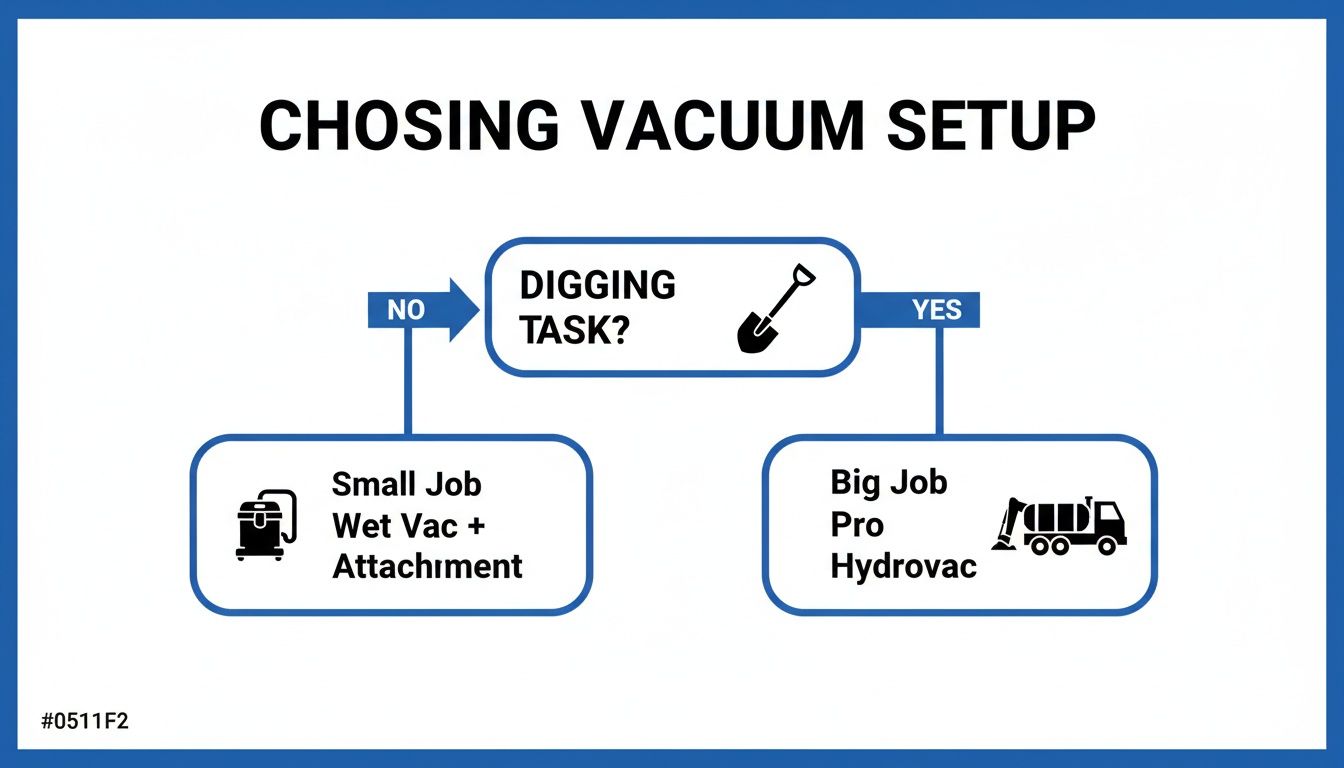
As you can see, for most residential jobs like fence post digging, a good wet vac paired with a specialized attachment is the most practical and effective solution. The big hydrovac trucks are designed for large-scale, professional projects and are not what mobile tools are for.
Comparing Vacuum Hose and Fitting Materials for Residential Digging
So how do you pick? It really comes down to balancing flexibility, durability, and cost. Here's a quick comparison to help you choose the right vacuum lines and fittings that won't let you down in the middle of a dig.
| Material | Best For | Pros | Cons |
|---|---|---|---|
| Polyurethane (PU) | Tight spaces, navigating corners, and tasks requiring high flexibility. | Extremely flexible, kink-resistant, and good abrasion resistance. | Generally more expensive than PVC and can be heavier. |
| Polyvinyl Chloride (PVC) | Abrasive conditions, rocky soil, and general-purpose digging. | Highly durable, cost-effective, and excellent resistance to crushing and punctures. | Can be less flexible, especially in colder temperatures. |
Ultimately, a good hose and the right fittings are what connect your power source to the actual work.
For most backyard projects like digging around pipes or clearing out post holes, a standard 2.5-inch diameter wet vac hose is the sweet spot. It gives you the perfect balance of airflow for serious suction power while being just the right size to avoid constant clogging from larger rocks and debris.
When you pair a hose like this with a specialized tool like The Hydrovac Attachment Tool, your standard wet vac becomes a precise, powerful digging machine. The attachment is specifically designed around this common hose size, so it integrates seamlessly with the gear you probably already have, making tasks like digging up pipes without damage simple and effective.
Mastering the Perfect Airtight Connection
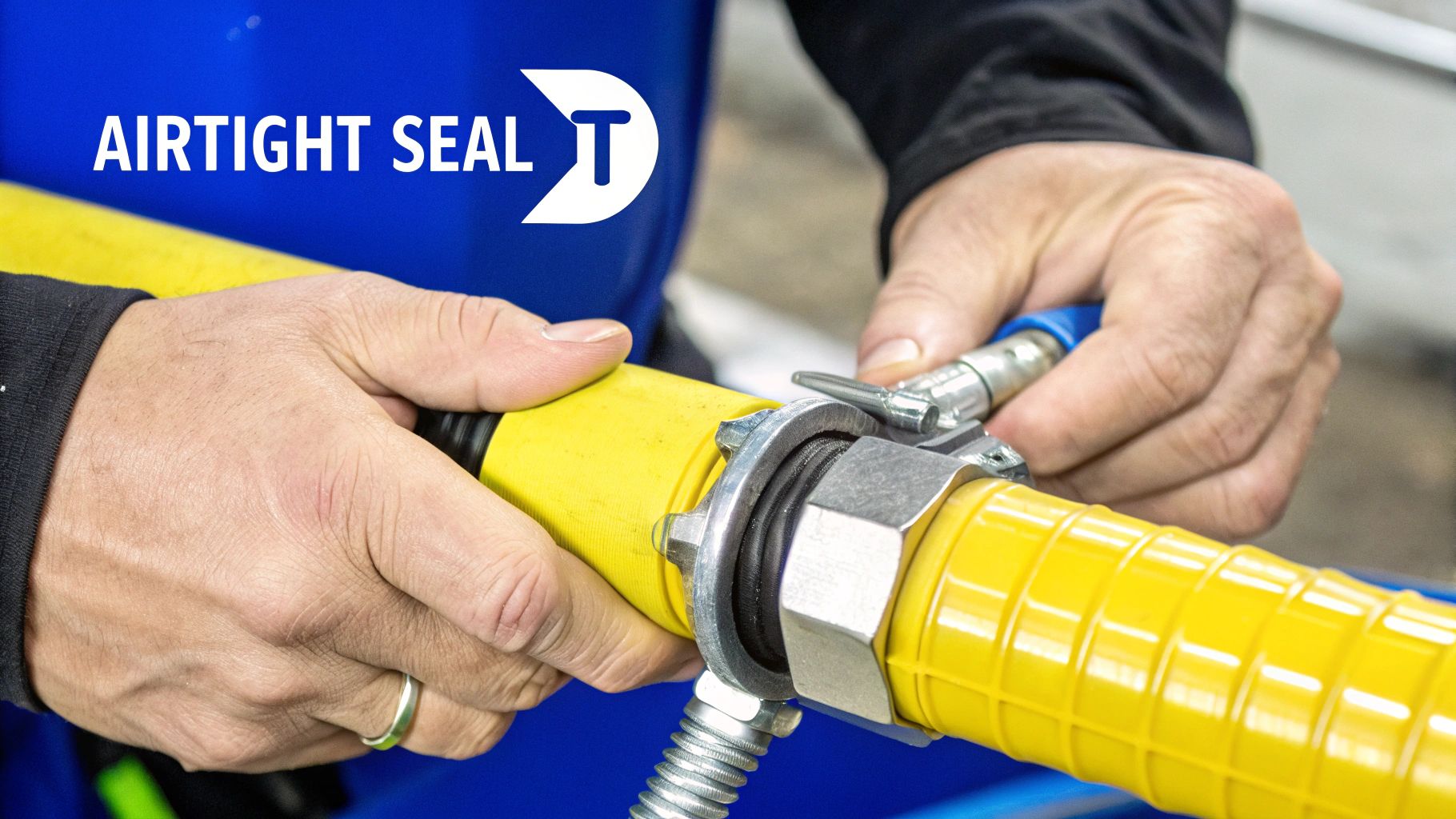
The secret to maximizing your vacuum's suction power isn't about getting a bigger unit—it’s all about creating a perfect, airtight seal. Any leak, no matter how tiny, bleeds away the power you need to dig effectively. This is hands-down the number one point of failure in any mobile vacuum setup, turning a high-powered tool into a frustratingly weak one.
Think of it like trying to drink a thick milkshake through a straw with a hole in it. You suck and suck, but you're mostly just pulling in air. The same thing happens with your wet vac hose. Every little gap at a connection point is a hole in your straw, killing the force needed to lift heavy, wet soil and debris.
Seating the Hose for Maximum Power
Getting that flawless seal starts with the most fundamental step: seating the hose correctly onto the fitting. Whether you're connecting to a simple barbed adapter or a specialized tool, the technique is always the same.
- Inspect the Fitting: First things first, give the fitting a quick once-over. Check for any dirt, debris, or damage. Even a small rock or a bit of grit can keep the hose from sitting flush, creating a tiny air gap that sabotages your suction.
- Slide and Twist: Push the hose firmly onto the fitting. As you do, give it a slight twist. This simple move helps the hose material really grip the barbs or ridges on the fitting, creating a much tighter initial connection.
- Secure with a Clamp: Never, ever rely on friction alone to hold it. A properly tightened clamp is what turns a good connection into a truly airtight one, making sure no power gets wasted.
Choosing the Right Clamp for the Job
Not all clamps are created equal, and picking the right one depends entirely on the pressure and materials you're dealing with. For digging jobs that involve heavy slurry and constant hose movement, your clamp choice is absolutely critical.
- Worm-Gear Clamps: These are the common, screw-tightened clamps you see everywhere. They’re fine for low-pressure stuff, but they can apply uneven pressure and have a nasty habit of loosening over time with heavy vibration.
- T-Bolt Clamps: For more demanding jobs, a T-bolt clamp is the way to go. It provides 360-degree, uniform pressure all the way around the hose. This creates a much more secure and reliable seal that won't leak or loosen up, making it ideal for the dynamic forces you see in mobile hydro excavation.
For pros setting fence posts or clearing out sediment, advanced tools are key. According to industry benchmarks, they minimize splashback and improve visibility on the job. The synergy with tools like The Hydrovac Attachment Tool's polymer-engineered clamps ensures high-pressure performance without the bulk, opening up limitless uses in fence post digging, foundation repair, and other residential property services. You can learn more about the advancements in the vacuum insulated pipe market.
Smart Design Eliminates the Guesswork
The best systems are the ones that make it easy to get a perfect connection, every single time. The Hydrovac Attachment Tool, for example, was engineered from the ground up to solve this very problem. Its three-part system includes a precisely molded hose clamp designed to fit a standard 2.5-inch wet vac hose perfectly.
This kind of thoughtful design completely eliminates the guesswork. The clamp is shaped to match the tool's base, ensuring it seats correctly and applies even, consistent pressure all the way around. It's a real-world example of how intelligent engineering guarantees a secure, leak-free connection, so you get full power on every single job. To learn more, check out our guide on choosing the right vacuum hose clamps.
Turn Your Wet Vac into a Precision Excavator
What if you could turn your standard wet vac into a powerful, precise digging tool for your yard? This isn't about buying a massive, expensive hydrovac truck, but about using the equipment you already own to do surgical excavation work. For landscapers, fence installers, and serious DIYers, this is a game-changer.
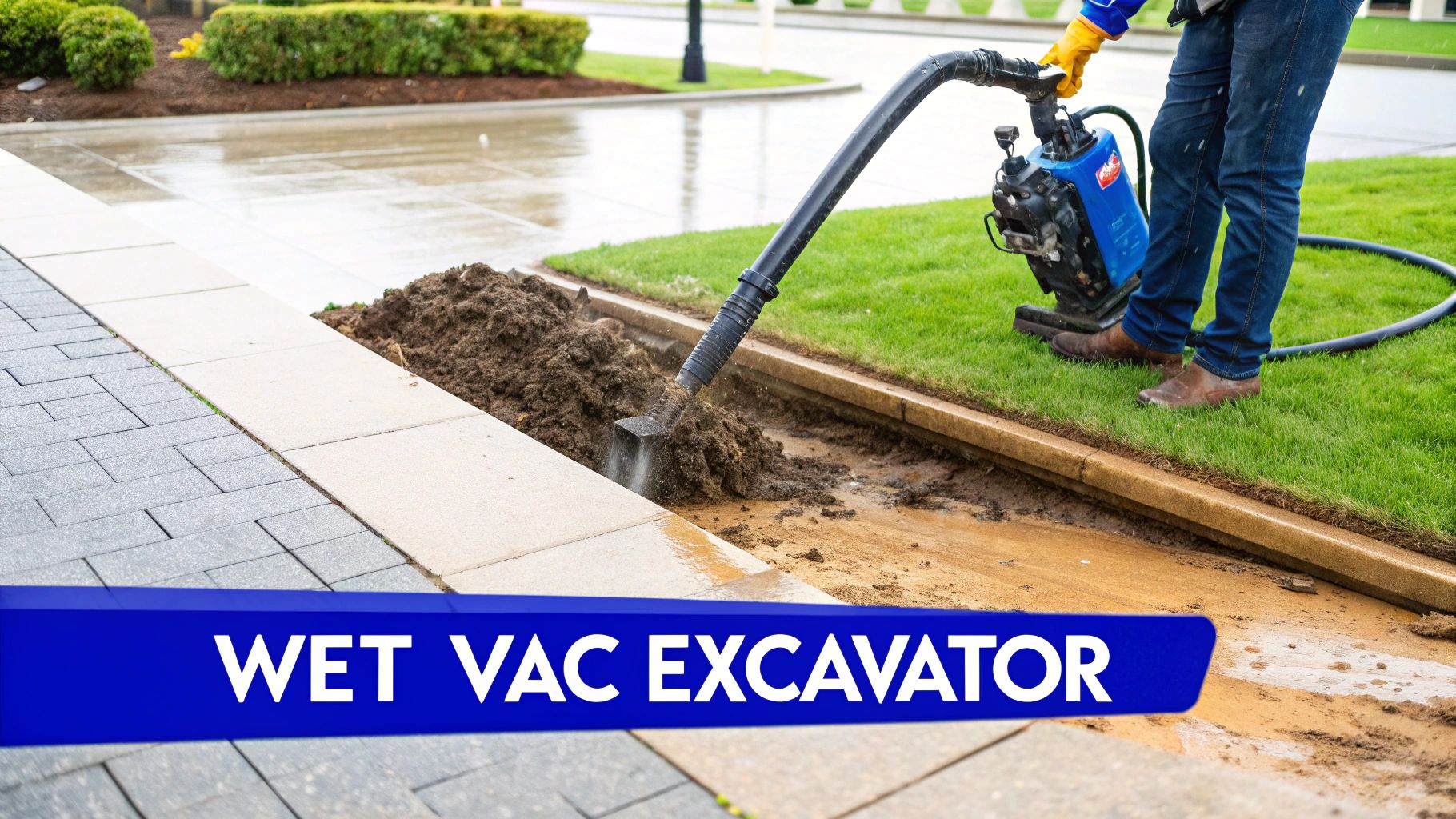
This is all possible thanks to The Hydrovac Attachment Tool. Its patented, three-part design is brilliantly simple: it combines a high-pressure power washer with any standard 2.5-inch wet vac hose. The result is a controlled, high-pressure water jet and a concentrated suction field that transforms a basic wet vac into a pinpoint excavator for small amounts of debris.
From Simple Cleanup to Surgical Digging
This isn't just about moving dirt faster; it's about digging with incredible precision, especially on sensitive jobs. We've all been there—digging with a shovel or pick, just hoping we don't hit a buried utility line, irrigation pipe, or delicate tree root. One wrong move can be costly and dangerous.
The Hydrovac Attachment Tool completely changes the game by using pressurized water to turn the soil into a slurry, which is then immediately vacuumed away. This "soft digging" method takes impact damage out of the equation. It’s the perfect way to safely expose, or "daylight," delicate utility lines or pipes without damage before any major work begins. Of course, whenever you're modifying equipment for new tasks, having solid work safety procedures in place is non-negotiable.
The concept is straightforward but incredibly effective: merge the soil-loosening power of a pressure washer with the instant debris removal of a strong wet vac. This synergy turns your ordinary shop vac into a tool for precise, non-destructive digging—tackling jobs like digging up pipes without damage that used to require slow, painstaking manual labor.
Real-World Jobs for Mobile Hydro Excavation
The real magic of this kind of setup is on jobs where bigger equipment just isn't practical. Think about trying to dig in an established, manicured lawn. A shovel creates a huge mess and leaves ugly damage that takes weeks to heal.
Here are just a few scenarios where a mobile hydrovac setup really shines:
- Digging Fence Posts: Quickly blast out perfect holes for fence posts or deck footings, even in compacted soil, without tearing up the surrounding landscape.
- Trenching for Irrigation: Carve out narrow, clean trenches for sprinkler systems or low-voltage lighting wires in a finished lawn with almost no turf disruption.
- Exposing Pipes Without Damage: Safely uncover a leaking PVC pipe for repair or locate a stubborn sprinkler valve without the risk of cracking the line with a shovel.
- Clearing Clogged Drains: Power through and vacuum out tough clogs in outdoor drainage lines packed with mud, leaves, and other gunk.
The Hydrovac Attachment Tool gives you the power to handle these jobs with professional-level results, using the vacuum and pressure washer you probably already have. It’s a smart, efficient way to expand what you can do, whether you're a homeowner on a weekend project or a contractor needing a more nimble tool for smaller jobs.
Keeping Your Equipment Ready for Action
Your digging tools are a serious investment. Just like any other heavy-duty equipment, they need consistent care to perform day in and day out. When it comes to your vacuum lines and fittings, a little proactive maintenance is the difference between maximum suction power and a frustrating, job-stalling breakdown.
Think of it this way: spending a few minutes on routine checks now saves you hours of troubleshooting later. Catching a hidden crack, clearing a stubborn clog, or spotting a worn seal before it fails is the key. A well-maintained system is a powerful system.
Your Pre-Dig Maintenance Checklist
Before you fire up the wet vac for any project, get into the habit of running a quick, systematic check. It's like a pilot's pre-flight inspection—a simple routine that ensures reliability when you can't afford a failure.
- Hose Inspection: Run your hand along the entire length of the wet vac hose. You're feeling for any soft spots, bulges, or subtle cracks that could easily become a full-blown rupture under pressure.
- Fitting and Seal Check: Take a close look at every connection point. Are the vacuum lines and fittings clear of caked-on mud and debris? Check the rubber gaskets and seals for any signs of drying out or cracking—these are almost always the first culprits for suction loss.
- Clear Debris Path: Peer through the hose and the attachment nozzle. Make sure there aren't any leftover rocks or debris from the last job. A clear path is absolutely essential for preventing a blockage right when you're in the middle of a dig.
This simple routine takes less than five minutes but can prevent 90% of common equipment failures, like that sudden pressure drop or a clog that brings the entire job to a halt.
Troubleshooting Common Suction Problems
Even with the best care, things can still go wrong on a job site. When your system suddenly loses its bite, knowing where to look first gets you back to work fast. This isn't about guesswork; it's about a clear diagnostic process.
In the world of residential digging, having reliable equipment is non-negotiable. Efficient systems with durable, well-maintained vacuum lines and fittings don't just make the job easier—they boost productivity significantly. In fact, they can cut cleanup time by 40%, which is crucial when digging fence posts or dealing with tough soil. Discover more insights on industrial vacuum efficiency and see how the right gear impacts performance.
If you hit a sudden drop in power, work through these steps in order:
- Check the Vacuum Filter: This should always be your first stop. A filter choked with fine dust or caked-on mud will completely suffocate your vacuum's airflow. Pop it out and give it a thorough cleaning, or swap in a new one if it's past its prime.
- Inspect All Connections for Leaks: Start at the vacuum unit and work your way down to the nozzle. Double-check that every single fitting is sealed tight and every clamp is secure. If you hear a hissing sound, you've found your air leak.
- Look for a Clog in the Line: Disconnect the hose and check for any obstructions. It often only takes one misplaced rock or a clump of roots to get wedged in there, creating a bottleneck that kills your suction power.
By following this straightforward maintenance and troubleshooting plan, you can be confident your gear is always ready for action. Tough, well-designed components like those on The Hydrovac Attachment Tool are built to minimize these headaches, but it's proper care that guarantees your tools will deliver peak performance for years to come.
Looking Ahead: The Future of Safe and Smart Digging
When it comes down to it, safe, efficient, and damage-free digging isn’t about brute force. It's about having the right system for the job. We've walked through just how vital the correct vacuum lines and fittings are, whether you're digging fence posts or navigating a complex dig around delicate pipes. A solid installation with an airtight seal is simply non-negotiable if you want peak performance.
Not too long ago, getting hydro excavation results meant calling in a massive crew with an industrial hydrovac truck. That’s not the case anymore. A smarter approach to digging is now within reach for just about everyone.
A New Standard in Precision Digging
Thanks to clever, mobile tools like The Hydrovac Attachment Tool, anyone can now turn their standard wet vac into a precision excavator. This is a game-changer. It opens the door for homeowners, landscapers, and small contractors to tackle sensitive jobs like digging up pipes without damage with a whole new level of confidence and control. The best part? The attachment integrates seamlessly with the standard wet vac hoses and fittings many people already have in their garage.
This shift is about more than just a new tool; it's a move toward a smarter, safer, and more precise way to handle excavation. It puts the power of non-destructive digging into more hands for everyday tasks.
This empowers you to do everything from setting a single fence post without tearing up a pristine lawn to safely repairing a buried sprinkler line without the fear of a costly shovel strike. By pairing high-pressure water with focused suction, this method protects what's underground and leaves you with clean, professional results.
The future of residential digging isn't about bigger machines—it's about smarter, more accessible solutions.
Got Questions? We've Got Answers
When you're thinking about using your wet vac for something as precise as digging, a few questions always pop up. It doesn't matter if you're a pro who's been on job sites for years or a homeowner diving into a weekend project—you need clear answers to practical questions. We've gathered the most common ones right here to help you get started and make the most of your setup.
Our aim is to clear up any confusion about what works with what, what this tool can really do, and how to use it right. Let's turn that shop vac into a serious digging tool.
What Kind of Wet Vac Do I Actually Need for This?
You can relax—you probably don't need to run out and buy a top-of-the-line industrial unit. The single most important thing is a solid motor that delivers good suction. We measure this in CFM (cubic feet per minute), and most standard wet vacs with 5.0 peak horsepower or higher have more than enough muscle to lift wet soil, slurry, and small amounts of debris.
The other piece of the puzzle is the hose connection. The Hydrovac Attachment Tool is built to fit the industry-standard 2.5-inch wet vac hose diameter. This means the vacuum lines and fittings you already have will likely create that perfect, airtight seal you need for maximum pulling power.
Can I Really Use This in Heavy Clay or Rocky Soil?
Absolutely, but you'll need to adjust your approach based on what you're digging in. Mobile hydro excavation is surprisingly versatile and works great in everything from loose sand to stubborn, dense clay.
- For Heavy Clay: The trick here is patience. You'll need to give the pressurized water a little more time to do its work, breaking down the soil into a slurry the vacuum can handle. Let the water do the heavy lifting before you even think about sucking the material away.
- For Rocky Soil: The system is fantastic for loosening and pulling out smaller rocks and gravel. When you hit bigger, more embedded rocks, just use the water jet to excavate the soil around them. Once they're exposed, they're much easier to pop out by hand.
The real magic of this method is its precision. You can carefully work around things like big roots or buried pipes without the brute force of a shovel, which almost always risks damaging something important.
What's the Best PSI for My Power Washer?
The perfect pressure really depends on the job. You're looking for that sweet spot: enough force to break up the soil, but not so much that you risk damaging whatever you're trying to uncover.
For most jobs around the house, like digging fence post holes or exposing sprinkler lines, a pressure washer that can deliver between 1,500 and 2,500 PSI is perfect. This range gives you plenty of power to cut through compacted dirt without being hard to control or posing a threat to PVC pipes and utility lines. A good rule of thumb is to always start low and dial up the pressure as you go.
How Do I Keep My Vacuum Filter from Clogging Up Instantly?
This is the most common headache when using a wet vac for digging. Fine silt mixed with water creates a paste that can choke your filter and kill your suction in a hurry. A clogged filter is almost always the reason for a sudden drop in performance.
Fortunately, there are a few easy ways to keep your filter breathing freely and your vacuum pulling strong:
- Use a Foam Wet Filter: This is non-negotiable. Never, ever use a standard paper filter for wet pickup. A foam sleeve or a filter specifically designed for wet use can handle the moisture and is way easier to clean.
- Add a Defoamer: Before you start, pour a few ounces of a defoaming agent right into your wet vac's collection tank. This simple step breaks the water's surface tension and stops that fine, filter-clogging mist from forming.
- Clean It Mid-Job: If you're tackling a bigger project, just plan on taking a quick break to clean the filter. A quick rinse with a garden hose is usually all it takes to bring it back to life and get you back to work with full power.
Ready to turn your wet vac into a precision digging machine? The Hydrovac Attachment Tool gives you the power to excavate safely and efficiently with the tools you already own. Discover the Hydrovac Attachment and start digging smarter today!