


A simple vacuum hose clip might not look like much, but it's the critical piece that connects your wet vac hose to an attachment, creating a secure, airtight seal. When you're tackling precision tasks like digging fence post holes or exposing underground pipes with the Hydrovac Attachment Tool, this small fastener is what prevents suction loss and messy splashback, making sure every bit of debris goes right where it's supposed to.
The Secret to Controlled Digging
If you've ever tried to dig a post hole in a perfectly manicured lawn or expose a fragile sprinkler line, you know the frustration. Shovels and traditional post-hole diggers are messy, imprecise, and you're always one wrong move away from damaging something expensive underground.
You end up with a huge pile of displaced dirt, potential repair bills for a sliced pipe, and a major cleanup headache. This is exactly where that often-overlooked vacuum hose clip proves its worth, enabling a much smarter, safer way to dig with a mobile wet vac setup.
Digging the old way is a gamble. You're essentially working blind, hoping you don’t hit a PVC pipe or an electrical conduit. Even when you get lucky and avoid a disaster, the process itself creates a chaotic worksite. Landscapers and yard care professionals are constantly fighting splashback, inconsistent soil removal, and the sheer inefficiency of clearing a hole by hand, especially when trying to avoid damaging underground utilities.
Turning Your Wet Vac into a Precision Tool
This is where the Hydrovac Attachment Tool completely changes the game. It's designed specifically for small-scale, precise jobs, turning a standard wet vac—not a massive hydrovac truck—into a genuine precision excavator. By securely connecting a pressure washer right to your vacuum hose, it allows for controlled, non-destructive digging for tasks like setting fence posts or safely uncovering buried pipes.
But the absolute linchpin of this entire setup is a properly secured vacuum hose clip. Without it, you're going to lose suction, create leaks, and completely defeat the purpose of having a controlled system in the first place.
A strong, reliable connection is non-negotiable. It's what transforms a powerful wet vac from a simple cleanup tool into a surgical instrument for yard care and residential digging. It ensures every bit of water pressure and suction is focused directly on the task.
The demand for these essential connectors is massive. The global hose clamps market—which is vital for securing vacuum hoses in construction and plumbing—is projected to grow from $2.68 billion in 2026 to a staggering $3.59 billion by 2035. This growth just underscores how critical reliable components are for preventing system failures, with stainless steel models being especially popular for their durability. You can explore more about vacuum hose accessories to see how they impact job site efficiency.
Ultimately, having the right gear is what makes a clean, efficient job possible. The Hydrovac Attachment Tool turns challenging small-scale projects into surprisingly manageable tasks. Instead of wrestling with mud and displaced dirt, you can focus on the work itself—whether that's setting a fence post with minimal disturbance or safely daylighting a sensitive pipe. Forget brute force; surgical precision is finally within reach.
Getting a Perfect Seal for Maximum Suction
Anyone who's done professional yard work or residential digging knows the frustration of lost suction. It costs you time and money. When the connection between your wet vac hose and an attachment is loose, you're not just losing power—you're creating a chaotic, messy worksite that’s hard to control. With the Hydrovac Attachment Tool, the vacuum hose clip is the one piece that ensures every bit of that suction power goes right where you need it for precise digging.
Without that perfect seal, you’re looking at water and slurry spraying everywhere. This is especially risky when you're working near delicate stuff like PVC irrigation lines or buried electrical conduit. A solid, leak-proof connection isn’t just nice to have; it’s a must for safe, damage-free work when digging up pipes.
This simple diagram shows you exactly what we're talking about—moving from a messy, uncontrolled dig to a precise, clean one. The clip is the key.
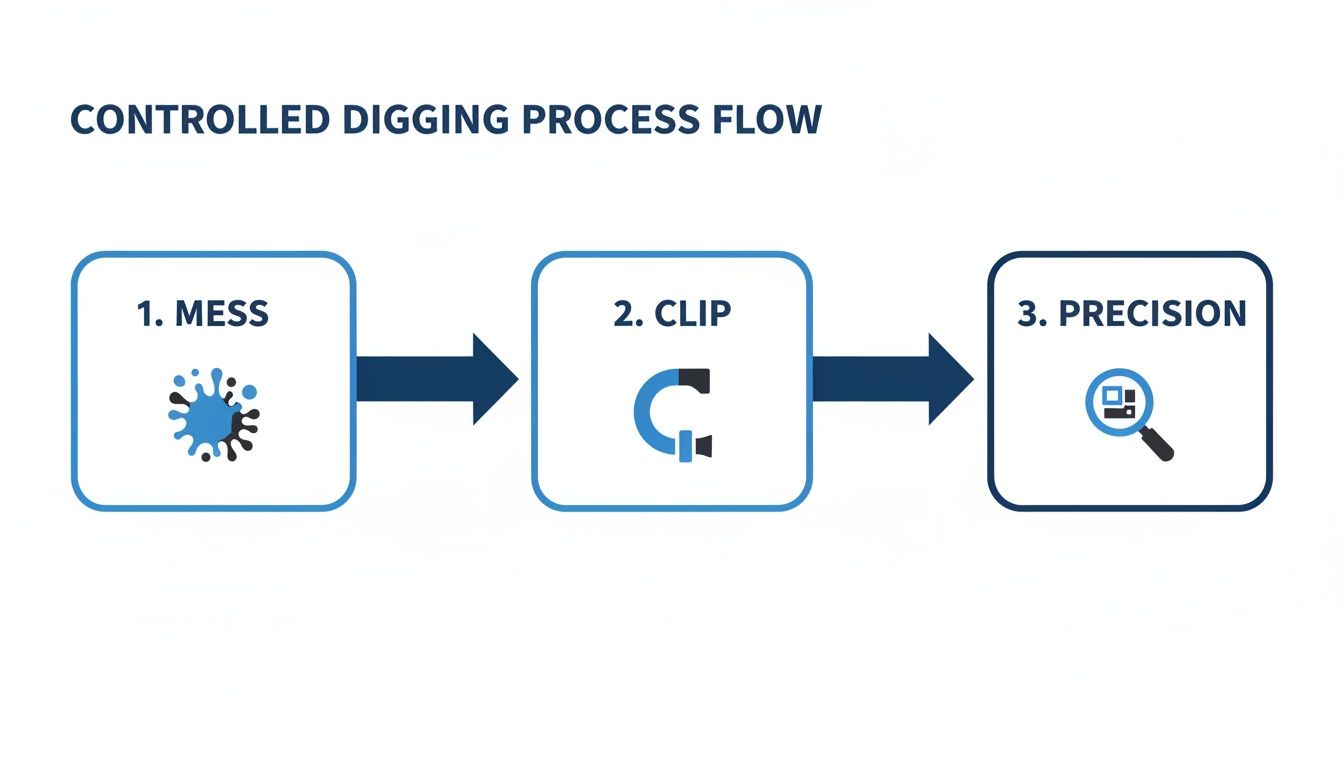
It’s clear how getting that clip right is the one step that turns a potential disaster into a professional, efficient operation.
Positioning the Clip for a Solid Lock
First things first, you have to get the alignment right if you want peak performance. When you slide the Hydrovac Attachment into your 2.5-inch wet vac hose, make sure it’s seated all the way in. You don't want any bunching or twisting in the hose material.
Next, position the vacuum hose clip about a quarter-inch from the end of the hose, making sure it sits right over the connection point. If you place it too far back, it won't actually secure the attachment. Too close to the edge, and it might just slip off under pressure. Getting that placement just right distributes the clamping force evenly for a true 360-degree seal. For a deeper dive into the mechanics, you can learn more about how a proper vacuum hose clamp works.
A Snug Fit is All You Need
This is where people often go wrong: over-tightening the clip. It's tempting to really crank down on that screw, but too much force can warp the hose, create weak spots, and even crack the plastic fittings over time. You’re aiming for a firm, secure grip, not a death grip.
Just hand-tighten the clip until it feels snug. Then, grab a screwdriver and give it one final quarter-turn. That’s it. This gives you all the clamping force you need to stop leaks without damaging your gear.
Installation Quick-Check for the Hydrovac Attachment Clip
Before you start any job, running through a quick mental checklist ensures your clip is properly installed. This table breaks down what to look for and why it’s so important for a safe, efficient workflow.
| Checkpoint | What to Look For | Why It Matters |
|---|---|---|
| Full Insertion | The attachment is seated completely inside the hose with no gaps. | Prevents air leaks at the base and ensures the clip has a solid surface to grip. |
| Clip Placement | The clip is positioned about a quarter-inch from the hose end. | Optimizes clamping pressure directly over the fitting, preventing slippage. |
| Even Pressure | The clip is straight and not tilted or angled. | Ensures a consistent 360-degree seal, eliminating potential weak spots for leaks. |
| Snug Tightness | The screw is firm but not excessively torqued. | Secures the connection without damaging the hose or the attachment itself. |
| The Tug Test | The attachment doesn't move or wobble when you give it a firm pull. | A quick, real-world confirmation that the connection is solid and job-ready. |
Taking just a few seconds to verify these points can save you from a major headache once the water and vacuum are running.
Pro Tip: Always do a quick "tug test" before you turn on the water and the vac. Just grab the Hydrovac Attachment and give it a firm pull while holding the hose steady. If you feel any wiggle or slippage, it needs a little more tightening. This five-second check can prevent a huge mess down the line.
Think about it this way: you're setting a fence post just a few inches from a customer’s brand-new sprinkler system. A loose connection could blast muddy water all over their siding or, even worse, cause the attachment to fly off and break a fragile pipe. In that situation, a rock-solid, hand-tightened seal is everything. Understanding how all the pieces of a vacuum system work together is key, and you can get a better sense of that by looking into various vacuum fittings. Taking a moment to secure your clip the right way is the first step to a clean, successful job every time.
Real-World Applications: Putting Precision Excavation to the Test
Specs on paper are one thing, but the real test for any tool is how it holds up on a messy, unpredictable job site. This is where you see the Hydrovac Attachment, held tight with a solid vacuum hose clip, go from a neat idea to an absolute must-have. It’s a game-changer for the tricky jobs that digging and property maintenance pros run into every day, like safely digging up pipes or setting fence posts without damage.
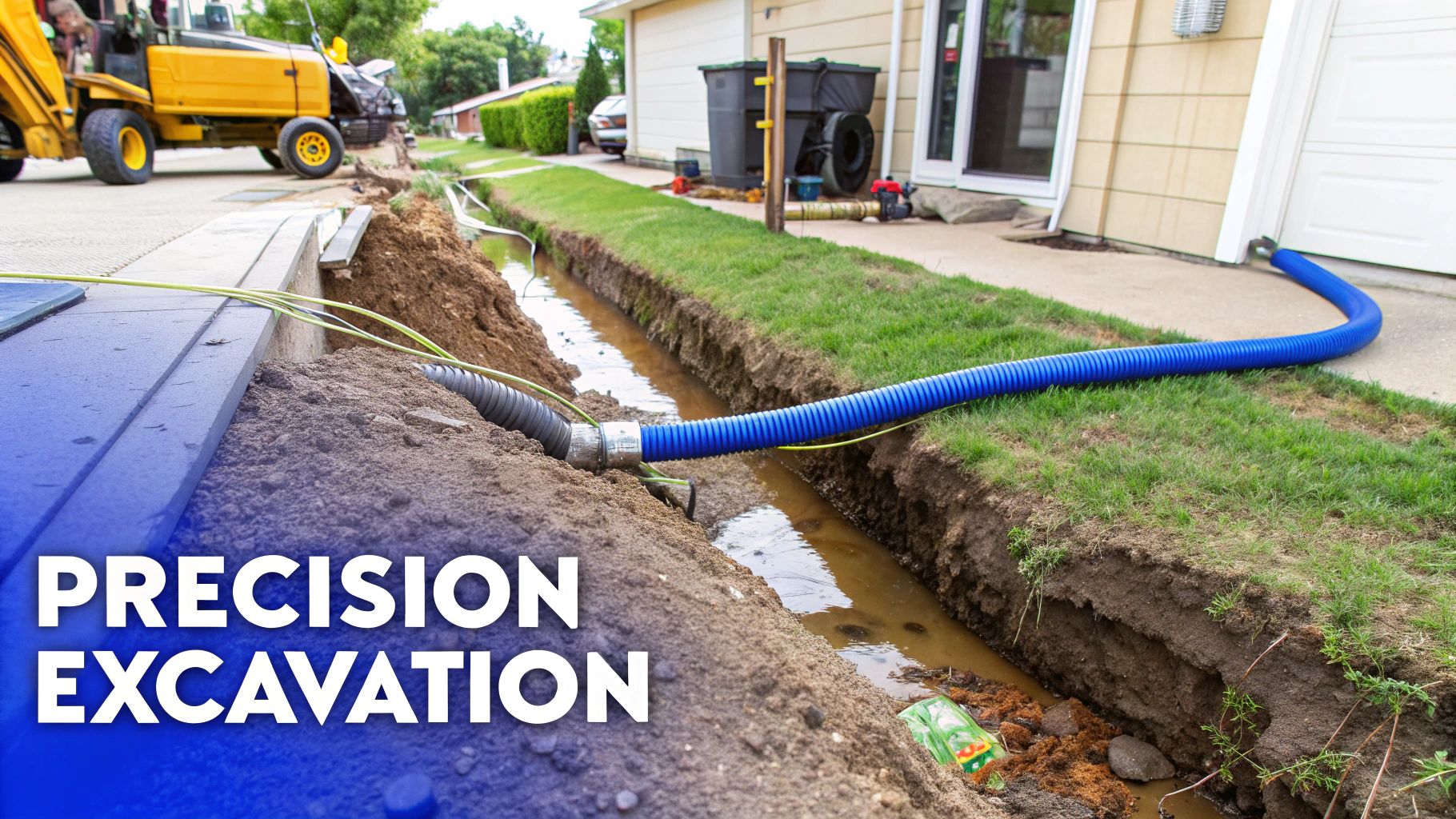
Think about the last time you had to "daylight" a shallow utility line—maybe an irrigation pipe or a buried cable that needed a quick repair. One wrong move with a shovel and you’ve got a much bigger, more expensive problem on your hands. With the Hydrovac Attachment, you can use a controlled stream of water to liquefy the soil right over the line, and the vacuum sucks up the slurry instantly. What you're left with is a clean, precise hole and zero risk of damaging what’s underneath.
That kind of surgical control is something you just can't get with hand tools. The secure connection from the vacuum hose clip is crucial here, making sure every bit of suction power is focused right where you need it. This prevents sloppy overflows and keeps the customer's lawn from turning into a mud pit.
Mastering Different Soil Conditions
Let’s be honest, not all dirt is the same, and your approach has to change with it. The beauty of the Hydrovac Attachment is that it gives you the flexibility to handle pretty much anything Mother Nature throws at you.
- Dense Clay Soil: For that heavy, packed-in clay, you’ll need to turn up the water pressure a bit to break it apart. The trick I've found is to keep the wand moving in small, tight circles. This stops you from creating a soupy mess, as the constant suction pulls the liquefied clay away before it has a chance to settle back down.
- Loose Sandy Soil: When you're working with sandy or loamy soil, you can ease off the water pressure quite a bit. Too much force will just blast sand everywhere. I usually dial it back and let the vacuum do the heavy lifting, gently pulling the loose material out of the hole.
No matter the soil type, getting the wand angle right is key. I always tell my crew to start at a 45-degree angle. It's the sweet spot for breaking debris loose and guiding it toward the vacuum hose without getting a face full of splashback.
The need for reliable gear is growing fast. The industrial hose market, which includes all the parts that make tools like this possible, was valued at a massive $11.3 billion in 2023 and is projected to keep climbing. This shows just how vital secure connections are—like a good vacuum hose clip on a 2.5-inch tube—across all kinds of industries.
Digging Footings and Fence Posts with Finesse
Here's another classic headache: digging for deck footings or fence posts right next to a house's foundation or a delicate retaining wall. Trying to squeeze an auger or shovel in there is a recipe for disaster, and you almost always end up with a hole that’s way bigger than it needs to be.
This is where non-destructive digging really proves its worth. With the Hydrovac Attachment, you can create a perfectly sized, clean hole exactly where you need it, without disturbing the surrounding area. It not only looks more professional but also saves a ton of time on cleanup and backfilling. If you want to dig deeper into the "why" behind this method, check out our guide that answers the question, "What is vacuum excavation?".
Once you get the hang of these applications, the Hydrovac Attachment stops being just another tool on the truck. It becomes a central part of working smarter, not harder.
Keeping Your Gear in Top Working Condition
Think of your tools as an investment in your business. Just like any good investment, proper care pays you back job after job. When it comes to the Hydrovac Attachment and its vacuum hose clip, effective maintenance isn't complicated, but it's absolutely critical for long-term reliability and avoiding those frustrating on-site failures. It all starts the second you wrap up a job.
Even a little corrosive soil and grit left on your equipment can eat away at the materials over time. Your first line of defense is simple: a quick rinse-down of the attachment and hose. You'll want to pay close attention to the screw mechanism on the vacuum hose clip, making sure it's clear of any gunk that could cause it to seize or strip out.
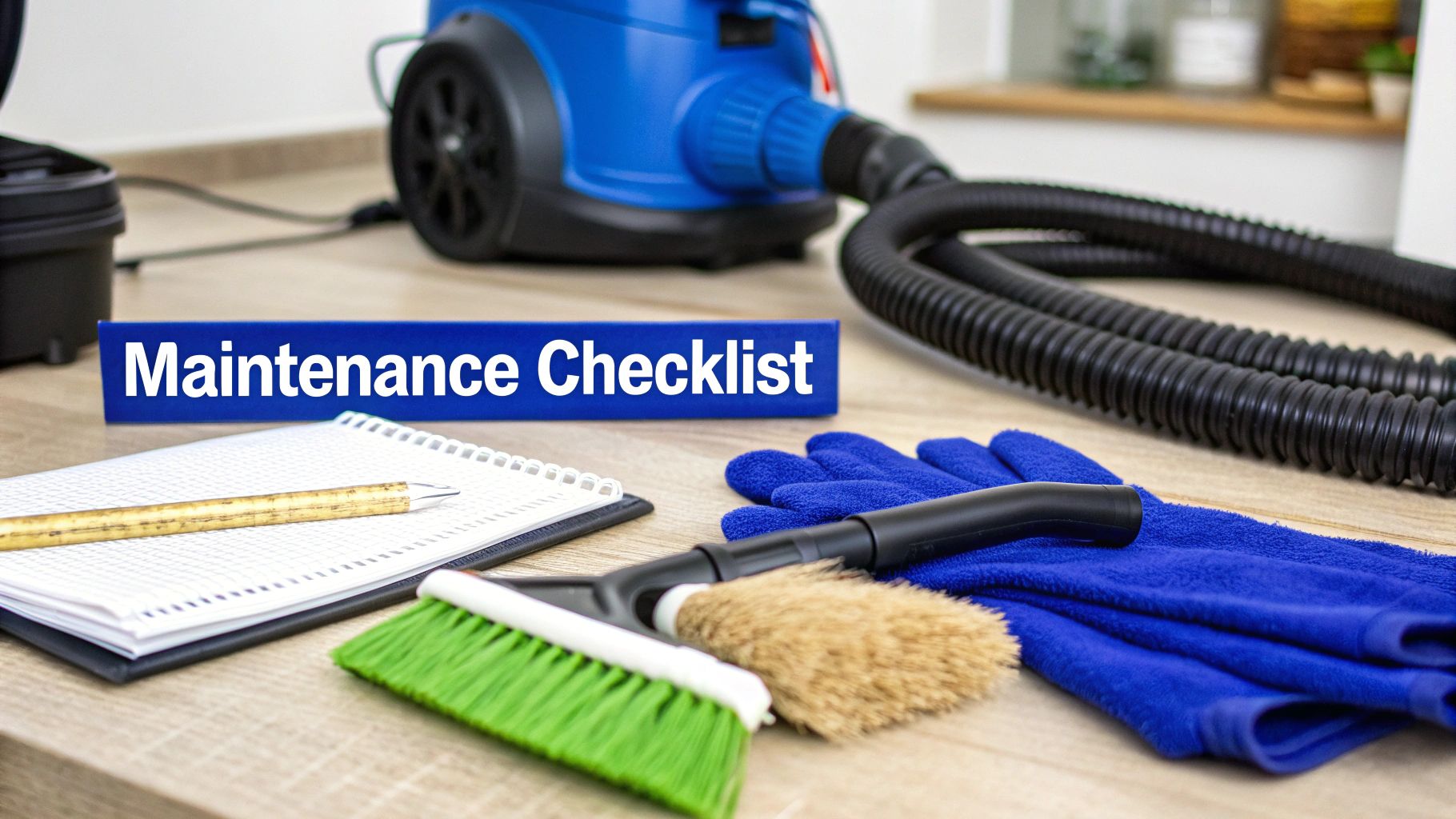
This kind of proactive care is a non-negotiable for any professional-grade gear. To keep your clips and other components running like they should, it’s smart to build solid industrial equipment repair strategies that keep you on the job, not on the sidelines.
Post-Job Maintenance Checklist
Building a simple post-job routine is one of the easiest ways to extend the life of your equipment. A consistent process stops tiny issues from snowballing into major headaches that cost you real time and money.
Here’s a quick rundown to follow after every use:
- Rinse and Clean: Grab some fresh water and flush out any leftover soil, mud, or debris from the attachment and the hose end.
- Inspect the Clip: Give the vacuum hose clip a good look-over. You’re checking for any signs of bending, rust, or stripping on the screw threads.
- Dry Thoroughly: Before you store it, wipe down all the components. This helps prevent corrosion and keeps mildew from growing inside the hose.
- Store Properly: Keep your equipment out of direct sunlight. UV rays can make the polymer brittle and weak over time.
Troubleshooting Common Field Issues
Let's be real—even with perfect maintenance, you'll still run into hiccups now and then. The key is knowing how to diagnose and fix them quickly to keep the workflow moving.
If you notice a gradual loss of suction, your first suspect should always be the connection point. If that vacuum hose clip feels even the slightest bit loose, that's almost certainly your culprit. Big temperature swings and constant vibration throughout the day can cause a clip to back off a little. Often, a quick check and re-tighten is all it takes to get back to full power.
A secure seal is everything. Think of it like a tiny hole in a straw—it dramatically cuts down the tool's ability to do its job, forcing your vacuum to work way harder for weaker results.
The vacuum hose market is a massive industry for a reason. In North America alone, it was valued at an incredible $3 billion back in 2019, making up over 60% of the global industry. This demand is driven by crews like yours who rely on wet vac hoses—secured by a dependable vacuum hose clip—for precision work like potholing and exposing utility lines. This just goes to show why keeping every single component, especially the clip, in prime condition is so vital for performance.
Boosting Job Site Safety and Efficiency
It’s easy to focus on just digging cleaner holes, but the real win here is running a smarter, more professional operation from top to bottom. That seemingly simple vacuum hose clip is what tethers the Hydrovac Attachment to your wet vac, and the quality of that connection has a direct impact on both safety and how fast you get the job done.
When the system is sealed up tight, you’re in complete control of the excavation.
That control is what lets you kill the messy splashback and flying debris that’s almost unavoidable with old-school digging. If you do any work in residential yards, you know that containing the mess isn't just a nice-to-have—it’s non-negotiable. A targeted stream of water with instant suction keeps all that mud, rock, and slurry inside the hose, protecting siding, windows, and the client’s prized flower beds.
Creating a Safer Work Environment
A safer site is an efficient site. When your crew isn't constantly ducking flying rocks or trying not to slip in a mud puddle, they can actually focus on the work in front of them. A properly secured Hydrovac Attachment makes for a surprisingly clean work area.
This brings a few major safety wins to the table:
- Reduced Slip Hazards: With far less water and mud pooling on the ground, your team has much better footing.
- Clearer Visibility: No dust clouds or muddy spray means operators can actually see the utility lines they're uncovering. That drastically cuts the risk of a dangerous—and expensive—strike.
- Eye and Skin Protection: By keeping the slurry contained, you stop it from spraying onto your crew. This cuts down on irritation and exposure to whatever might be in the soil.
This level of control turns what can be a chaotic digging process into a predictable, manageable task. It gives you the confidence to dig right up against a foundation or in a tight spot without worrying about collateral damage.
Think of the Hydrovac Attachment as more than just another tool. It's a strategic move toward professional-grade performance. When you improve your process like this, you elevate the quality of your work and the safety of your whole operation.
Translating Efficiency into Profit
Every minute your crew spends on manual cleanup is a minute you aren't billing for the next job. The time saved by using a contained hydro-excavation system is real, and you'll see it on day one.
When the hole is dug cleanly and the debris is sucked away in one smooth motion, there's almost no post-job cleanup.
This means you can pack up and head to the next site with practically zero downtime. For smaller jobs like setting fence posts, repairing irrigation lines, or trenching for electrical, that saved time adds up fast. It lets you stack more jobs into a single day, which goes straight to your profit margins and strengthens your bottom line. It all starts with that small but critical vacuum hose clip, the lynchpin for a faster, safer, and more profitable workflow.
Answering Your Top Questions About the Hydrovac Attachment
We get a lot of great questions from landscapers, residential digging crews, and property maintenance pros. Getting the right info upfront helps you hit the ground running and make every job cleaner, safer, and more profitable from day one. Let's dig into the most common ones.
First and foremost, everyone wants to know about compatibility. The answer is simple: the Hydrovac Attachment is built to work with any standard 2.5-inch wet vac hose, no matter the brand. If your hose has that common diameter, our vacuum hose clip will give you a rock-solid, leak-proof seal for maximum suction.
What Do I Do About Clogs?
It happens. You're digging in tough soil and suddenly feel a drop in suction. Nine times out of ten, it’s just a large rock or a stubborn clump of clay stuck right at the nozzle or just inside the hose. Don't shut everything down.
Here’s a quick field trick: just lift the nozzle out of the mud and dunk it in a bucket of clean water for a second. That sudden rush of water, combined with the vacuum's powerful pull, is almost always enough to break the clog free instantly. It’s a five-second fix that keeps you on schedule.
Experienced hydrovac operators know that workflow is everything. A simple technique like this turns a potential shutdown into a tiny blip on the radar, keeping your crew productive and the job moving forward.
How Does This Really Compare to Using a Shovel?
This is where the real "aha!" moment happens for most contractors, especially when working in finished yards. The difference between using our attachment and traditional post-hole diggers or shovels is massive, and it boils down to one thing: non-destructive digging.
An auger or shovel tears up turf, creates a huge mess, and runs a serious risk of slicing through irrigation lines, low-voltage cables, or other utilities buried just beneath the surface. The cleanup alone can eat up valuable time.
The Hydrovac Attachment, on the other hand, is all about precision. It uses pressurized water to carefully liquefy only the soil you need to remove, while the vacuum sucks the slurry away immediately. This is the ideal solution for digging up pipes without damage or setting a fence post with care.
- Surgical Accuracy: You get a clean, perfectly sized hole with almost no impact on the surrounding lawn or garden beds.
- Zero Damage Risk: It's the safest way to dig around sensitive utilities. Pressurized water won't break a pipe or cut a wire like a sharp steel blade can.
- Minimal Cleanup: Forget massive dirt piles. The excavated soil goes straight into your vacuum's tank, leaving the job site incredibly tidy.
It completely changes the game for tasks like setting fence posts, repairing sprinkler systems, or exposing utility lines. You go from a messy, high-risk chore to a controlled, professional operation that your clients will definitely appreciate.
Ready to make your digging process safer and more efficient? The team at Hydrovac Attachment has you covered. See how our tool can turn your standard wet vac into a precision digging machine by visiting our website at https://hydrovacattm.com today.