


When you pair a powerful wet vac with the right vacuum hose and attachments, you're not just cleaning up a mess—you're unlocking a whole new way to handle yard care and residential digging. These accessories can turn a standard shop vacuum into a precision excavation tool, perfect for jobs like digging fence post holes or safely uncovering buried pipes without causing damage.
The Modern Toolkit for Precision Excavation
For as long as anyone can remember, the shovel and pickaxe were the go-to tools for digging. They get the job done, but often with a lot of collateral damage. Anyone who's accidentally hit a sprinkler line, nicked a buried electrical wire, or torn up the roots of a beautiful old tree knows this all too well. A simple project like installing a new fence can quickly spiral into a costly repair, not to mention the mess and back-breaking effort involved.
This is where the modern toolkit really starts to shine. Smart yard care pros and repair technicians are realizing their wet vacuums have a ton of untapped potential. By simply hooking up the right accessories, they can perform controlled, non-destructive digging—think of it as small-scale hydro excavation. The technique is simple but effective: use water to gently loosen the soil, and a powerful vacuum to suck up the slurry right away.
Bridging the Gap in Digging Technology
The biggest hurdle has always been finding the right tool for the job. Massive industrial hydrovac trucks are overkill for digging a few fence post holes or clearing out a clogged drain. On the other hand, a standard wet vac just doesn't have the oomph to break through compacted dirt on its own. This is exactly the problem that new, innovative tools are built to solve.
The Hydrovac Attachment is a game-changer, turning a regular wet vac into a mobile, precision digging system. It safely combines a pressure washer with vacuum suction, creating a self-contained and incredibly efficient excavation tool without needing a giant truck.
This simple setup brings a lot to the table for residential jobs:
- Surgical Precision: You can carefully remove soil around sensitive objects, which means no more expensive repairs to sprinkler systems, cables, or pipes.
- Reduced Mess: The vacuum sucks up debris as it’s loosened, so there's far less mud, dust, and splashback. The result is a cleaner, safer worksite.
- Increased Efficiency: Let's be honest, it's way faster than digging by hand. You can dig fence post holes or expose buried utilities in a fraction of the time.
To give you a clearer picture, let's compare the old way with the new.
Traditional Digging vs. Vacuum-Assisted Excavation
This table breaks down the key differences between swinging a shovel and using a modern vacuum-assisted approach for yard care.
| Metric | Traditional Digging | Vacuum-Assisted Excavation |
|---|---|---|
| Safety | High risk of striking utilities | Extremely low risk of damage |
| Precision | Low; difficult around obstacles | High; surgical removal of soil |
| Worksite Mess | Significant piles of dirt, mud | Minimal mess; debris contained |
| Labor | Physically demanding and slow | Much faster and less strenuous |
| Restoration | Requires extensive backfilling | Easy backfilling; minimal landscape impact |
As you can see, the benefits of incorporating vacuum technology go far beyond just convenience—it's about working smarter, safer, and cleaner.
Of course, for much larger projects, other specialized equipment comes into play. For instance, services like grab lorry waste removal services are essential for hauling away large volumes of material efficiently. By understanding the full spectrum of tools available—from small attachments to large-scale support equipment—you can build a toolkit that’s truly versatile.
If you want to dive deeper, you can explore a detailed breakdown of different types of professional hydrovac excavation equipment in our comprehensive guide.
Picking the Right Vacuum Hose for Tough Jobs
When you're tackling demanding work like yard care or residential digging, not just any vacuum hose will do. Your hose is the lifeline of your whole setup, and skimping on quality is a recipe for frustration. A weak or poorly sized hose leads to clogs, lost suction, and expensive delays on the job. The material it's made from is the first line of defense against the rough stuff you'll be sucking up.
A standard plastic shop vac hose might be fine for sawdust, but it's going to get shredded by rocks, abrasive soil, and wet slurry. That's why professionals rely on hoses made from materials like abrasion-resistant rubber or flexible polyurethane. These are built to handle the punishment of excavation. They can bend without kinking and resist getting punctured by sharp debris, ensuring your equipment just keeps working.
Why Hose Diameter Is a Game-Changer
Material is one thing, but the diameter of your vacuum hose is arguably the single most important factor for getting the job done right. If a hose is too narrow, it’s going to clog every five minutes when you're pulling in clumps of soil or small rocks. On the flip side, a hose that’s too wide for your vacuum's motor will kill your suction power, leaving most of the material behind.
For wet vac applications in residential digging and landscape maintenance, the 2.5-inch diameter is the industry standard. This size strikes the perfect balance between strong airflow and the ability to handle chunky debris without constant blockages. It’s the sweet spot for tools like the Hydrovac Attachment.
This idea of using vacuum power for precision work is a big step up from traditional digging methods.
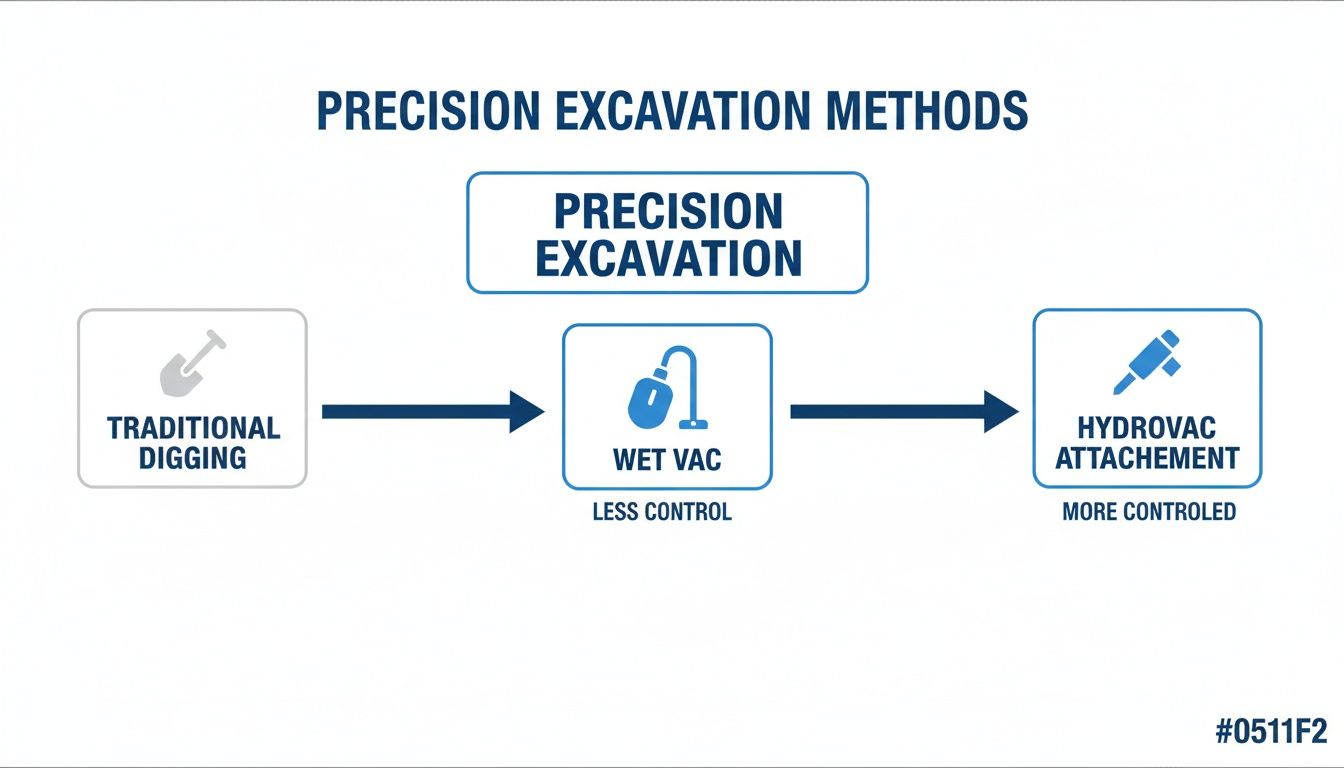
As you can see, specialized tools like the Hydrovac Attachment build on the power of a standard wet vac to bring a new level of precision to the job site.
Matching Your Hose to the Work
Ultimately, picking the right vacuum hose and attachments is all about matching the gear to the specific job you're facing. This focus on using the right tool is why the entire hydro excavation industry is booming. The global market for these services was valued at $6,548 million and is expected to climb to $9,170 million by 2031. That growth comes from professionals demanding smarter, non-destructive ways to dig that avoid hitting expensive underground utilities.
When you're choosing a hose, keep these key factors in mind:
- Flexibility: Can the hose get into tight corners and around obstacles without collapsing on itself? You can learn more about the benefits of flexible vacuum hoses for tricky job site layouts.
- Length: Is it long enough to reach your work area without having to drag the vacuum unit around every few minutes?
- Cuff Quality: Are the connectors built to last? A cheap cuff will leak air and rob you of suction power right where you need it most.
By investing in a high-quality hose that's the right size, you set up your wet vac and attachments like the Hydrovac Attachment to perform at their best. It’s how you turn a tough job into a simple one.
Essential Attachments That Transform Your Wet Vac
A solid vacuum hose is the backbone of any wet vac setup, but it's the attachments that really do the heavy lifting. The standard nozzle that came with your shop vac is fine for sawdust on the garage floor, but it’s completely out of its league when you're digging in the yard or trying to safely uncover buried pipes. For jobs like that, you need tools built to handle dirt, rocks, and mud.
This is where you start looking at purpose-built vacuum hose and attachments. Instead of just grabbing a shovel and hoping for the best, these accessories let you perform something more like surgical excavation. The idea is to go beyond simple suction and create a system that breaks up and pulls away material in one smooth, controlled action. It’s not just faster; it's a whole lot safer when you're working around delicate things like sprinkler lines or electrical wiring.
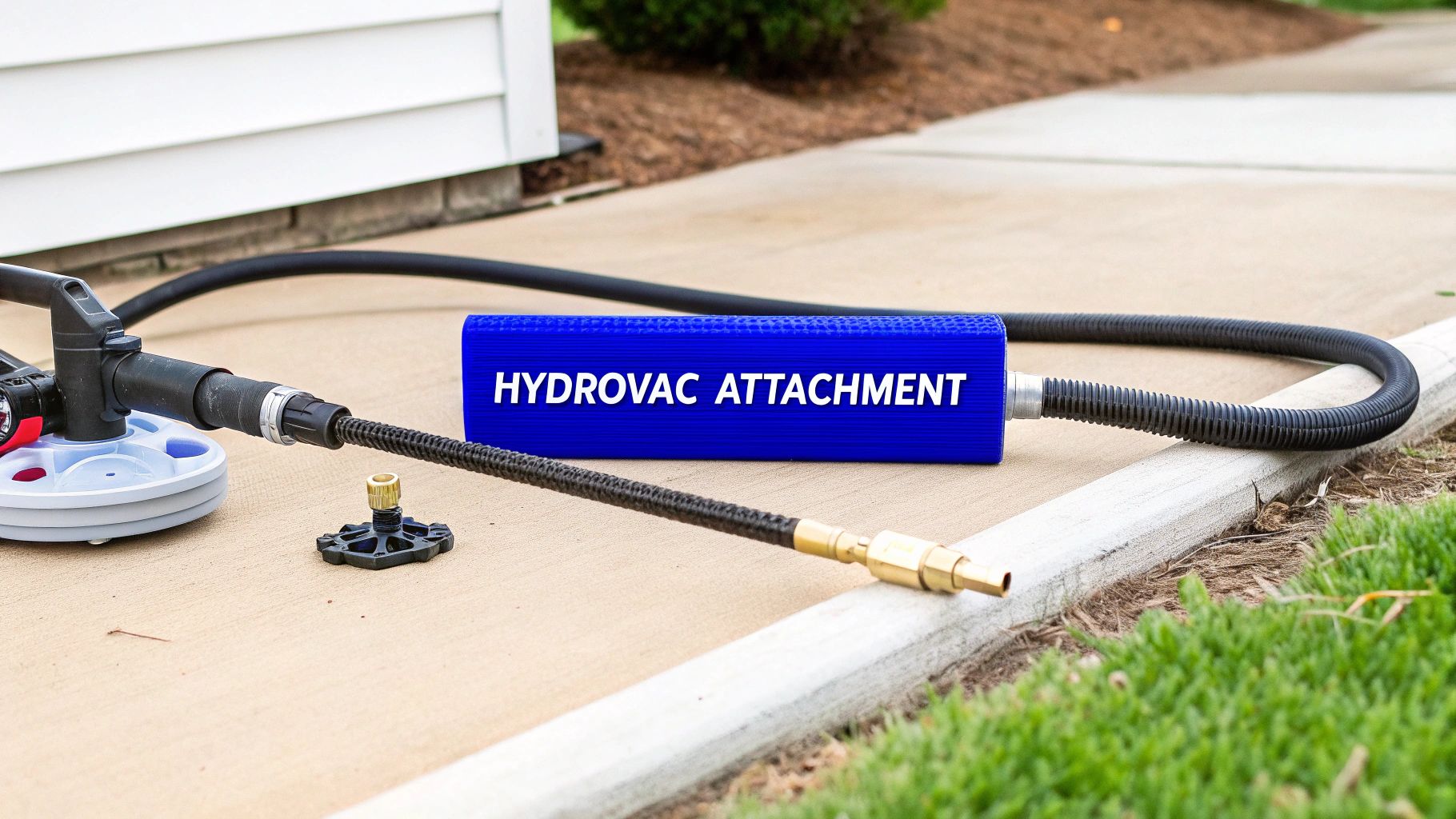
A Smarter Way to Dig
The Hydrovac Attachment is a prime example of this kind of smart design. It’s a simple but incredibly effective tool that combines a pressure washer wand with your wet vac hose. This setup creates a self-contained, high-power system that blasts soil loose with a focused jet of water while the vacuum sucks the slurry away instantly. It's a mobile solution for clearing small amounts of debris for specific tasks.
The magic is in the integrated design. By keeping the high-pressure water and messy slurry contained right at the suction point, you get almost zero splashback. The work area stays clean and, more importantly, visible. This lets you work with incredible precision, clearing soil right up to a fragile pipe without worrying about breaking it.
This kind of control is exactly why the hydro excavation industry is booming. The global vacuum truck market—which runs on the same principle—was valued at $1.97 billion and is expected to hit $3.48 billion by 2032. All that growth is driven by the need for safer digging methods, especially in crowded urban and residential areas. For smaller jobs, a portable tool like the Hydrovac Attachment gives you the same benefits without needing a giant truck, and it connects right to the standard wet vac hoses you already own.
Expanding Your Attachment Arsenal
While the Hydrovac Attachment is a game-changer for precision digging, it's smart to have a few other tools in your arsenal. Depending on the job, you might want to look into specialized nozzle attachments designed for different soil conditions or types of debris.
It's also worth exploring other useful https://hydrovacattm.com/blogs/info/vacuum-hose-accessories that can make your workflow even smoother. Having the right tool for the job means you're always prepared, whether you're digging a fence post hole or carefully clearing out a stubborn drain.
Putting Your Hydrovac Attachment to Work: Real-World Scenarios
Alright, enough with the theory. The true test of any tool is how it performs out on the job site. Let's look at a few common, often frustrating, situations where swapping a shovel for a wet vac armed with a Hydrovac Attachment can save your day. These are the kinds of yard care and digging jobs where this tool is the perfect solution.
Imagine you're tasked with setting fence posts, but the client's property map shows the sprinkler lines run right along the fence line. Going in with a shovel is a high-stakes gamble. One misplaced swing, and you've got a geyser, an angry client, and a costly, muddy repair on your hands.
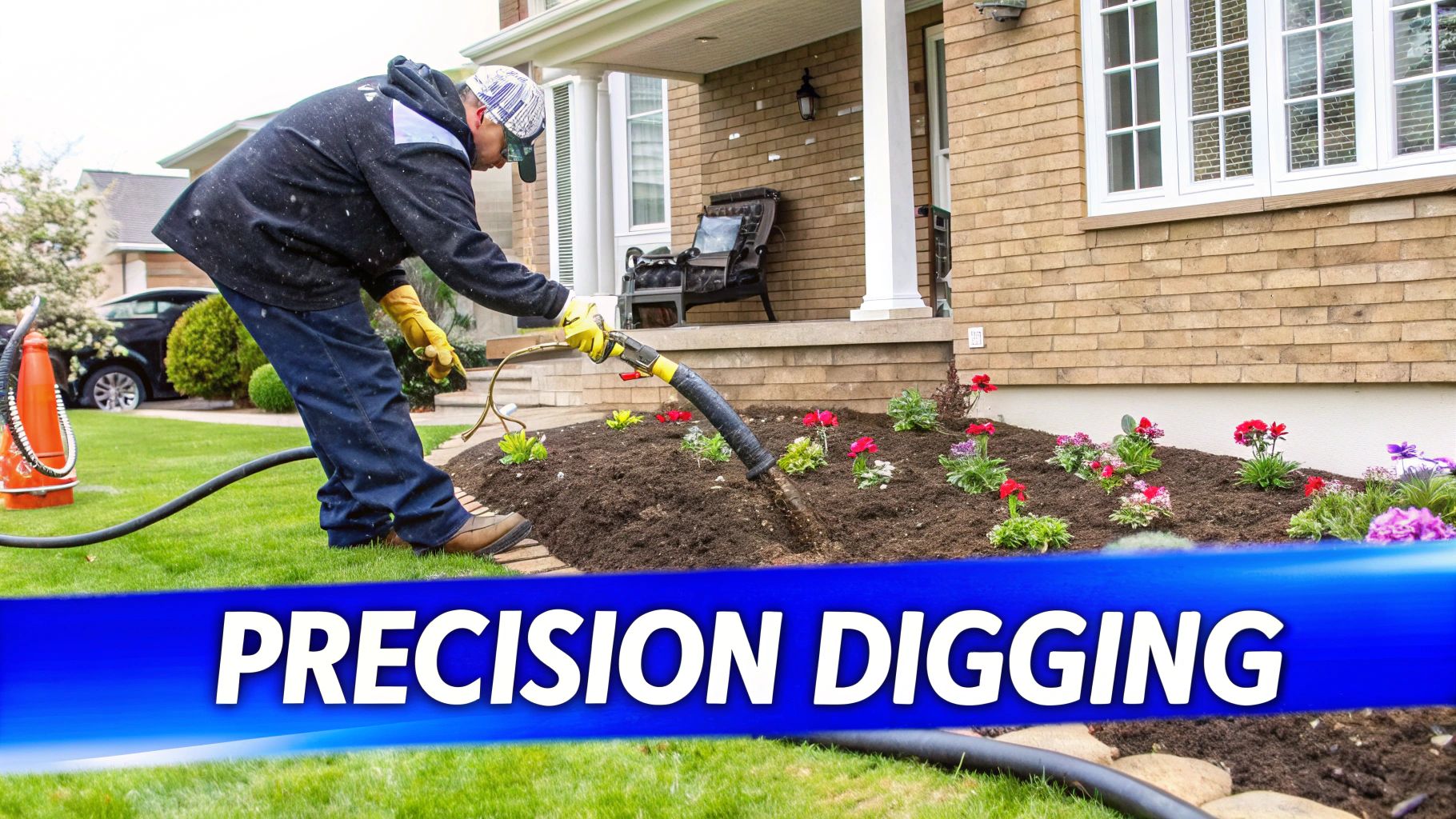
This is precisely where the Hydrovac Attachment excels. With the tool, you can use a controlled stream of water to soften the soil into a slurry, which is immediately sucked away by the vacuum. You're not digging; you're gently uncovering. The soil vanishes, revealing the sprinkler line perfectly intact. You get a clean, precise post hole exactly where you need it, with zero collateral damage.
Safely Exposing Utilities in Tight Spaces
Here’s another classic headache: an underground pipe or electrical conduit needs repair, but it's buried in the middle of an established, meticulously landscaped flowerbed. A shovel would obliterate expensive perennials, and a mini-excavator is out of the question. The cleanup alone would take more time than the actual electrical work.
The Hydrovac Attachment provides a near-surgical solution. Its focused spray and vacuum let you work around delicate root systems, removing only the soil directly above the pipe.
Because you're containing the water and soil right at the source, there’s no mud splattered on plants, walkways, or the house siding. It's the difference between a quick fix and a full-blown landscaping overhaul when digging up pipes without damage.
Clearing Clogged Trenches Without the Mess
Think about a drainage trench so packed with silt, leaves, and rocks that it’s basically solid ground. Water is backing up, turning the lawn into a swamp and threatening the home's foundation. Clearing it manually is a miserable, back-breaking job that’s guaranteed to tear up the turf.
Hook up your Hydrovac Attachment, and the task becomes straightforward. You can work your way down the trench, letting the water jet break apart the compacted gunk while the vacuum instantly removes the debris. No torn-up lawn, no mountain of mud to haul away.
A Quick Comparison: Old Way vs. New Way
| Scenario | Shovel/Traditional Method | Hydrovac Attachment Method |
|---|---|---|
| Digging Fence Posts Near Pipes | High risk of pipe damage, messy flooding | Zero impact on pipes, clean and controlled |
| Repairing Buried Conduit | Destroys surrounding landscape, extensive cleanup | Preserves plants and hardscapes, minimal mess |
| Clearing Drainage Trench | Tears up lawn, physically demanding | Protects surrounding turf, fast and efficient |
In every one of these cases, the advantage is crystal clear. The right vacuum hose and attachments aren't just another piece of gear. They represent a smarter, safer, and ultimately more profitable way to tackle those tricky residential jobs.
Getting Set Up for Success: Maintenance and Safety
Proper setup is more than just connecting hoses; it's the foundation of a safe and efficient project. When you get your vacuum hose and attachments configured correctly from the start, a messy, unpredictable job transforms into a clean, controlled operation. The whole point is to make the tools work for you, not against you.
Getting started with the Hydrovac Attachment is incredibly simple. You just connect your standard 2.5-inch wet vac hose to the base, slide your pressure washer wand through its opening, and lock it in. That’s it. You've just created a self-contained system that vacuums up debris as you dig, cutting down on splashback and keeping your line of sight clear.
Keeping Your Gear in Fighting Shape
Your vacuum hose takes a beating. It’s constantly sucking up abrasive grit, rocks, and thick slurry. A little bit of care goes a long way in preventing it from wearing out prematurely.
After you wrap up a job, take five minutes to flush the hose with clean water. This simple rinse clears out any leftover grime that can grind away at the interior lining or, worse, harden into a future clog. Think of it as cleaning your tools before putting them away.
Before you store it, give the hose a quick once-over. Look for any cracks, small punctures, or weak spots, paying close attention to the cuffs where it connects—that's where the most stress happens. Catching a small tear early can prevent a full-on blowout later, which saves you from lost suction and a huge mess.
On-the-Job Safety That Actually Matters
Even though this mobile setup is designed for safety, following smart practices is non-negotiable. Always wear your Personal Protective Equipment (PPE). That means safety glasses or a face shield for stray debris and waterproof gloves to keep your hands dry and protected.
Water pressure management is also a huge part of staying safe. You can't just blast away at full power on every job.
- Loose or sandy soil? Start with a lower pressure. You just need to gently loosen the material, not send it flying everywhere.
- Tough, compacted clay? You might need to dial up the pressure, but do it slowly and carefully. This is especially true if you even think there might be utilities buried nearby.
The name of the game is control. This mobile hydrovac setup is a precision tool, built to avoid the kind of costly damage that comes with swinging a shovel or pickaxe. Know your equipment's limits and work within them to keep the job site safe.
This shift toward precision and safety isn't just a small trend. The global market for hydrovac trucks, which depend on the same kind of advanced vacuum hoses and attachments, has exploded. In North America alone, the market share shot up by 84.56% between 2021 and 2025. This shows a massive industry-wide move toward smarter, non-destructive digging. If you're interested, you can explore more data on these market trends to see just how valuable this approach has become.
Where Mobile Precision Digging is Headed
The writing's on the wall: the old way of doing things is on its way out. The days of either bringing in oversized, clunky equipment or resorting to risky, back-breaking manual digging for smaller jobs are numbered. We're seeing a major shift toward smarter, safer, and more accessible excavation methods.
This whole movement is really driven by one simple, powerful idea: getting more out of the equipment you already have. Your standard wet vac, something most crews have in the truck, can be transformed into a legitimate precision digging tool with the right vacuum hose and attachments. It’s a common-sense approach that turns a shop staple into specialized gear.
Making the Smarter Business Call
Let's be clear, investing in a tool like the Hydrovac Attachment isn't just about buying another piece of gear—it's a calculated business move. When your crew can dig fence post holes or expose buried utility lines without damaging anything, you're directly boosting your bottom line.
Think about it. You're cutting down on expensive, accidental repairs, slashing cleanup time, and making the worksite safer for your team.
For anyone doing yard care, landscaping, or residential digging, getting on board with these kinds of modern tools is how you get ahead and stay there. It’s all about doing cleaner, faster, and more dependable work on every single job.
When you boil it all down, the future of mobile excavation is in these smart, high-performance attachments. By adding one effective tool to an existing wet vac, you can immediately elevate the quality of your work, protect your client's property, and build a better business.
Frequently Asked Questions
Got questions about using a hydrovac attachment for those smaller, more precise digging jobs? You're not alone. Let's tackle some of the most common things people ask, so you can get started with confidence.
Can I Hook This Up to Any Old Shop Vac?
Great question. This attachment is built specifically to connect with the 2.5-inch wet vac hose, which is pretty much the standard for most heavy-duty and professional shop vacuums out there.
Getting that snug, airtight fit is crucial—it's what keeps the suction power strong and prevents you from losing pressure. Before you buy, just double-check the diameter of your vacuum's hose to make sure it's a match.
Is This Meant to Replace a Full-Sized Hydrovac Truck?
Not at all. Think of this attachment as a precision tool, not a replacement for heavy machinery. It is NOT for hydrovac trucks. This is a mobile tool designed to bring the power of hydro excavation to small, tight, or delicate jobs where bringing in a giant truck would be overkill or just plain impossible.
It’s perfect for things like digging fence post holes, carefully exposing a shallow pipe for a quick repair, or cleaning out a valve box. When you have a massive trench to dig, you'll still need to call in the big hydrovac truck.
What Kind of Pressure Washer Do I Need?
You're in luck here—the attachment is designed to work with most standard pressure washer wands, whether they're for home or commercial use. This makes it a really easy addition to the tools you probably already own.
The real key to using it effectively is learning to manage your water pressure. Always start low, especially if you know there are utilities or sensitive tree roots nearby. Gently loosen the soil first. That control is what lets you dig without causing any damage.
Ready to add some real precision to your digging arsenal? The Hydrovac Attachment can turn your wet vac into a serious excavation tool. Head over to our website to see it in action and grab one for yourself!