


When you're tackling a residential digging job on your own, a one-man post hole auger can seem like the obvious choice for yard care projects. They’re fast, powerful, and get the job done. But they're not the only game in town, and in situations demanding precision, they're far from the best option. For projects like digging fence posts, digging up pipes without damage, or working near sensitive utilities, a modern approach using a mobile vacuum excavation tool is the smarter, safer way to go.
This guide will break down the differences between brute-force augers and precision hydro-digging, helping you choose the right tool for your next residential project.
Choosing the Right Solo Digging Method
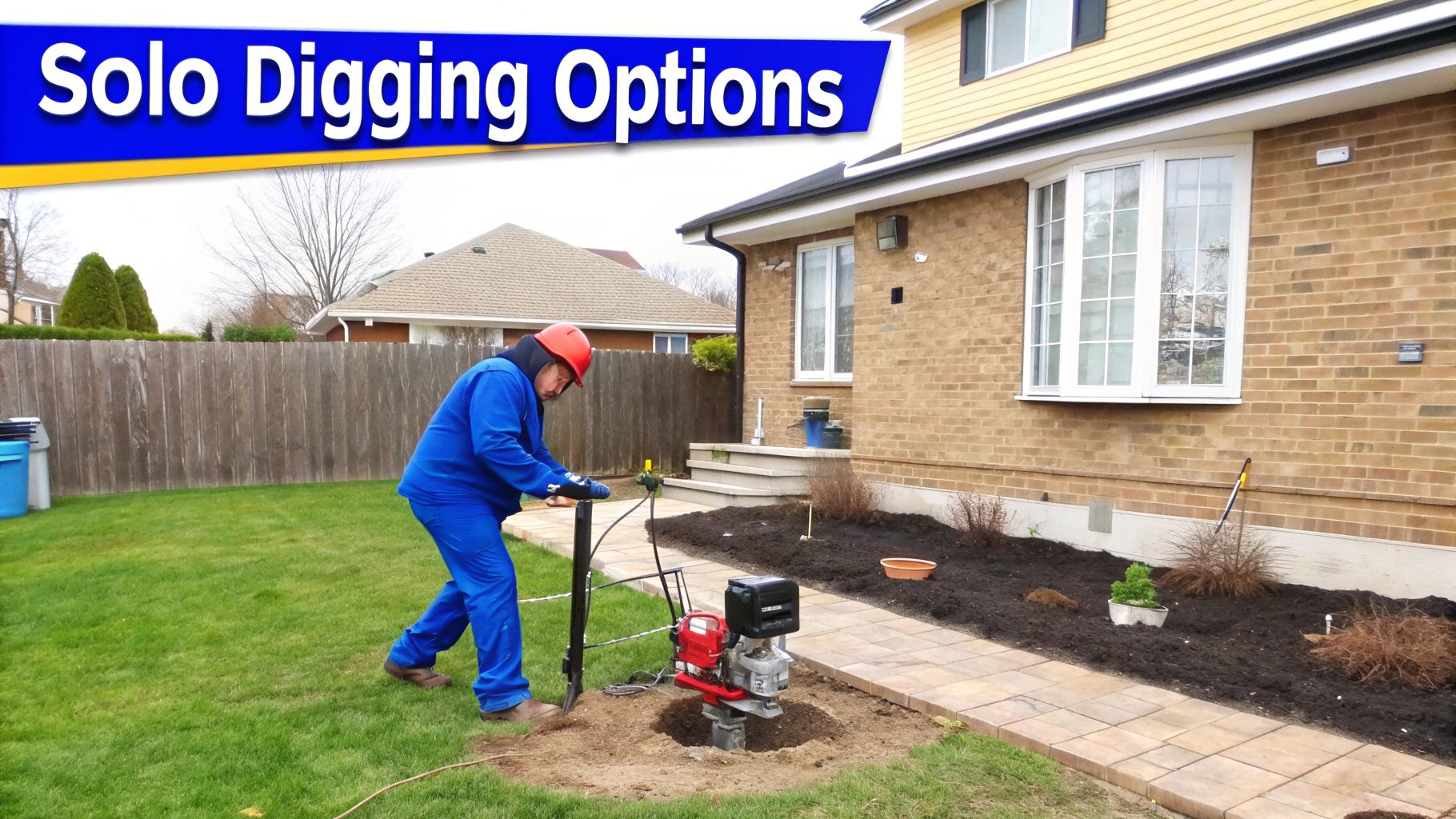
Working alone means your equipment has to be a true partner, not a liability. For years, the go-to tool for setting fence posts or deck footings has been a gas-powered, one-man auger. It's easy to see the appeal—these machines chew through soil with incredible force, turning what would be a long day with a shovel into a surprisingly quick task.
There's no denying that one-man augers have changed the game for solo landscapers and fencers, slashing labor times. In fact, the global post hole borer market was valued at a whopping USD 4.5 billion in 2023, with portable one-man models making up a huge slice of that pie, especially for home projects. Think about it: digging a standard fence post hole can go from 45 minutes with a shovel down to just 2-3 minutes with an auger. That's a productivity boost of over 90%. You can dive into a full market analysis of post hole borers to see the numbers for yourself.
But all that raw power comes with some serious strings attached that every solo operator needs to think about.
The Drawbacks of Brute Force
A mechanical auger is designed to do one thing: drill. It doesn’t know the difference between soil, a stubborn tree root, or a buried utility line. This blindness creates very real risks, especially in residential yards.
- Dangerous Kickback: If that auger blade catches on a big rock or root, the entire machine can twist violently in your hands. This kickback is notorious for causing sprains, bruises, or worse.
- Operator Fatigue: It's not just the risk of kickback. Fighting a heavy, vibrating machine all day is exhausting. The more tired you get, the more likely you are to make a mistake.
- Utility Strikes: This is the big one. Hitting a buried water line, gas pipe, or electrical cable is more than just an expensive repair—it can be incredibly dangerous.
When it comes to digging, brute force isn't always the answer. If you need accuracy and safety, especially in yards with sprinklers or near marked utility lines, you need a more controlled method.
The Hydrovac Attachment Tool: A Smarter, Safer Alternative
This is where the concept of hydro vacuum excavation provides a superior solution for residential digging. Instead of drilling and tearing, this method uses pressurized water to gently break up and liquefy the soil. A powerful vacuum then sucks the mud and water away, leaving a clean, precise hole.
The Hydrovac Attachment Tool is a mobile tool that brings this professional-grade tech down to a residential scale. It is NOT for large hydrovac trucks but is designed to be paired with a standard wet vac and its wet vac hose. By connecting your pressure washer and vacuum, this simple, tough tool transforms your existing equipment into a precision digging machine for clearing small amounts of debris.
It’s the perfect solution for effective digging purposes like safely exposing pipes for repair, digging fence posts right next to a sprinkler line without breaking it, or creating a narrow trench in a tight spot. It’s all about working smarter, not just harder.
One Man Auger vs Hydrovac Attachment A Quick Comparison
To make the choice clearer, let's put these two methods side-by-side. The best tool really depends on what you're trying to accomplish and the environment you're working in.
| Feature | One-Man Post Hole Auger | Hydrovac Attachment Tool |
|---|---|---|
| Digging Method | Mechanical drilling with a steel blade | Pressurized water loosens soil, vacuum removes it |
| Best For | Open areas, soft to medium soil, projects far from utilities | Congested areas, digging near utilities, precision work |
| Speed | Very fast in ideal soil conditions (2-3 minutes per hole) | Slower but more controlled and precise |
| Safety Risk | High risk of kickback and utility strikes | Extremely low risk; non-destructive to buried lines |
| Physical Effort | High; requires significant strength to control | Low; minimal physical strain on the operator |
| Mess & Cleanup | Leaves piles of loose dirt around each hole | Contains soil and water in the wet vac for easy disposal |
| Equipment Needed | The auger unit itself | Pressure washer, wet/dry vacuum, and the attachment |
Ultimately, a mechanical auger is a tool for speed and power in wide-open spaces. But when your project demands a more careful touch for tasks like fence post digging or digging up pipes without damage, the precision and safety of the Hydrovac Attachment make it the clear winner for solo operators who want to avoid costly and dangerous mistakes.
The Real Risks of Using an Auger Near Utilities
It's surprisingly easy to forget what’s lurking just inches beneath your feet. A powerful post hole auger one man can handle won't know the difference between hard-packed soil and a brittle gas line, water pipe, or fiber optic cable. That spinning steel blade is pure brute force, and when it meets critical infrastructure, the result is almost always a costly—and dangerous—disaster.
Sure, calling 811 before you dig is the law and a crucial first step. But it’s not a magic bullet. Those paint marks and flags are just approximations, not pinpoint GPS coordinates. Locators often have a tolerance of 18-24 inches on either side of the actual line, which leaves a huge margin for error. In that zone, a mechanical auger is a high-stakes gamble. This is where you need to shift from a mindset of raw power to one of smart, safe precision.
The Problem with Brute Force Excavation
In the construction world, there's a specific process for safely uncovering buried utilities called "potholing" or "daylighting." The entire point is to visually confirm the exact location, depth, and type of line without ever touching it with a blade. A mechanical auger is the absolute wrong tool for this job; its aggressive, tearing action is the polar opposite of the careful approach needed.
If you're digging anywhere near marked utilities, it's worth understanding the professional alternatives. You can learn more about this safety-first mindset by reading up on non-destructive digging. It's all about prioritizing safety over speed when the stakes are this high.
Hitting a utility line isn't just a minor headache. It can mean thousands of dollars in repair bills, knocking out service for a whole neighborhood, and even causing serious personal injury. The risk is just too high to rely on guesswork and a powerful drill.
A Safer, More Precise Approach
The move toward better solo digging methods is driven by two simple things: safety and saving money. A tool like the Hydrovac Attachment is the solution for effective digging because it eliminates the risk of impact damage. This mobile tool is not for hydrovac trucks; it's a small-scale, precision instrument for yard care professionals and homeowners.
By using pressurized water to gently turn the soil into a slurry and a powerful wet vac to suck it away through its hose, you can carefully expose a utility line without any risk of impact. This controlled process completely eliminates the gamble, turning a high-risk job into a safe and manageable task.
Vacuum Excavation: A Smarter Way to Dig
After seeing the serious risks of using a mechanical auger anywhere near buried infrastructure, it’s pretty clear we need a better way. The answer isn't a more powerful drill—it’s a fundamentally smarter, non-destructive digging process. For any solo operator in the yard care or residential digging industry, this is where hydro excavation really shines.
At its heart, hydro excavation is simple but brilliant. It combines two elements: pressurized water to gently break apart and liquefy the soil, and a powerful vacuum to suck up the slurry right away. Unlike the brute force of a one-man post hole auger, this method doesn't tear or cut. It carefully washes the earth away, leaving delicate pipes, cables, and sprinkler lines completely untouched.
Making Pro-Level Tech Accessible
For a long time, this kind of technology was only found on massive, expensive hydrovac trucks you'd see on huge industrial sites. That put it way out of reach for everyday jobs like residential yard work, digging fence posts, or locating smaller utilities. But that’s not the case anymore.
The Hydrovac Attachment Tool was designed specifically to fill this gap. It’s a tough, mobile tool that brings professional-grade hydro excavation to the equipment many contractors and homeowners already have: a standard wet/dry vac and a power washer. This is not for hydrovac trucks. It's a rugged, purpose-built system that connects to a standard wet vac hose to clear small amounts of debris safely and effectively. You can dive deeper into the fundamentals of what vacuum excavation is and see exactly how it works.
The big idea is simple: instead of bringing a massive truck to a small job, bring the essential technology. The Hydrovac Attachment turns your existing tools into a precision excavation system.
This approach finally makes intelligent, safe digging accessible to everyone. It’s the practical solution for anyone who needs to dig a fence post hole next to an irrigation line or safely expose a buried pipe without risking thousands of dollars in damage.
How the Hydrovac Attachment Works
The tool itself is a straightforward, three-part system built for durability and efficiency. It connects directly to the standard 2.5-inch wet vac hose that comes with most shop vacuums.
Here’s a quick look at the components:
- The Base Connector: This piece attaches firmly to your wet vac hose, creating the main suction channel for debris.
- The Hose Clamp: It securely holds your power washer wand in the perfect position, aligning the water jet right where the vacuum is working.
- The Nozzle Cap: This final piece focuses the suction, creating a contained zone that reduces splash-back and funnels the soil slurry straight into the vacuum.
This clever design creates a controlled, low-mess work area. As you spray, the liquefied soil and debris are immediately suctioned away. This not only keeps your worksite clean but also gives you a clear view of what you're uncovering—a massive advantage over the messy, unpredictable nature of a mechanical auger, especially when trenching in tight spaces or digging around sensitive foundations.
Getting Your Hydrovac Attachment Up and Running
So, you've decided to give hydro excavation a shot. Good choice. Moving from the brute force of a one‑man post hole auger to the surgical precision of the Hydrovac Attachment Tool is a lot easier than it sounds. The best part? You don't need a bunch of specialized gear. If you've got a standard wet vac and a power washer, you're pretty much ready to go.
Let's walk through the setup. It’s designed to be simple, something you can throw together right on the job site.
First, take the main base of the attachment and connect it to your wet vac hose. You want a good, snug fit to maximize suction. Then, you'll see an integrated hose clamp—that's where your power washer wand goes. Just slide it in and tighten it down. The last step is to secure the nozzle cap. This little piece is key, as it focuses both the water jet and the vacuum suction into a single, powerful point of action.
Reading the Ground: How to Handle Different Soil Types
Once you're all hooked up, the real skill comes down to adapting your technique to the soil you're facing. Every patch of ground is different, and mastering your water pressure is the secret to clean, efficient digging.
- Loose or Sandy Soil: Go easy here. Start with low pressure. If you come in too hot, you'll just blast sand everywhere, digging a much wider, messier hole than intended. A gentle stream is all you need to turn the soil into a liquid the vacuum can easily slurp up.
- Clay and Compacted Earth: Now you can crank it up. Tough, dense ground like clay requires a higher PSI to break it apart. As you work, move the wand in a circular motion. This helps chew away at the edges and turns that stubborn clay into a manageable slurry.
The real art is finding that perfect balance. You want the water to liquefy the soil just fast enough for the vacuum to keep up. When you get it right, you use less water, make less mess, and get the job done faster.
Don't forget about the vacuum side of the equation. Always check that your wet vac filter is clean before starting; a clogged filter will kill your suction power. If you feel the suction weaken mid-dig, you've likely got a rock or some other debris temporarily stuck in the hose. Just lift the attachment out for a second, and it should clear itself.
This diagram breaks down the hydro excavation process into its three core actions.
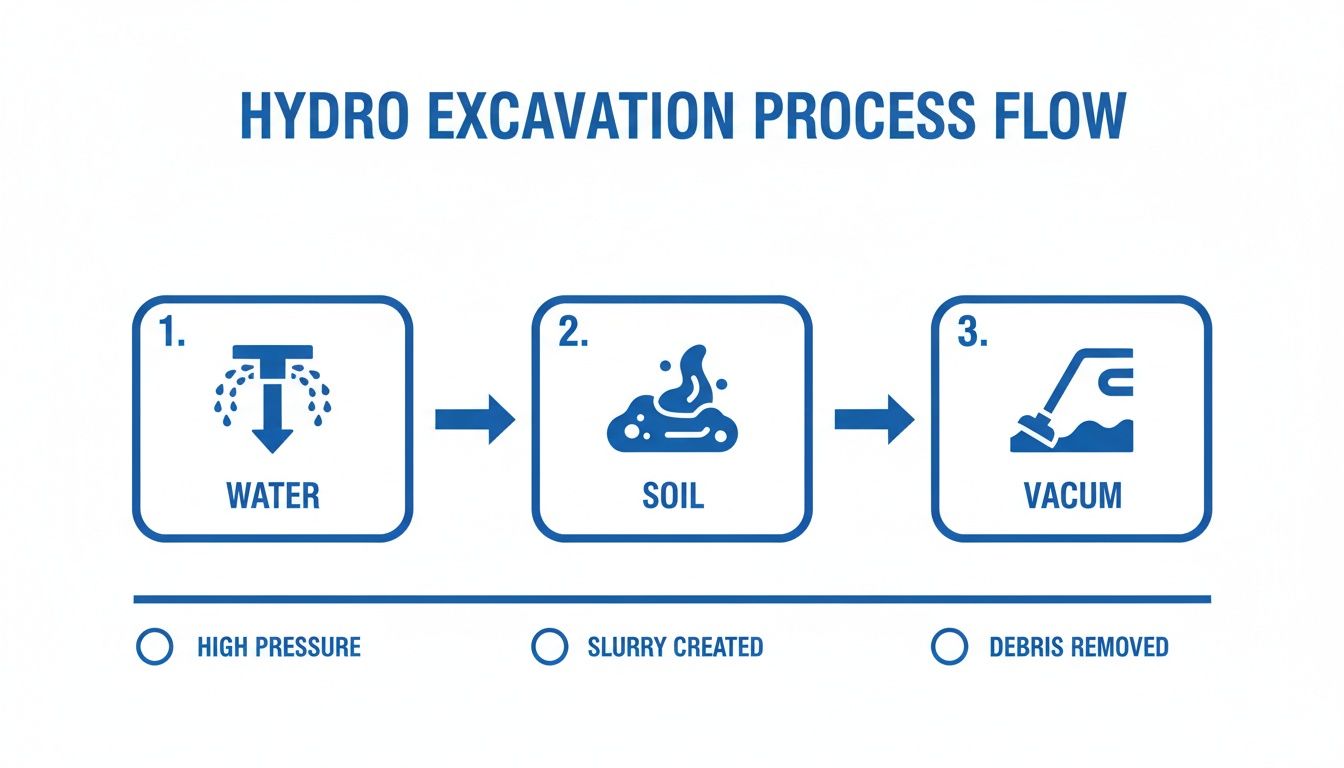
It's a simple but effective cycle: pressurized water breaks up the soil, creating a slurry that the vacuum immediately removes, giving you a safe, non-destructive way to dig.
Putting It to Work: Real-World Scenarios
Let's imagine a classic job: you need to dig a fence post hole right next to a sprinkler line. With a mechanical auger, you'd be sweating bullets. With the Hydrovac Attachment Tool, it's a different story.
You'd start by marking your spot and turning the water pressure down low. Aim the jet straight down. The vacuum will instantly start pulling the muddy water away, so you can literally watch your progress in real-time. As you get deeper, you'll carefully expose the sprinkler pipe without even scratching it—a feat that’s pretty much impossible with a spinning steel auger. For more specific job-site tips, you can find a more detailed guide on using a vacuum hose attachment for specific jobs.
The demand for efficient one-person digging solutions is exploding. In construction and agriculture, solo operators are now handling an estimated 60% of all small-scale digging projects. This trend fueled a 15% annual surge in earth auger sales between 2020 and 2024.
Interestingly, many pros are now using a hybrid approach. They’ll use a traditional auger to quickly remove bulk soil in open, utility-free areas. Then, they switch to the Hydrovac Attachment for the delicate work of digging up pipes without damage. This combined method has been shown to cut overall project time by as much as 50%.
When to Choose Hydro Excavation Over an Auger
Knowing when to leave the mechanical auger in the truck is just as important as knowing how to use it. A one-man post hole auger is a fantastic tool for raw speed out in the open, but some jobs call for a smarter, less destructive touch. In situations where a mistake could be catastrophic, hydro excavation isn't just an alternative—it's the only real choice.
It all comes down to risk. If you’re digging anywhere near marked utility lines, the decision is already made. The chance of a spinning auger blade hitting a gas line or fiber optic cable is a gamble you can't afford to take. The Hydrovac Attachment Tool is the solution for effective digging because it lets you safely "daylight" those lines, meaning you can physically see their exact location without risking a single scratch.
Precision Work in Congested Yards
Picture this: you're installing deck footings in an established backyard. That lawn is probably a hidden maze of irrigation pipes, low-voltage lighting wires, and maybe even old drainage systems. A mechanical auger is completely blind down there and will tear through any of it without a moment's hesitation, turning a simple job into a massive headache and an expensive repair bill.
This is exactly where the Hydrovac Attachment shines. Hooked up to your wet vac, it gives you surgical control to navigate that underground network. You can carve out the precise hole you need for a footing while leaving every single sprinkler line and landscape wire perfectly intact.
The real value of hydro excavation is damage prevention. It gives you the confidence to work in complex areas, knowing you won’t be creating more problems than you're solving. It’s the very definition of working smarter, not harder.
Digging in Tight and Awkward Spaces
Now, think about digging in confined areas. Let's say you need to cut a small trench for a drainpipe, but it's wedged between the house foundation and a concrete walkway. You simply don't have the space to maneuver a bulky auger, and the machine's vibration alone could risk damaging the foundation or cracking the concrete.
The Hydrovac Attachment's wand system is perfect for this. It lets you dig a clean, narrow trench with almost no disturbance to the structures on either side. Better yet, the vacuum removes all the dirt slurry as you go, so you aren't piling mud all over the walkway. That kind of control and cleanliness is something you'll never get from a traditional auger.
Here are a few other jobs where this mobile tool is the clear winner:
- Fence Post Digging: Avoid accidentally cutting a neighbor's buried cables or sprinkler system.
- Digging Up Pipes Without Damage: Safely expose water or irrigation pipes for repair or replacement.
- Cleaning Out Clogged Drains or Culverts: The focused water jet breaks up the blockage, and the vacuum sucks out the debris in one clean shot.
Got Questions About Solo and Hydro Digging?
Moving from a traditional one-man auger to a more precise hydro excavation setup is a big shift. You're trading brute force for finesse, which naturally leads to a few questions. Let's tackle some of the most common ones we hear from solo operators and landscaping pros who are thinking about making the switch.
We'll get into the nitty-gritty of using gear you probably already have, compare job speeds in the real world, and clarify what you need to get started. This should give you a good feel for how a tool like the Hydrovac Attachment Tool can slot right into your workflow.
Can I Really Use My Regular Shop Vac for This?
Yep, you absolutely can. The Hydrovac Attachment Tool was designed from the ground up to fit the standard 2.5-inch wet vac hose that comes with almost every shop-style wet/dry vacuum on the market. This clever design lets you turn a tool you already own into a precise excavator without shelling out for expensive, specialized gear.
Just make sure your vacuum is rated for water suction (most are) and has enough juice for the soil you're dealing with. For the majority of residential jobs, a standard consumer-grade wet vac is more than powerful enough to suck up the slurry of soil and water.
Is This Slower Than an Auger in Open Areas?
Honestly, if you're punching dozens of holes in a wide-open field with zero utilities around, a mechanical auger is going to be faster. No question. That tool is built for raw speed when conditions are perfect. But the real magic of hydro excavation isn't about speed—it's about precision and safety in tight or sensitive spots.
Think about the time you'd spend painstakingly hand-digging around marked utility lines. Now, add in the catastrophic cost and danger of a utility strike. Suddenly, the Hydrovac Attachment Tool method looks a lot more efficient and way safer for most jobs near homes or buried lines.
What Kind of Power Washer Do I Need?
You don't need a beast of a machine. The system is incredibly versatile. For most backyard projects in typical soils like loam or even some compacted clay, your standard consumer-grade power washer will do the trick perfectly. It doesn't matter if it's electric or gas, as long as it can put out 1500-3000 PSI.
The attachment is what does the heavy lifting, concentrating that pressure into a controlled jet that liquefies the soil so your wet vac can whisk it away. A great pro tip is to start with lower pressure and dial it up only if you hit tougher ground. This gives you total control, which is exactly what you want when digging up pipes without damage or working near cables.
Ready to bring a new level of precision and safety to your solo digging jobs? The Hydrovac Attachment Tool converts your existing equipment into a powerful hydro excavation tool. Work smarter, avoid costly utility strikes, and save your back.
Check out the Hydrovac Attachment and see it in action at https://hydrovacattm.com.