


Hydro jetting nozzles are the business end of any precision digging operation. For yard care professionals and residential contractors, these specialized tools transform a standard pressure washer and wet vac into a surgical digging machine, perfect for tasks like setting fence posts or accessing buried pipes without causing damage. Instead of brute force, this method uses a high-pressure water stream to carefully slice through soil and muck.
How Hydro Jetting Nozzles Power Precision Digging
Think about using a garden hose to clean a muddy patio. If you put your thumb over the end, the gentle flow becomes a powerful jet. Hydro jetting nozzles operate on the same principle, but on a much more powerful and engineered scale. They take high-pressure water from a pressure washer and force it through one or more tiny, precisely-drilled holes called orifices.
This action skyrockets the water's velocity, creating a fine, potent stream that acts like a liquid scalpel. Instead of the brute force of a shovel or a mechanical auger, this method relies on focused hydraulic energy to carefully cut through soil, dense clay, and gravel. It's a form of non-destructive digging that's perfect for delicate jobs where you can't afford to make a mistake, like digging around sensitive utility lines or sprinkler systems.
From Industrial Power to Backyard Projects
While hydro jetting has long been used for heavy-duty industrial pipe cleaning, the same core technology is now perfectly suited for smaller-scale landscaping and residential work. This is a game-changer for any task that demands surgical accuracy, especially for yard care pros, fence installers, and residential digging contractors.
Just think about these common situations:
- Digging Fence Post Holes: Need to set a post right up against a foundation or next to a prized garden bed? The water jet excavates the soil cleanly without the violent jarring of an auger that could crack concrete or tear up root systems.
- Accessing Buried Pipes Without Damage: When you have to expose a sprinkler line or a utility pipe for repair, swinging a metal shovel is a huge risk. Hydro jetting lets you wash the soil away, leaving the pipe completely untouched and ready for work.
- Trenching for Irrigation: You can carve out clean, narrow trenches for irrigation lines or low-voltage landscape lighting without tearing up the surrounding lawn.
Bringing It All Together for Clean Results
The real magic happens when you pair these nozzles with a vacuum system. The Hydrovac Attachment Tool is the key piece of the puzzle, connecting your pressure washer and wet vac hose together right at the point of digging. This mobile tool creates a tidy, self-contained excavation system: the nozzle breaks up the soil, and the vacuum sucks up the resulting slurry instantly. It's crucial to note this tool is designed for wet vac hoses and vacuums to clear small amounts of debris, not for large hydrovac trucks.
This integration means virtually no mess, minimal splashback, and a clean, visible work area. You can dig a perfect hole and have almost no cleanup afterward, saving time and labor on every project. You can explore more about this method by reading our guide on what is vacuum excavation.
The demand for precision digging is growing. While large-scale hydro jetting is a massive industry, the effectiveness of this technology is now accessible for smaller residential applications, preventing costly property damage during tasks like fence installation or pipe repair.
Hydro Jetting vs Traditional Digging Methods
For smaller residential and light commercial jobs, the advantages of hydro jetting with a mobile hydrovac attachment become incredibly clear when you compare it to old-school methods. It’s not just about getting the hole dug; it’s about how you get it done safely and cleanly.
| Feature | Hydro Jetting (with Hydrovac Attachment) | Manual Shovel Digging | Mechanical Auger |
|---|---|---|---|
| Precision | High: Surgical accuracy, ideal for tight spaces and sensitive areas. | Low: Messy, difficult to control hole size and shape. | Medium: Better than a shovel but can still wander or create oversized holes. |
| Safety | Very High: No risk of damaging buried utilities, pipes, or cables. | High Risk: Easily damages pipes, wires, and irrigation lines. | Extreme Risk: Can quickly sever utilities, leading to costly and dangerous repairs. |
| Mess & Cleanup | Minimal: Soil and water are vacuumed away immediately into a wet vac. | High: Creates large piles of displaced dirt. | High: Flings dirt and debris over a wide area. |
| Labor Effort | Low: The water does the hard work; minimal physical strain. | High: Physically demanding and time-consuming. | Medium: Requires significant strength to control the machine, especially in hard soil. |
| Best For | Fence posts near structures, utility exposure, trenching in established lawns. | General digging in open areas with no known underground utilities. | Open areas for multiple, uniform holes where precision isn't critical. |
Ultimately, choosing hydro jetting is about working smarter, not harder. It provides a level of control and safety that traditional tools simply can't match, making it an invaluable technique for modern residential digging projects.
Choosing the Right Nozzle for Every Task
Picking the right hydro jetting nozzle is like a seasoned artist choosing the perfect brush; the tool you select has a huge impact on the final result. The nozzle is easily the most critical component, defining the shape, power, and efficiency of your water jet for any given digging task, from setting a fence post to carefully digging up a pipe.
Think about it this way: the same pressure washer can give you wildly different outcomes based entirely on the nozzle you snap on. One might be gentle enough to clear soil from around delicate tree roots, while another can blast a deep, clean hole straight through compacted clay. Knowing which one to grab—and when—is what separates messy guesswork from masterful non-destructive digging.
The Three Primary Digging Nozzles
For the vast majority of projects you'll encounter around a property, from building a fence to installing a new sprinkler system, you really only need to master three core nozzle types. Each is designed with a specific job in mind, giving you the confidence to handle just about anything.
- Rotating (Spinner) Nozzles: These are your champions for digging holes. A rotating nozzle shoots water in a powerful cone shape, scouring the sides of the hole as it cuts down. This action creates those perfectly round, uniform holes you need for setting fence posts, deck footings, or planting new trees.
- Penetrating (Laser) Nozzles: When you hit a wall of tough, compacted soil, heavy clay, or gravel, this is the nozzle you want. It produces a zero-degree, laser-focused stream of water that acts like a liquid drill bit, breaking up the most stubborn ground you can find.
- Fan Nozzles: For anything at the surface level, a fan nozzle is a must-have. It creates a wide, flat spray that’s perfect for clearing away loose debris, digging shallow trenches for irrigation lines, or carefully exposing utilities that are just below the turf.
The real beauty of The Hydrovac Attachment Tool is how it works with these nozzles. It’s designed so you can swap them out quickly right there in the field. As soil conditions change, you can adapt your approach on the fly without losing momentum, ensuring you've always got the right tool for the job.
This decision tree gives you a great visual for picking the right digging method based on what you’re trying to accomplish.
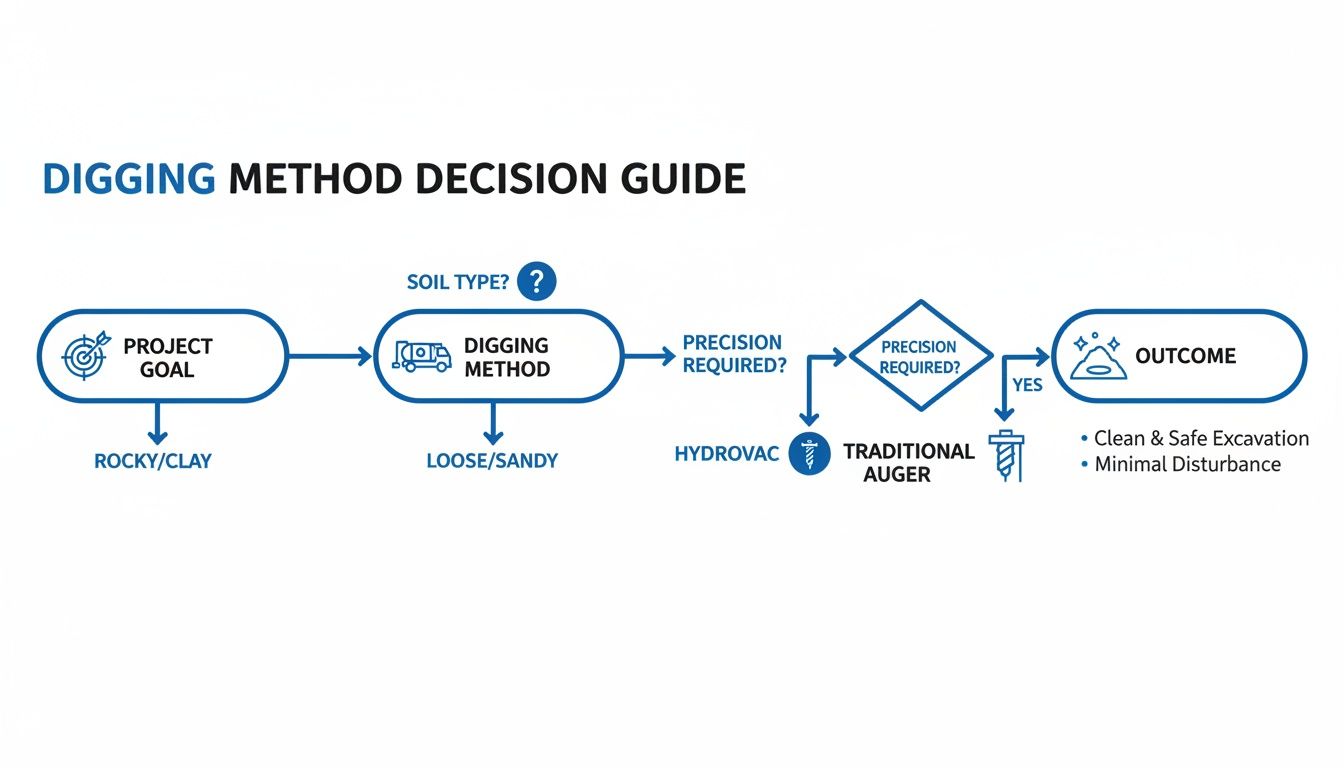
As the flowchart shows, when your goal is a clean, precise hole for projects like fence post digging or safely exposing pipes, using a mobile hydrovac method is the best way to get it done right with minimal mess.
Matching the Nozzle to the Job
Putting this knowledge to work is simple. Let's say you're putting in a new fence. You'd start with a rotating nozzle to dig clean post holes. If you suddenly hit a stubborn layer of hardpan clay, you could switch over to a penetrating nozzle to break through it, then go back to the spinner to finish the hole. Planning to lay down a new sprinkler system? The fan nozzle will let you carve out a shallow path without tearing up the whole yard.
The precision engineering behind these tools is also making waves in bigger industries. In fact, hydro jetting nozzles hold a dominant 32% market share in the waterjet cutting consumables market—a sector valued at $2.20 billion in 2025 and projected to hit $3.11 billion by 2032. While this reflects large-scale industrial use, the same precision is what allows residential contractors to safely expose buried lines without damage. You can dig deeper into these numbers by checking out the full research on the waterjet cutting consumables market.
At the end of the day, understanding the unique roles of rotating, penetrating, and fan nozzles is what elevates your digging from messy, hard labor to a clean and efficient science. It’s an approach that saves time, prevents damage, and delivers professional-grade results every time.
Balancing Water Pressure and Flow for Peak Performance
To get the most out of your non-destructive digging setup, you have to understand the delicate dance between water pressure and water flow. These two forces—PSI and GPM—drive the whole operation. Nail the balance, and you'll cut through tough ground with precision; get it wrong, and you'll just be making a muddy mess.
Think of it this way. PSI (Pounds per Square Inch) is the muscle. It’s the brute force that shatters compacted soil, carves through stubborn clay, and pops rocks loose. High PSI is your chisel, delivering a sharp, concentrated impact right where you need it.
Then you have GPM (Gallons Per Minute), which is all about momentum. It’s the sheer volume of water that clears out all the debris the PSI just broke apart. High GPM acts like a powerful current, flushing the hole clean so you can keep digging. You need both; one is pretty useless without the other.
Matching Your Settings to the Soil
True expertise isn't about cranking your pressure washer to the max. It's about reading the ground and adjusting your PSI-to-GPM ratio to match the challenge in front of you. Different soils require different game plans.
Here's a practical guide for on-the-job adjustments:
- Hard, Compacted Clay: When you hit that tough, dense stuff, you need to prioritize PSI. The main goal is to fracture the material, so you need that intense cutting power. A lower GPM is fine here because you aren't trying to wash away tons of loose debris—you’re just trying to break ground.
- Loose, Sandy Soil: Here, the script flips. You need to focus on GPM. Sand practically falls apart on its own, so you don't need a ton of pressure. The real challenge is getting that heavy, loose material up and out of the hole. A strong flow is crucial for lifting and carrying it away before it all caves in.
- Mixed or Loamy Soil: This is your everyday ground, and it calls for a balanced attack. You need enough PSI to deal with roots and compacted sections, but also enough GPM to keep the hole clear. This is usually the go-to setting for most general digging like setting fence posts.
The Nozzle Orifice is Your Control Valve
So, how do you actually control this balance? It all comes down to the tiny hole in the tip of your nozzle: the orifice. The size of that opening is what translates your machine's power into real-world performance.
A smaller orifice chokes the water, forcing it out in a faster, high-pressure jet. Think of putting your thumb over a garden hose. Conversely, a larger orifice lets more water through, giving you higher GPM but at a lower pressure.
This is exactly why you can't just slap any nozzle on any machine. A nozzle with an orifice that's too big for your pressure washer will give you a weak, lazy stream. One that's too small can choke your pump and cause a dangerous pressure spike, potentially damaging your equipment. Matching your hydro jetting nozzles to your gear isn’t just about performance—it’s a critical safety step.
Getting the Most Out of Your Hydrovac Attachment
When you’re running The Hydrovac Attachment Tool, this balance is everything. The whole point is to create a soupy slurry that your wet vac can suck up with ease.
If you have too much cutting power (PSI) and not enough flushing (GPM), you’ll end up with thick mud at the bottom of the hole that your vac can't lift. On the flip side, too much flow can flood the hole and overwhelm your vacuum's tank in minutes.
The sweet spot is when your water jet is breaking up the soil at the exact same rate your vacuum is removing it. This gives you a clean, steadily deepening hole where you can always see what you’re doing. To dial in your rig perfectly, make sure you have the right pressure washer jetter hose connecting it all together. Once you get a feel for the interplay between PSI, GPM, and your nozzle, you’ll turn standard equipment into a seriously efficient digging machine.
The Hydrovac Attachment: A Perfect Partner for Your Nozzles
While having the right hydro jetting nozzle gives you the digging power, the real game-changer for residential work is controlling the mess. That's exactly where The Hydrovac Attachment Tool comes in. Think of it as the crucial bridge connecting your high-pressure water jet to the powerful suction of a wet vac. This simple but brilliant setup creates a clean, contained, and incredibly efficient excavation system for small amounts of debris.
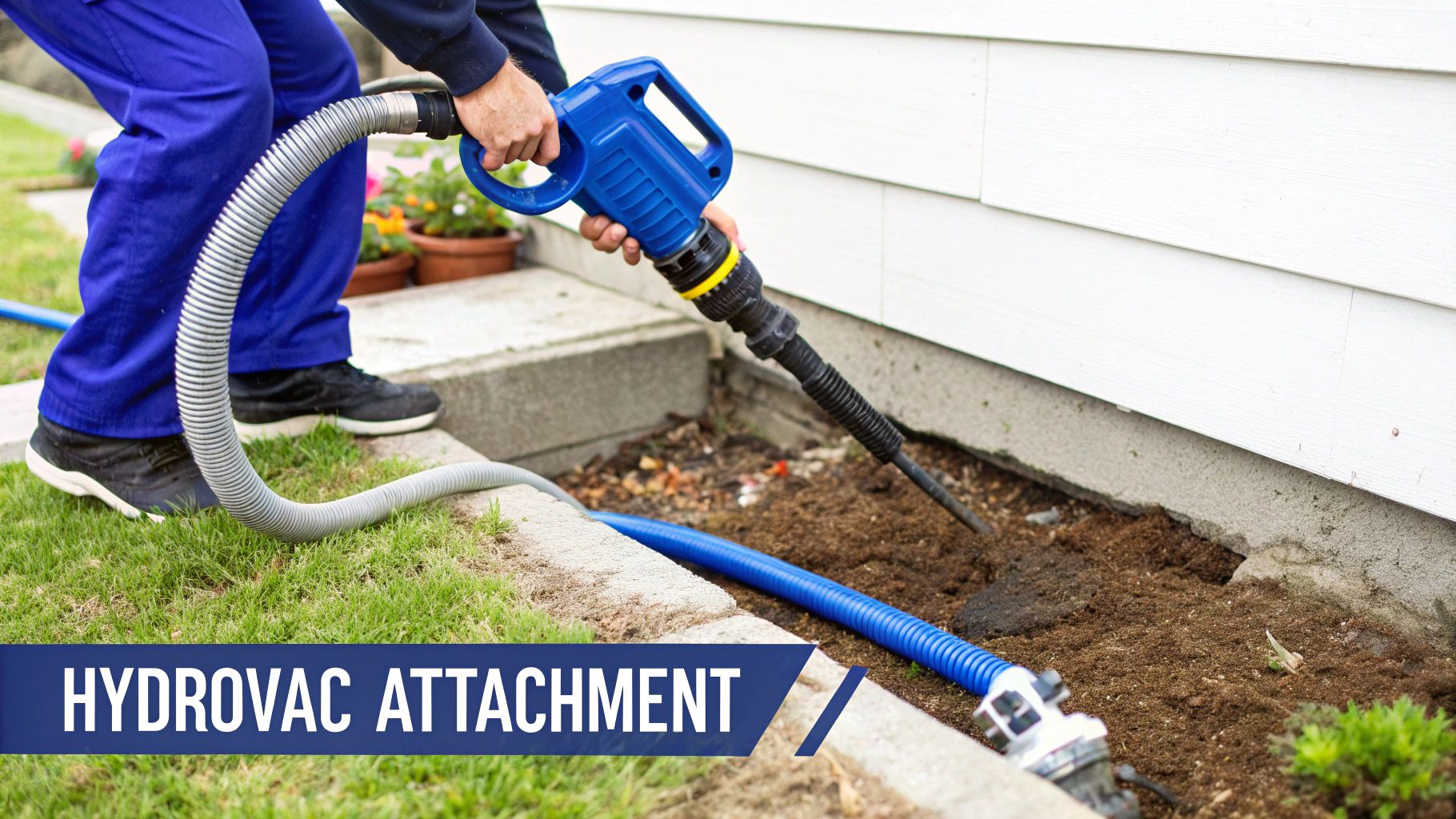
This tool isn't a complex industrial machine; its effectiveness is rooted in its simplicity. It’s a straightforward, three-part design that securely links your pressure washer wand to a standard wet vac hose. By doing this, it creates a focused suction zone right around the nozzle. The soil and water slurry gets vacuumed up the instant it's created, making it the ideal solution for effective digging purposes on residential sites.
The result? A nearly splash-free job. Instead of blasting mud and water all over a manicured lawn or a client's siding, all that debris is neatly contained and whisked away. This single integration transforms a powerful but messy process into one that's surgical and clean.
The Core Benefits of a Contained System
For any professional in landscaping, fencing, or yard care, using this attachment completely changes the digging experience. It elevates simple hydro jetting to true vacuum excavation, bringing three major advantages that save time, cut down on labor, and boost safety on every single job.
- Virtually No Splashback: The attachment’s design forces the water jet down while the vacuum simultaneously pulls the slurry up. This controlled environment means you can work inches from foundations, delicate flower beds, or finished patios without causing a massive cleanup headache later.
- Minimal Cleanup Required: Traditional digging leaves you with piles of dirt that need to be shoveled and hauled away. With this system, the excavated material goes straight into the wet vac tank. You can dispose of it easily, leaving the job site remarkably tidy.
- Clear Visibility of Your Work Area: One of the toughest parts of hydro digging is trying to see what you're doing through murky water. By constantly removing the slurry, the attachment keeps the bottom of the hole visible. This is absolutely critical when you need to daylight a sensitive utility line or make sure a post hole is perfectly plumb.
This level of control isn't a luxury; it's essential for precision tasks. It's the difference between a fast, professional job and a long, frustrating ordeal that ends with extensive cleanup and potential damage when digging up pipes or setting fence posts.
Practical Scenarios Where It Excels
Let’s move from theory to what this looks like on the job.
Imagine you're a fencing contractor who needs to set a post just inches from a homeowner's prized rose bushes. A mechanical auger would be a disaster, shredding roots and throwing dirt everywhere. With The Hydrovac Attachment and a rotating nozzle, you can dig a perfect, clean hole with surgical precision, leaving that garden completely untouched.
Or, picture a landscaper needing to expose a buried sprinkler line for a quick repair. Taking a shovel to it is a gamble that could easily puncture the PVC pipe, turning a small fix into a major project. The soft-digging power of hydro jetting nozzles combined with the attachment's constant suction safely clears the soil away, revealing the pipe without a single scratch. This is the ideal solution for digging up pipes without damage.
The tool’s durable construction and built-in compatibility with standard 2.5-inch wet vac hoses make it a reliable partner for any pressure washer setup. For any modern professional doing residential digging, this isn't just a nice-to-have gadget—it's essential for delivering clean, damage-free results every time.
You can find detailed specs and see how the Hydrovac Attachment V2 can fit into your workflow. It's truly the key to making precision digging accessible and practical for everyday jobs.
Real-World Applications and Success Stories
The theory behind a tool is one thing, but its real worth is proven out in the field. Let's move past the specs and get into some real-world examples of how operators are using hydro jetting nozzles with The Hydrovac Attachment to turn tough jobs like fence post digging into straightforward tasks.
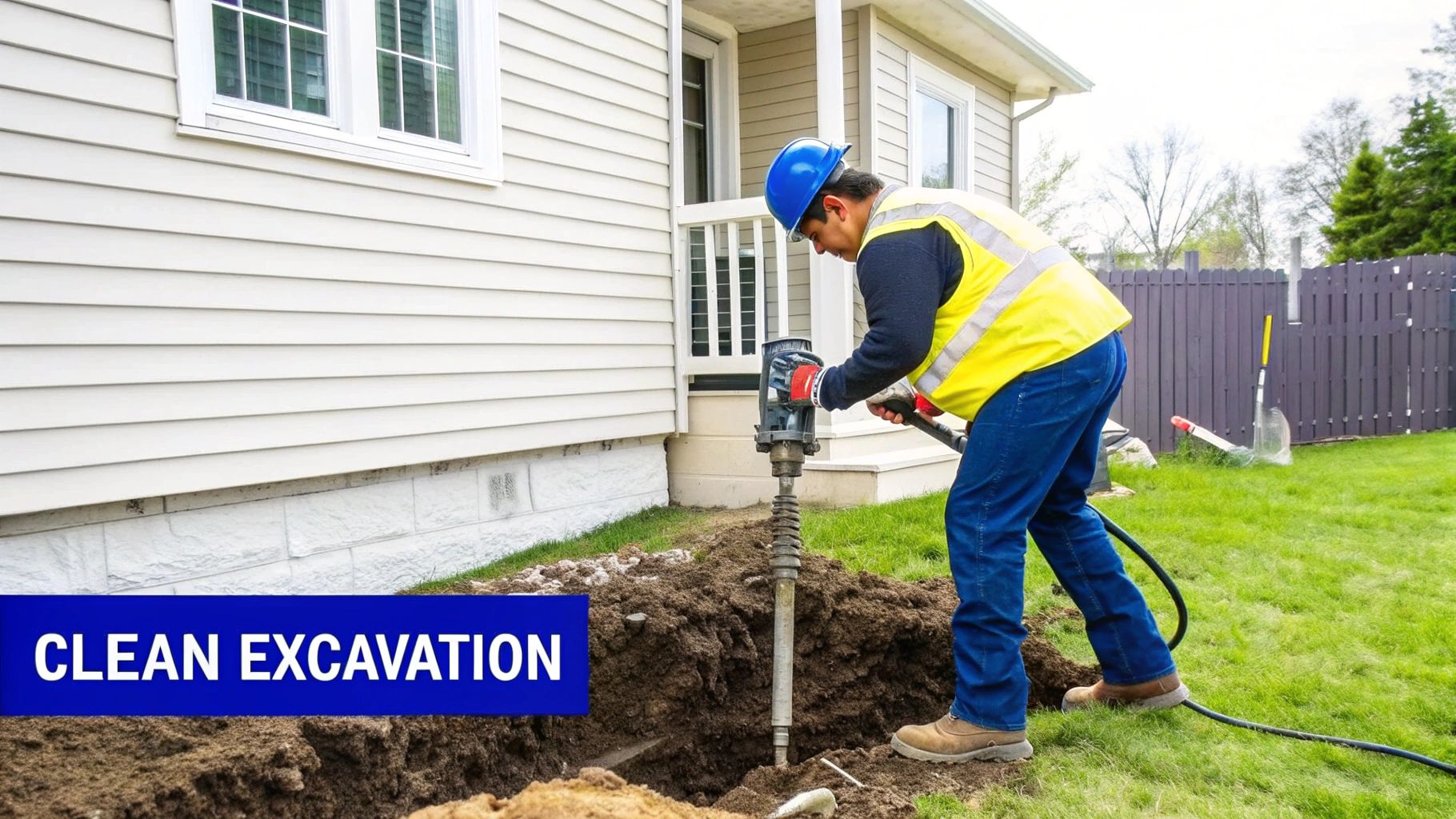
These stories highlight how this mobile hydrovac system delivers clean, precise results that you just can't get with traditional digging.
Installing a Fence Beside a Foundation
A fencing contractor had a common but nerve-wracking problem: they needed to dig a fence line just one foot away from a client's brand-new concrete foundation. Firing up a mechanical auger was a non-starter. The vibrations could easily send hairline cracks through the fresh concrete, turning a simple job into a costly, reputation-damaging nightmare.
The Solution: The contractor hooked up The Hydrovac Attachment with a rotating spinner nozzle. This setup was perfect for effective fence post digging, scouring the soil away in a controlled conical pattern to create perfectly round post holes. As they worked, the paired wet vac hose sucked up the slurry, so not a single drop of muddy water splashed onto the pristine foundation walls.
The Outcome: Every post hole was dug cleanly and precisely, with zero risk to the foundation. The client was blown away by the lack of mess and the obvious care taken to protect their property. The job got done faster and with way less labor than digging by hand would have ever allowed.
Trenching for Irrigation in a Tight Space
Imagine being hired to install a sprinkler system in a meticulously landscaped backyard, complete with a stone patio and delicate garden beds. A landscaper faced this exact challenge: digging narrow trenches for irrigation lines through a tight spot between the patio and a retaining wall. There was no way to get larger equipment in there.
The Solution: Using The Hydrovac Attachment with a fan nozzle, the landscaper essentially carved out the shallow trenches with surgical precision. The nozzle's wide, flat spray was ideal for peeling back just enough turf and soil for the pipes without messing with the nearby stonework or plant roots. The wet vac hose pulled all the excavated material away instantly.
The Outcome: The whole irrigation system was installed with almost no disruption to the existing yard. The project was wrapped up in a single day with virtually no cleanup needed—a far cry from the destructive path a trencher would have left behind.
Safely Exposing a Buried Water Line
A property maintenance crew got an urgent call for a leaking water line buried under a front lawn. They had to expose the pipe for repair, but no one knew its exact depth. Taking a shovel to it was a huge risk; one wrong move could turn a small leak into a major break.
The crew knew that precision and safety were everything here. Hitting that pipe with a metal tool could escalate a simple repair into a full-blown emergency, costing thousands in water loss and damages.
The Solution: By pairing The Hydrovac Attachment with a penetrating nozzle, the team quickly blasted through the compacted topsoil. The continuous suction from the wet vac hose cleared the slurry, giving them a clear view as they dug deeper. This method allowed them to dig up the pipe without damage, as the pressurized water simply washed the soil away from the PVC, leaving it completely exposed and untouched.
The Outcome: They found and fixed the leak without causing any additional damage to the line. This "soft digging" method kept the pipe's integrity intact, providing a safe and incredibly efficient solution. To see more on how these specialized tools are used, you can explore guides on professional hydro jetting services.
While industrial hydro jetting is a large market, the real innovation for residential contractors is the accessibility of this technology on a smaller scale. Tools like The Hydrovac Attachment, which connects nozzles to 2.5-inch wet vac hoses, create a contained suction area, keeping the mess to a minimum during precise digging jobs.
Common Questions About Hydro Jetting Nozzles
Getting into any new way of working is going to bring up some questions, and hydro jetting for residential digging is no different. Knowing the practical ins and outs is what lets you get the most from your gear right from the start. This last section is all about tackling the real-world questions we hear from landscapers, fencing crews, and property maintenance pros.
Our goal is to give you clear, straight-up answers so you can work with confidence, handle common hiccups, and see just how much of a game-changer a good hydro jetting nozzle paired with The Hydrovac Attachment Tool can be for digging fence posts or exposing pipes.
Can I Use My Existing Pressure Washer and Wet Vac?
Yes, absolutely. That’s the whole point behind a system like The Hydrovac Attachment. It’s a mobile tool built to hook right up to your standard pressure washer and a common 2.5-inch wet vac hose, turning the tools you already own into a hydro excavation powerhouse. You don't need to shell out for a massive, dedicated hydrovac truck for smaller residential jobs that only require clearing a small amount of debris.
The key is making sure your pressure washer has the right mix of PSI and GPM for the ground you're working in. For most residential stuff—digging in topsoil, trenching for sprinklers—a solid commercial-grade pressure washer has more than enough muscle. The nozzles use standard threads, so they fit most wands, letting the cutting power of water and the pull of the vacuum work together seamlessly.
What’s the Best Nozzle for Fence Post Holes?
For digging clean, perfectly round fence post holes, a rotating or 'spinner' nozzle is your best bet, hands down. Think of it like a tiny, powerful sprinkler that sprays water in a cone shape. This scours the sides of the hole as it digs down, naturally creating that uniform, circular shape you need and chewing through compacted soil and small roots.
Now, if you hit really stubborn ground like heavy clay or rocky soil, you can switch up your strategy. Start with a penetrating 'laser' nozzle to punch through and break up the toughest spots at the bottom. Once you've fractured that hardpan, swap back to the rotating nozzle to widen the hole to the right size and clear out all the loose stuff. It’s a one-two punch that gives you both precision and power for effective fence post digging.
How Can I Avoid Damaging Buried Pipes or Utilities?
This is where hydro jetting really shines. It's often called 'soft digging' for a reason. Unlike a sharp shovel or a churning auger, the high-pressure water stream is designed to slice through soil but simply flow around harder objects. It gently washes the dirt away, exposing PVC pipes, conduit, or fiber optic lines without cracking, denting, or tearing them. This makes it the ideal method for digging up pipes without damage.
The Hydrovac Attachment makes this process even safer. By sucking up the water and soil slurry the instant it’s created, the tool gives you immediate, clear visibility of the utility line as it’s uncovered. You aren't digging blind.
For an extra layer of safety, always dial back the pressure when you know you're working near a marked utility line. You can slowly ramp it up once you have eyes on the line and can see what you're dealing with.
What Kind of Maintenance Do My Nozzles Need?
Taking care of your nozzles is simple, but it's absolutely critical for keeping them working right and making them last. The biggest enemy is clogging from mineral deposits or tiny bits of debris in the water line. If you let that build up, you’ll see a major drop in cutting power.
Just follow these simple steps to keep your nozzles in prime condition:
- Flush After Every Use: When you’re done for the day, pop the nozzle off and run clean water through it backward. This quick flush will push out any grit that got stuck in the orifice.
- Check for Wear: Over time, the orifice (the tiny hole the water shoots through) will wear down and get bigger. A worn-out orifice kills your pressure and turns a sharp jet into a weak, misty spray. If you see that happening, it’s time for a new nozzle.
- Prevent Buildup: An inline water filter on your pressure washer's supply hose is a cheap and incredibly effective way to stop debris from ever reaching the nozzle in the first place.
- Store Them Right: Keep your hydro jetting nozzles in a clean, dry spot. This prevents rust and corrosion, which can quickly ruin that precisely machined orifice.
Stick to these habits, and your gear will always be ready to perform when you are, saving you a ton of time and frustration on the job.
Ready to change the way you dig? The Hydrovac Attachment turns your existing equipment into a precision excavation tool, helping you work faster, cleaner, and safer on fence post and pipe digging jobs.
Discover how you can eliminate messy cleanup and prevent costly damages on your next project by visiting https://hydrovacattm.com.