


When you're looking for a new shop vacuum for professional yard care or residential digging, it’s easy to get sidetracked by big numbers like horsepower or tank size. But if you’re planning on digging fence posts, trenching for sprinkler lines, or safely exposing buried pipes, there's one spec that trumps all others: Cubic Feet per Minute, or CFM. This number tells you the sheer volume of air the vacuum can move, and for tasks that require a wet vac hose to clear debris, a high CFM is absolutely non-negotiable.
What High CFM Really Means for Your Wet Vac Hose
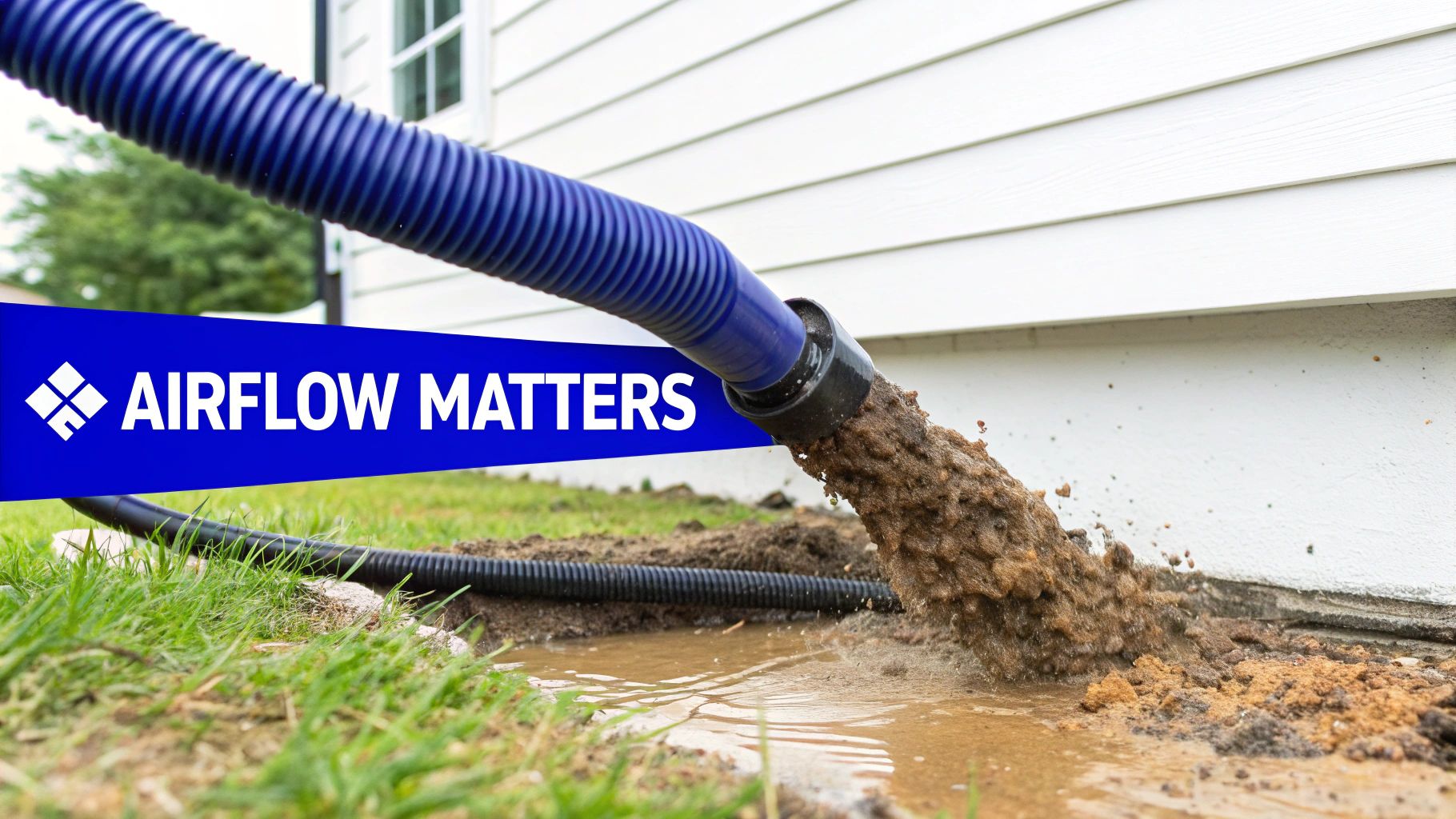
Ever bought a shop vac with a beefy "Peak Horsepower" rating only to be disappointed by its actual performance when trying to clear wet, heavy debris? You're not alone. Real-world digging and clearing power isn’t about a motor's theoretical muscle; it’s about its ability to move a massive volume of air through a wet vac hose, second after second, without quitting.
To make sense of it, think of your vacuum's performance like a river.
- CFM (Airflow): This is the river's width and speed. A wide, fast-moving river has the power to carry away heavy logs and big rocks. That's your high CFM at work, providing the raw force needed to pull a thick slurry of mud, clay, and gravel from a fence post hole.
- Water Lift (Suction): This is the river's pressure, like a narrow, deep channel. A high-pressure jet of water can pry something loose, but it doesn't have the volume to carry it downstream. High lift is less important for moving a mix of wet debris common in yard care.
When you're doing non-destructive digging—like for fence posts or exposing pipes without damage—you're creating a heavy mix of soil and water. You absolutely need the powerful current of a high-CFM river to keep that material flowing through your wet vac hose and prevent constant, frustrating clogs.
The Evolution of Mobile Vacuum Power
Over the past decade, the demand from landscapers and contractors for better mobile debris removal has really pushed manufacturers to up their game. We've seen huge improvements in airflow, with many modern wet/dry vacuums now clearing the 200 CFM mark.
In fact, recent tests on five high-performance 6.5 Peak HP shop vacs revealed an average airflow of 197 CFM. The results were all over the map, ranging from 131 CFM on the low end to a whopping 248 CFM on the high end. This just goes to show that horsepower alone is a poor indicator of performance—a crucial lesson for anyone who relies on their vacuum for professional digging.
For precision digging with a mobile tool like the Hydrovac Attachment, a vacuum’s ability to sustain high airflow is paramount. It’s the difference between a controlled, surgical excavation for a fence post and a frustrating battle with a constantly clogged wet vac hose.
Harnessing Airflow for Precision Work
This is exactly where specialized tools shine. The Hydrovac Attachment is designed to take all that raw airflow from your high-CFM shop vac and turn it into a precision digging tool. It is NOT for large hydrovac trucks, but a mobile solution that pairs a pressure washer with a 2.5-inch wet vac hose, creating a closed-loop system that focuses the powerful airstream right at the point of excavation.
This setup ensures that the heavy, wet slurry gets whisked away immediately, letting you safely uncover utility lines or dig post holes with incredible control. The concept is similar to what you see in professional duct cleaning equipment, which also depends on high-volume airflow to pull heavy buildup out of tight spaces.
Getting a handle on how vacuum suction power and air watts all work together is the key to really mastering this technique. You can learn more about that here: https://hydrovacattm.com/blogs/info/vacuum-suction-power-air-watts
Why Airflow Is Crucial for Non-Destructive Digging
Knowing the textbook definition of CFM is one thing, but its real-world importance smacks you in the face when you're ankle-deep in mud on a digging job. This is where the spec sheet on your shop vacuum crashes into the reality of heavy, wet soil, thick clay, and stubborn gravel. It’s the moment a high-CFM machine earns its keep, and a weaker one just plain quits.
Ever tried to suck a thick milkshake through one of those skinny coffee stirrers? It’s a losing battle. That's the perfect picture of what happens when a low-CFM shop vac tries to clear small amounts of heavy debris—the air volume is just too small to lift and carry the watery muck you’re creating.
This leads directly to the single biggest headache in vacuum digging: clogs. Constant, momentum-killing clogs. The wet vac hose jams, suction plummets, and suddenly you’re spending more time wrestling with your equipment than you are actually digging fence posts or exposing pipes.
The Physics of Clearing a Hole
Non-destructive digging isn't just about raw suction power; it's about continuously moving material from point A to point B. Whether you’re digging a hole for a fence post in packed earth or cutting a trench for a sprinkler system, your success hinges on pulling a steady stream of debris out of the way.
This is exactly why the highest CFM shop vacuum you can find is your best friend on the job site. The sheer volume and speed of the air moving through the hose acts like a powerful, non-stop conveyor belt for dirt and water.
- For Fence Post Digging: High CFM gives you the muscle to pull water-soaked clay and small rocks straight up and out of a deep, narrow hole without losing steam.
- For Exposing Pipes Without Damage: The massive airflow whisks away loosened soil the second it breaks free, keeping your view clear so you don't accidentally hit a sensitive utility line.
- For Trenching: It keeps the trench from filling back in as you work, efficiently moving the excavated slurry into the vacuum tank instead of creating a mud pile right where you need to stand.
In every case, airflow is the engine that makes the whole process work. It transforms a messy, back-breaking job into a controlled, efficient operation. A vacuum with weak airflow will just get bogged down, leaving you with a swampy hole and a hopelessly plugged hose.
Turning Brute Force into a Precision Tool
This is the exact principle our Hydrovac Attachment was designed around. It doesn't create its own power. Instead, it brilliantly channels all that airflow from your high-performance shop vacuum and focuses it into a surgical digging tool. By combining your pressure washer with a 2.5-inch wet vac hose, it creates a closed-loop system that funnels water and debris directly into that powerful airstream.
The Hydrovac Attachment uses your vacuum's high CFM to create a clean, controlled excavation zone. It nearly eliminates the splash-back and mess, protecting the surrounding lawn and letting you work with incredible accuracy around buried pipes and cables.
This synergy turns the raw power of your vacuum's motor into a precision instrument for any yard care professional. The attachment contains the water jet as it loosens the soil, and the high-CFM airflow immediately sucks up the resulting slurry. That instant removal is the key—it stops the hole from turning into a muddy pit and gives you constant visibility and control. It’s what turns a potentially messy and dangerous job like digging up pipes into a clean, safe, and surprisingly fast one.
How to Measure and Compare True Shop Vac Performance
When you're standing in the hardware store aisle, it's easy to get drawn in by the massive "Peak Horsepower" number plastered on the side of a shop vac box. But here’s a little industry secret: that figure is one of the most misleading marketing metrics out there.
Real-world digging power has almost nothing to do with that theoretical horsepower rating. It's all about standardized, verifiable performance data—the numbers that tell you how the machine actually behaves on a job site.
Decoding the Data That Matters
To pick a machine that won’t let you down, you have to learn to read the specs like a pro. Forget the marketing fluff and focus on three key metrics: CFM, water lift, and air watts. These numbers tell the true story.
- CFM (Cubic Feet per Minute): This is the king of metrics for excavation. Think of it as the volume of air the vacuum moves every minute. For jobs with the Hydrovac Attachment, high CFM is what keeps that heavy slurry of wet soil, clay, and gravel moving through the hose instead of turning into a frustrating clog.
- Water Lift (Inches): Often called "sealed suction" or "static pressure," this measures the raw lifting force of the vacuum. Imagine it as how high the vacuum could pull a column of water straight up a sealed tube. It's important, but for moving mixed debris over a distance, it takes a backseat to CFM.
- Air Watts: This is a neat little calculation that combines both CFM and water lift into a single number representing the vacuum's overall "usable power." It gives you a much more balanced view of performance than looking at either CFM or water lift on its own.
For efficient vacuum excavation, you'll want to pair the Hydrovac Attachment with a shop vac that has a verified rating of 180+ CFM. This level of airflow is the sweet spot, ensuring the machine can handle the toughest mix of soil and water when digging fence posts or clearing debris without losing suction or constantly getting jammed up.
The difference between a low-CFM and a high-CFM setup isn't subtle. It’s dramatic.
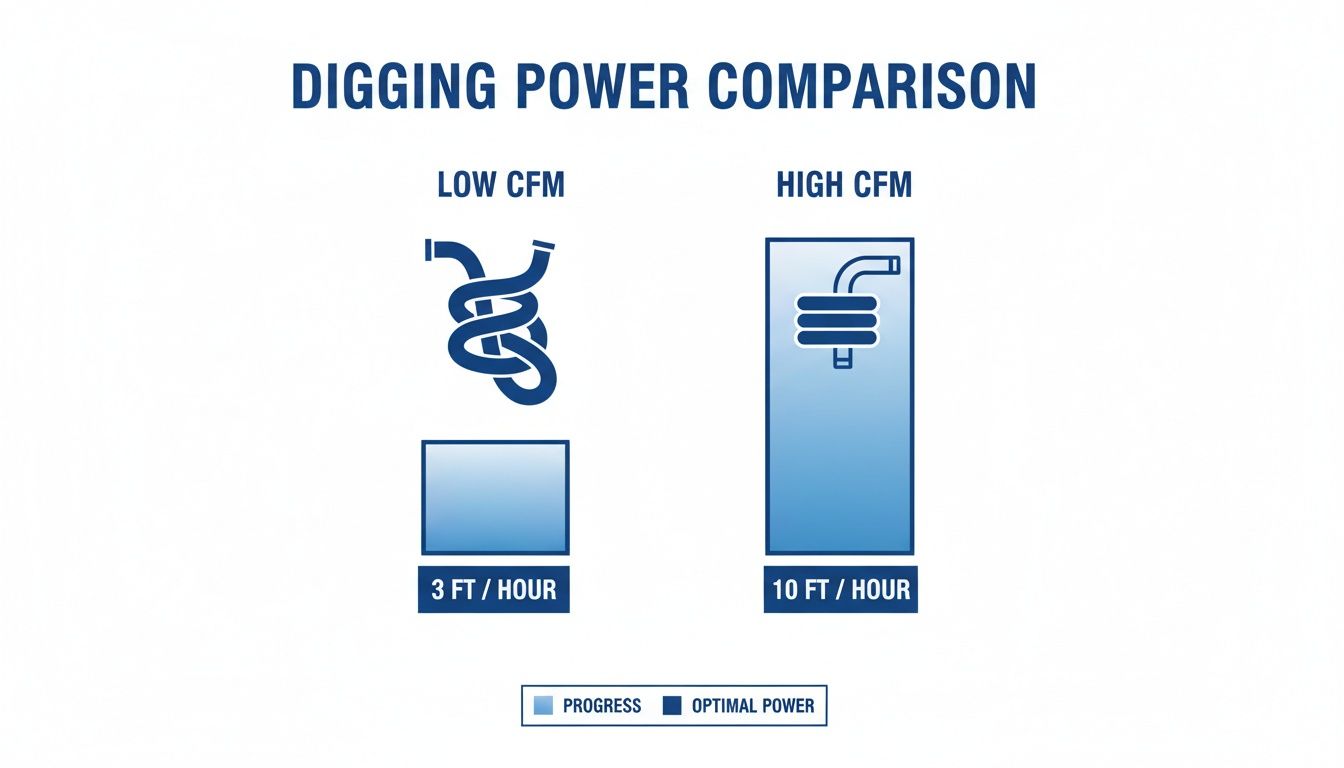
As you can see, a high-CFM machine can literally triple your digging speed. That's the difference between a long, tedious day and a quick, efficient job.
Finding Verified Performance Numbers
So, how do you find the real numbers? Manufacturer claims can be, let's say, optimistic. Luckily, the community of tool enthusiasts and independent reviewers has stepped up. They use standardized testing methods to measure what a vacuum can actually do.
These tests don't just happen in a lab; they measure performance under load, giving you a clear picture of how a vacuum will perform on your site. For example, some incredibly detailed community testing revealed that the Craftsman CMXEVBE17595 6.5 HP model was a standout performer, pulling a massive 248 CFM with 55 inches of water lift. These are the kinds of verified data points that help contractors make smart buys.
If you really want to dive deep, check out the in-depth forum discussion at Sawmill Creek. It’s a goldmine of real-world data and comparisons.
Comparing High-Performance Shop Vacs for Excavation
To save you some time, we've compiled a comparison of some top-rated shop vacuums. This table focuses on the verified performance metrics that are crucial for vacuum excavation, cutting through the advertised horsepower to show you what really matters.
| Model | Peak HP (Advertised) | Verified CFM (Airflow) | Water Lift (Inches) | Best For |
|---|---|---|---|---|
| Craftsman CMXEVBE17595 | 6.5 | 248 CFM | 55 in. | Maximum power for frequent, heavy-duty excavation projects. |
| Ridgid HD1800 | 6.5 | 203 CFM | 74 in. | Excellent all-around performance for professionals needing power and reliability. |
| DeWalt DXV10P | 5.0 | 150 CFM | 55 in. | Great for landscapers needing a portable yet powerful unit for smaller jobs. |
| Workshop WS1600VA | 6.5 | 185 CFM | 63 in. | A strong contender for homeowners and contractors tackling fence posts and trenching. |
Choosing the highest CFM shop vacuum you can find is the single best way to ensure your hydro excavation work is fast, efficient, and frustration-free. The data speaks for itself.
Matching Your Shop Vacuum to Your Digging Needs
Picking the right shop vacuum isn't a one-size-fits-all deal. It's about matching the machine's muscle to the reality of your work. Are you a landscaper doing quick sprinkler repairs, or a contractor setting a dozen fence posts? The best vacuum for you will strike that perfect balance between raw power, tank size, and how easy it is to lug around the job site.
The good news is, there are more great options than ever before. A quick look at a major retailer like Northern Tool shows a huge spread, from little 2-gallon cordless vacs to brawny 16-gallon corded monsters. You'll see airflow ratings starting around a modest 65 CFM and climbing all the way up to an impressive 248 CFM on the high end. This variety reflects the real-world needs of yard care pros, from digging up pipes without damage to setting fence posts. You can explore the full range of high-performance shop vacs at Northern Tool and see just how diverse the market has become.
Sizing Up Your Workload
The smartest thing you can do is be honest about what you'll be using it for. That giant, high-horsepower vacuum looks great in the store, but it’s a pain to drag out just to clean a single sprinkler head. On the flip side, trying to tackle a big project with an underpowered vac is a recipe for pure frustration.
Let's break it down to help you find that sweet spot:
- Small-Scale Repairs & Spot Cleaning (120-150 CFM): If your work involves clearing out a clogged drain or fixing a small section of landscaping, a solid mid-range vacuum is your best friend. These units in the 120-150 CFM range have enough oomph for wet soil and debris but are still light enough to carry around a property without breaking your back.
- Serious DIY & Professional Use (180+ CFM): Now we're talking. When the job involves digging multiple fence post holes, trenching for new irrigation lines, or carefully exposing buried pipes without damage, you need to bring in the big guns. A vacuum with 180+ CFM is what we consider the ideal partner for the Hydrovac Attachment. It provides the relentless airflow required to pull heavy, waterlogged material without constantly getting clogged.
Essential Features Beyond the Motor
While CFM gets all the attention, a few other features are absolutely critical for hydro excavation work. Don't get so focused on the motor that you forget about the rest of the machine.
A powerful motor is useless if the rest of the machine can't keep up. For hydro excavation, every component—from the wet vac hose to the filter to the tank—is part of a system that must work together seamlessly.
Here are the non-negotiables for a reliable digging machine:
- Durable 2.5-Inch Wet Vac Hose: This is the industry standard for a good reason. That wide diameter is your best defense against clogs when you're sucking up a thick slurry of mud, rocks, and water. A flimsy or narrow hose will jam up constantly, bringing your work to a dead stop.
- Effective Wet/Dry Filtration: Make sure the vacuum has a filter system built for wet work. This usually means a foam sleeve or a special cartridge filter that can handle moisture and protect the motor from getting wrecked by debris.
- Rugged Tank Construction: The tank is going to take a beating from heavy, abrasive material. A cheap, brittle plastic tank just won't cut it. Look for a unit built with thick, durable polymer or even stainless steel that can handle the rough-and-tumble reality of a job site.
For those tackling bigger jobs or working in remote areas without easy access to power, there are even more powerful options to consider. Our guide to gasoline-powered vacuums dives into solutions for going completely off-grid. In the end, it’s all about matching the machine’s specs to your work so you get a tool that makes your life easier, not harder.
How the Hydrovac Attachment Unlocks Precision Digging
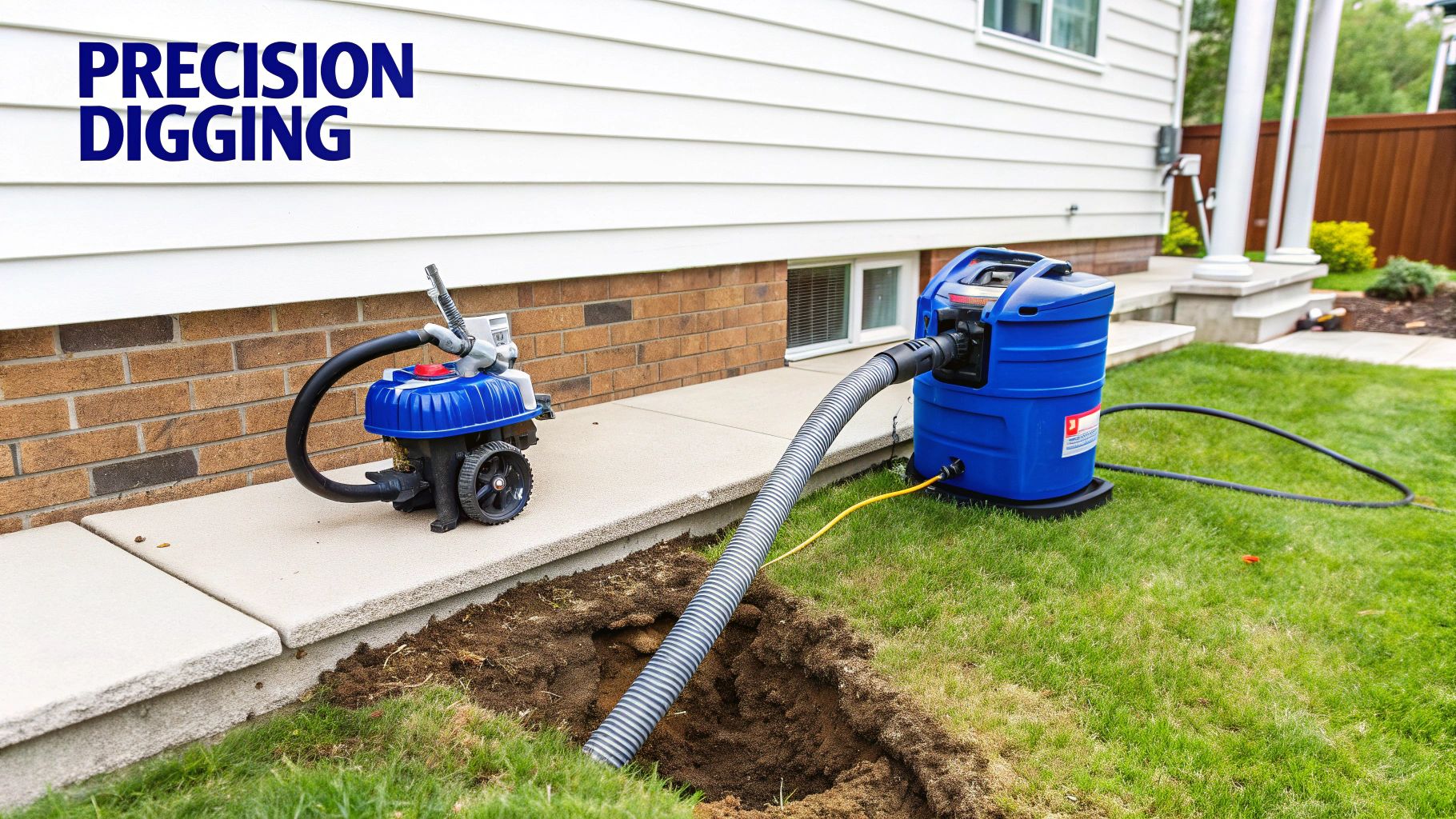
Having a shop vacuum with monstrous airflow is only half the battle. Raw power without focus is just chaos. But when you channel that power correctly, it becomes an instrument of precision, letting you excavate with an accuracy that shovels and augers can only dream of.
This is where a specialized tool can completely change the game, turning your high-CFM machine from a simple cleanup device into a surgical digging system for small amounts of debris.
The Hydrovac Attachment is the key. This is NOT a tool for hydrovac trucks. It’s a brilliant, mobile tool designed to pair your pressure washer with a standard 2.5-inch wet vac hose, creating a single, cohesive unit. This combination gives you a contained, powerful hydro-excavation tool that puts the immense airflow from the highest cfm shop vacuum to work with incredible efficiency.
Instead of just making a muddy mess, the attachment focuses a jet of water to liquefy the soil. At the exact same time, your vacuum’s powerful suction pulls that slurry away instantly. This immediate removal is the secret to its precision—the hole doesn't fill up with water, and you always have a clear view of what you're doing.
From Brute Force to Surgical Accuracy
The real magic of this system is the control it gives you. By containing the high-pressure water and channeling the vacuum's airflow, it all but eliminates splash-back and keeps the surrounding area clean. This is a game-changer when you're working on a pristine residential lawn or digging a fence post hole next to a house foundation.
The core principle is simple: your vacuum provides the raw power, but the Hydrovac Attachment provides the surgical precision. It’s the difference between using a sledgehammer and using a scalpel.
This level of control makes delicate jobs not just possible, but downright straightforward. You can confidently dig around sensitive sprinkler lines, cables, or roots without the constant fear of causing expensive damage. High-risk tasks like digging up pipes without damage become routine procedures.
Simple Setup for Powerful Results
Getting the Hydrovac Attachment up and running is incredibly easy and takes just a few moments. It's designed to be intuitive for any contractor or serious DIYer.
- Attach to the Hose: The main body of the attachment slides right onto the end of your 2.5-inch wet vac hose and tightens down.
- Insert the Wand: Your pressure washer wand slides through the designated opening in the attachment.
- Secure and Dig: A clamp holds the wand firmly in place, creating a sealed, integrated system. Fire up the pressure washer and the vacuum, and you're ready to start digging.
If you need more details on getting the perfect fit, a comprehensive shop vac adapter guide can walk you through all the connection options for your specific setup.
Real-World Applications in Yard Care and Digging
The practical uses for a mobile hydro-excavation system like this are almost endless, especially for anyone in yard care, landscaping, or residential contracting. It shines in any scenario where precision and minimal disruption are non-negotiable.
- Safely Digging Up Pipes: Need to fix a sprinkler line, but you're not 100% sure where it is? Instead of risky "exploratory" digging with a shovel, you can gently wash away the soil to reveal the pipe without a single scratch.
- Creating Perfect Fence Post Holes: Digging fence post holes in compacted, rocky soil is back-breaking work. This system liquefies the tough ground so your vacuum can suck it right out, leaving clean, perfect holes with a fraction of the manual labor.
- Trenching Across a Manicured Lawn: Running low-voltage lighting wire across a client's perfect lawn used to be a nightmare. The attachment creates a narrow, neat trench with almost no collateral damage, saving the turf and slashing your cleanup time.
- Daylighting Utilities: For utility locators, this is the perfect tool for potholing. You can quickly and safely verify the depth and location of buried cables or pipes before bringing in heavy equipment.
When tackling precision digging projects, it's always smart to think about the bigger picture, especially for jobs involving deep excavation, dewatering, and shoring design. The control offered by this system allows you to perform careful, deliberate work that aligns with professional standards, even on a smaller scale. In the end, pairing the highest CFM shop vacuum with the right attachment is what elevates your capability from simple cleanup to complex, non-destructive excavation.
Got Questions About High CFM and Excavation? Let's Dig In.
Theory is one thing, but what happens when the rubber meets the road—or in this case, when the nozzle meets the mud? When you're trying to pair a powerful shop vac with a specialized tool for non-destructive digging, real-world questions always pop up.
Here are the most common ones we hear from landscapers, contractors, and serious DIYers. The goal is to give you straight, no-nonsense answers so you can get the job done right.
What’s the Real Minimum CFM I Need for Hydro Excavating?
For our Hydrovac Attachment to really do its job, we strongly recommend a shop vacuum that pulls at least 150 CFM. Sure, a weaker vac might manage to slurp up loose, sandy soil, but the moment you hit wet clay or compacted earth, you'll be fighting constant clogs. It's incredibly frustrating.
If you’re a pro digging fence post holes or trenching for irrigation, you’ll want to aim higher. A vacuum in the 180-200+ CFM range is the sweet spot. That kind of power creates a relentless column of air that pulls the heavy, muddy slurry up and out without breaking a sweat, which means you get the job done faster with way fewer headaches.
Will the Hydrovac Attachment Fit the Shop Vac I Already Own?
There's a very good chance it will. We designed the Hydrovac Attachment to fit the industry-standard 2.5-inch wet vac hose connection you see on most medium-to-large shop vacuums. Brands like Ridgid, Craftsman, Workshop, and DeWalt almost always use this size.
The only thing you need to do is double-check your vacuum's hose diameter. Just remember, the attachment is only as good as the vacuum powering it. For the best results, hook it up to the highest CFM shop vacuum you can get your hands on. You'll be amazed at how quickly it turns a brutal digging job into a manageable task.
How Exactly Does High CFM Keep Me from Damaging Buried Pipes?
This is where high CFM really shines. It’s all about safety and control. A strong, continuous airflow instantly vacuums away the soil and water as soon as your pressure washer loosens it. This is huge, because it keeps the hole clear instead of letting it turn into an opaque mud puddle. You can actually see what you're doing the entire time.
A shovel is a blunt instrument—it's incredibly easy to accidentally strike and crack a buried line. Hydro excavation, on the other hand, is all about finesse. The combination of pressurized water and high-volume suction gently uncovers utilities without brute force. This is precisely why it's the go-to method for "daylighting" or "potholing" around sensitive infrastructure.
This controlled approach lets you carefully work around pipes or cables, exposing them without ever touching them with a hard, unforgiving tool.
Will a Longer Hose Kill My Vacuum's Power?
Oh, absolutely. It's one of the most overlooked factors in vacuum performance. Every foot of hose adds friction, which robs your machine of its effective CFM. A shop vac that boasts 200 CFM at the motor might only be delivering 150 CFM (or less) at the business end of a 15-foot hose.
This is exactly why starting with the most powerful vacuum you can find is so important for this kind of work. To get every ounce of performance, stick with the shortest 2.5-inch hose you can comfortably work with. It's a simple trick, but minimizing that distance ensures your Hydrovac Attachment gets the raw power it needs to tear through the dirt and keep your project on track.
Ready to turn your powerful shop vacuum into a precision digging machine? With the right tool, you can tackle tough excavation jobs with more speed, safety, and control. See how the Hydrovac Attachment can make your next project cleaner and more efficient.